

Seeing comes before words.”
This post is part of my 33 Days in Europe series. Visit the hub page to follow along, see the full itinerary, and sign up for email updates.
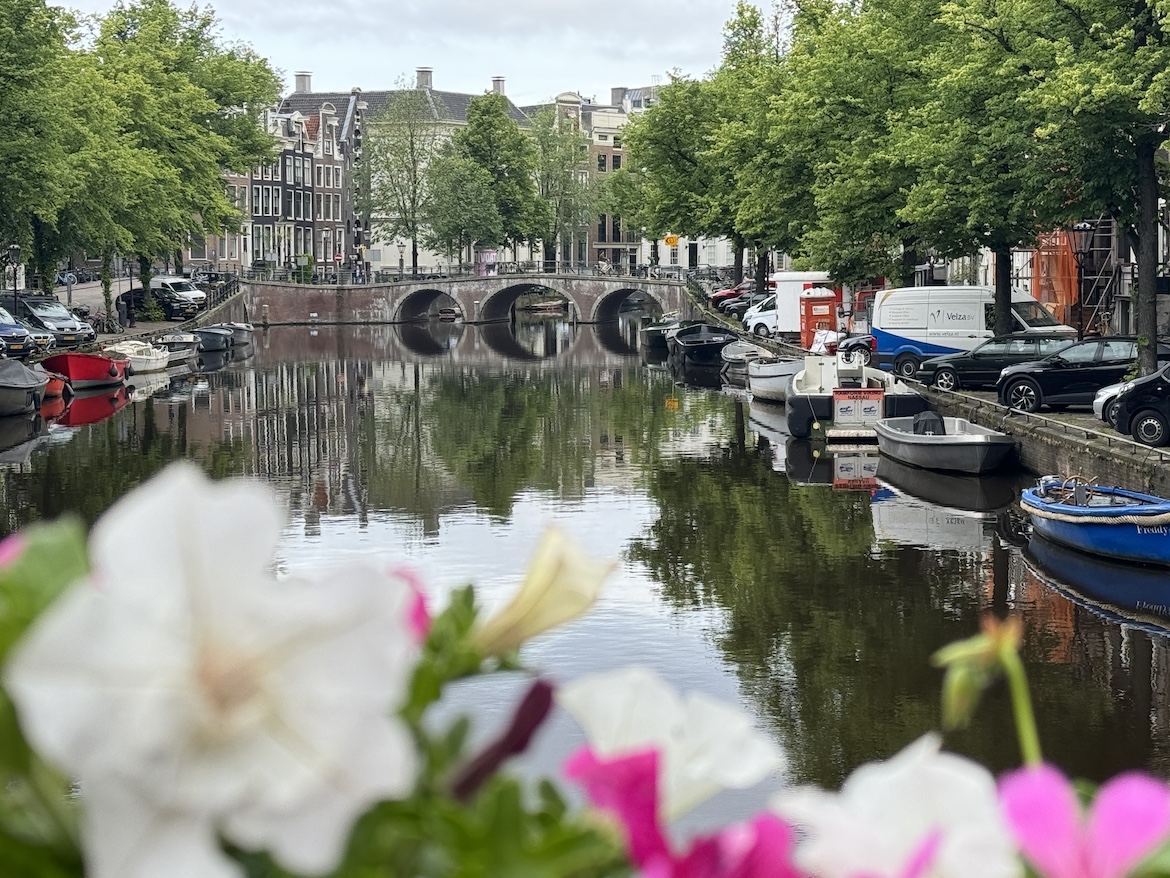
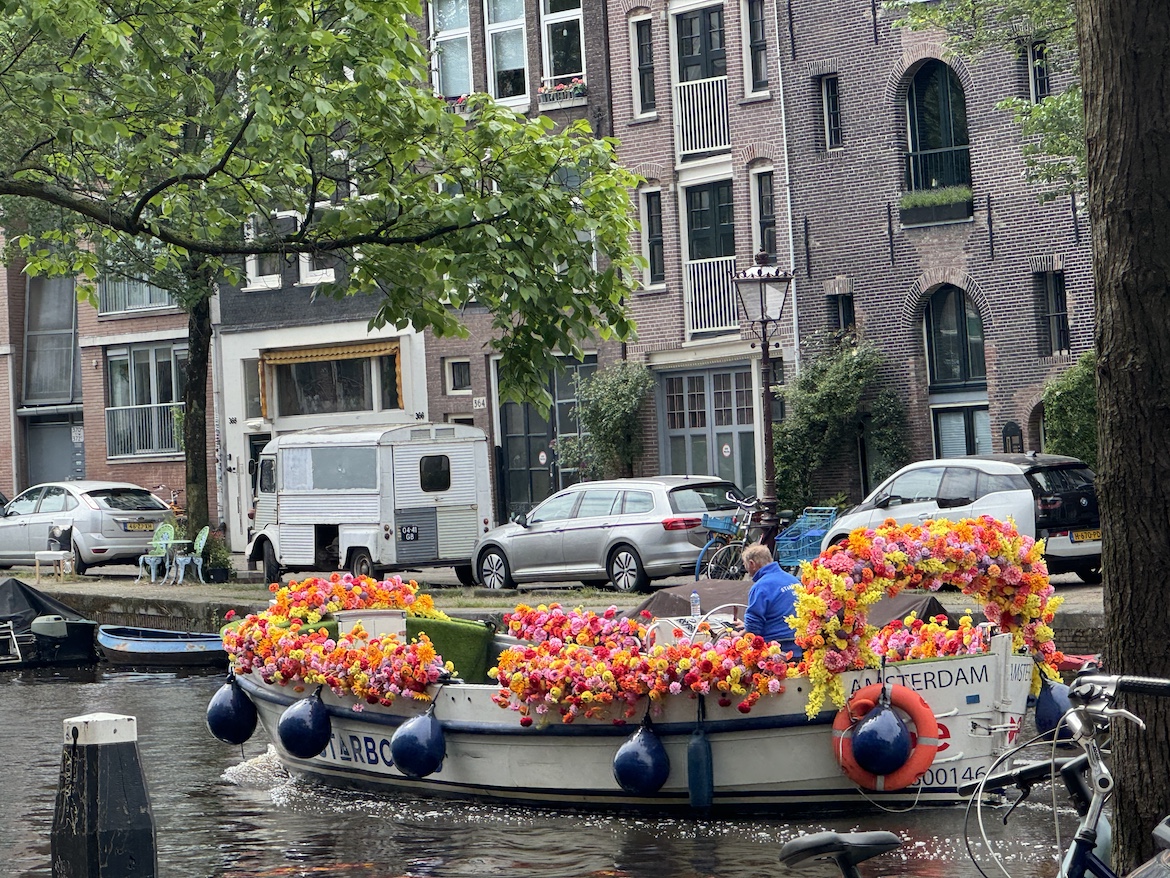
First, isn’t that featured picture above simply beautiful? I take no credit for its loveliness. I simply hit the button on my iPhone. I don’t alter travel photos. This is what it looked like on this cloudy day in Amsterdam.
For this day, the 17th of our 33 days in Europe, I have much to share with you. And believe me, I’ve held back to some sort of reasonable length.
We started our second full day in Amsterdam spry and eager, but that really doesn’t differentiate it from any other travel day. Each day begins with a natural hit of wonder and ends in awe.
Wonder and awe can be addictive.
As we left the hotel, I snapped this picture of our hotel’s lounge area. Note: I’ve always wanted a velvet couch and this scene pushed any practical sensibilities aside and it’s on my wish list now. Paired with that black and white photo and the urban-y wall? Oh, my!
I really like this hotel for its fresh, simple and delectable breakfasts (which are unique to me, but very European); its hotel staff; lovely urban, chic aesthetic; and perfect location. And of course for their receptionist’s gracious demeanor when I learned I had COVID while staying here. Check out Day 16 of 33 for more on that story.
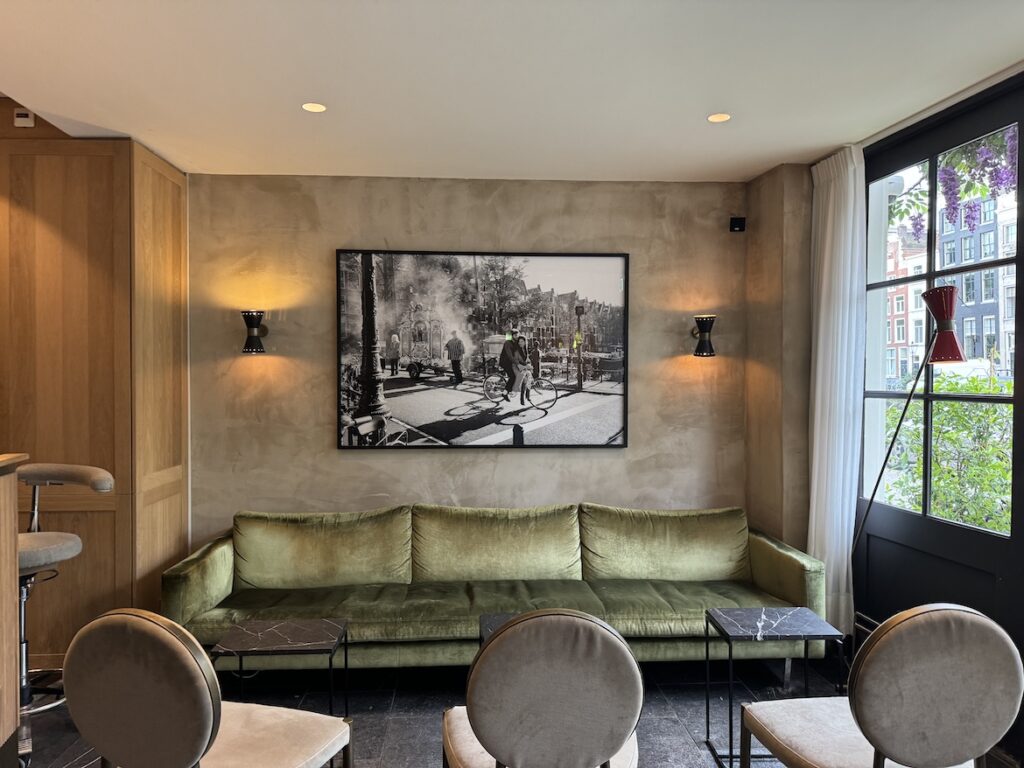
I love this lobby of The Times Hotel—the green velvet sofa, the black-and-white street photograph, and the canal houses framed in the window.
Street Scenes — Walking the City
We only had one true agenda today: visit the Van Gogh Museum. But as always, the meandering moments end up carrying just as much weight.
The area known as the Nine Streets—De Negen Straatjes—is a cluster of narrow lanes woven between Amsterdam’s canals, filled with independent shops, cafés, and storefronts that feel distinctly local. This is where much of our wandering took place before and after visiting the museum, and where the city’s character really revealed itself—unpolished, expressive, and full of personality.
Walking a place can be just as profound as any must-see attraction. And for some reason, I always notice the birds singing. I don’t think I even notice them in city spaces at home. So perplexing, but the feeling remains steadfast in me no matter where I go.
New places purge your senses and light them up.
There is so much to take in.
Everything is art.
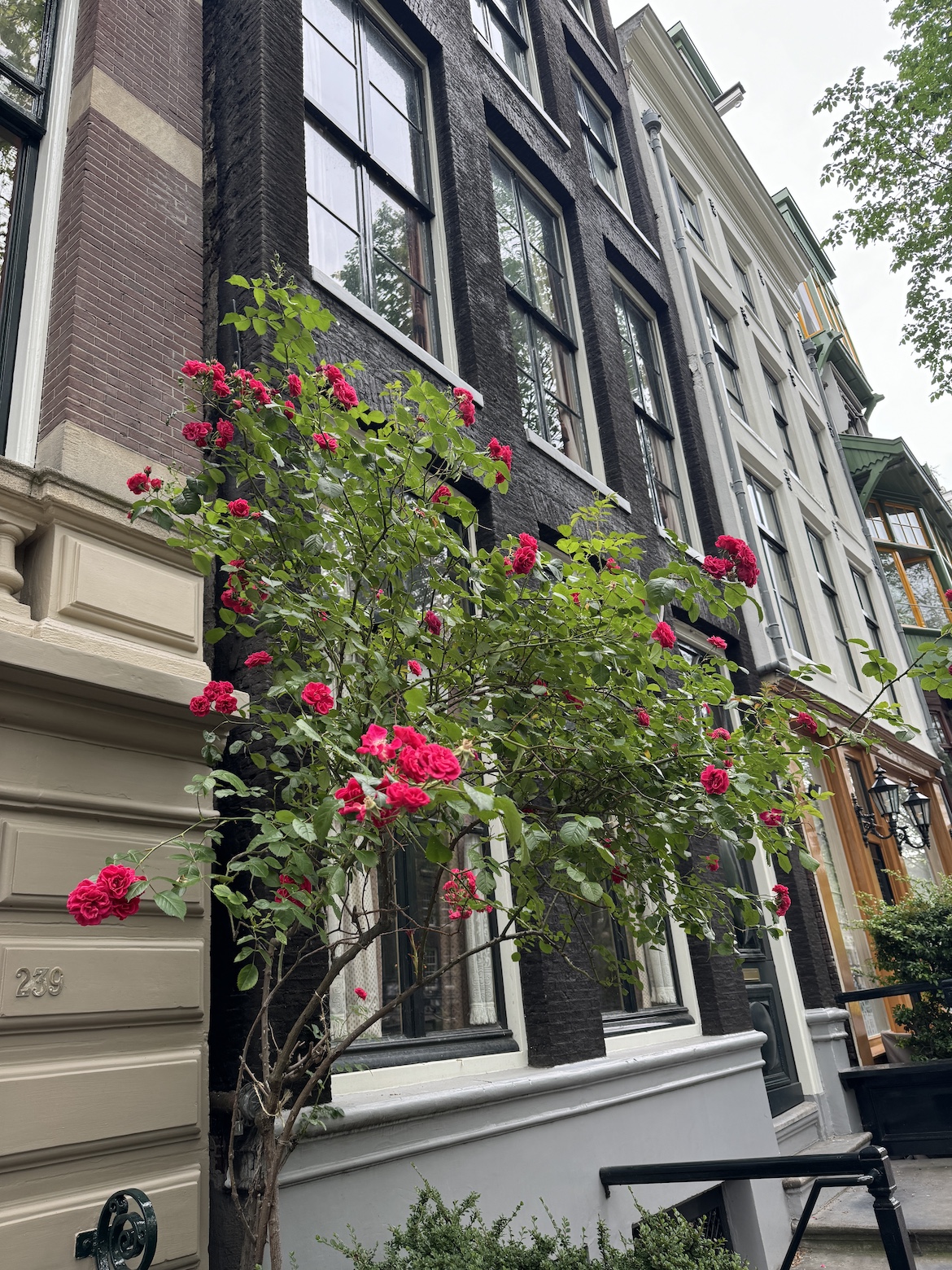
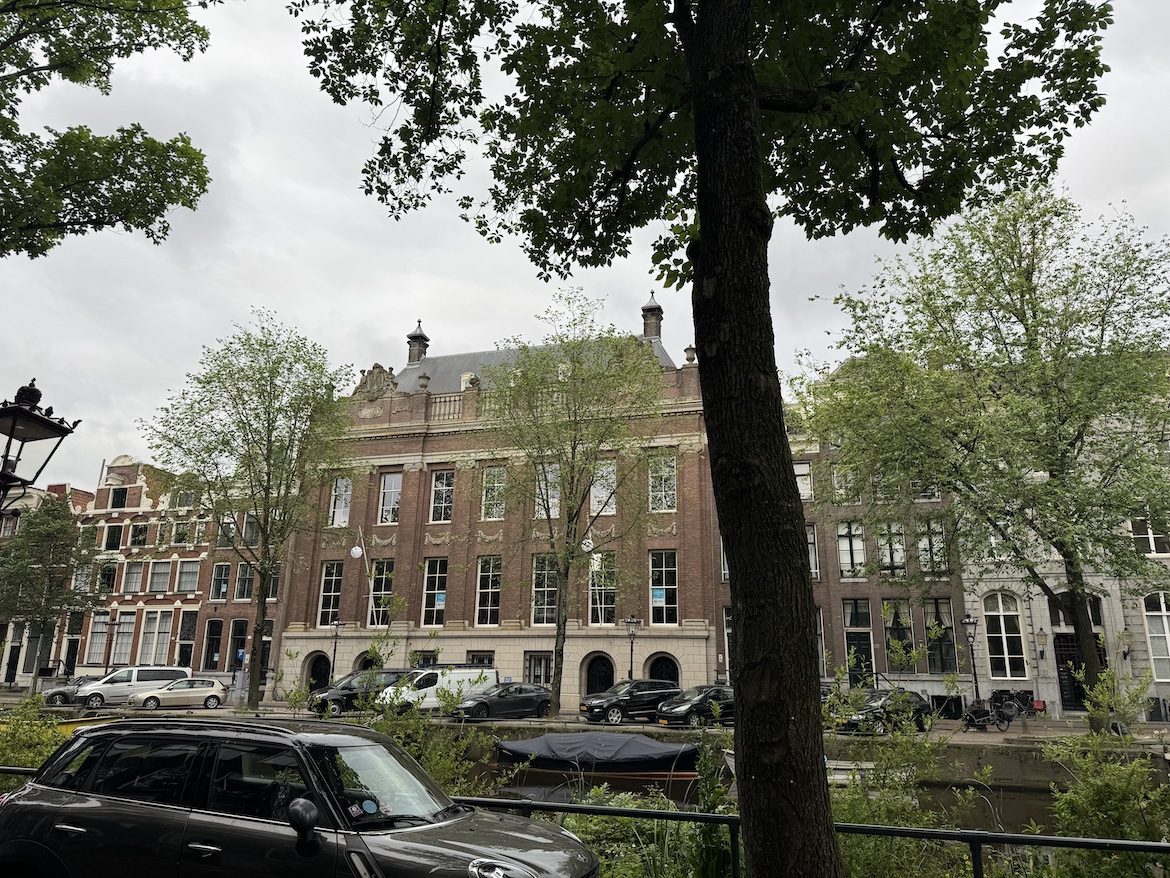
I found myself noticing small, inconsequential things: the way a tree frames a façade, the way red flowers climb up toward a window. Wrought iron swirls as a handrail. The way the clouds blanket the May to June sky in puffy cotton balls.
This is what I love about wandering a city like this; taking in all its layers.
And when I get home from traveling, I always see every ordinary thing in my life from a different perspective. For example, I see my home as a castle—grander than I knew.
Whatever it is, it is enough.
My perspective is clearer. And I am better for it.
Once again, I stand firmly with my megaphone declaring that travel is a crucial element in a life well-lived.
Click (or tap) any photo to open all galleries, see the full image, captions, and scroll through the set.
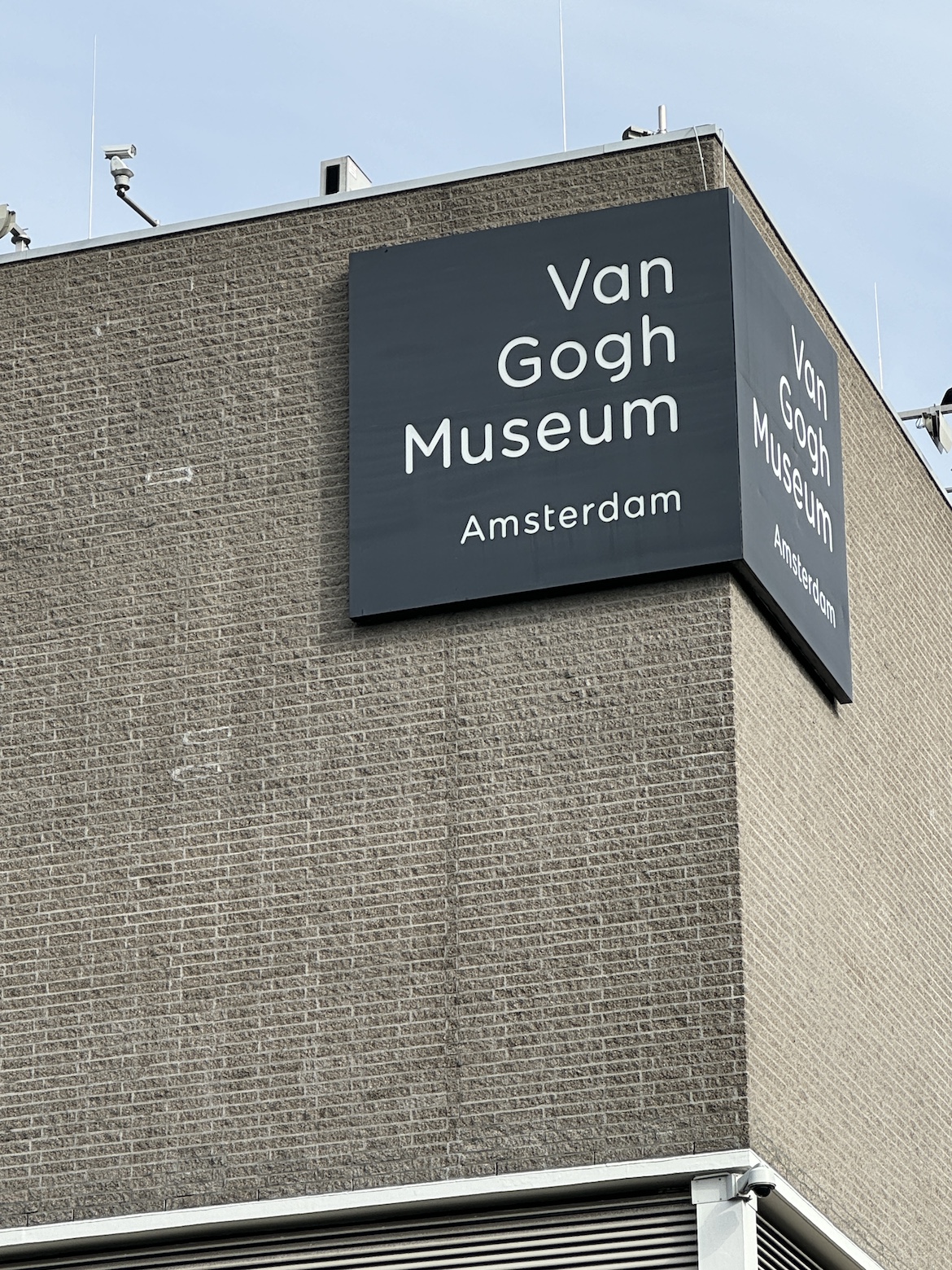
Van Gogh Museum
Visiting the Van Gogh Museum felt significant.
There’s something profound about seeing an artist’s work in the place where their life unfolded. You’re not just looking at paintings—you’re standing inside the context that shaped them.
I’ll be honest: Van Gogh has never been my favorite. There are other artists I’m more drawn to.
But standing in front of his work, seeing the texture of the brushstrokes, the movement in the paint—it gave me a new appreciation.
His work feels restless. Intentional, but searching. Experimental, yet lived.
And what struck me most was not just Van Gogh’s work—but how it became revered.
Vincent sold almost nothing in his lifetime—likely just one painting. He struggled financially, relied on his brother Theo for almost everything, and dealt with ongoing mental and physical challenges. The image we have of him—a poor, troubled, deeply passionate artist—is grounded in truth.
But that alone doesn’t create legacy.
After Vincent died in 1890, Theo died just six months later. Theo’s wife, Johanna van Gogh-Bonger, was left with hundreds of Vincent’s paintings.
And what she did next matters.
She didn’t just preserve his work—she shaped how the world encountered it.
She organized exhibitions. She placed his paintings where they would be seen. She published his letters, giving people access to his thoughts, his struggles, his intensity. She gave context to the work—emotion, story, meaning.
All of this is illustrated in the museum.
From a modern lens, it’s hard not to see this as a form of public relations.
Not in a manipulative sense, but in the clearest definition: framing, positioning, and carrying a story into public view.
And it worked.
Which raises questions I can’t quite shake:
Would Van Gogh be as revered without the public relations effort?
Why didn’t his work sell when he was alive?
What changed? The art—or the way it was presented?
What Johanna offered wasn’t just paintings. It was a narrative: a passionate artist, misunderstood, struggling, searching, creating anyway.
That story matters. It gives people a way in.
And it makes me think about how often public relations—good, strategic, intentional public relations—shape what we come to value.
We see this everywhere.
There’s a famous example from the diamond industry—De Beers—where a sustained campaign and their slogan “A Diamond is Forever” helped position diamonds as essential to engagement—something timeless and rare, even though the supply was carefully managed and far from scarce. The campaign is often cited as one of the greatest public relations campaigns in history. If you’re curious, this video explains it well. Different context, but the mechanism feels familiar. And if you’re curious about my career in public relations—and my passion for the subject— that’s here.
After visiting so many museums over the years, I keep coming back to this:
Art is subjective. No one person gets to decide what is great.
Sometimes it’s skill. Sometimes it’s emotion. Sometimes it’s something unusual that catches hold. And sometimes, it’s the story that carries it forward. We all know that stories can create legends.
Because of that, I think it’s just as important to look in the smaller places. Artists are everywhere. Their work is often overlooked—not because it lacks something, but because it hasn’t been brought into view.
I never tire of seeing it.
And I’m grateful for the people who preserve it—and, yes, the ones who help us see it.
Click into a photo to explore the full gallery—it’s part of the experience.
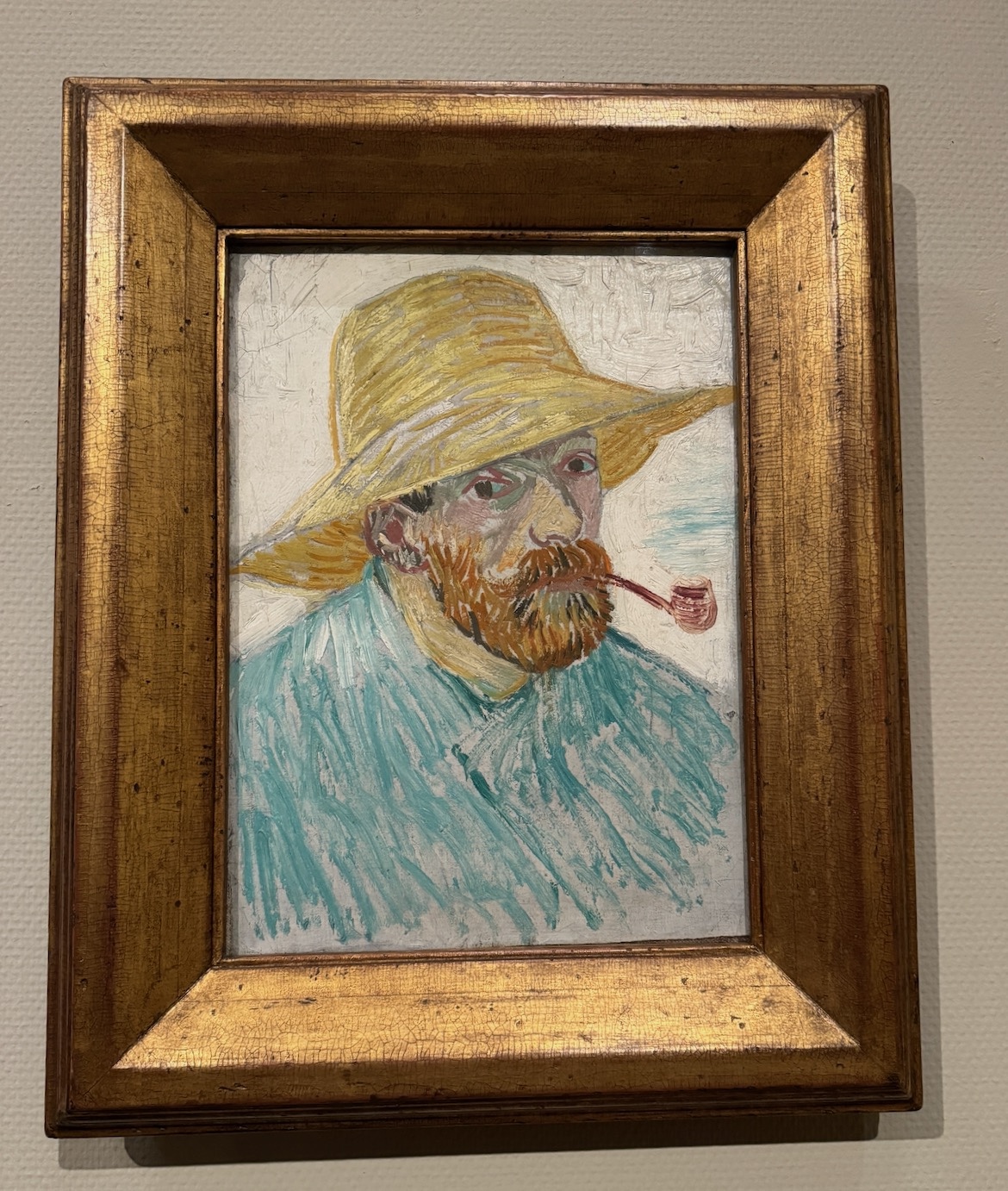
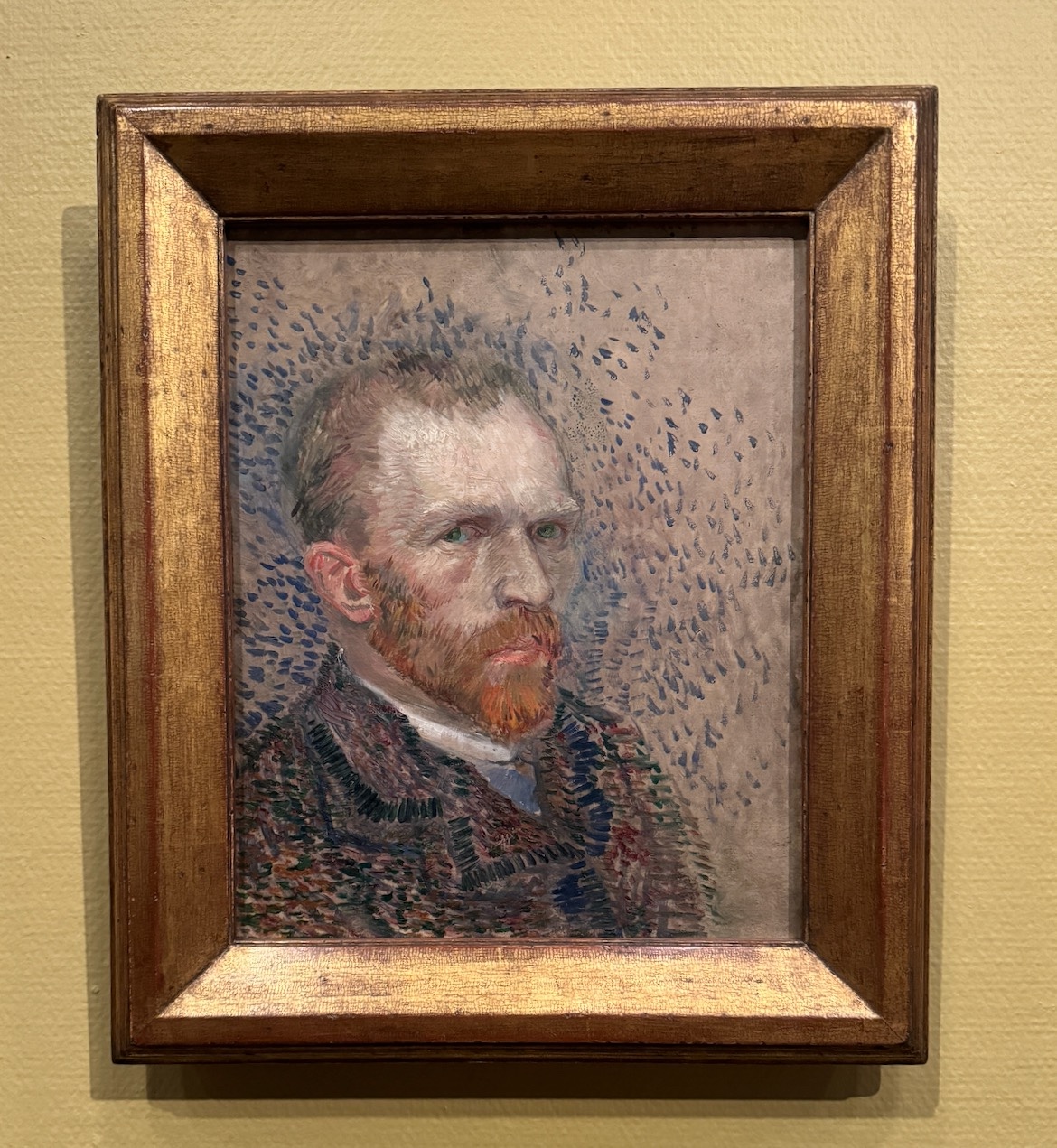
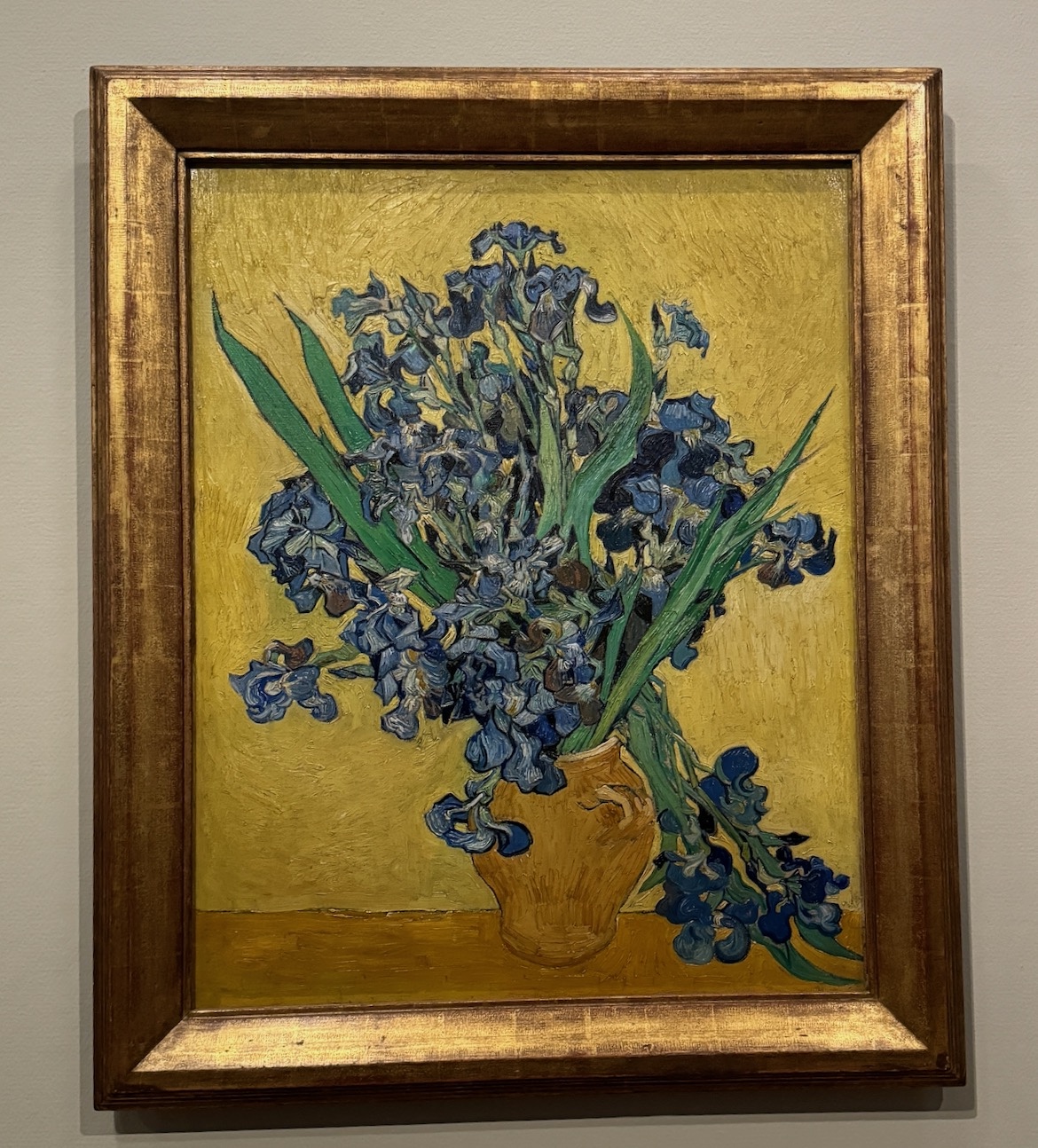
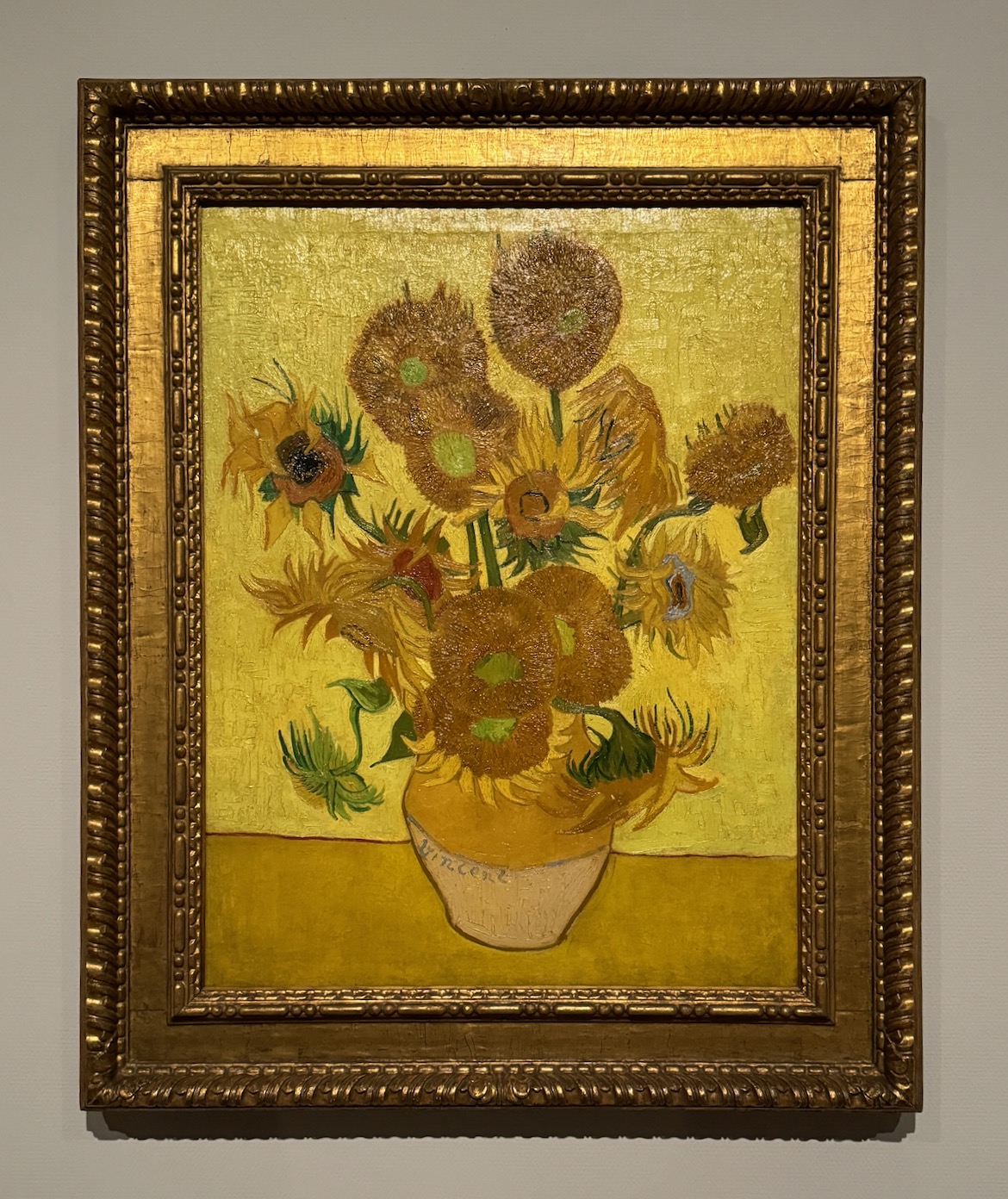
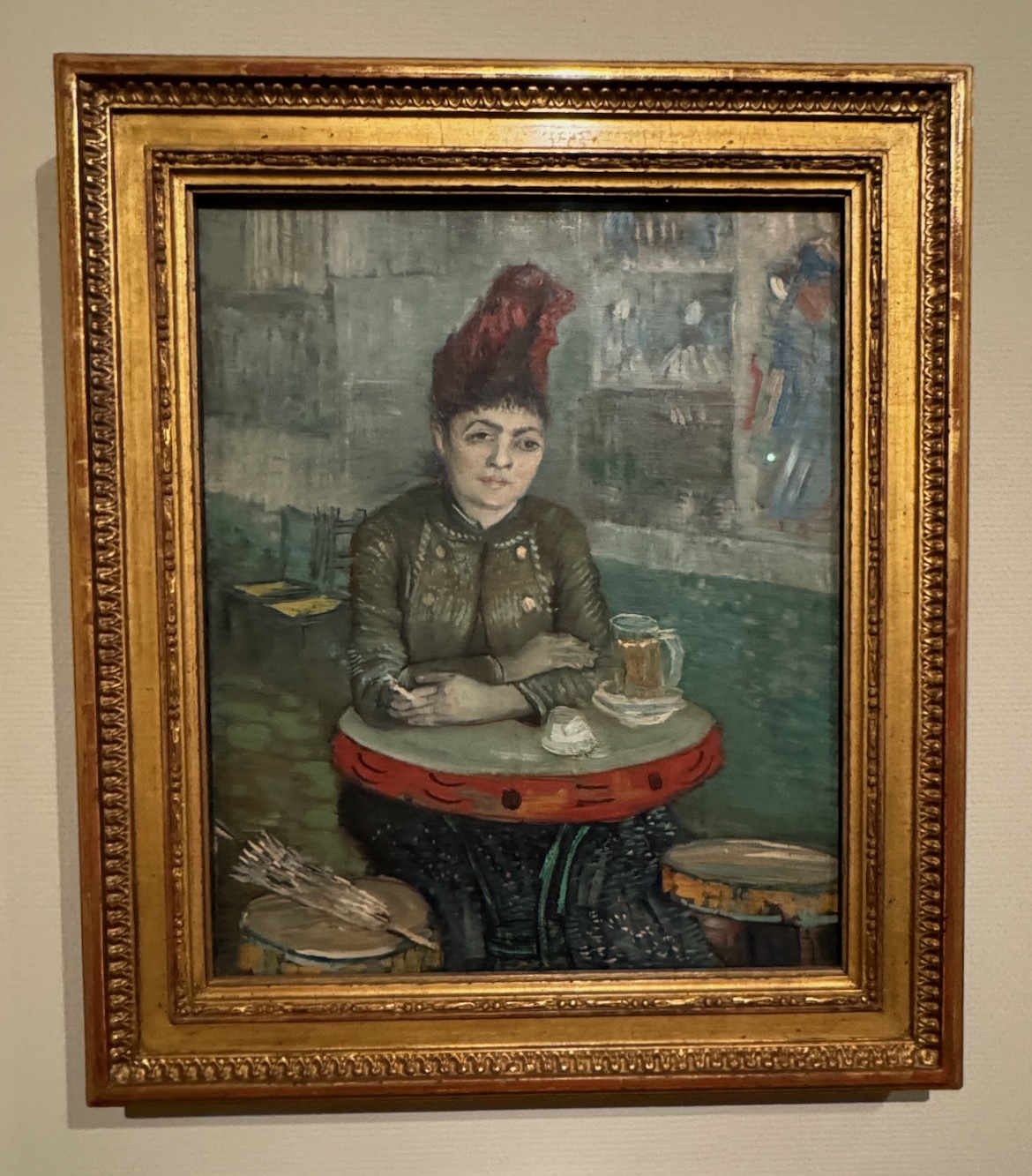
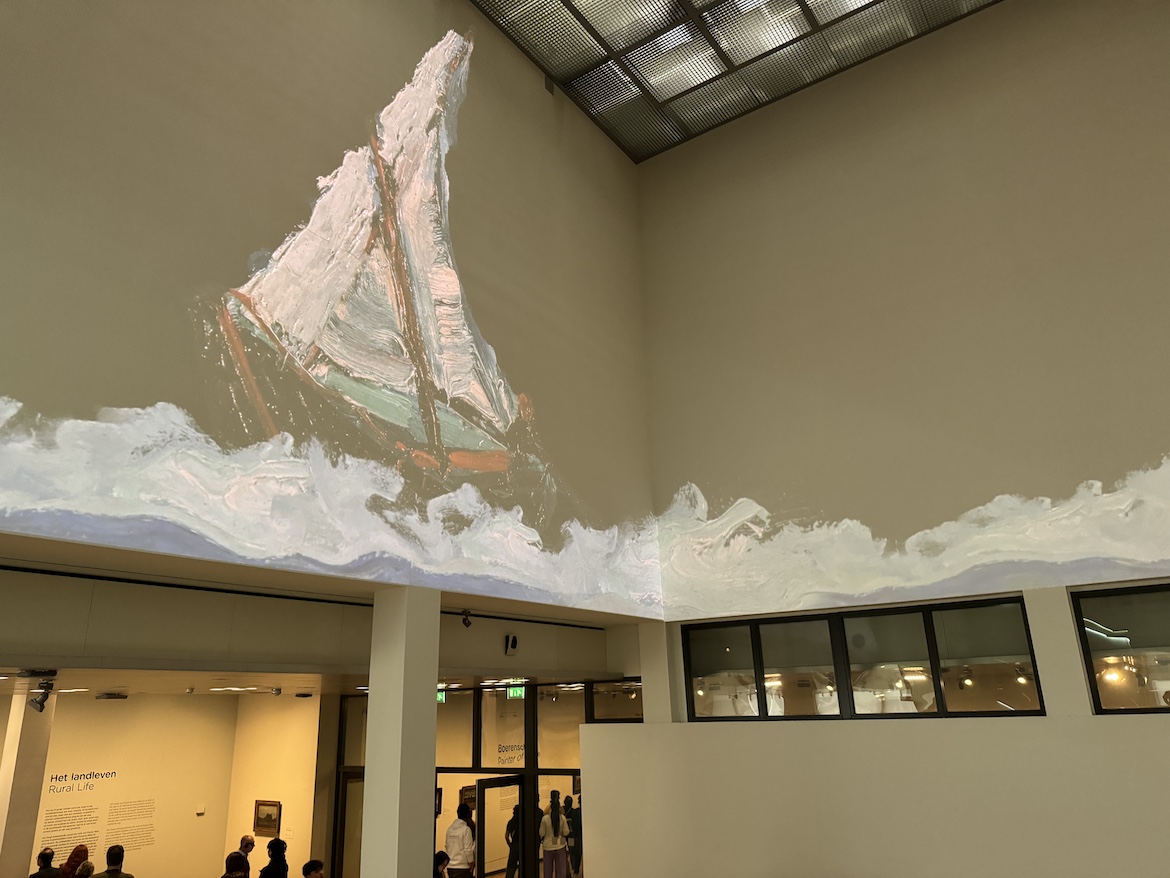
The Museum Offers An Immersive Experience
Click the picture to see the captions.
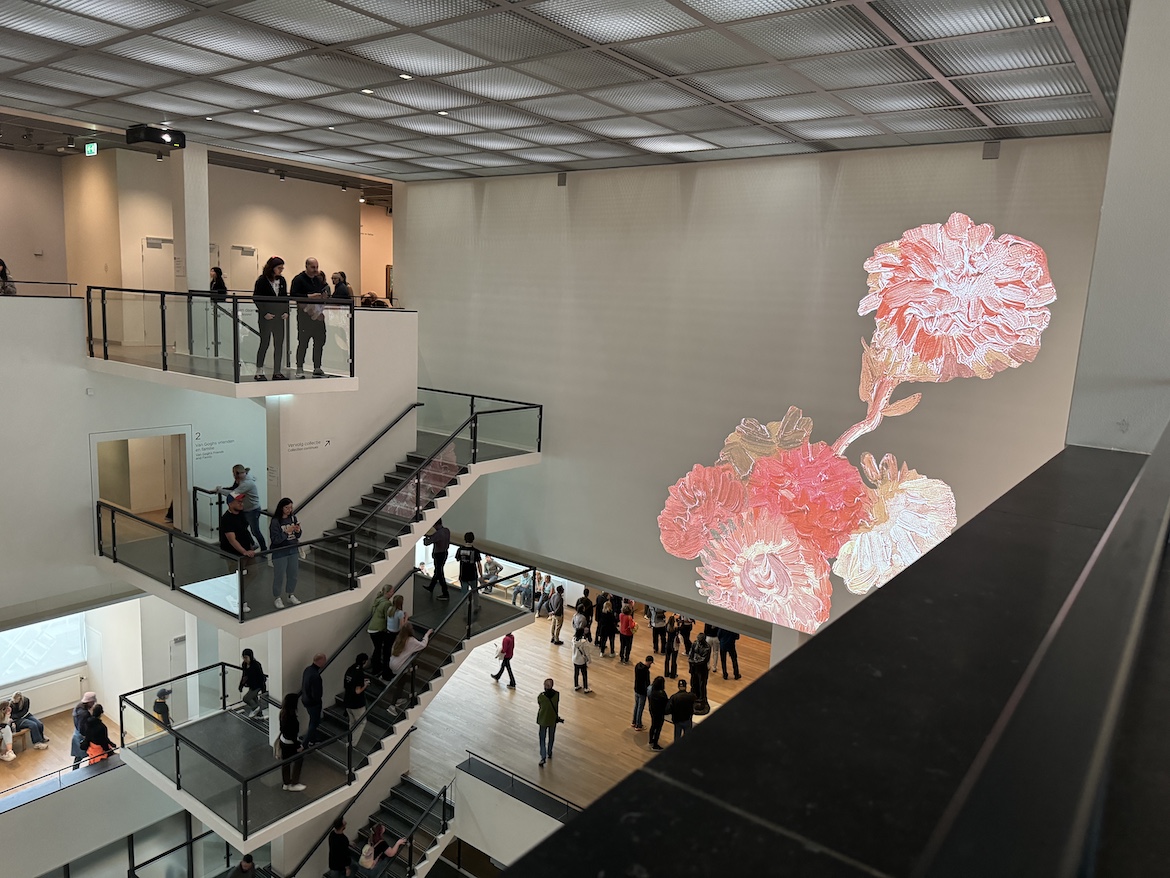
Other Great Artists At The Van Gogh Museum
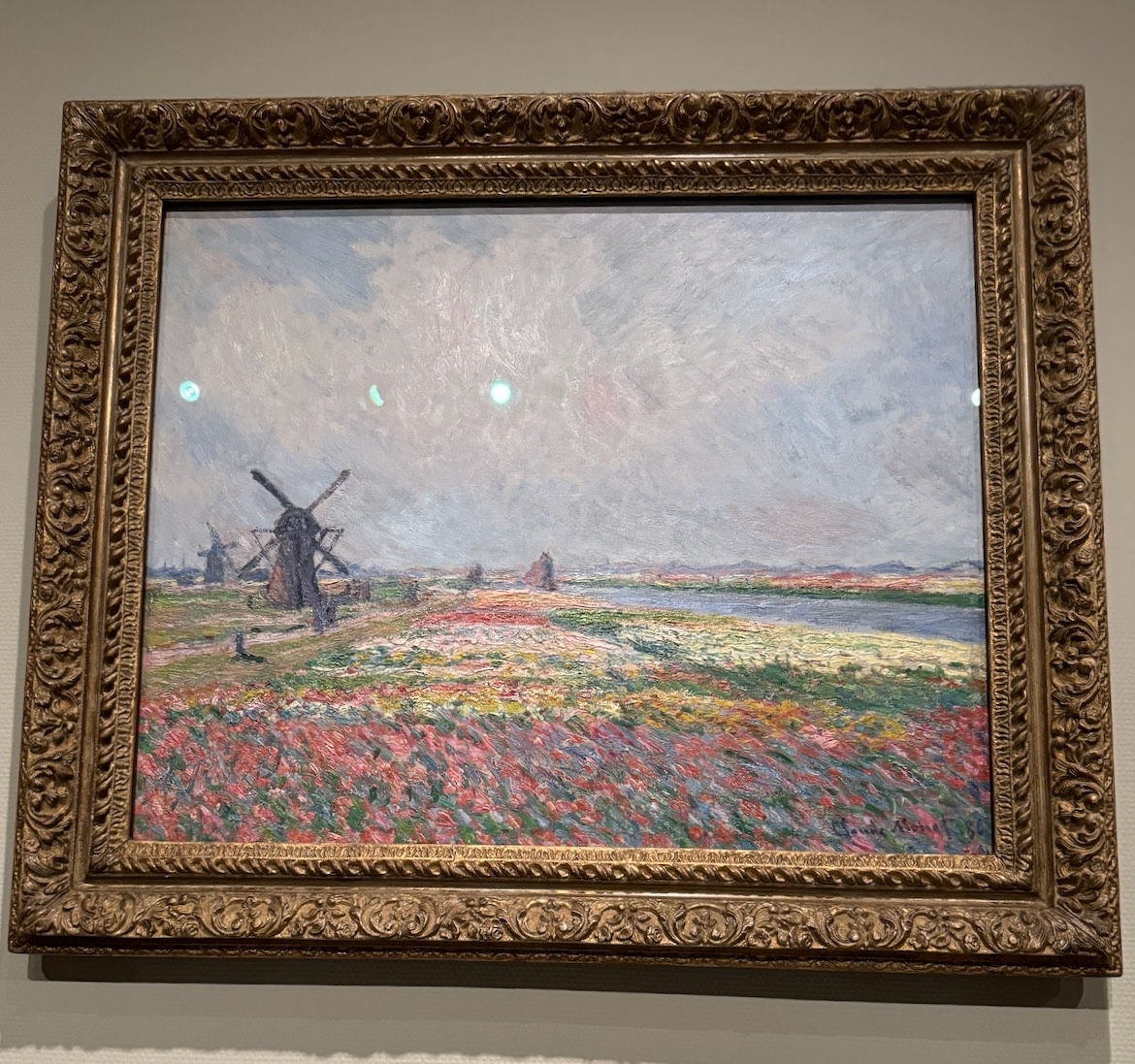
I was just as drawn to the surrounding works.
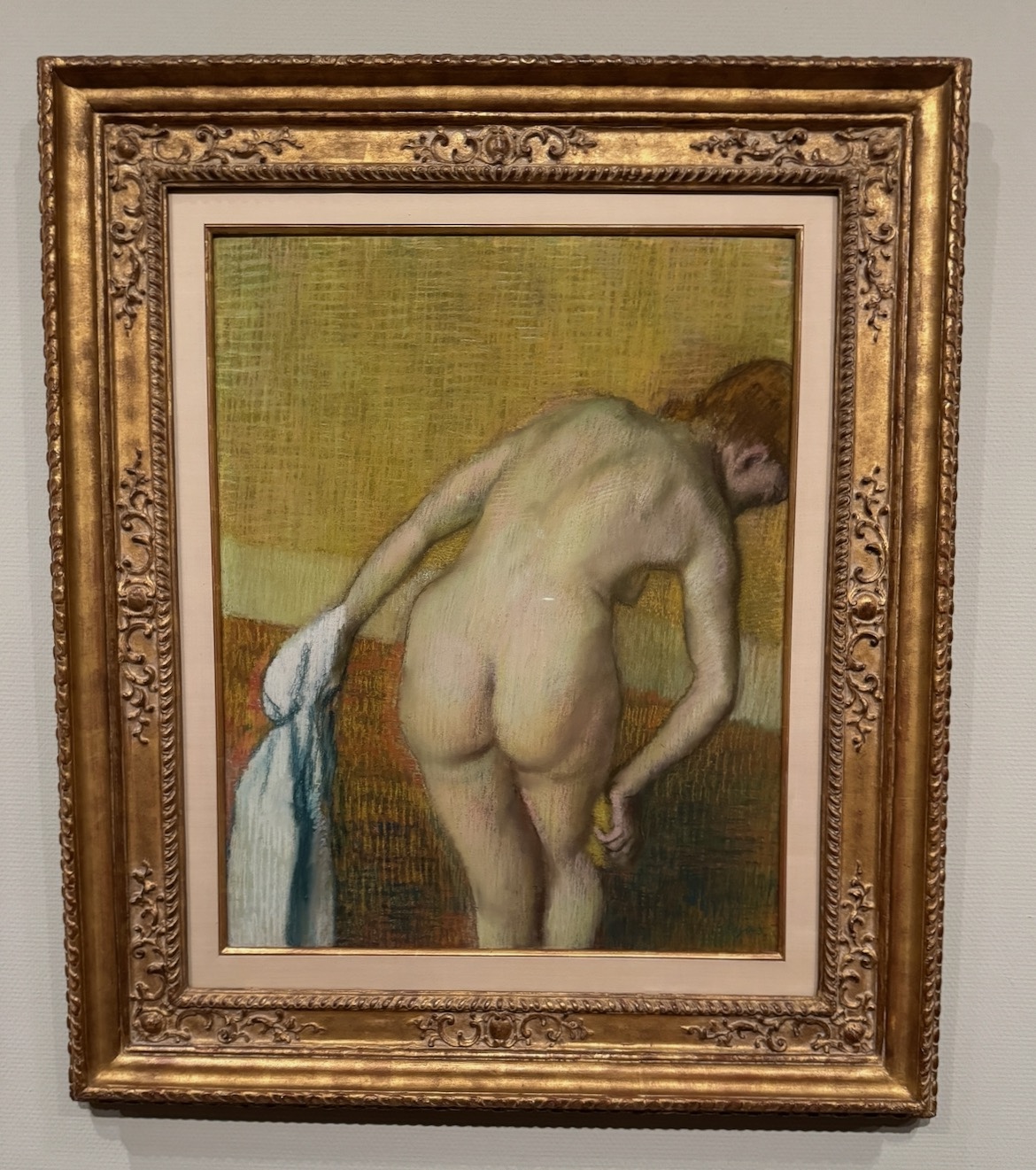
Monet and Degas, in particular—two very different approaches, but both unmistakable. Seeing them side by side reminded me how varied art can be, even within the same era. It’s one thing to see these pieces in books. It’s another to stand in front of them and realize how much doesn’t translate through a page or a screen.
Each one so unique.
Claude Monet’s Tulip Fields near The Hague (1886).
Theo van Gogh had written admiringly about Monet’s art as early as 1885. Vincent initially dismissed the Impressionists as careless and badly painted, but in Paris he came to see what Theo saw—bright color, loose brushwork, and a radically fresh way of looking. This painting became part of that story; Vincent saw it in Paris in 1887.
This also connects to what scholars call Van Gogh’s Paris period (1886–1888), when exposure to the Impressionists transformed his palette. That makes Monet’s presence in this museum feel especially resonant.
I love knowing Monet’s luminous tulip fields helped shape Van Gogh’s evolving eye.
Edgar Degas’s Woman Bathing
I was surprised and delighted to find a Degas at the Van Gogh Museum. Woman Bathing (c. 1887) by Edgar Degas (1834–1917) reflects what I love about his work: something simple and everyday-ish made extraordinary. Degas was known for finding beauty in unposed moments. Van Gogh saw Degas’s nudes in Paris and greatly admired them, which likely explains why his work is featured here. That attention to ordinary life is part of what sets Degas apart, and why he matters to so many people.
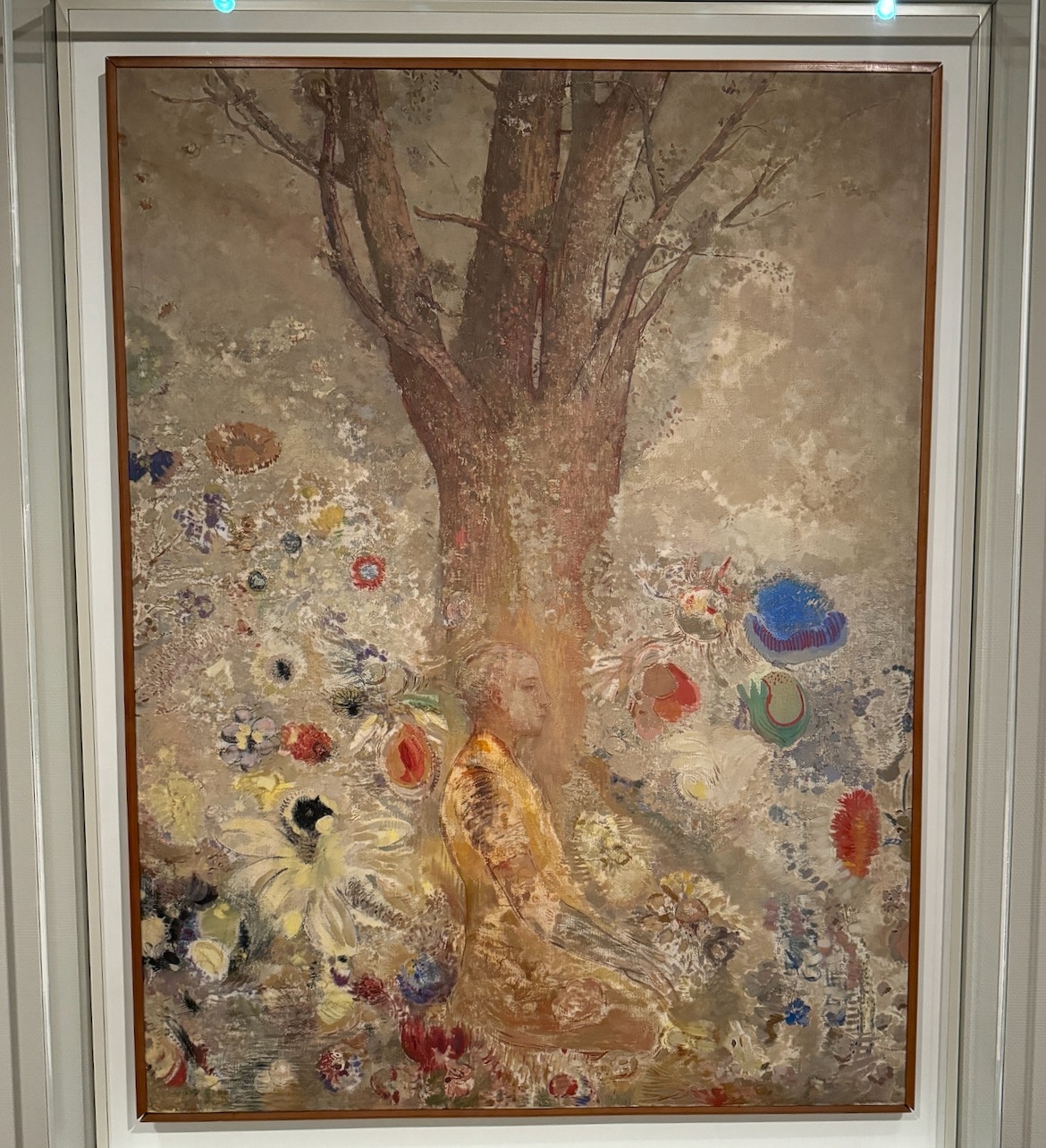
Odilon Redon’s The Buddha.
One surprise at the Van Gogh Museum was encountering Odilon Redon’s The Buddha. I later learned Theo’s brother-in-law, Andries Bonger, was a devoted collector and friend of Redon’s, which helps explain its presence here. I loved this dreamlike painting instantly.
I could fancy this on a wall in my home simply because of the textures and color. It’s much more vibrant and moving in person. I suspect that this is one of those works of art that makes you notice or feel something different with each glance. I didn’t even notice the Buddha at first, nearly camouflaged in front of the tree and nestled in the flowers. And the way the flowers float in the scene held me captive for several minutes.
What I love about visiting museums is exactly this—discovering artists who may be famous in the world, but new to me.
I take no shame in arriving late to an artist.
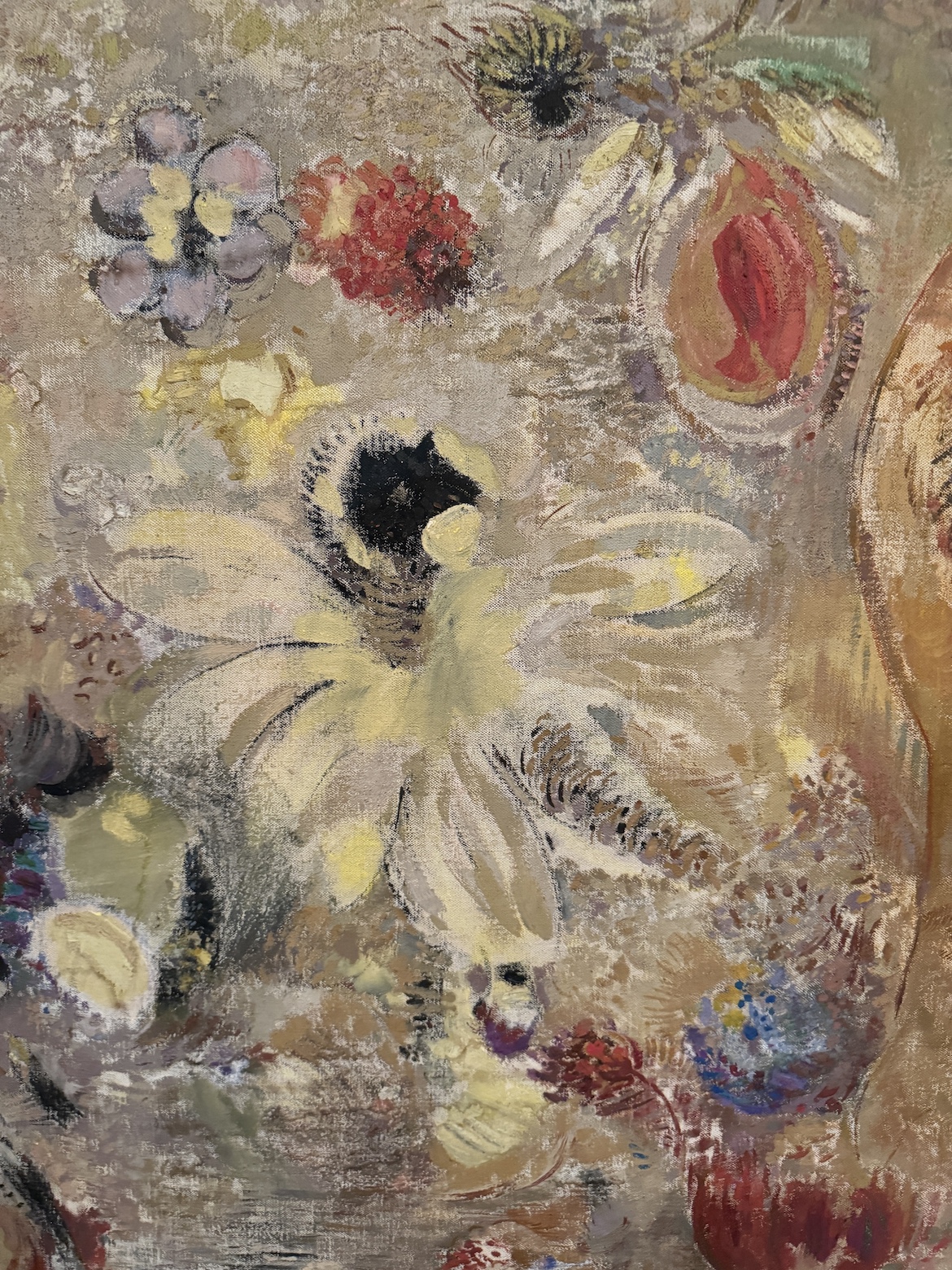
The point is that I arrived.
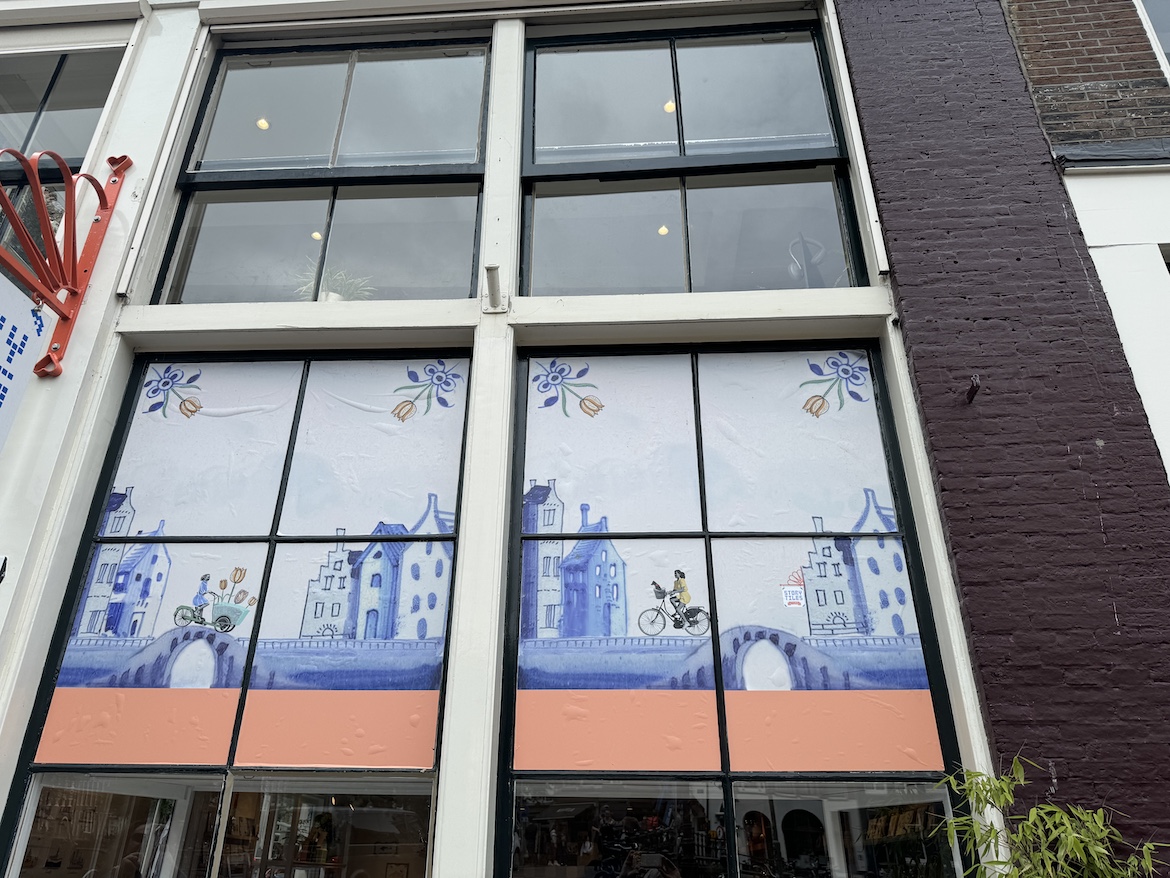
Storefronts & Windows
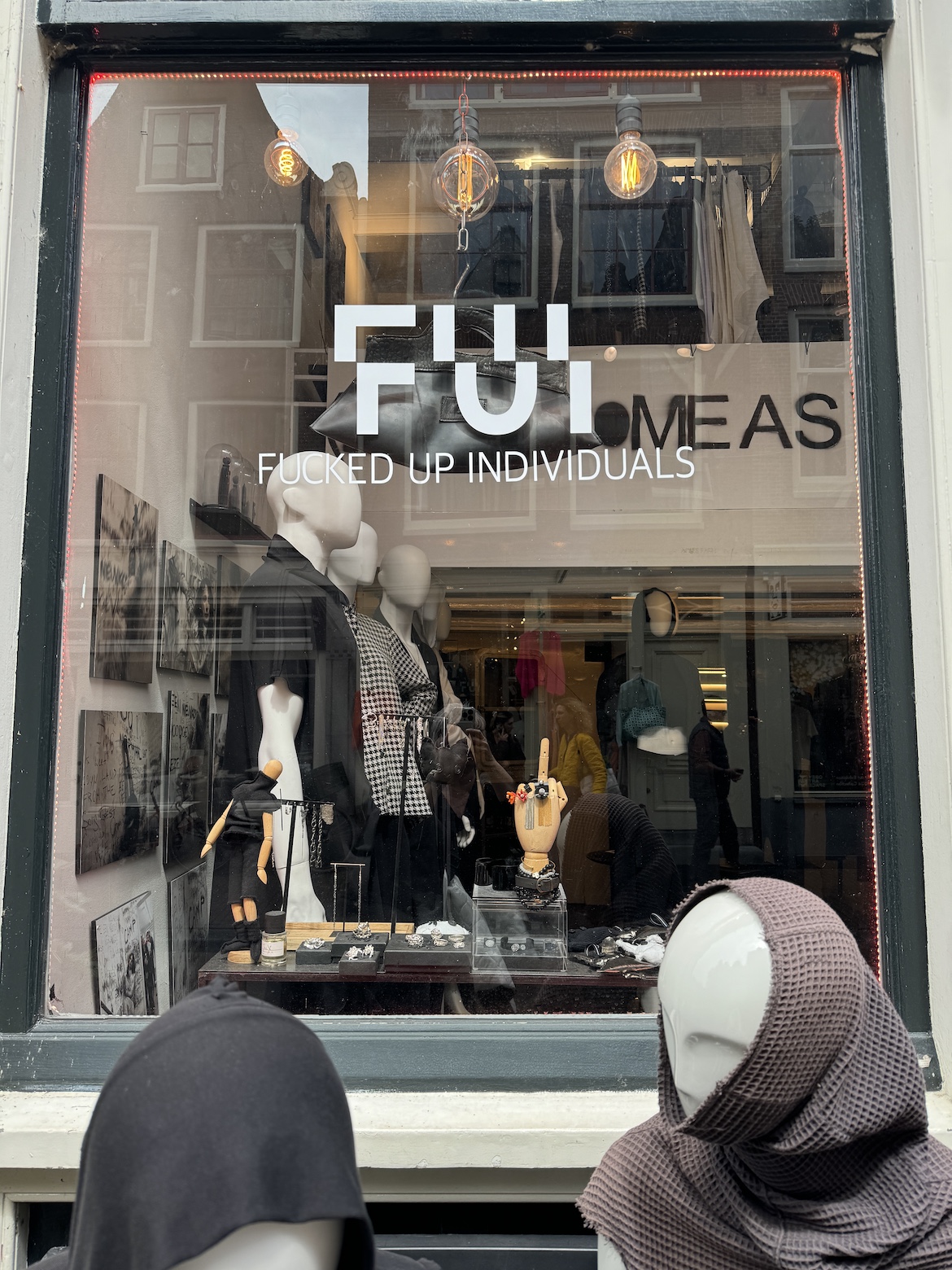
Back out on the streets, store windows held my attention. They set the vibe of Amsterdam’s cool urban attitude.
I especially love that storeowners project their attitude onto their glass canvasses. To this beautiful-thing/meaningful-thing seeker, window expressions touting love-you-as-you-are poetry represent Amsterdam as a whole: free, hip, rooted, gracious, kind, fond, and welcoming to all humans, no matter our packaging.
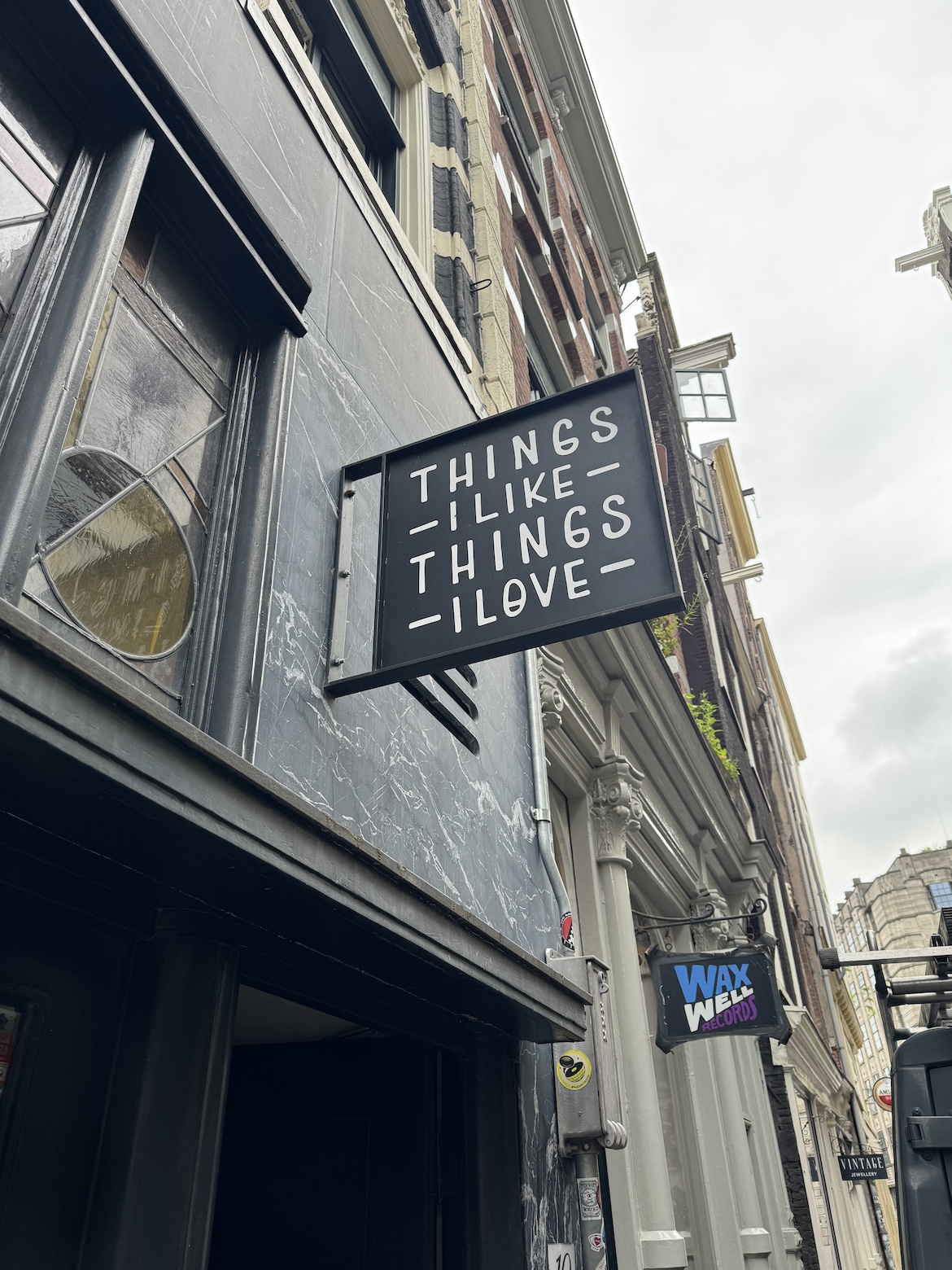
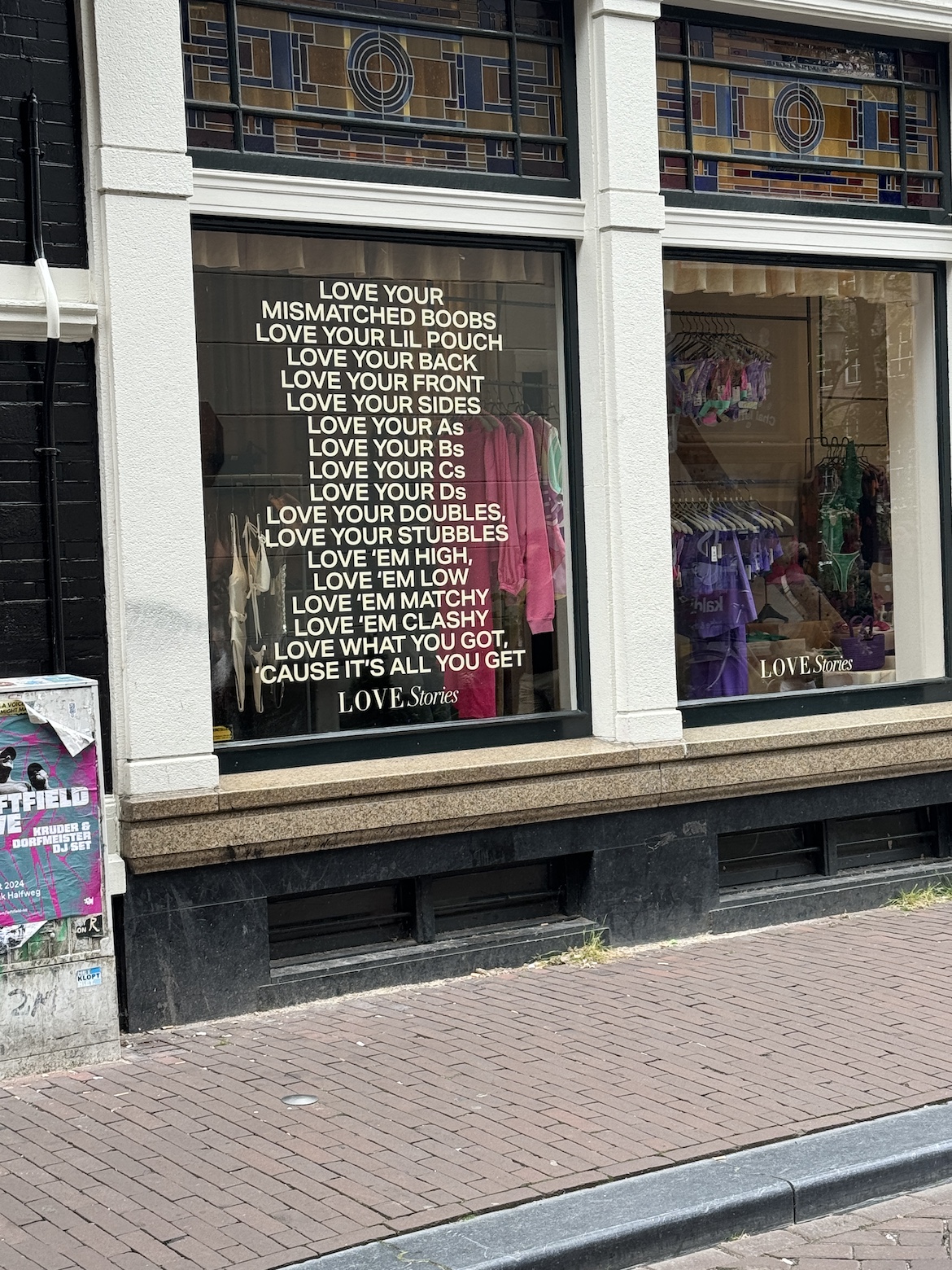
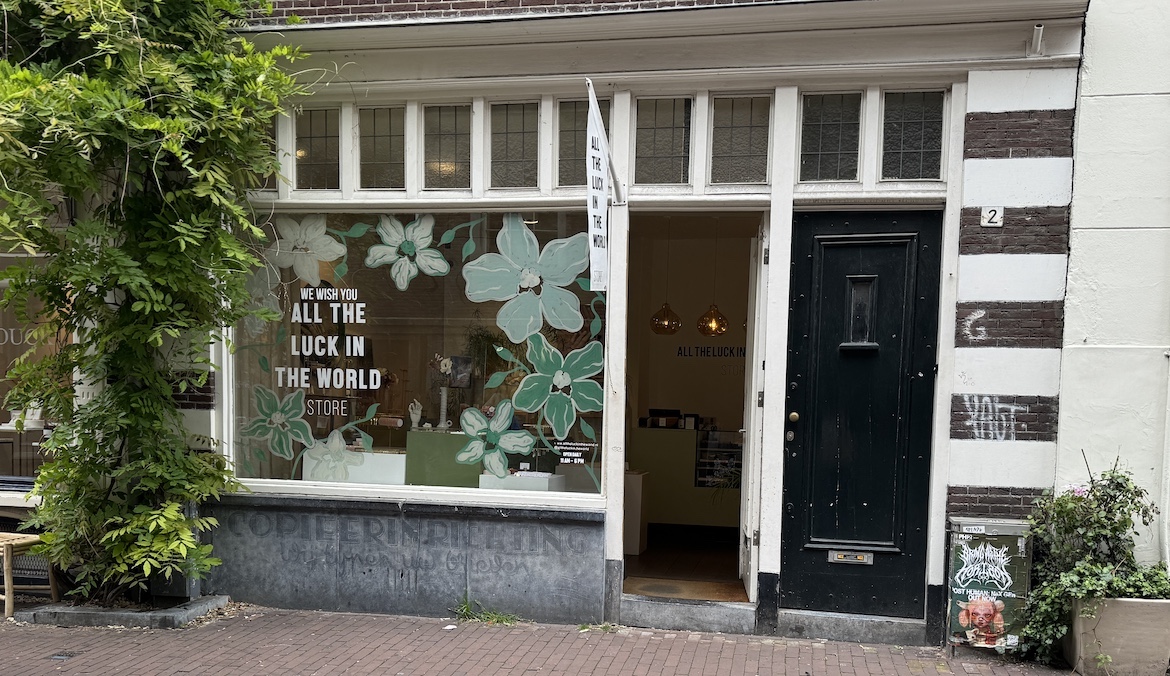
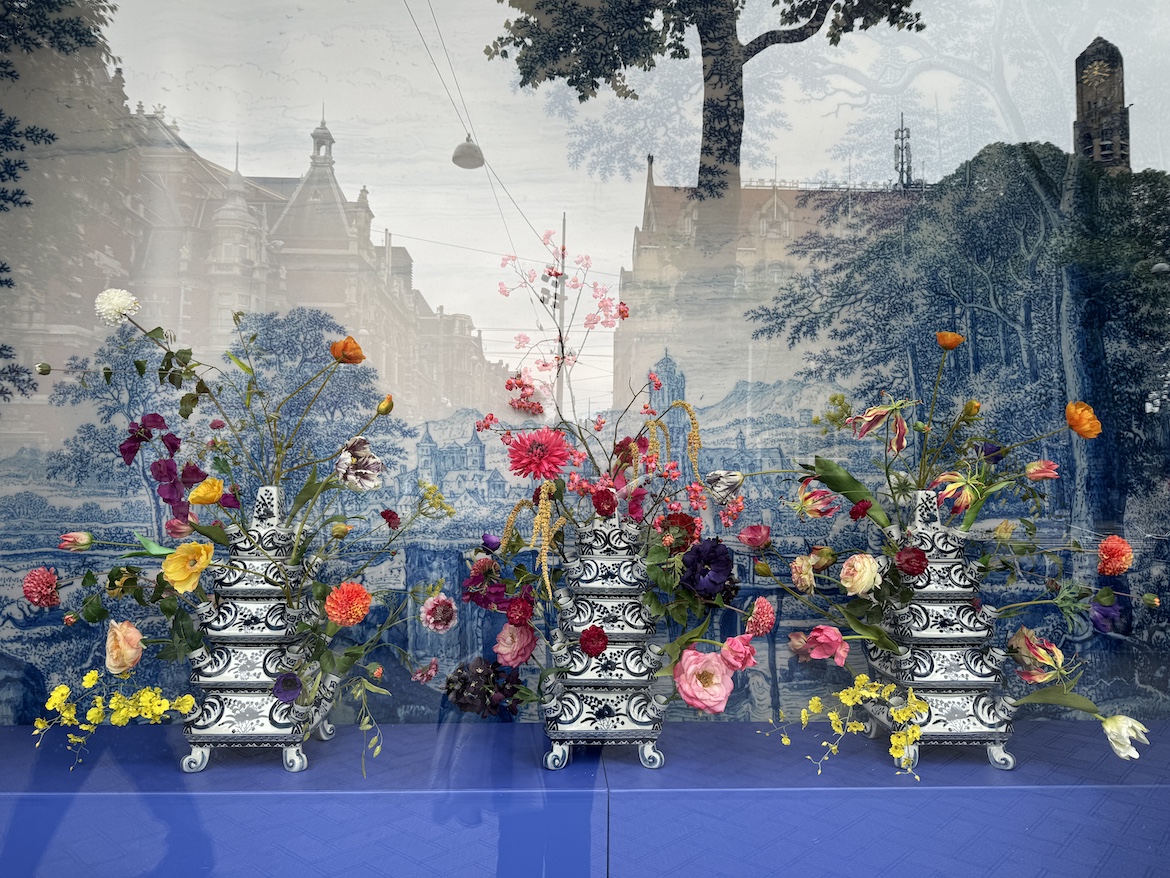
A storefront display advertising the Rijksmuseum, with floral imagery that felt like a nod to Dutch painting. I love that the Amsterdam buildings reflected in the glass, almost becoming part of the composition itself. I stood there admiring it for quite a while. So stunning!
* Subscribe to my Links & Lovelies newsletter here.
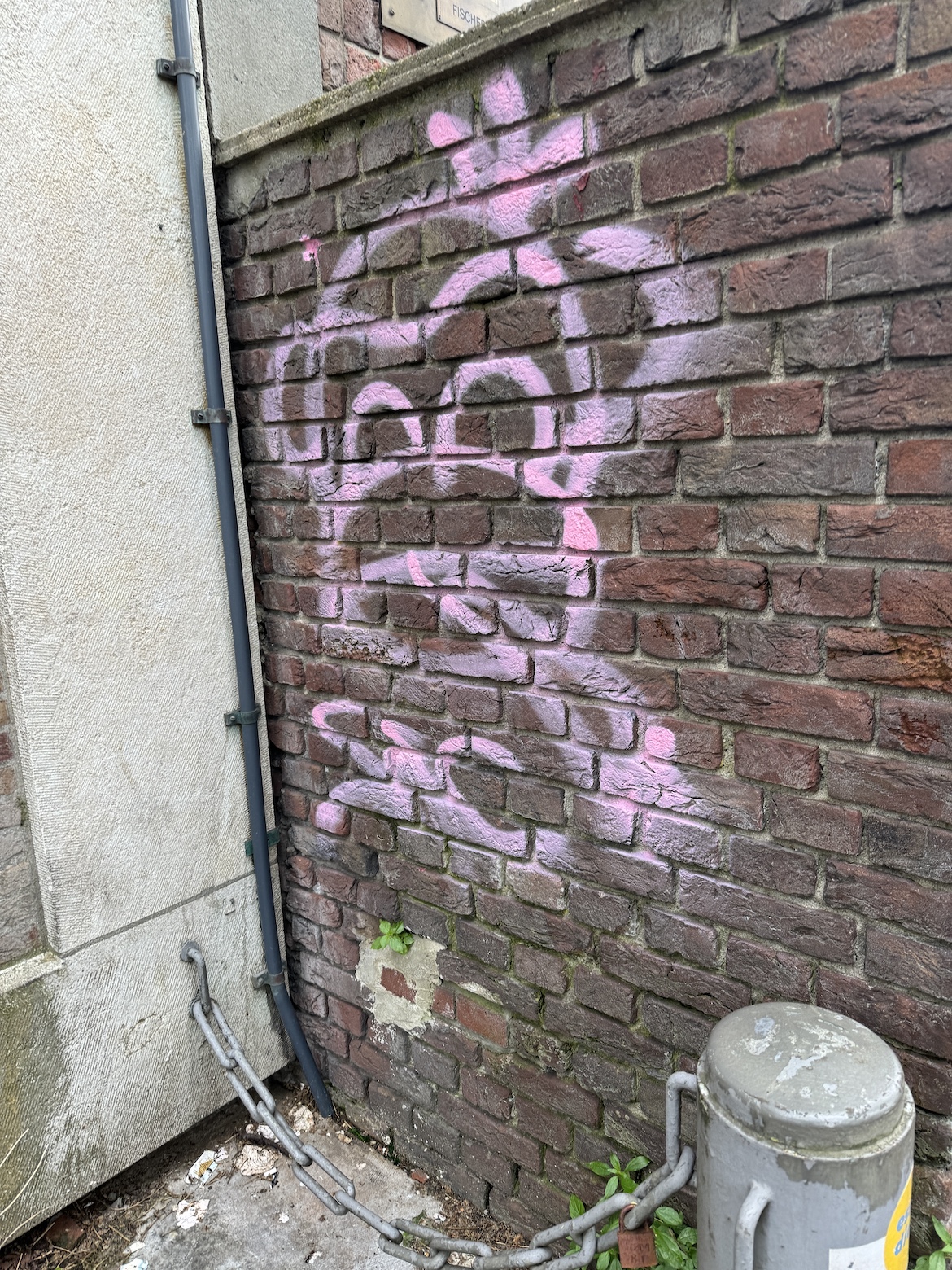
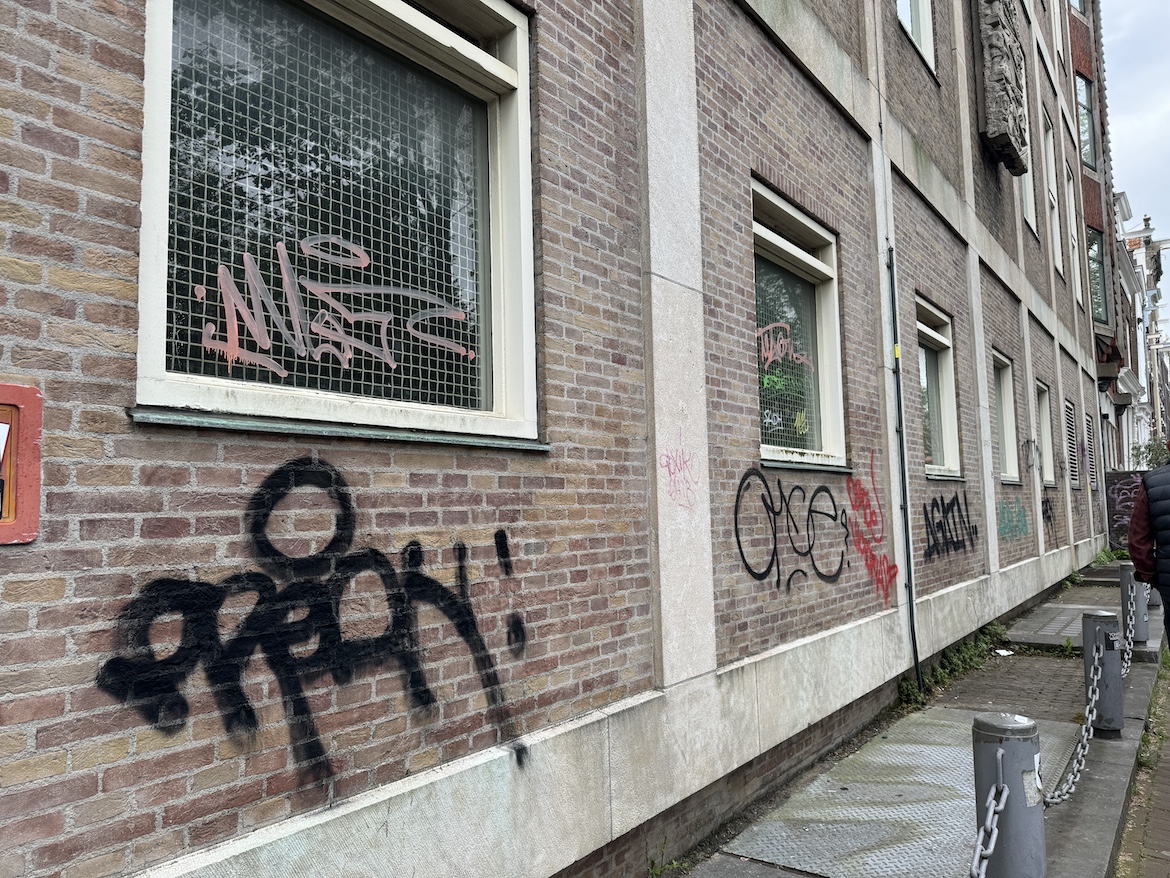
Graffiti
Graffiti is complicated.
On one hand, it’s defacing public space. On the other, it’s expression—art.
It is part of the visual story of a city, whether we agree with it or not.
I’m drawn to it. I can hardly explain why. There’s something gritty and raw about it; something unfiltered.
And in a city layered with history, the contrast feels honest. It’s a melding of past and present; proof that no matter the era, no matter the class, life isn’t perfect and there is always something to say.
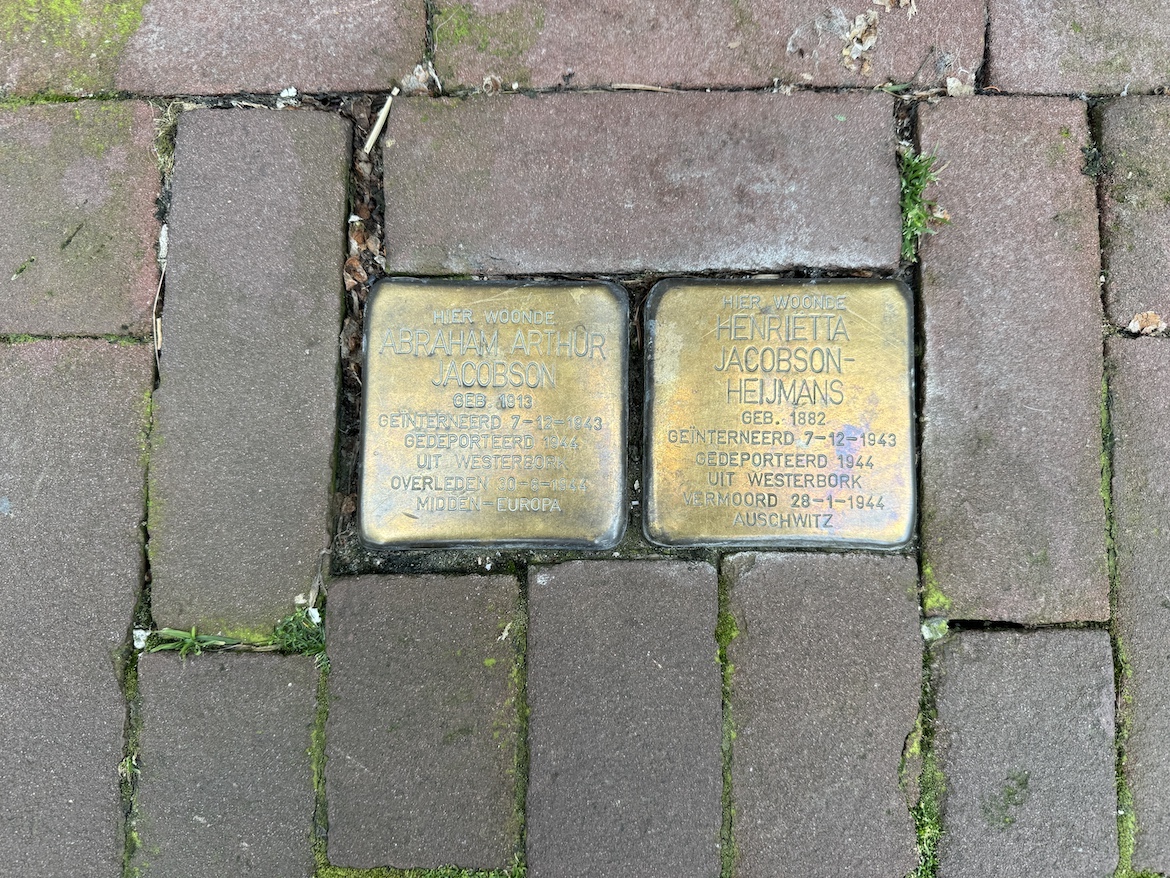
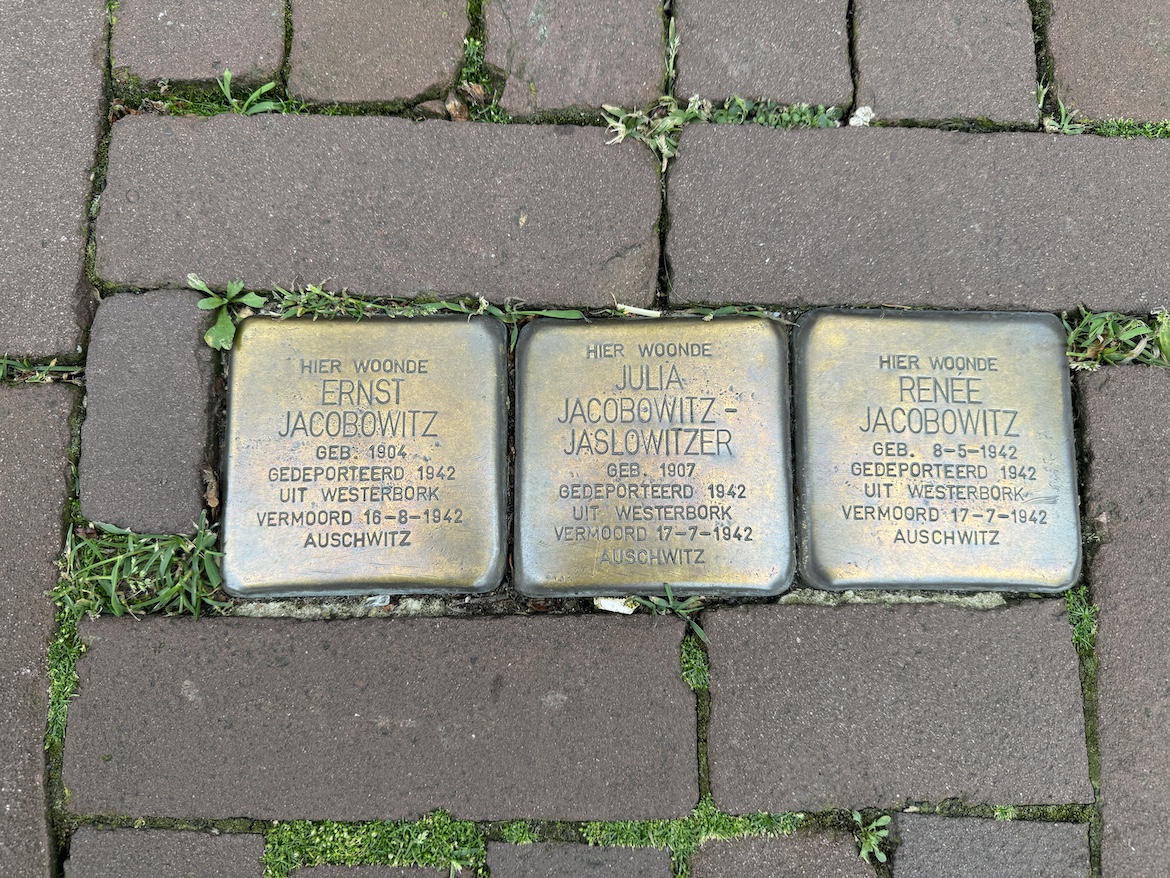
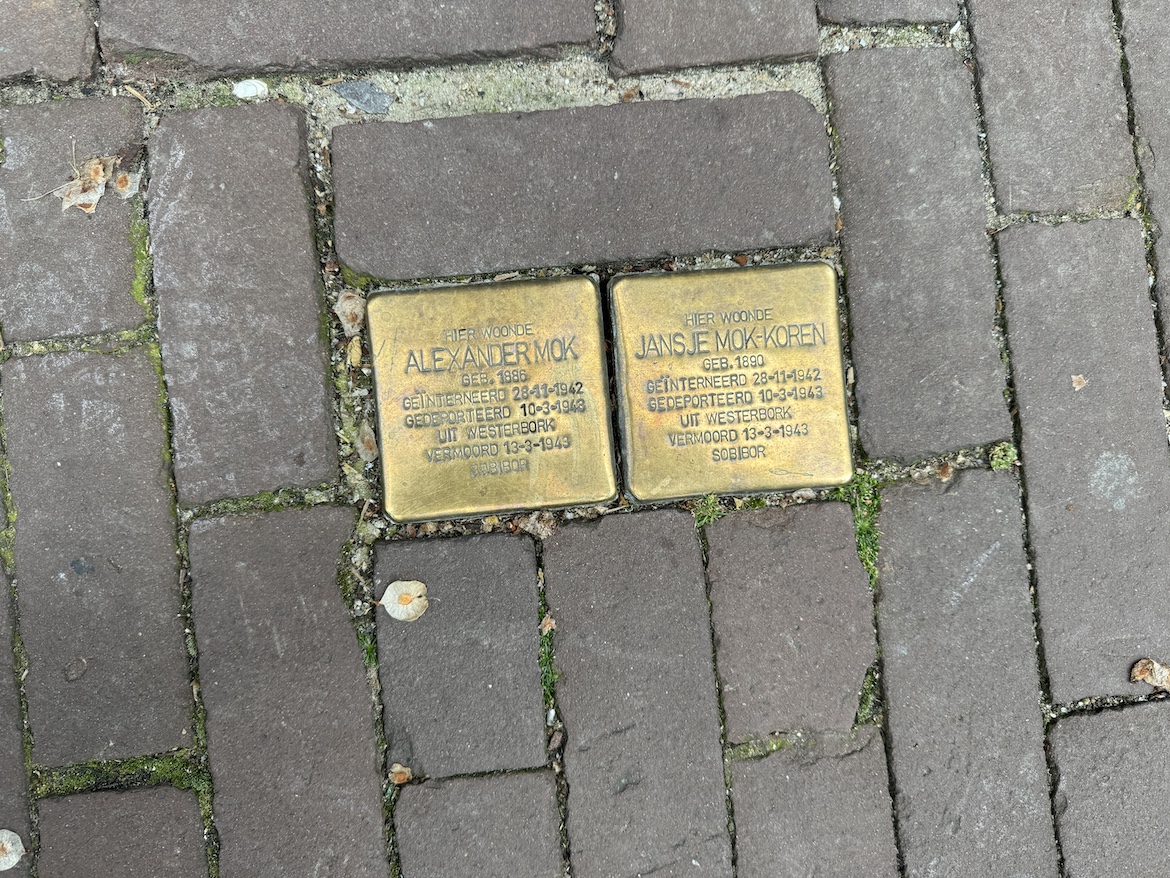
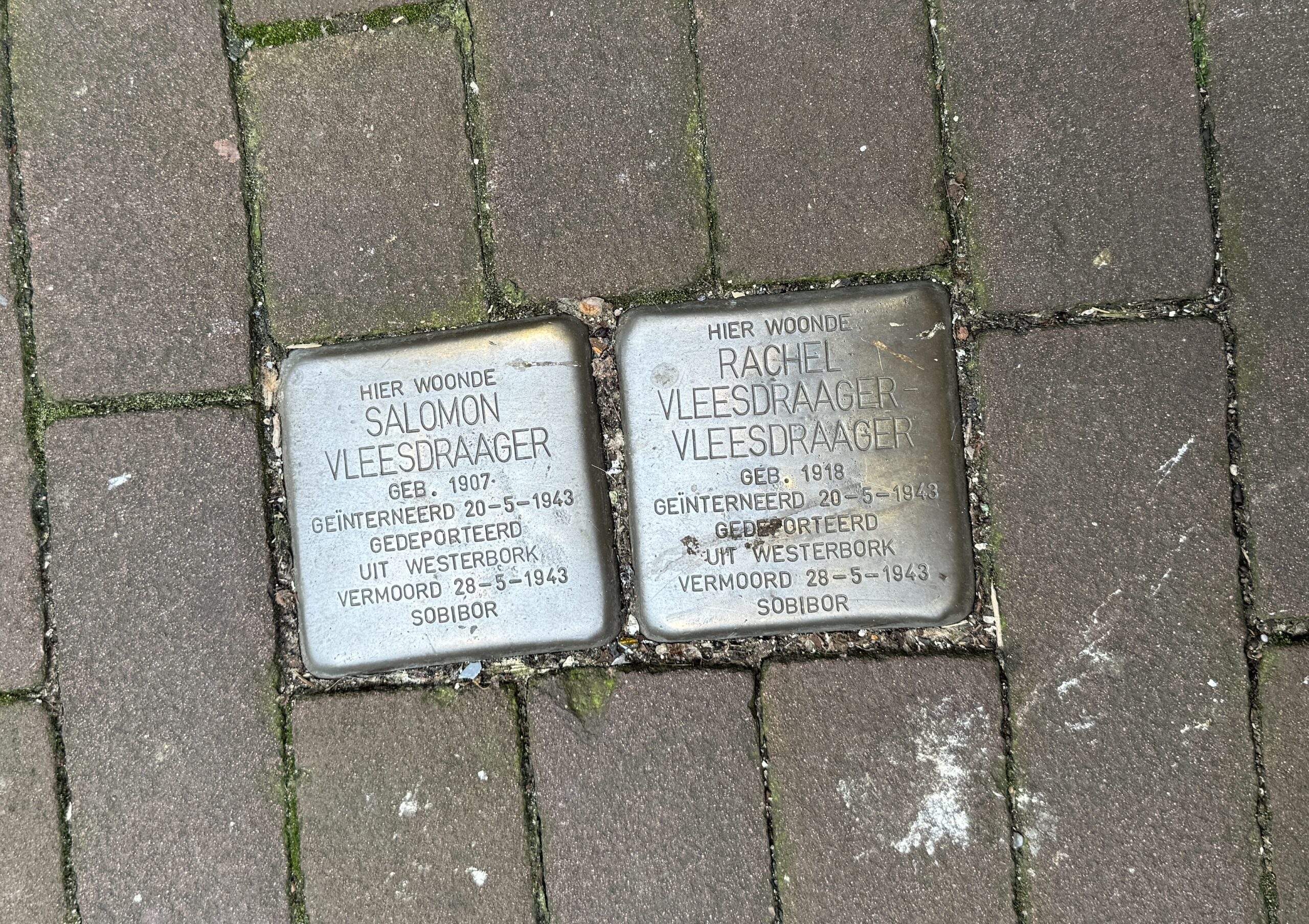
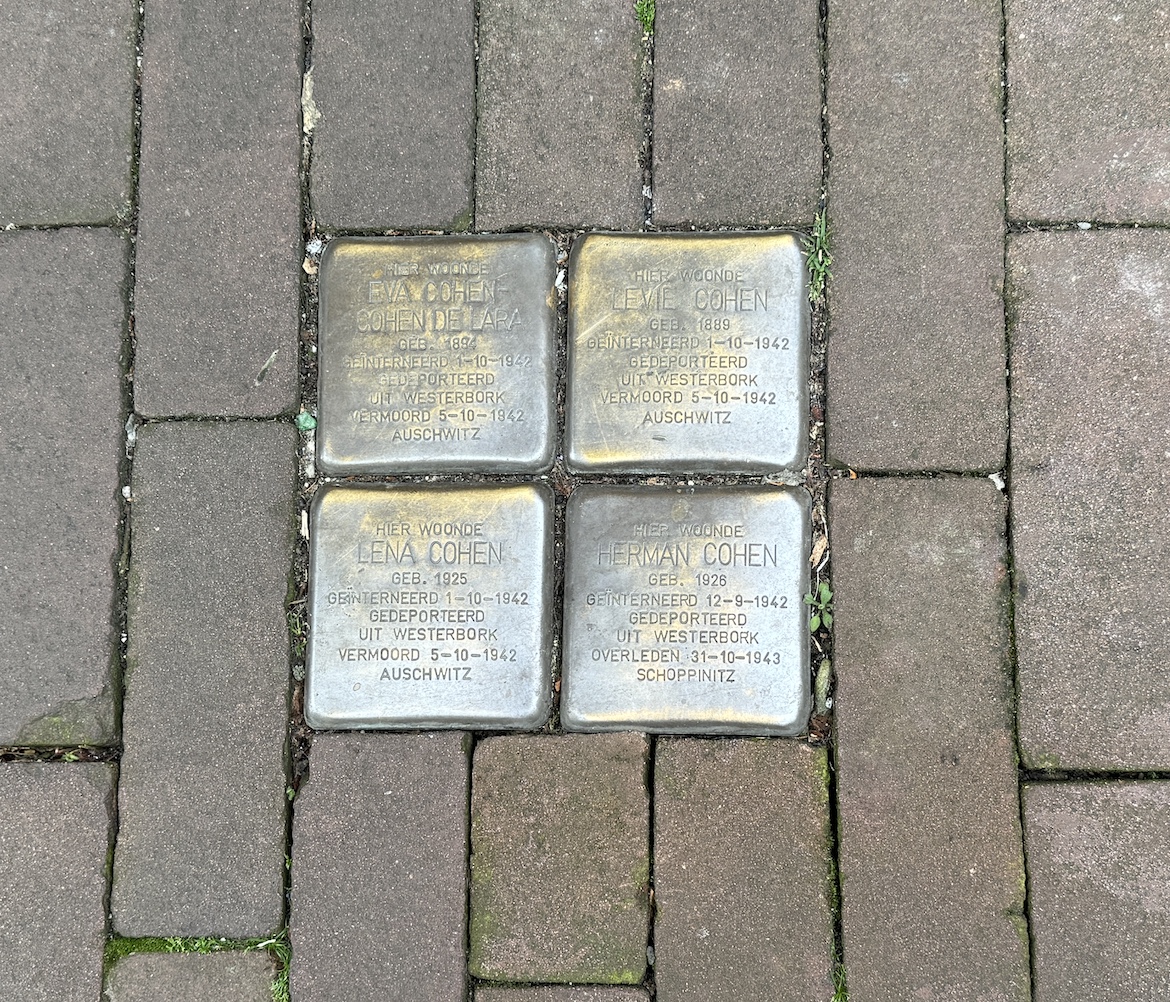
Stolpersteine (Stumbling Stones)
And then, more stumbling stones.
I always stop when I see them.
If you don’t know about Stolpersteines yet, check out my previous posts What the Holocaust Taught Me About Human Nature, Day 12: Castles in the Mist | Sailing the Rhine & Koblenz, and Day 13 — Cologne, Germany: A City of Locks & Fragrance.They are just too important. Each one carries a name, a life. I feel a responsibility to photograph them, to share them, to keep those names moving forward in whatever way I can.
There are some places that don’t allow them. Some people wish to forget the atrocities of the war, of the Holocaust, and move on.
But they are of equal value to other historical elements, just as important as architecture, or canals, or food, or cobblestones, or churches…
History is history.
Glorious or grotesque.
I can’t imagine a more proper or respectful way to honor those who were stolen, lest we grow immune to their tragedies and commit the same atrocities on others.
If you haven’t yet, click into a photo to explore the full gallery—it changes the experience.
Story Tiles
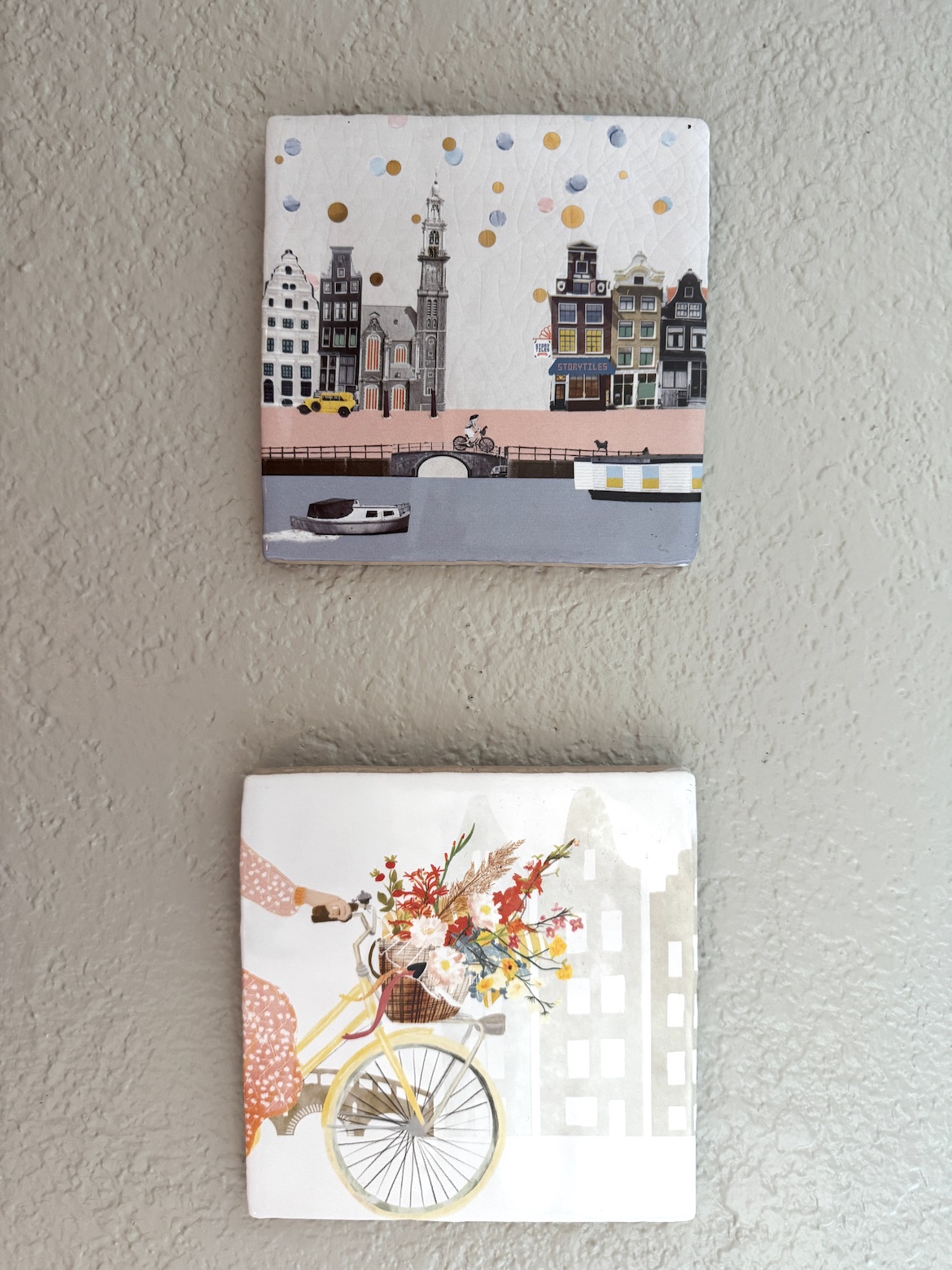
One little discovery I loved in Amsterdam was StoryTiles, handmade ceramic art tiles created by Dutch designer Marga van Oers’ . They riff on traditional Delftware, but with wit, whimsy, and often a surreal twist.
They often begin with classic Dutch imagery—canal houses, windmills, tulips, bicycles, ships at sea, birds, pastoral scenes—and then slip into little visual stories: lovers on rooftops, a woman reading in a tree, a whale floating above the city, a cyclist pedaling through clouds. That’s why they’re called StoryTiles. Each one tells a story.
But the beauty is…you get to make up the story.
I chose one of a little dark-haired girl riding a bicycle across a canal bridge, with a dog tucked in her basket. I couldn’t help but think of Anne Frank. If Anne Frank had been allowed the ordinary freedoms of childhood, I imagine her pedaling over bridges like this, along the canals, as carefree as any Amsterdam girl. That is what this little tile came to mean to me. I find it sad, but also hopeful. In this scene, I see Amsterdam as it is now. And how it should be.
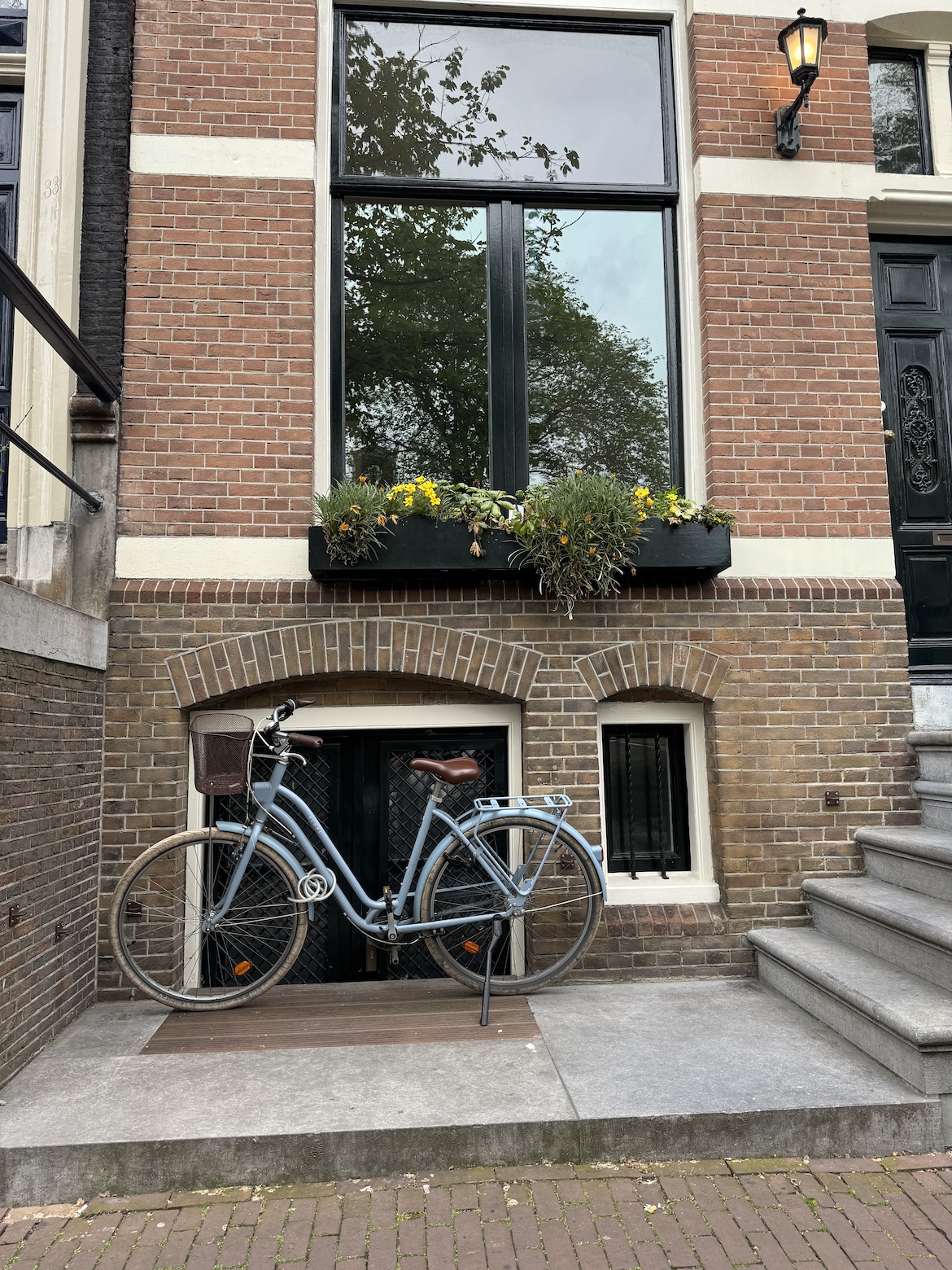
The second felt iconic Amsterdam: canal houses, a classic Dutch city bike—an omafiets (“grandma bike”)—and a basket spilling over with flowers. I later learned those upright Dutch bicycles became beloved because they are both romantic and practical: graceful to look at, but designed for ordinary life, with stable frames, easy step-through mounts, baskets, and an unhurried posture suited to city streets. That feels very Amsterdam to me—beauty woven into usefulness. Honestly, I think I’m in love with them.
About StoryTiles
They come in several sizes, and I chose the 4 x 4 inch version, which is the iconic format.
People use them in a variety of ways. They can be hung as miniature art, grouped salon-style into a story wall, displayed on a stand or picture ledge, framed, or even incorporated into backsplashes and fireplaces because they’re fired ceramic. They easily move between art object and architecture.
What especially charmed me was learning they continue a much older Dutch storytelling tradition. Historic Delft tiles often depicted ships, animals, children at play, and domestic scenes. These feel like a contemporary continuation of that spirit. Old, yet new.
And many of the Amsterdam-themed tiles—canal houses, bicycles, tulips, harbor scenes—felt like tiny distilled versions of the city itself.
They aren’t just souvenirs to me. They’re little narratives you can bring home.
And, how could I not love something that combines story and art anyway?
I can’t wait to buy more from this store. I will when I return for my 42 Days: A Viking Passage & Beyond trip.
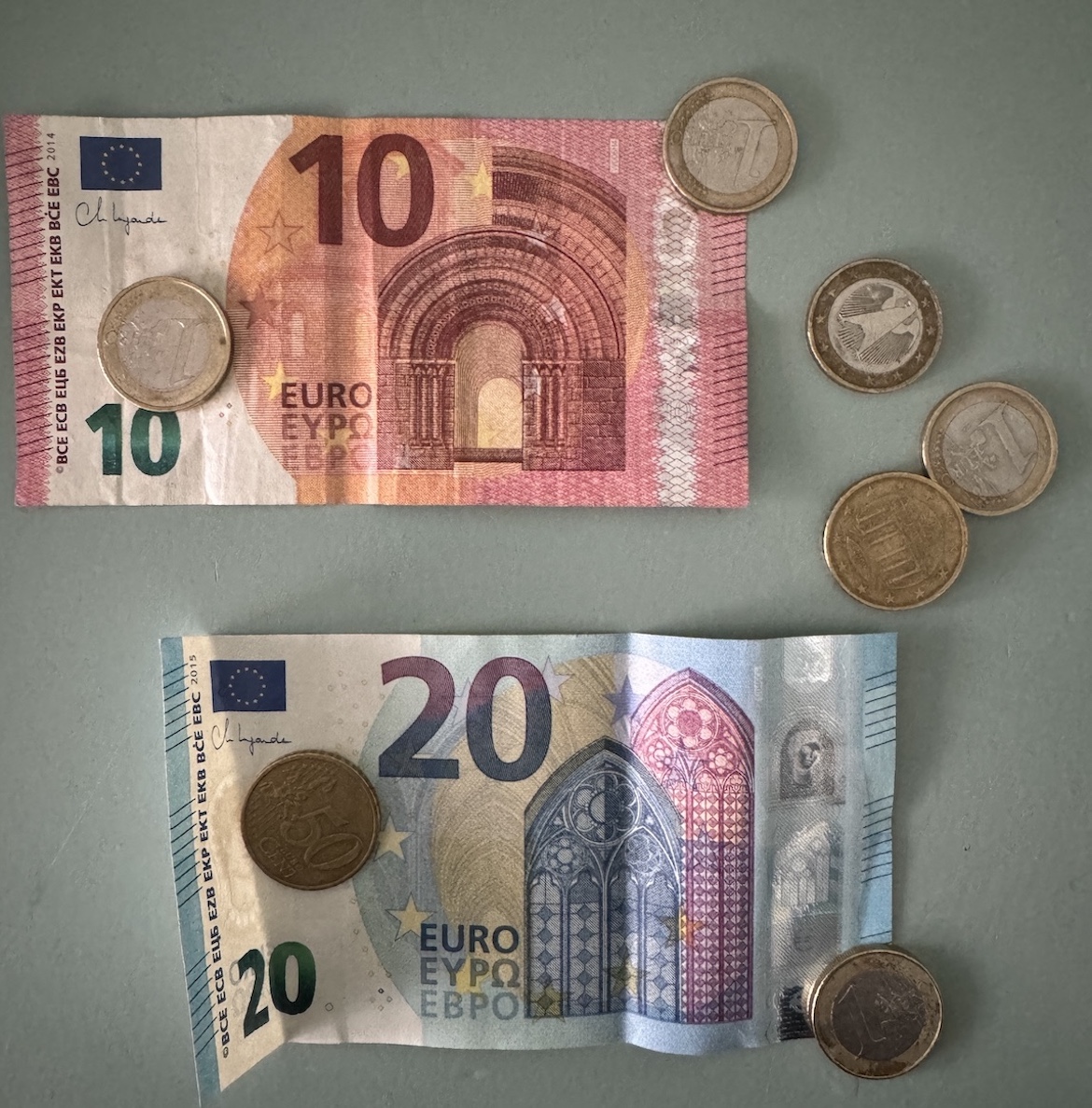
Money
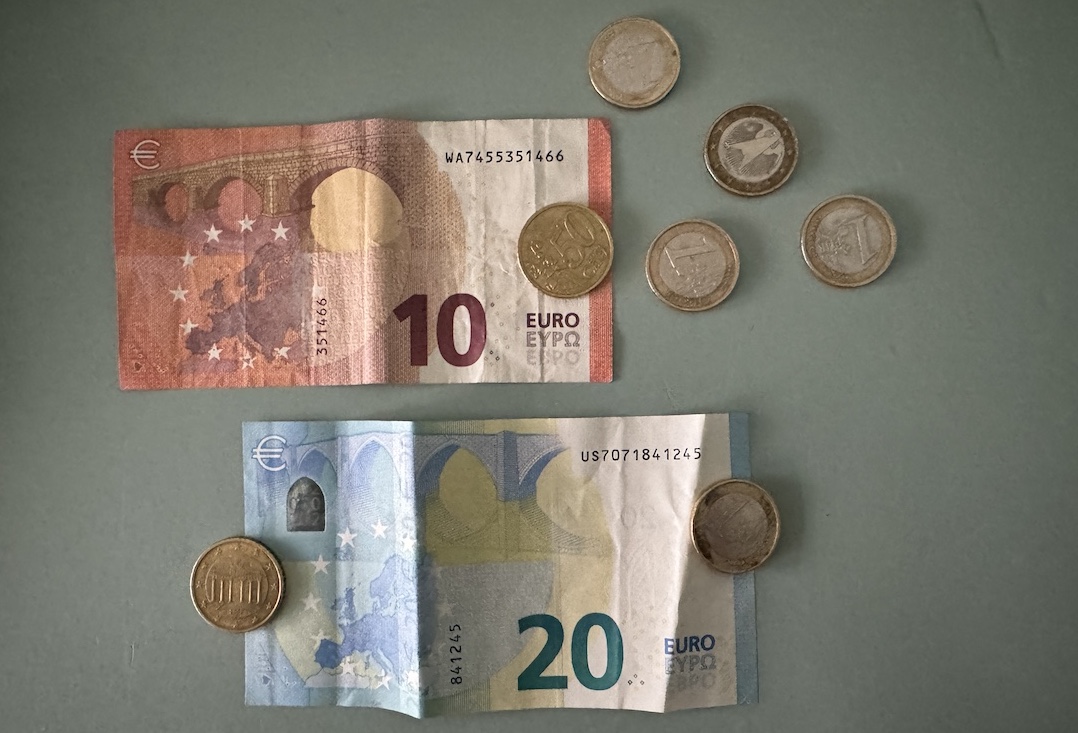
Oh, I’m such a tourist taking pictures of currency.
I don’t care. They are art.
Again… it’s the little things that all make up a big thing.

And finally, a few seconds of canal water in motion—looped so it lingers. I couldn’t resist adding a bit of music to carry it along.
Sometimes a place is best remembered not in grand scenes, but in its sounds and small movements.

That’s a wrap for Day 17 of our 33 Days in Europe series.
Missed a day or just joining in? The full 33 Days in Europe series is right here.
Next Up – Day 18 of my 33 Days of Europe series:
- Anne Frank House: The Day That Quieted Us
Gear I Recommend
See all my travel gear and essentials here: Things I Love & Recommend
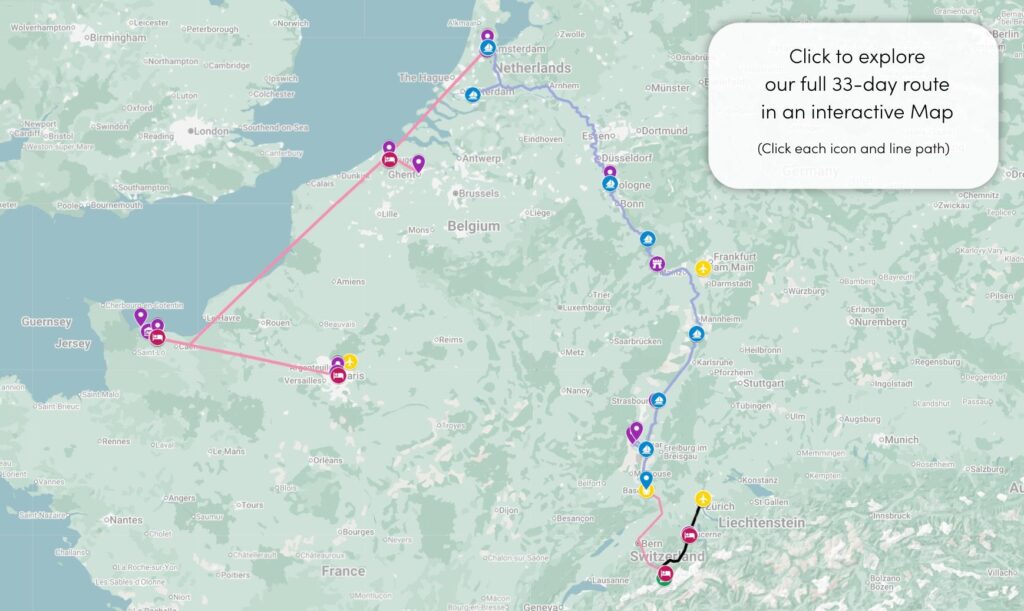
Detailed Map of the Entire Journey
Below is a visual summary of our full 33-day route—hotels, attractions, Viking cruise path and stops, as well as transit modes and paths—hiking, train, plane, gondola.
Click to explore the interactive version and wander through the journey pin by pin.
In case you missed these…
Day 15 – First Day in Amsterdam: Canals, Cappuccinos, & Laundry