
A good traveler has no fixed plans and is not intent on arriving.
This post is part of my 33 Days in Europe series. Visit the hub page to follow along, see the full itinerary, and sign up for email updates.
Day 14 of our 33 Days in Europe was supposed to be a day of windmills — tall wooden giants turning slowly above canals and wide green fields.
Instead, I spent the day in our cabin.
I woke up coughing and feeling feverish. At first I tried to push through it. Travel days are precious, and this was our final day aboard the Viking longship. I even attempted to get ready for the morning excursion.
But somewhere between standing at the mirror and attempting to put on a little makeup, it became obvious that something wasn’t right. I felt hot, dizzy, and utterly exhausted.
More than anything, I worried about everyone else on the ship.
Traveling in a group means buses, narrow walkways, shared air — and the last thing I wanted was to pass along whatever was brewing in my system.
So I stayed in the room.
Ron, however, went to see the windmills.
I insisted.
There was no reason for both of us to miss the excursion, and Viking’s cabins are very comfortable places to rest. While he headed out into the Dutch countryside, I stayed tucked inside with tea, tissues, the television, and the comfort of the cabin.
More Than Machines
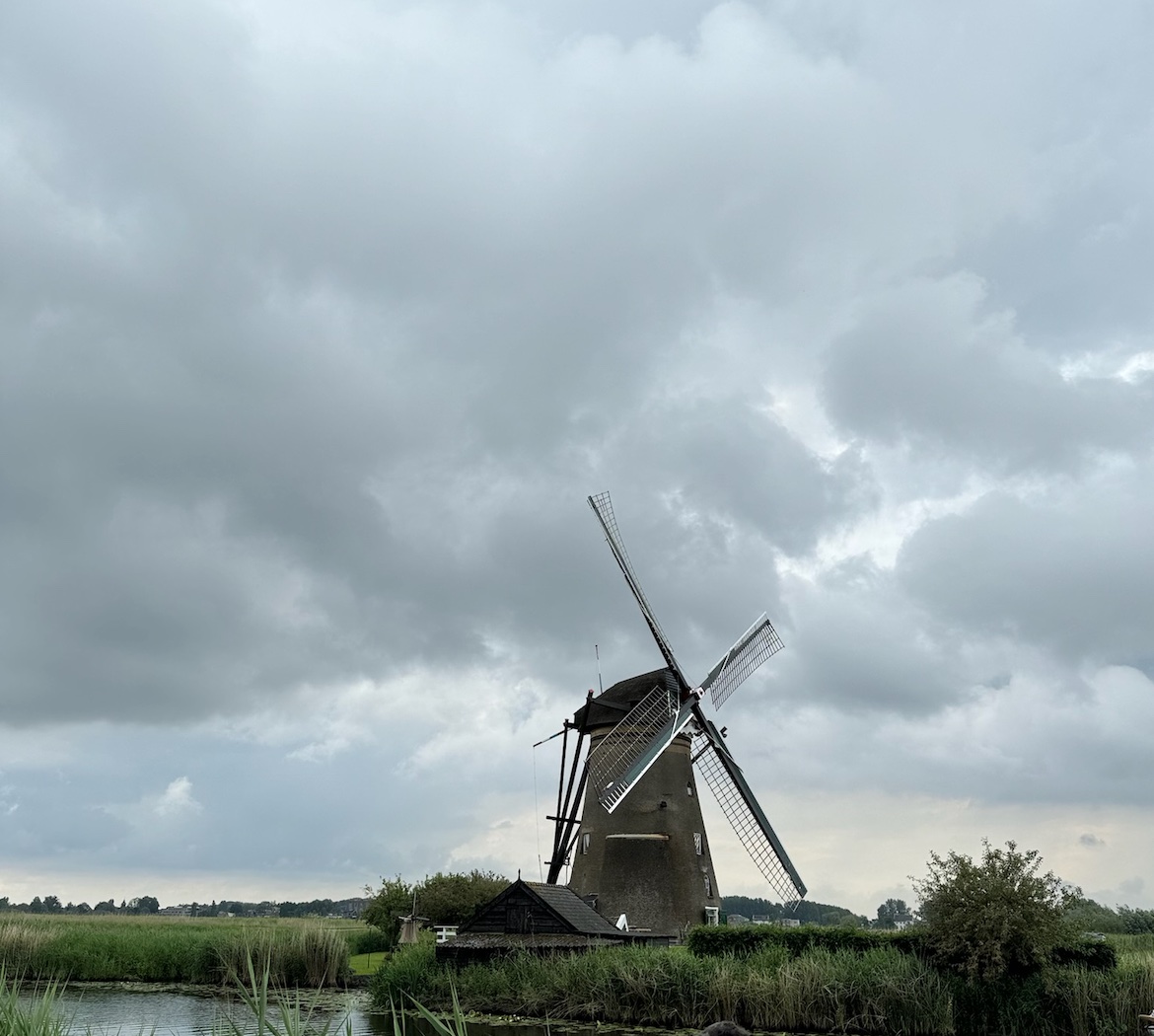
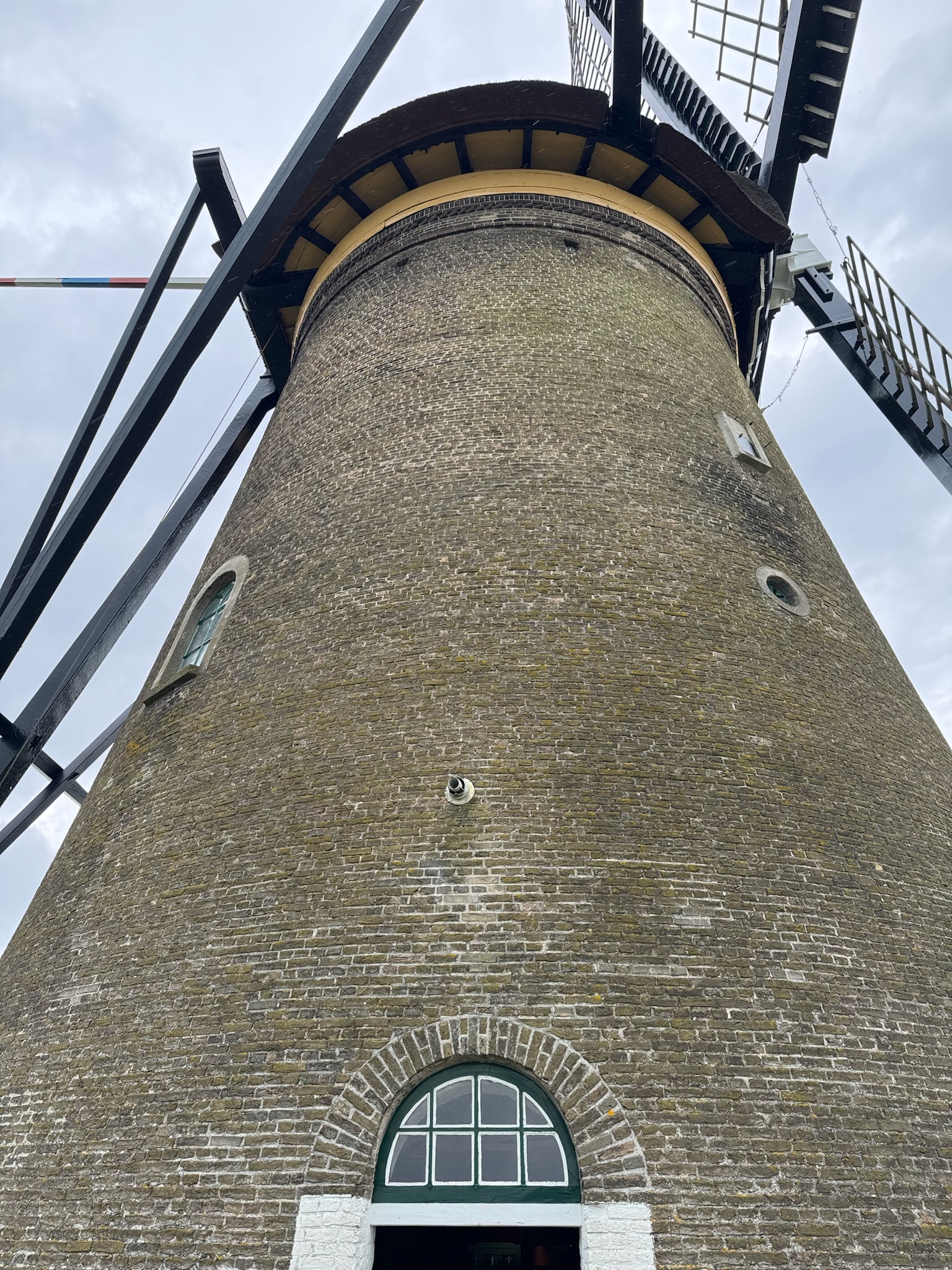
While I stayed in the cabin, he headed out to visit the famous windmills at Kinderdijk — one of the Netherlands’ most recognizable landscapes. The windmills there were built in the 1700s, and today 19 of them still stand together, forming one of the most remarkable historic water-management systems in the world.
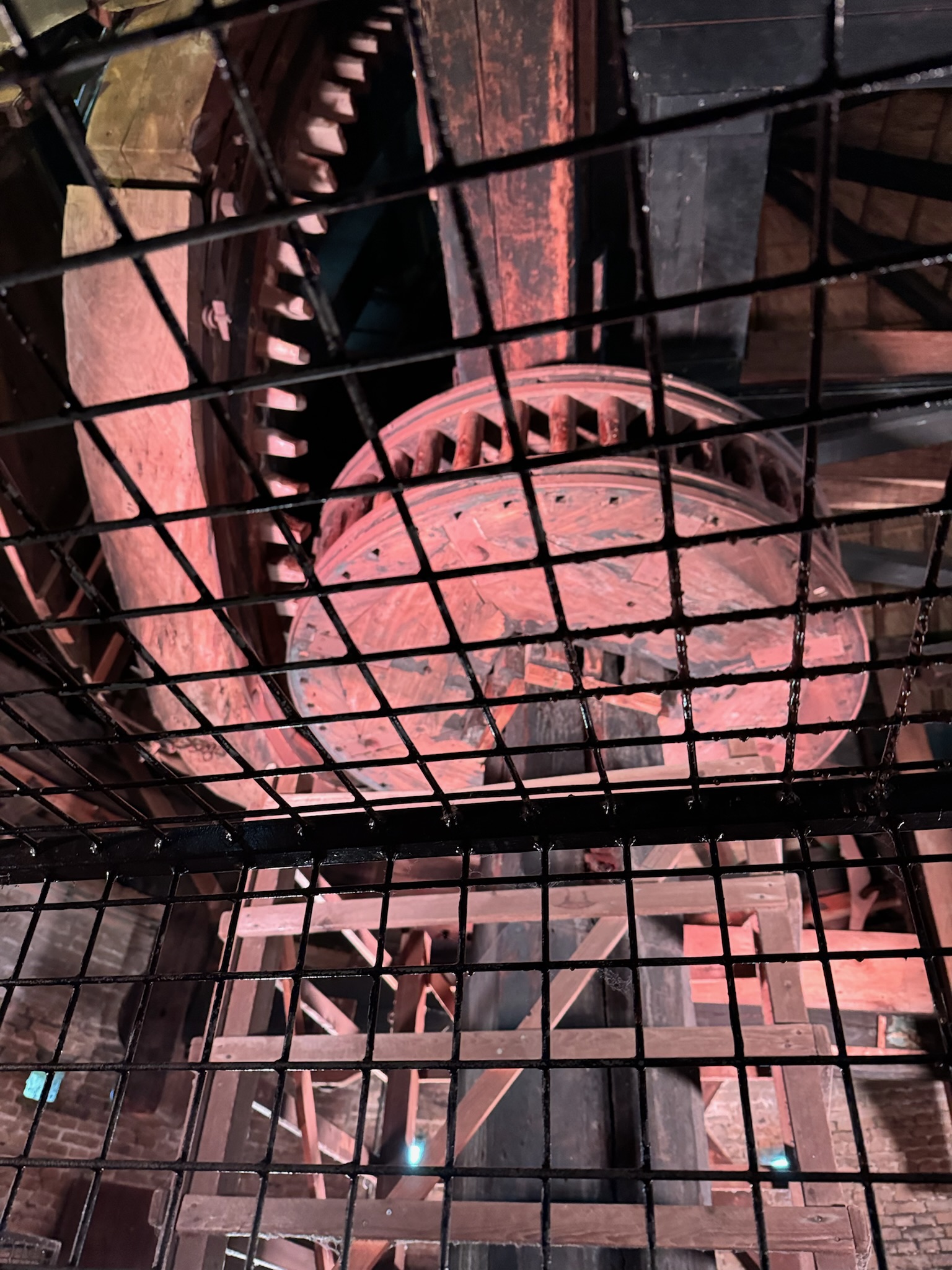
Much of the Netherlands sits at or even below sea level, and for centuries the Dutch have relied on engineering to keep their country dry. These windmills were not decorative landmarks. They were working machines designed to pump excess water from low-lying polders into canals and rivers. By lifting water step by step through a coordinated system of mills and waterways, they helped protect farms, towns, and roads from flooding.
The Kinderdijk windmills were built around 1740, and the entire site is now protected as a UNESCO World Heritage landscape, a reminder of how Dutch engineering has shaped the country for centuries.
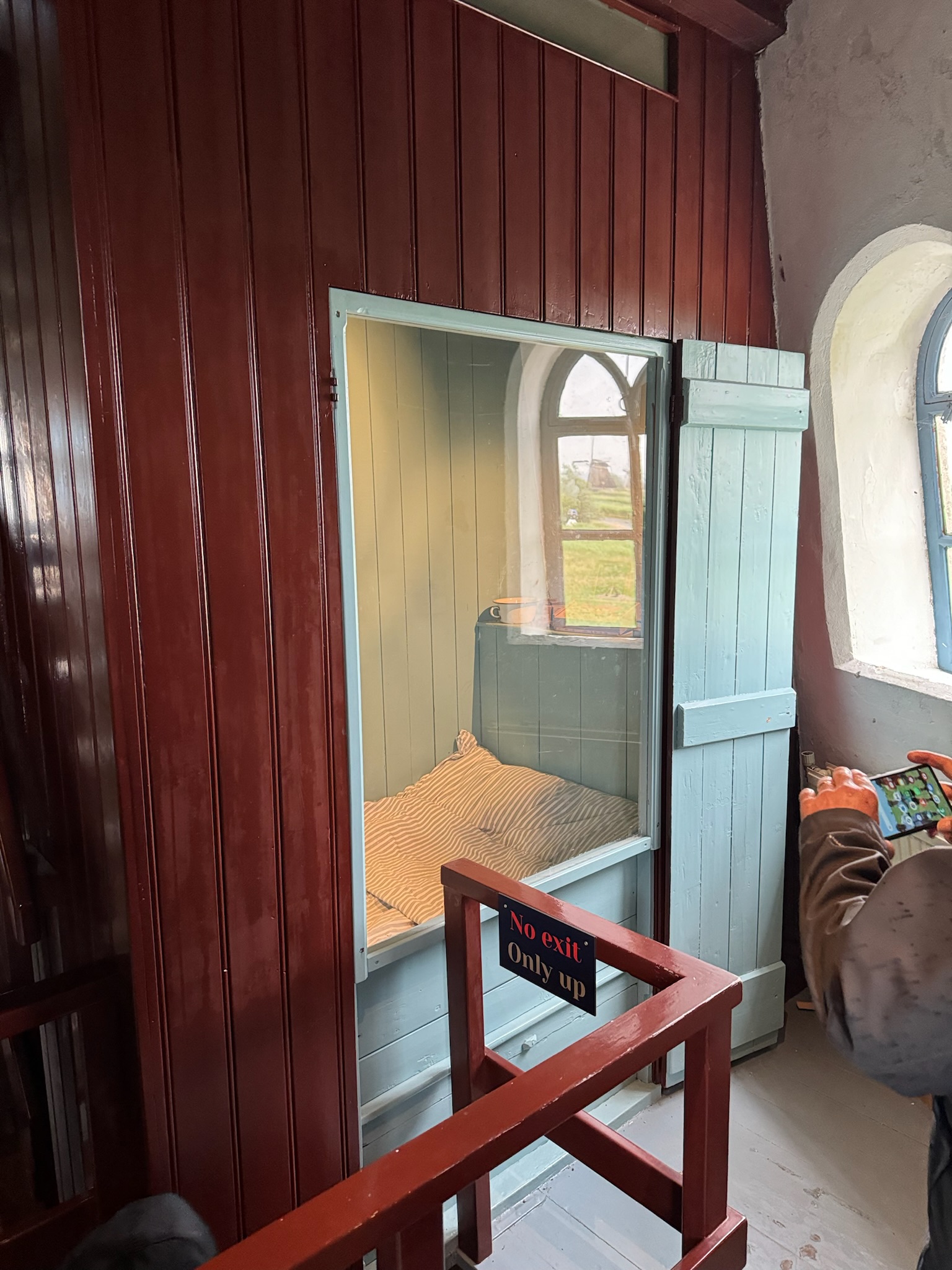
What surprised Ron most was discovering that these windmills weren’t just machines — they were homes.
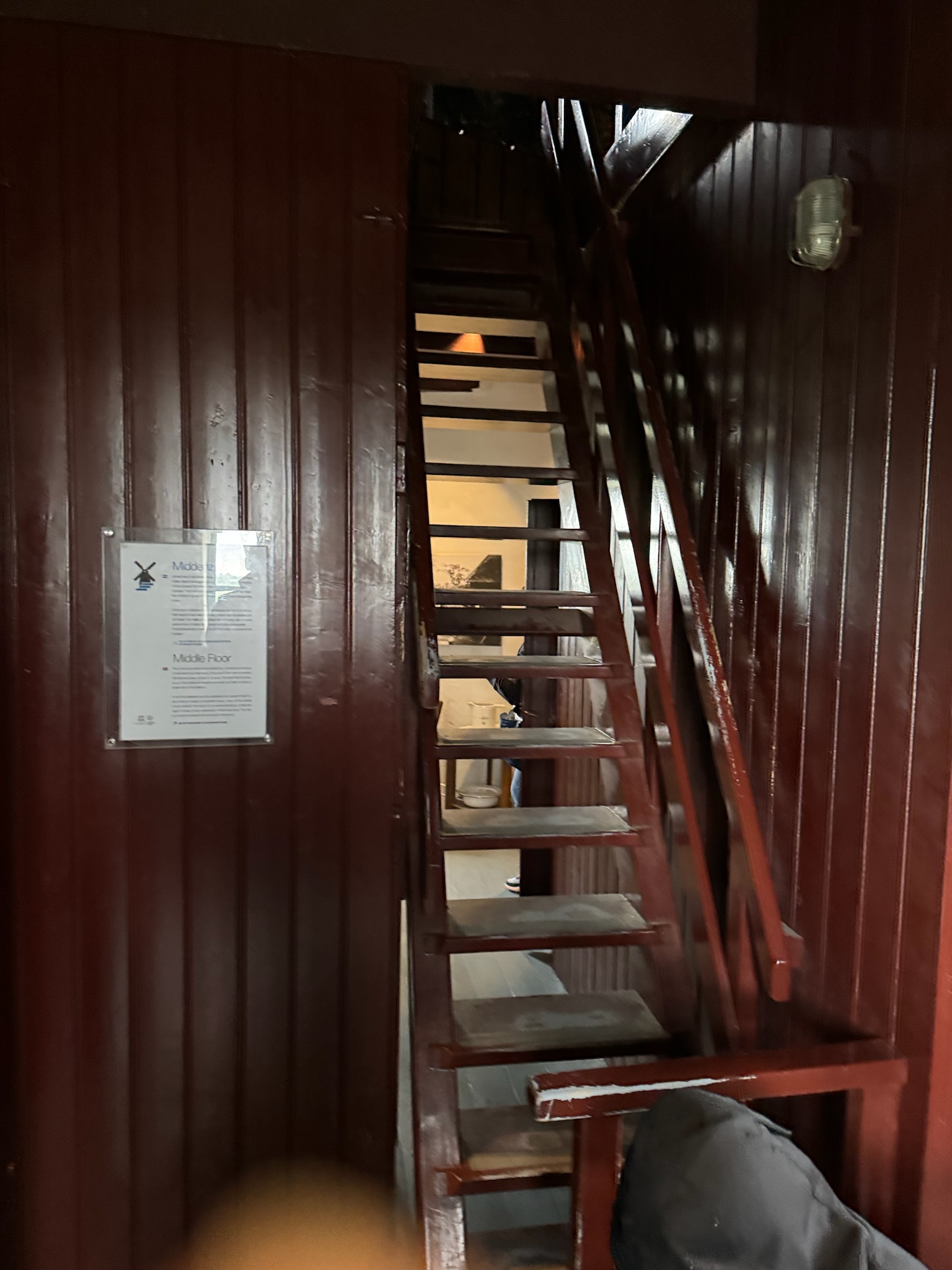
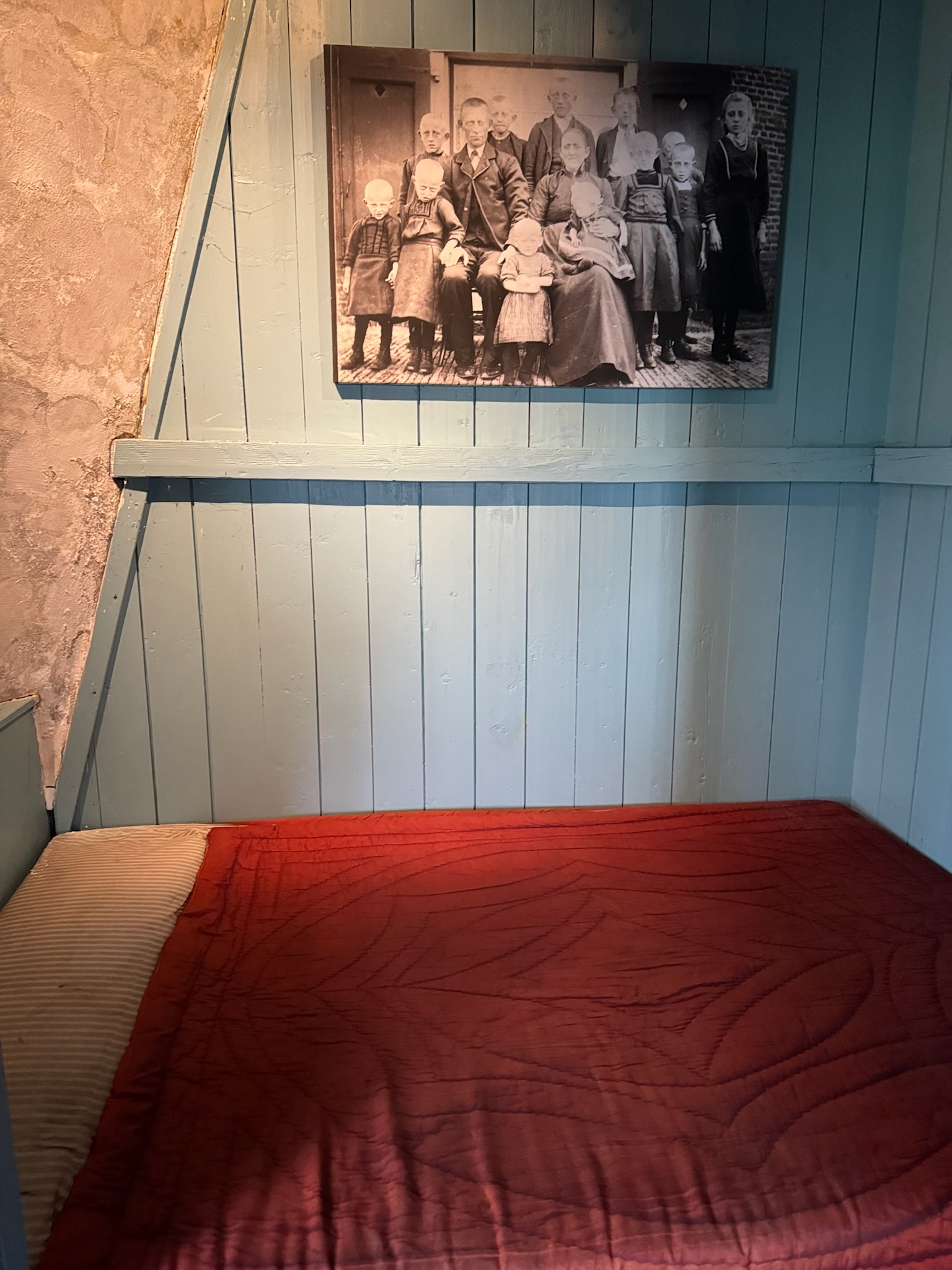
Each windmill once had a miller responsible for operating the machinery and monitoring water levels. That person lived inside the structure with their family. The interior spaces were compact and practical, with steep staircases connecting the levels and small living quarters tucked beneath the massive turning gears.
Even today, some of the windmills at Kinderdijk are still inhabited by volunteer millers and caretakers who help preserve the historic system. Standing inside, Ron realized that generations of families had lived their daily lives in these towers — cooking, sleeping, and raising children — while also tending the wind-powered machinery that helped keep the surrounding land dry.
Ron tells it this way:
“As an engineer, I loved seeing how practical they are. You grow up seeing pictures of Dutch windmills, but standing there among them is something completely different. They’re not just beautiful — they’re part of a system that literally made the country possible.
Each mill helped move water from one level to another until it could drain into the river. It’s a simple idea, but the way they built it and coordinated everything centuries ago is brilliant engineering.
And the landscape around them is exactly what you imagine the Netherlands to look like — wide green fields, canals everywhere, and these tall windmills turning slowly in the wind. I’m really glad Deb insisted I go and I’m sorry she didn’t get to see them.”
Every so often Ron returned to check on me, bringing food and a few photos from the morning’s tour. One image in particular captured the scene perfectly — windmills rising above the flat landscape of the Netherlands, exactly the view we had expected to share together.
Click (or tap) any photo to open the gallery, see the full image, captions, and scroll through the set.
Travel Doesn’t Always Unfold the Way You Imagine
Ron and I retired in January 2018 with plans to travel more. A few years into retirement, we were sitting on our boat fishing in the river and wondering where we might go next. I mentioned that I had always wanted to see the Anne Frank House in Amsterdam, and before long we were sketching out the beginnings of a European trip.
The next day I started planning our itinerary. That same day, Ron read an article about a strange new virus emerging in China. At the time, no one else was talking about canceling travel. There were no advisories, no warnings, no sense that the world was about to change.
But Ron had spent his career working in hospitals, and he didn’t brush it aside. He had a feeling this one was different — that it wouldn’t stay contained for long.
His advice was simple: let’s wait.
And I trusted his judgment.
At the time, it sounded overly cautious. But of course we all know what happened next. The world shut down, borders closed, and travel stopped everywhere.
By the time we finally made it to Europe, it was 2024.
And then, on the last day of our cruise in the Netherlands…
I woke up coughing in our cabin.
The irony was hard to ignore.
At the time, I didn’t know exactly what was going on with me. I only knew that something had knocked me off my feet, and I attributed it to being tired from so much activity. But the safest thing I could do was stay put.
The Viking ship made that easy. The room was comfortable, and Ron kept me well supplied with snacks and food and updates from the outside world.
Still, I wondered what exactly had hit me.
I would find out soon enough.
Our next stop — Amsterdam.
That’s a wrap for Day 14 of our 33 Days in Europe series.
Missed a day or just joining in? The full 33 Days in Europe series is right here.
Next Up – Day 15 of my 33 Days of Europe series
- Day 15 – Laundry Day in Amsterdam: New City, Clean Start
Gear I Recommend
See all my travel gear and essentials here: Things I Love & Recommend
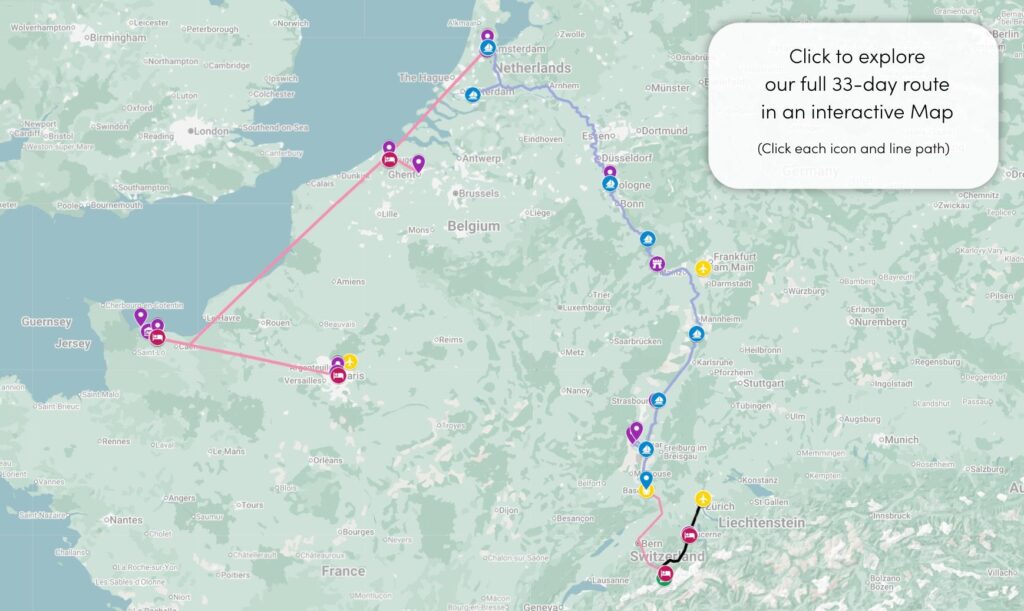
Detailed Map of the Entire Journey
Below is a visual summary of our full 33-day route—hotels, attractions, Viking cruise path and stops, as well as transit modes and paths—hiking, train, plane, gondola.
Click to explore the interactive version and wander through the journey pin by pin.