
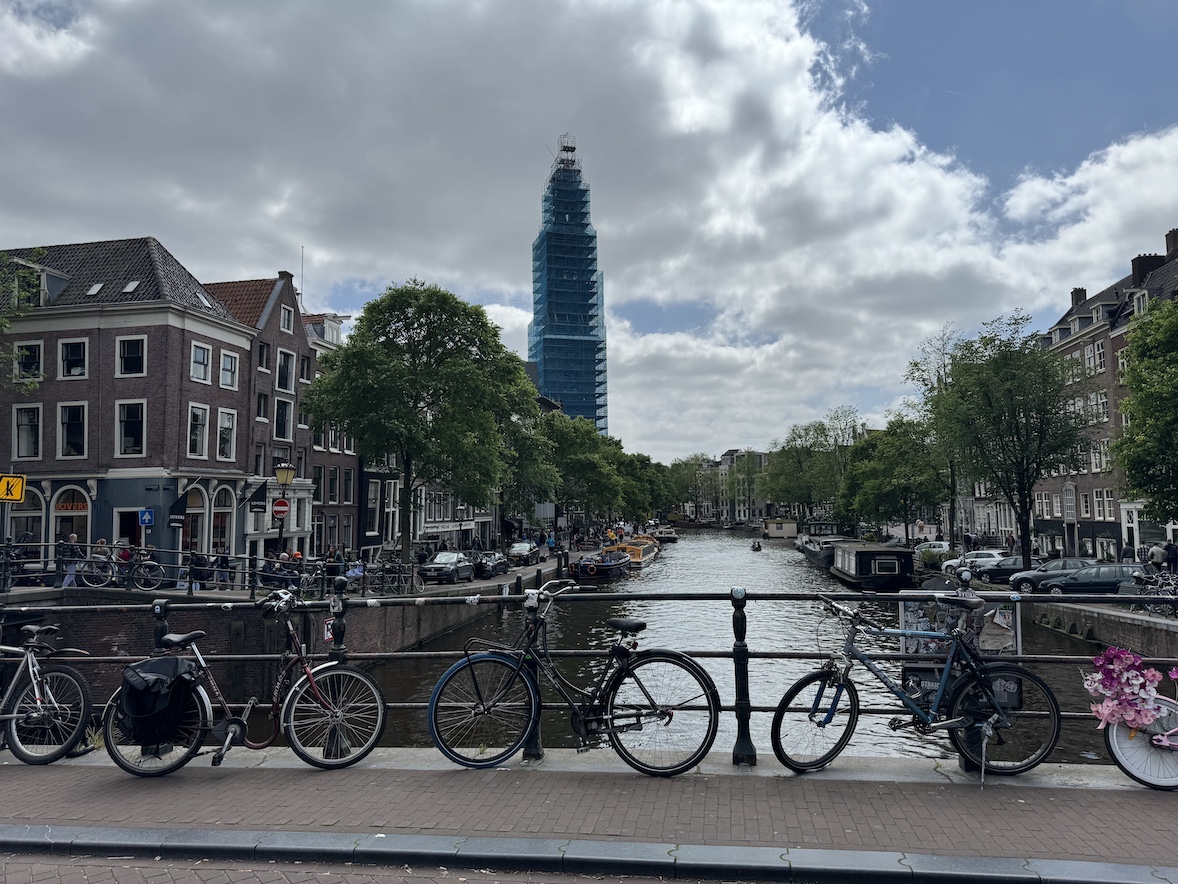

“Wherever you go becomes a part of you somehow.”
This post is part of my 33 Days in Europe series. Visit the hub page to follow along, see the full itinerary, and sign up for email updates.
I didn’t start this day feeling well.
In fact, I felt pretty unwell—coughing, tired—beyond simple cold symptoms. Thankfully, our room wasn’t up on the main floors of the hotel. We were in what I later learned is called a souterrain—a lower-level room just below street level, not quite a basement, but close. The windows sit high, and people walk by almost at eye level.
I booked it to save money, but under the circumstances, it felt like a gift.
I could rest, keep to myself, and not feel like I was disrupting anyone. Our room was isolated from all the others.
Still, I wanted to be responsible.
So I went to the front desk and asked where the nearest pharmacy was. The receptionist asked why—kindly, not suspiciously. In Amsterdam, pharmacies (called apotheek) can be smaller and more specialized than what we’re used to in the U.S., and I think she was trying to guide me to the right place.
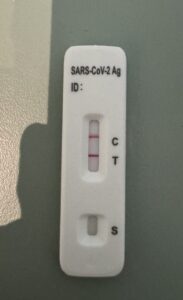
Not exactly the souvenir I had in mind. The line appeared almost instantly.
When I told her I wasn’t feeling well and wanted a COVID test, I hesitated. I wasn’t sure what that might trigger. What were their rules and restrictions? Would I be asked to leave?
But her response surprised me.
“Oh, that’s okay,” she said. “You don’t need to test for that. It’s really not a big deal here.” Then she added, almost casually, “I have a test if you’d like one. It’s a little outdated, but you’re welcome to it.”
I took it back to the room.
Positive. Immediately.
And yet—nothing changed.
There was no alarm, no concern, no disruption. It was treated like a cold. A shrug. A different mindset entirely.
Back in the room, I looked it up myself, just to be sure. Their public health guidance said essentially the same thing—no quarantine, no major restrictions, just use common sense.
So that made me feel much more at ease.
Still, I wore my mask where it made sense. It just felt like the right thing to do.
Taking It Slowly
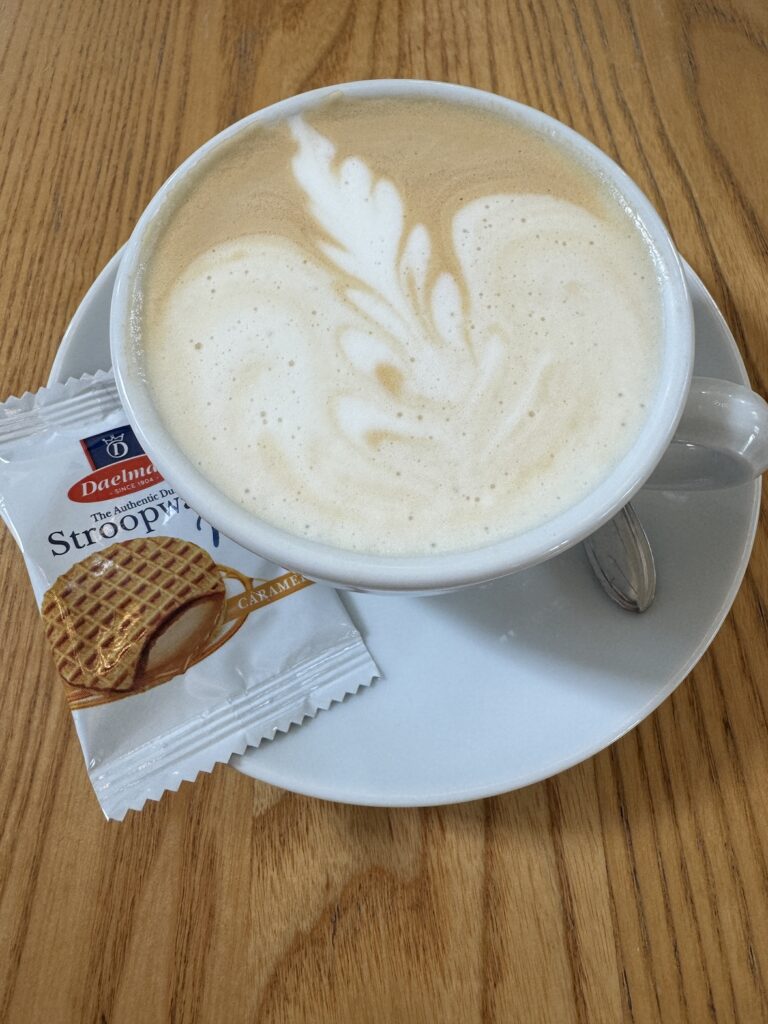
A cappuccino and a stroopwafel—those thin waffle cookies with warm caramel syrup in the middle, beloved across the Netherlands. That alone gives away the location. Can one really have too many cappuccinos? I think not.
We wandered.
That’s really the best word for it.
No agenda, no pressure—just walking the streets of Amsterdam, letting the city unfold in front of us.
And even feeling under the weather, everything around me was so beautiful and interesting that I stopped noticing how I felt. Travel has a way of doing that.
Of course, there was a cappuccino.
Can one really have too many cappuccinos? I think not.
And a stroopwafel—thin waffle cookies with caramel syrup pressed between them, found everywhere in the Netherlands.
Anne Frank House Preview
I was especially eager to see the Anne Frank House. In fact, our entire 33-day trip to Europe was seeded on seeing the house.
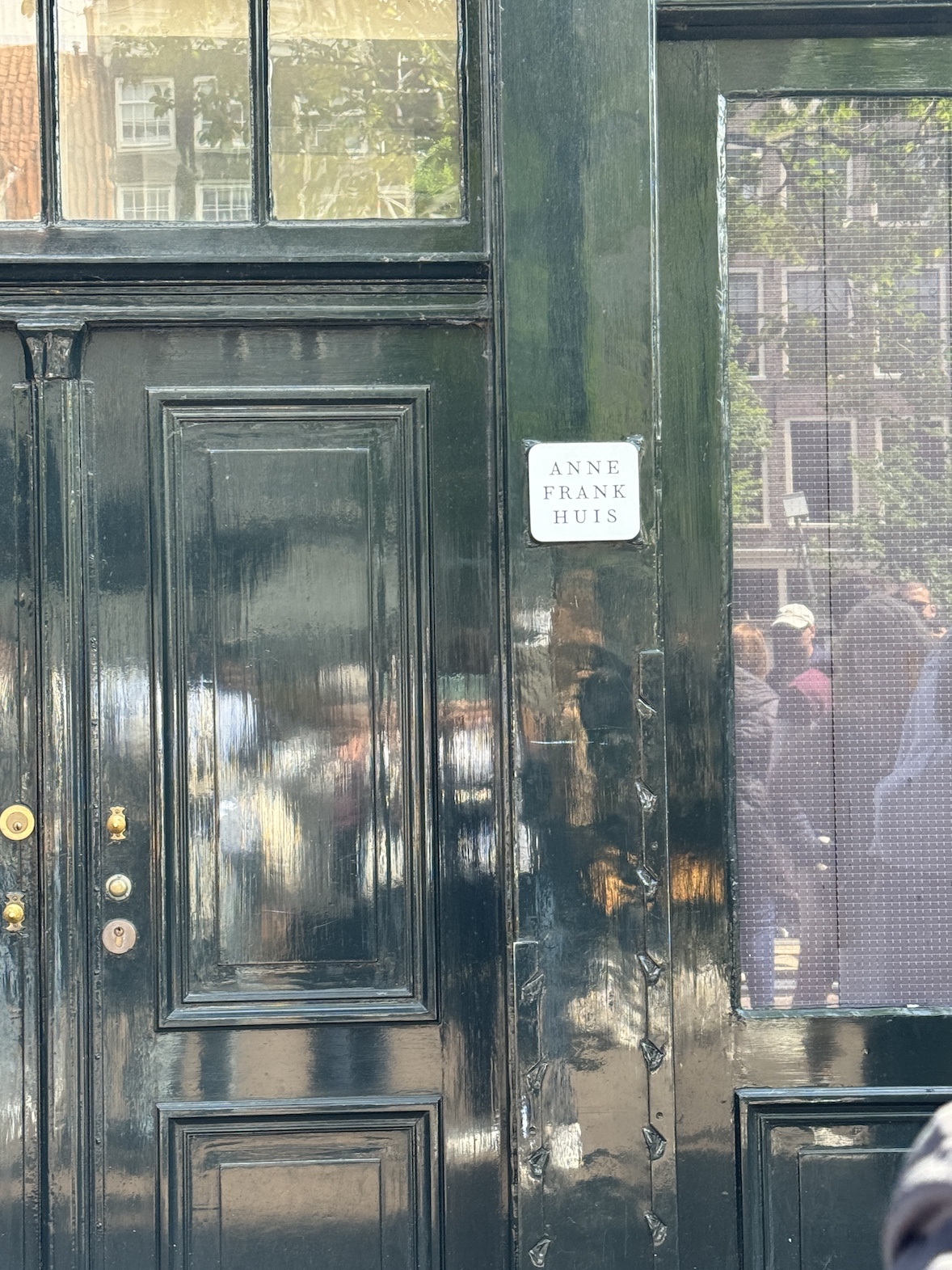
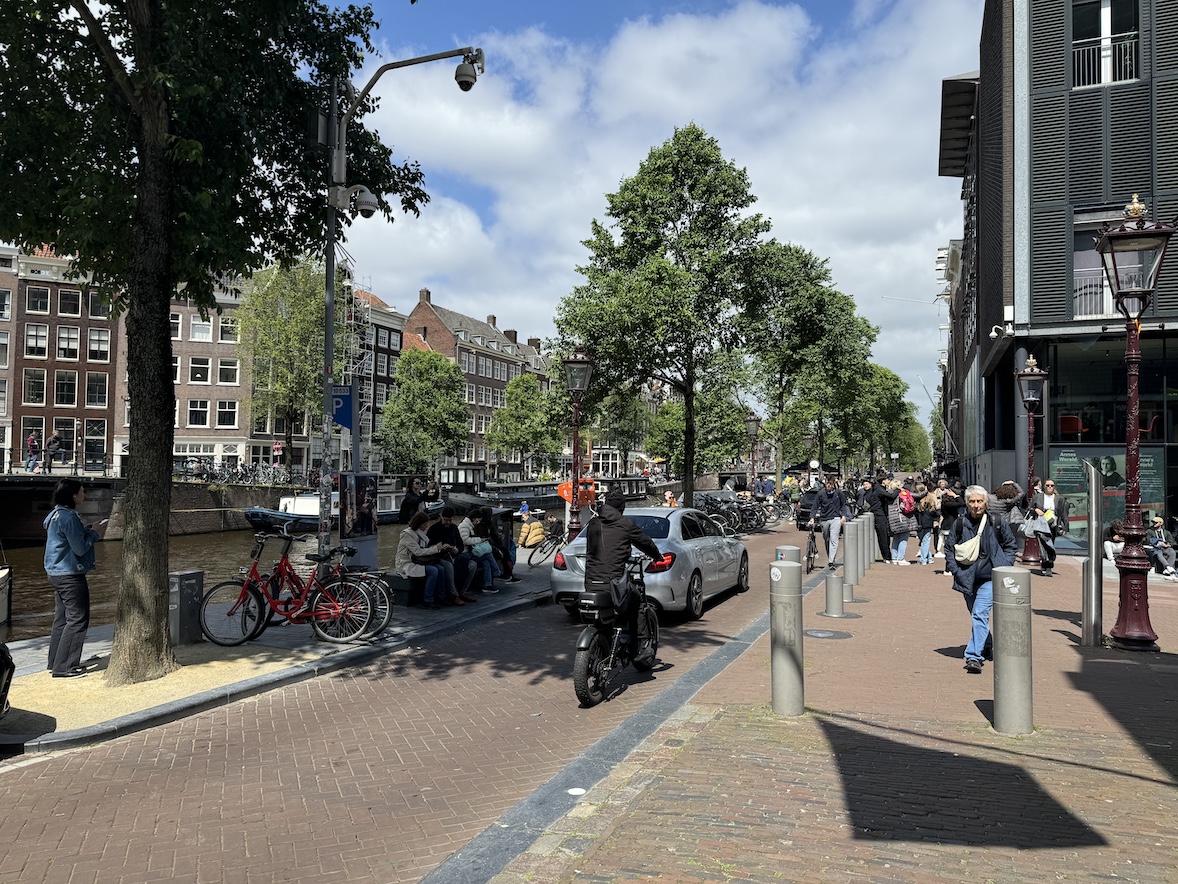
Our tickets weren’t for another two days, but we walked by anyway—just to be there, to stand on that street and get a sense of everything.
The birds were chirping, bicyclists passed by chatting and laughing, and the canal moved along with ease. It was a happy scene.
It hardly seemed possible that such horrific events had ever taken place here. The contrast between that moment and its history felt almost impossible to reconcile.
That’s why I think it’s important to visit a place. I don’t think you can grasp the full weight of it from a distance.
Because standing there, on a beautiful day with people moving through their lives, you feel how much can change—and how much can be taken away.
Click (or tap) any photo to open the gallery, see the full image, captions, and scroll through the set.
Lunch, Local Style
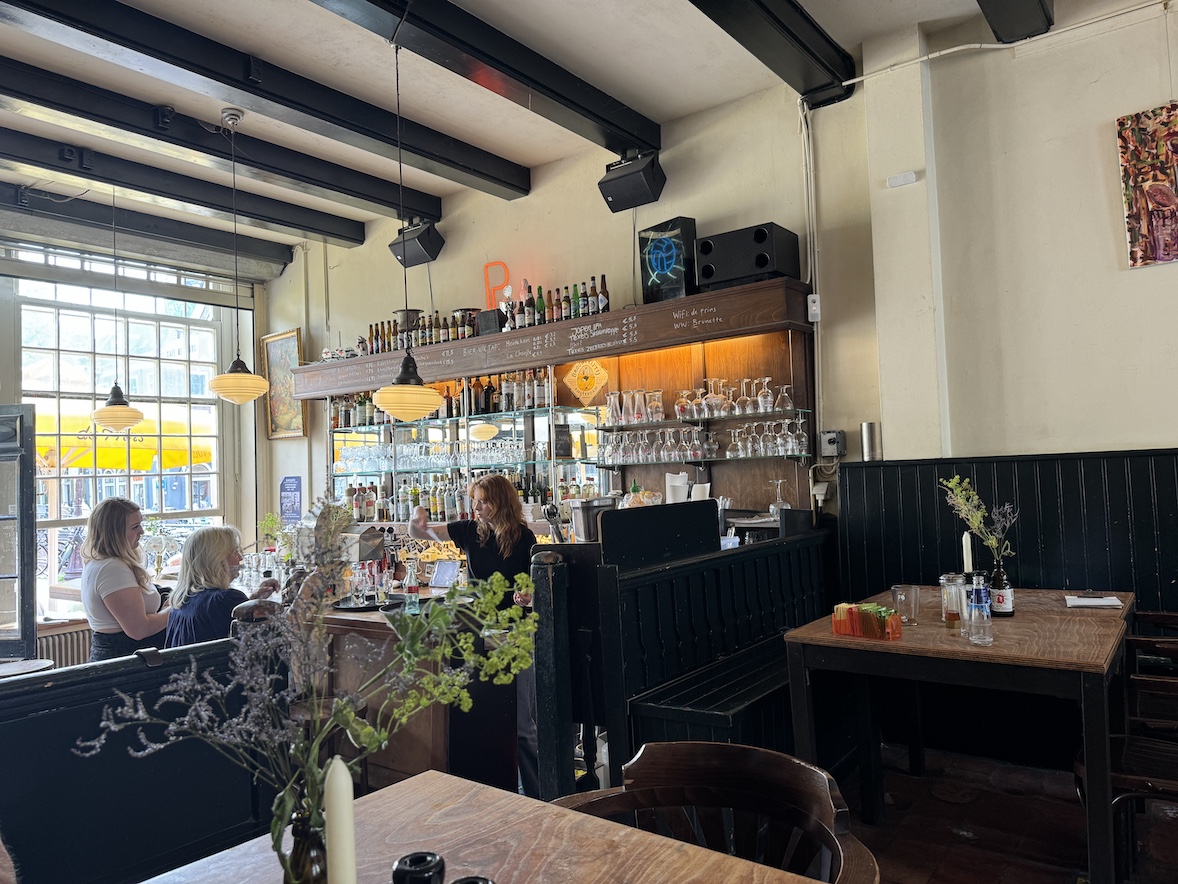
We stopped for lunch at a small café called De Prins.
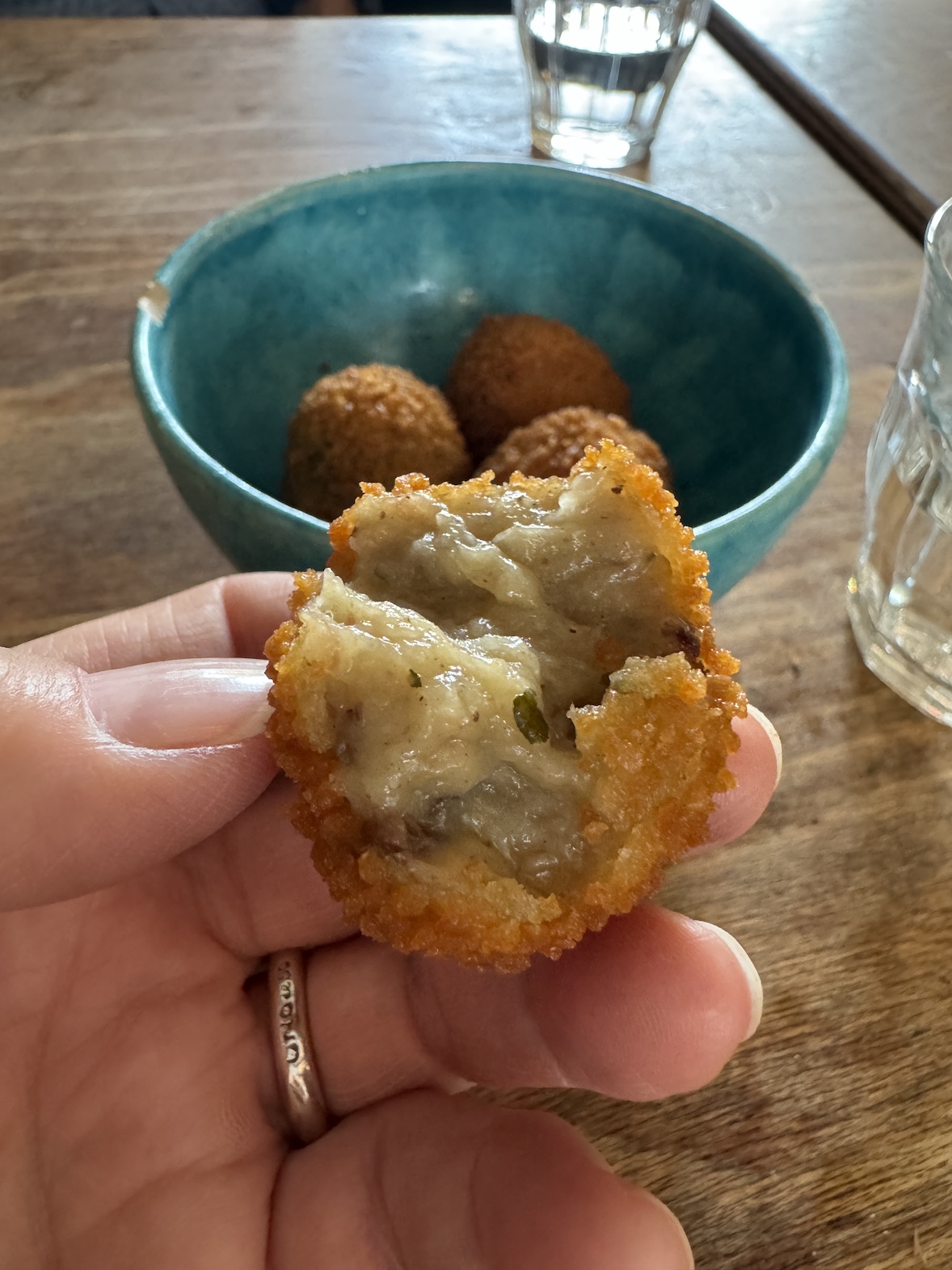
We ordered bitterballen (when in Rome and all that), a traditional Dutch snack—small, deep-fried balls filled with a thick, savory ragout, usually made with beef or veal and served with mustard. They’re popular here, often eaten with drinks, and show up on menus all over the city.
I thought they might be a little like hush puppies.
They’re not.
I’m glad I tried them—it felt like part of the experience—but it’s not something I’d order again. The texture, especially inside, just wasn’t for me.
The café, though?
I loved it.
It had that same feeling I noticed everywhere—each place with its own personality, nothing overly polished or the same as the next. The people working there seemed genuinely happy. The whole experience felt easy, natural.
Easy, breezy.
Click (or tap) any photo to open the gallery, see the full image, captions, and scroll through the set.
The Rhythm of the City
And then there’s the architecture.
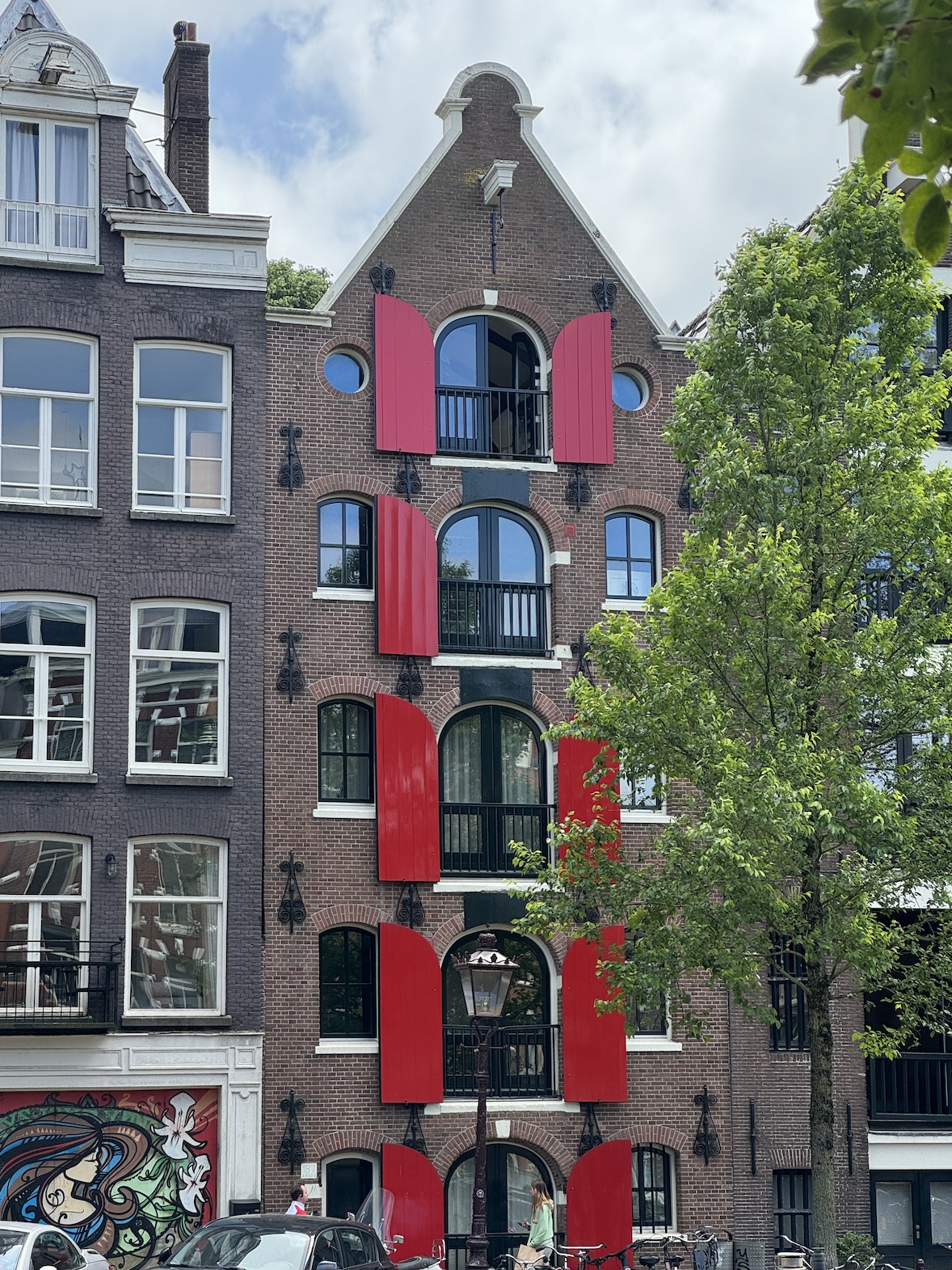
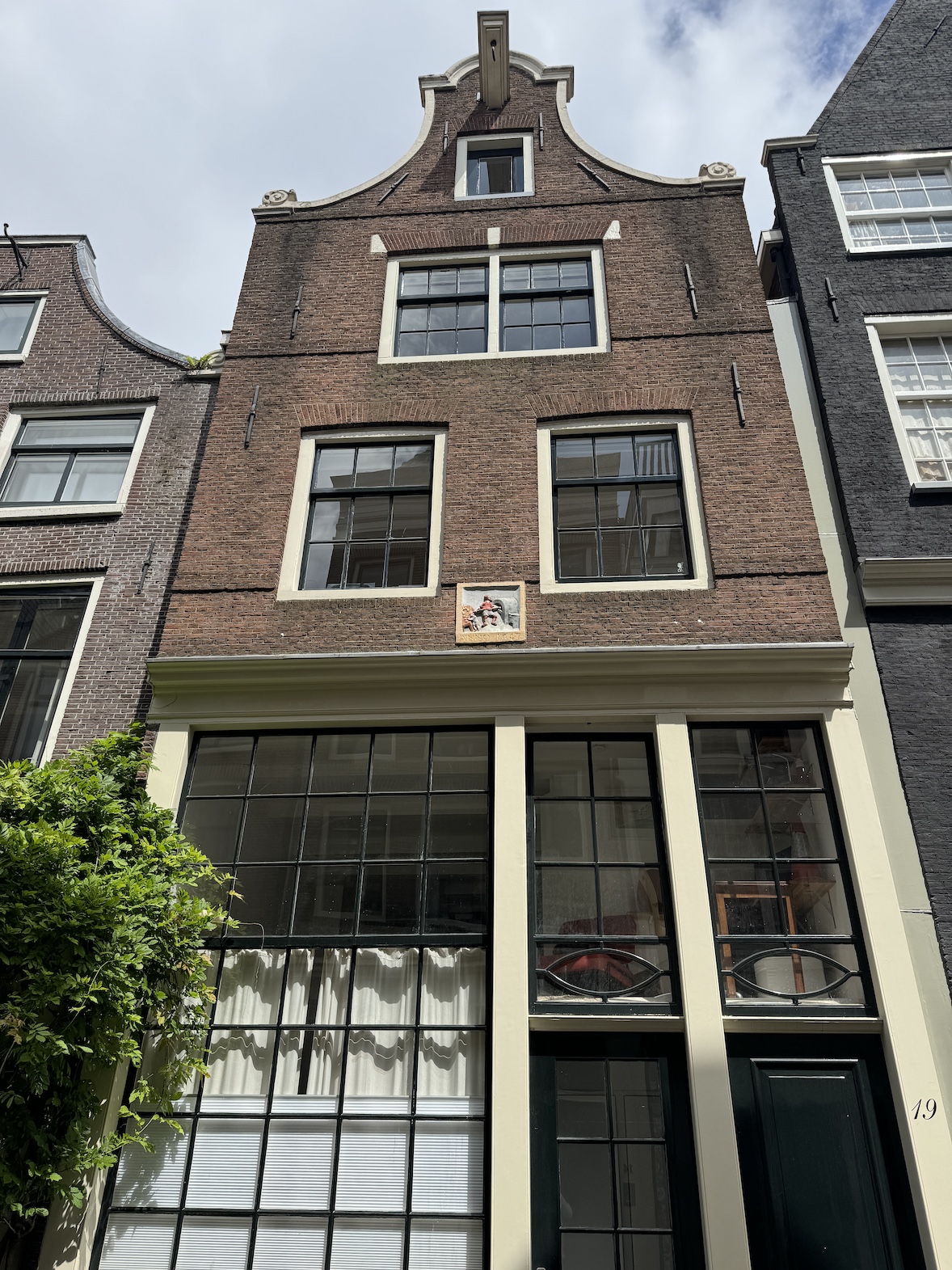
I found myself drawn again and again to the lines—the black and white contrasts, the tall narrow buildings standing shoulder to shoulder. Contemporary in feeling, yet rooted in something much older.
Many of these canal houses date back to the 1600s and 1700s, built narrow because property taxes were once based on the width of the façade. So instead, they built up—tall, efficient, and full of character.
Click (or tap) any photo to open the gallery, see the full image, captions, and scroll through the set.
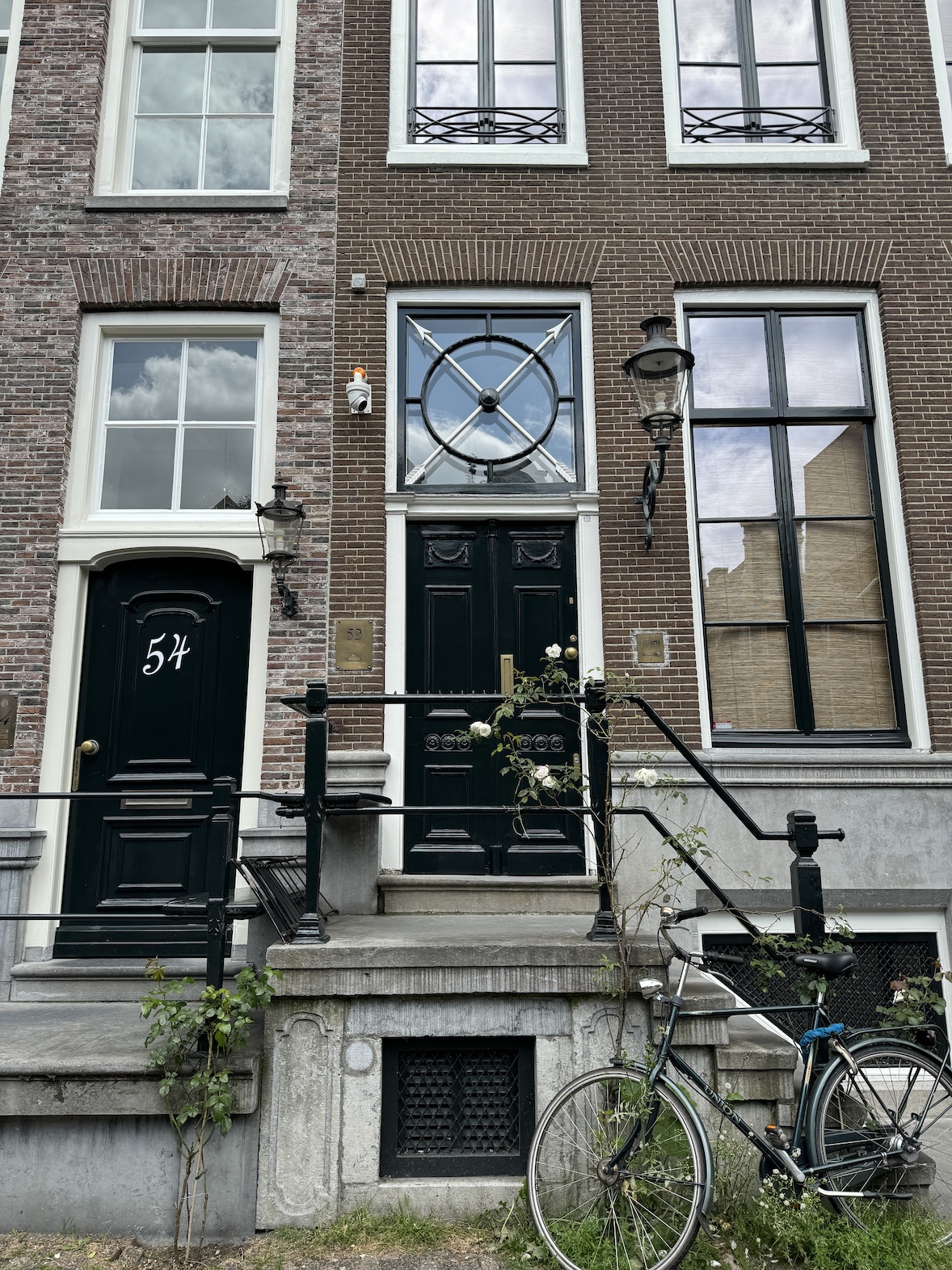
And everywhere—bicycles.
Leaning against railings, clustered along bridges, parked in front of homes and cafés. Yes, many are locked, but not always in the way we might expect—often with simple frame locks or chains. It’s just part of daily life here, so embedded into the rhythm of the city that it hardly draws attention.
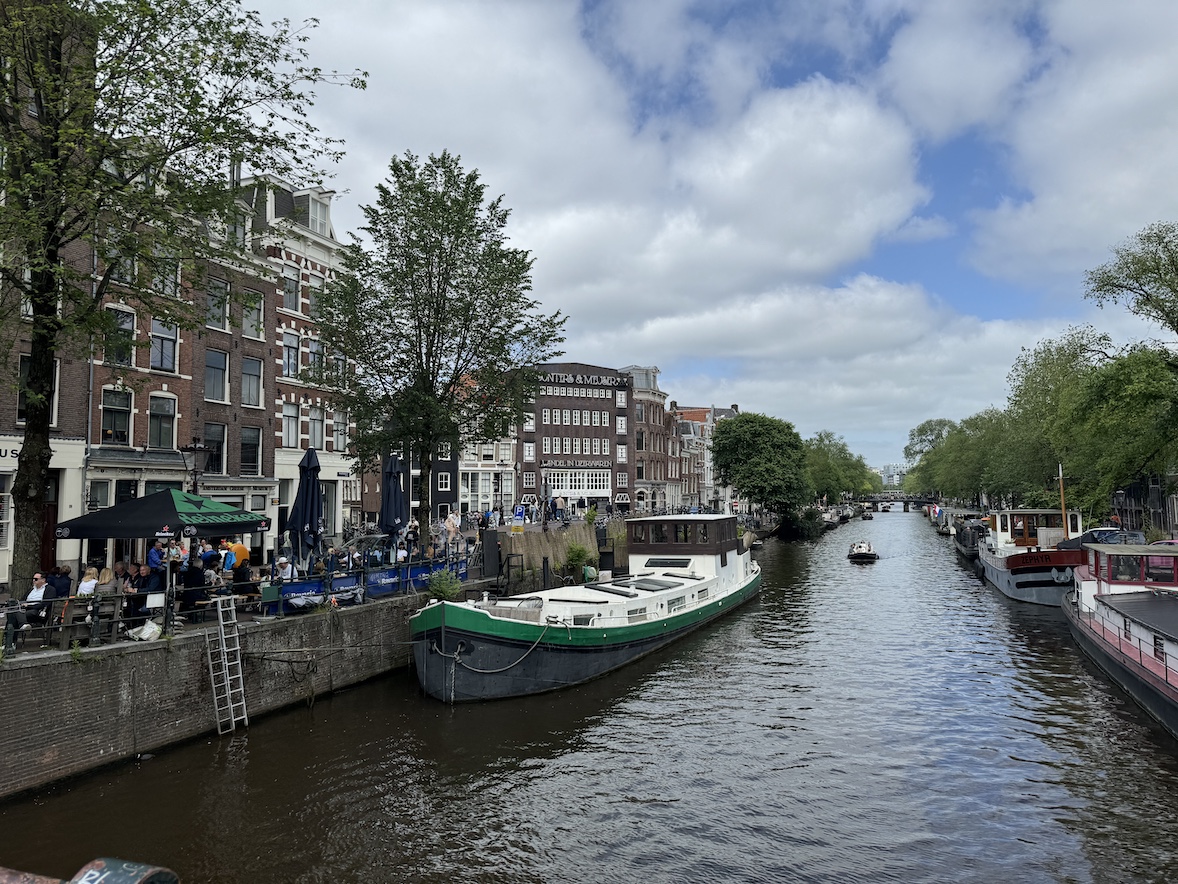
The canals aren’t just scenic—they’re active, constantly in motion. It feels like the heartbeat of the city.
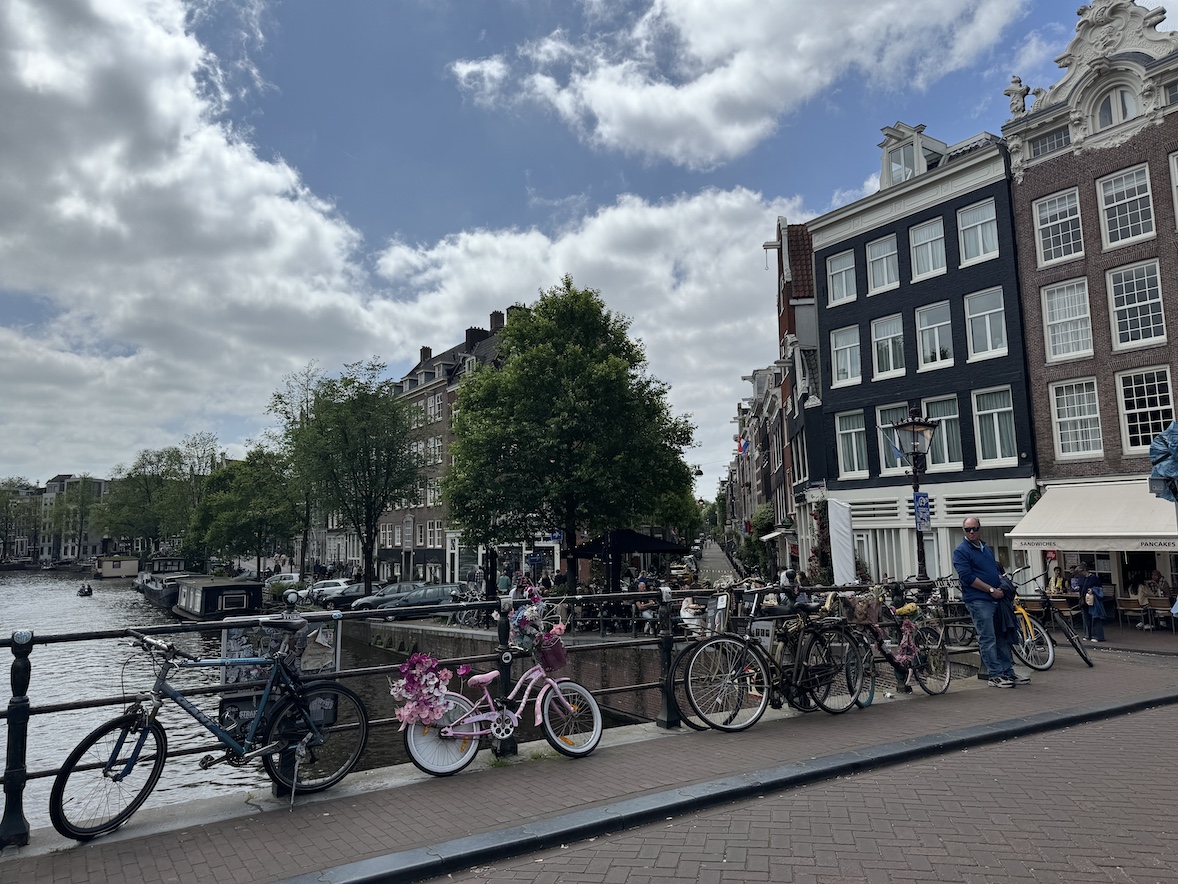
Bikes lined up as far as I could see—just part of daily life here, not a second thought.
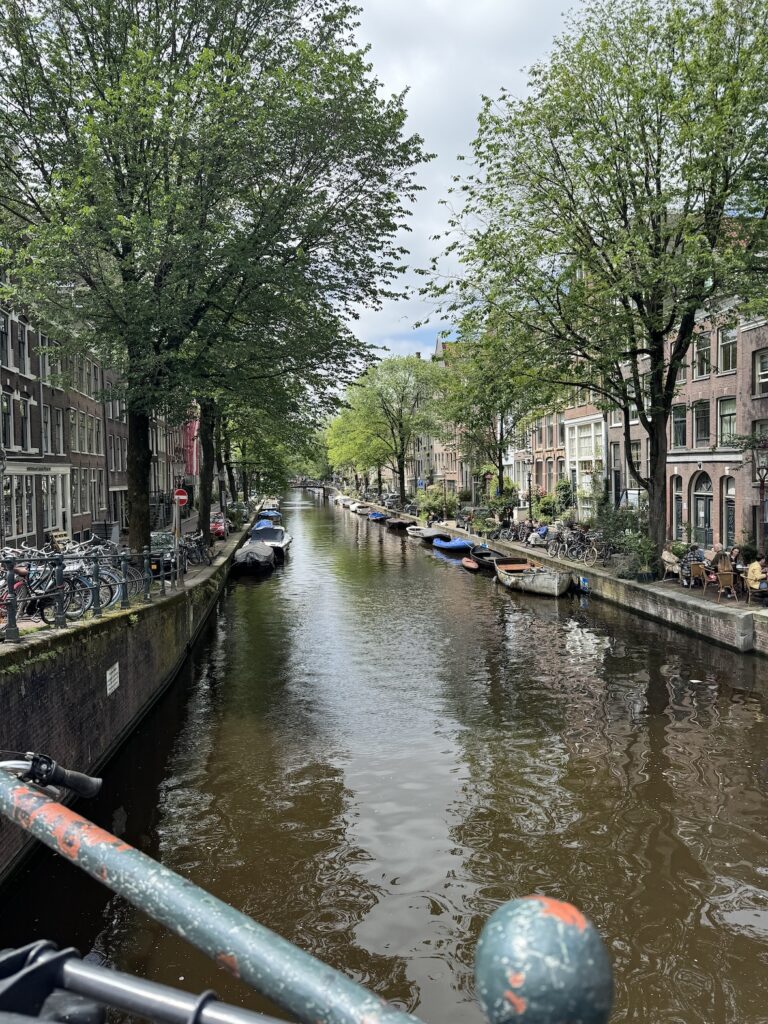
A lovely view of a canal.
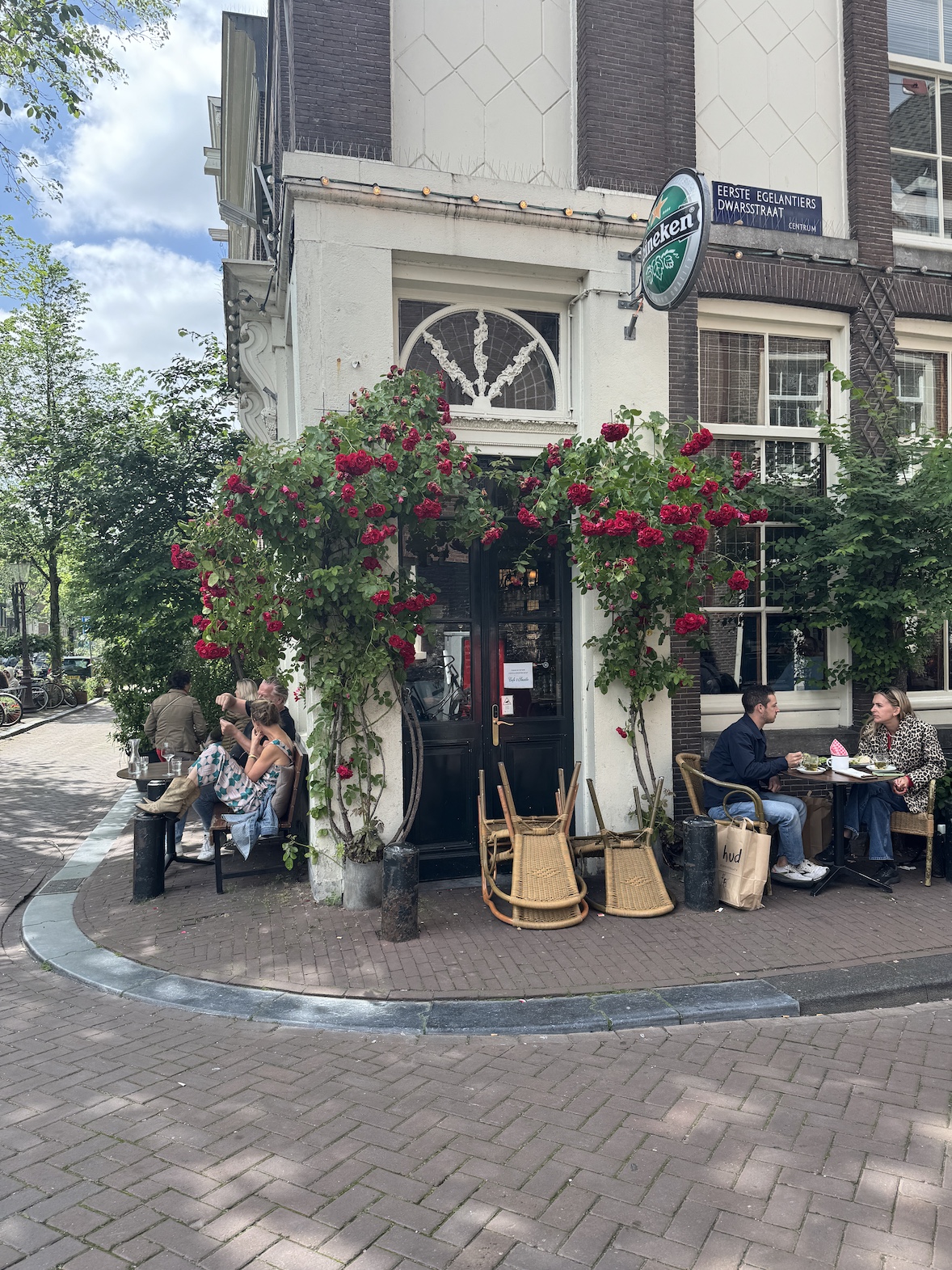
These little cafés seem to appear on every corner. So inviting and unpretentious.
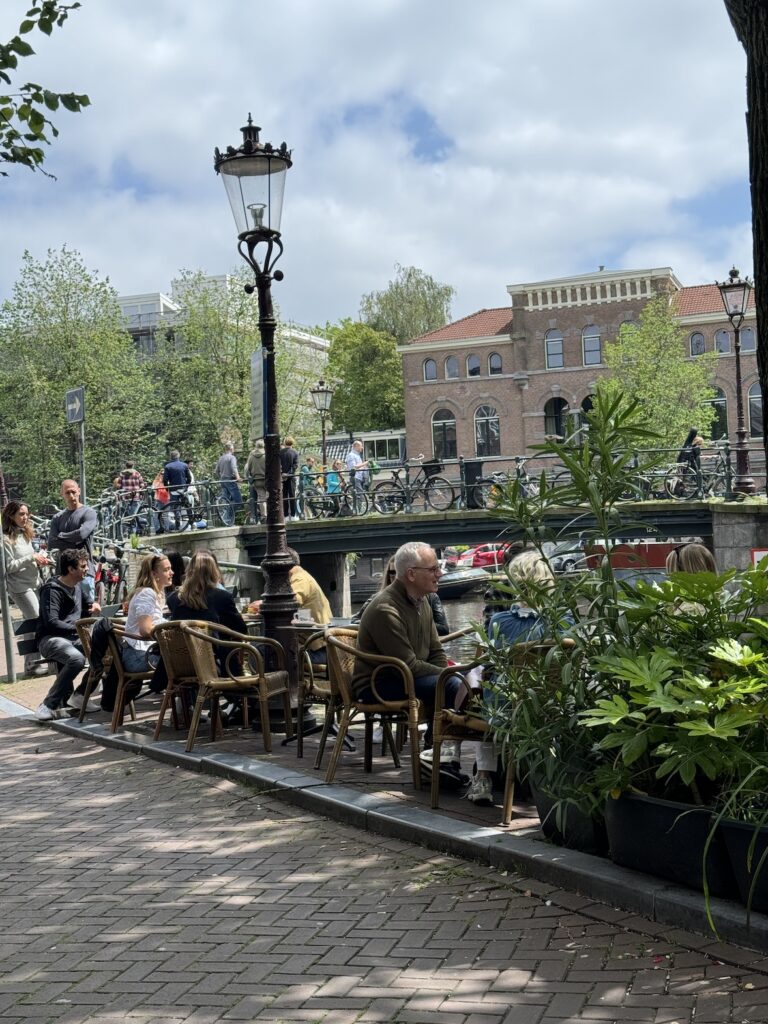
People gathered along the canal, soaking up the sun like it had been gone too long.
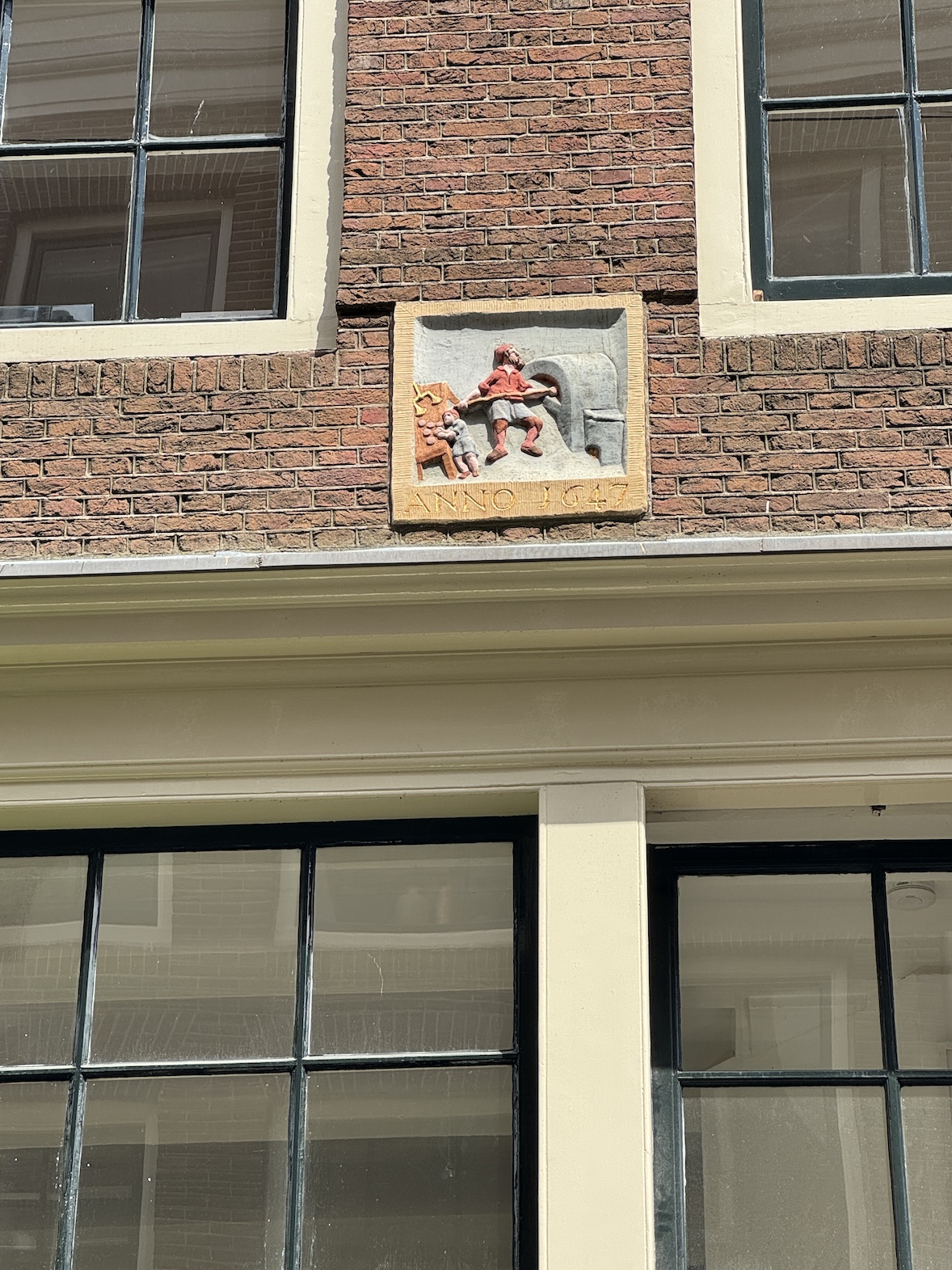
Look Up—There’s More to See
At some point, I started noticing something else.
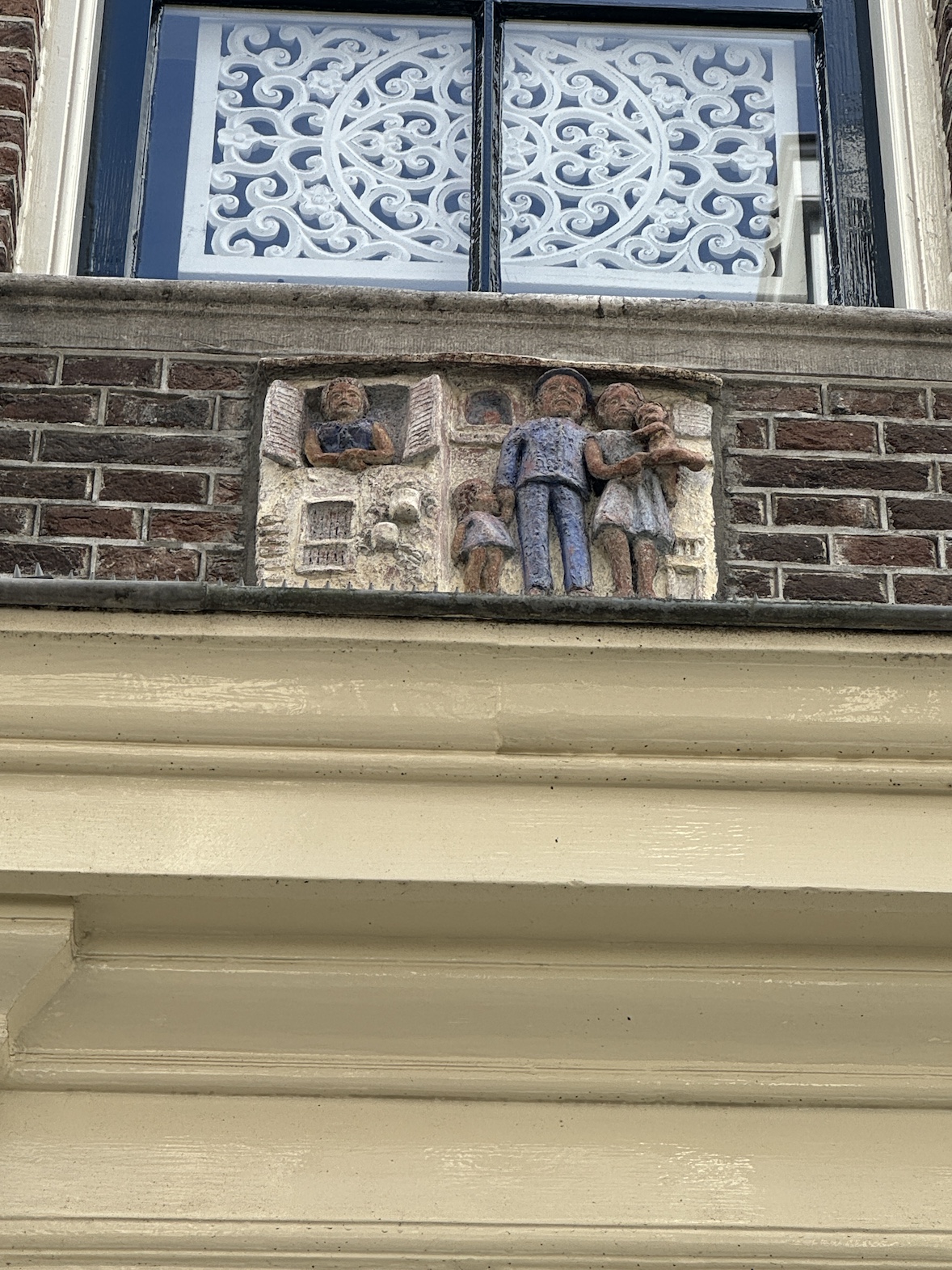
High up on the buildings—small carved scenes.
You really have to look to catch them.
These are called gevelstenen—decorative plaques that date back to the 1600s and 1700s. Before street numbers existed, they were used to identify homes—little visual markers that might represent a trade, a family, or a story.
Once I saw one, I started seeing them everywhere.
Click (or tap) any photo to open the gallery, see the full image, captions, and scroll through the set.
It Was Such a Lovely Day.
No major itinerary. No packed schedule.
Ron and I always create a balanced trip. We plan for special places and itineraries, but always leave room for wandering. Sometimes, we appreciate that more than the tourist sites, which, admittedly, are tourist sites for a reason. But we also like to immerse ourselves in the current culture as well.
Just walking, noticing, sitting, lingering, browsing, and taking it all in.
Such a lovely day.
❦
That’s a wrap for Day 16 of our 33 Days in Europe series.
Missed a day or just joining in? The full 33 Days in Europe series is right here.
Next Up – Day 17 of my 33 Days of Europe series
- Day 17 – Van Gogh and the Red Light District (Ooh, la la!)
Gear I Recommend
See all my travel gear and essentials here: Things I Love & Recommend
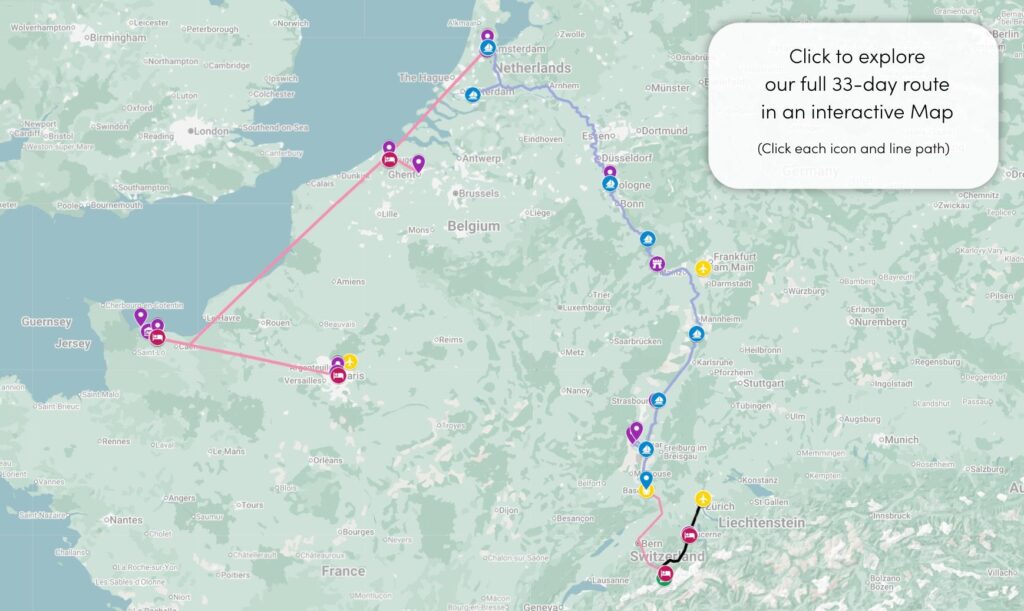
Detailed Map of the Entire Journey
Below is a visual summary of our full 33-day route—hotels, attractions, Viking cruise path and stops, as well as transit modes and paths—hiking, train, plane, gondola.
Click to explore the interactive version and wander through the journey pin by pin.
In case you missed Day 15…
Day 15 – First Day in Amsterdam: Canals, Cappuccinos, & Laundry
2 comments
Now I want a cappuccino! haha. So glad you were able to still get out and explore even though you weren’t feeling well. Amsterdam is definitely on my list of places I’d like to visit.
Thank you, Emily. I have so much more to share about Amsterdam. Stay tuned! 🦋