
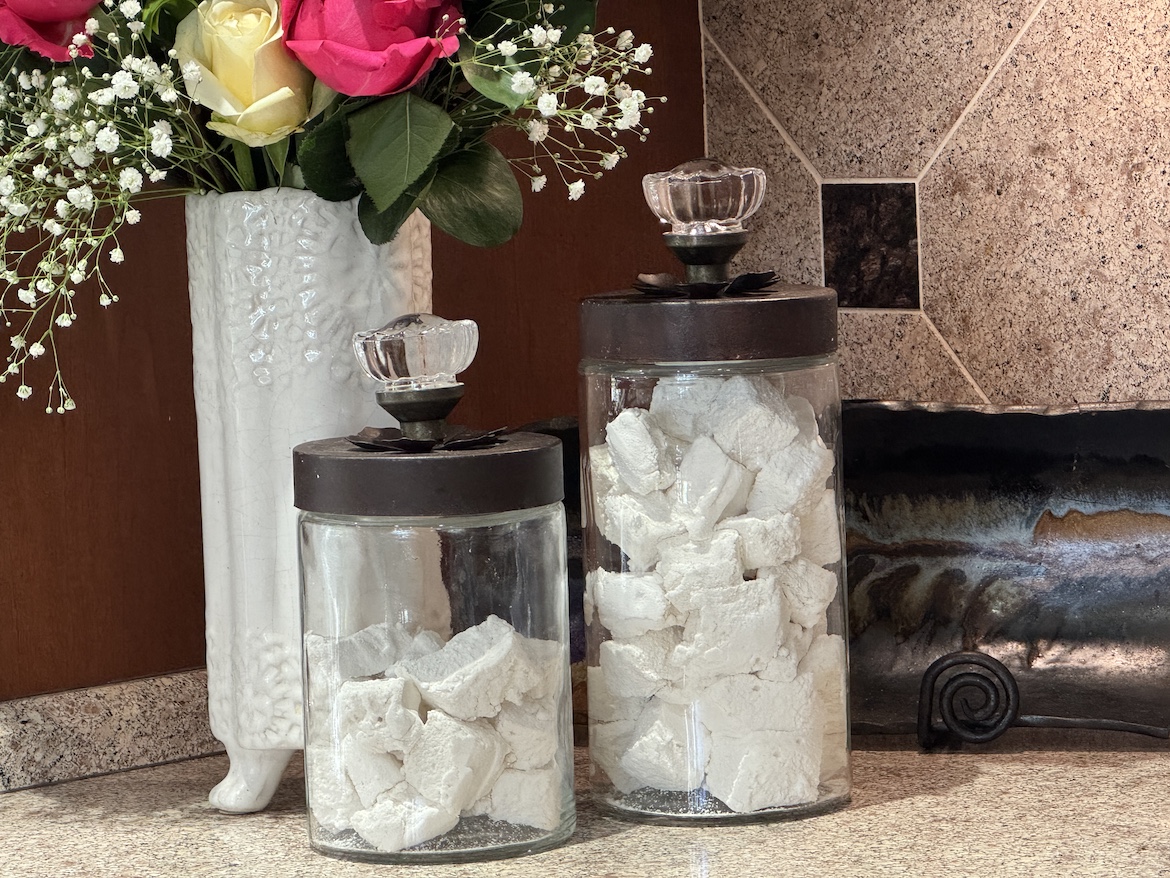
Have you ever made homemade marshmallows before?
Eating homemade marshmallows versus store-bought marshmallows is like the difference between eating a sun-warmed tomato from your own garden and the pale grocery store version. Once your taste buds experience homemade, it becomes the only version that truly satisfies.
And the best part? They’re surprisingly easy to make.
Sticky, yes. Gooey, of course.
Shockingly Simple
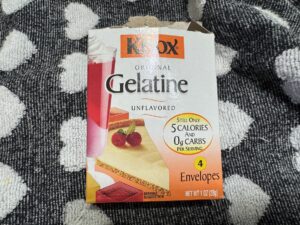
Three humble little packets doing some very heavy lifting.
You simply take three packages of unflavored gelatin, mix them with water, and let them sit in the bowl of your KitchenAid mixer while they bloom.
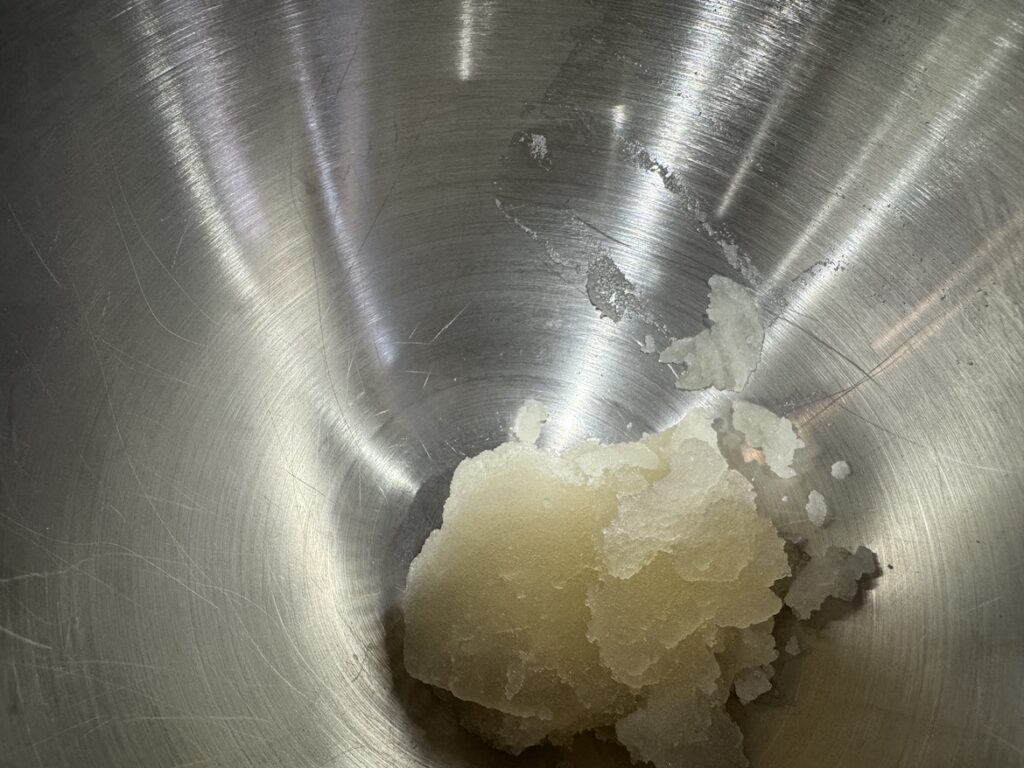
This strange-looking blob is exactly what you want.
Meanwhile, in my beloved Dansk Kobenstyle saucepan (it has a lid that doubles as a trivet and is truly one of my favorite kitchen workhorses), you combine sugar, corn syrup, salt, and water.
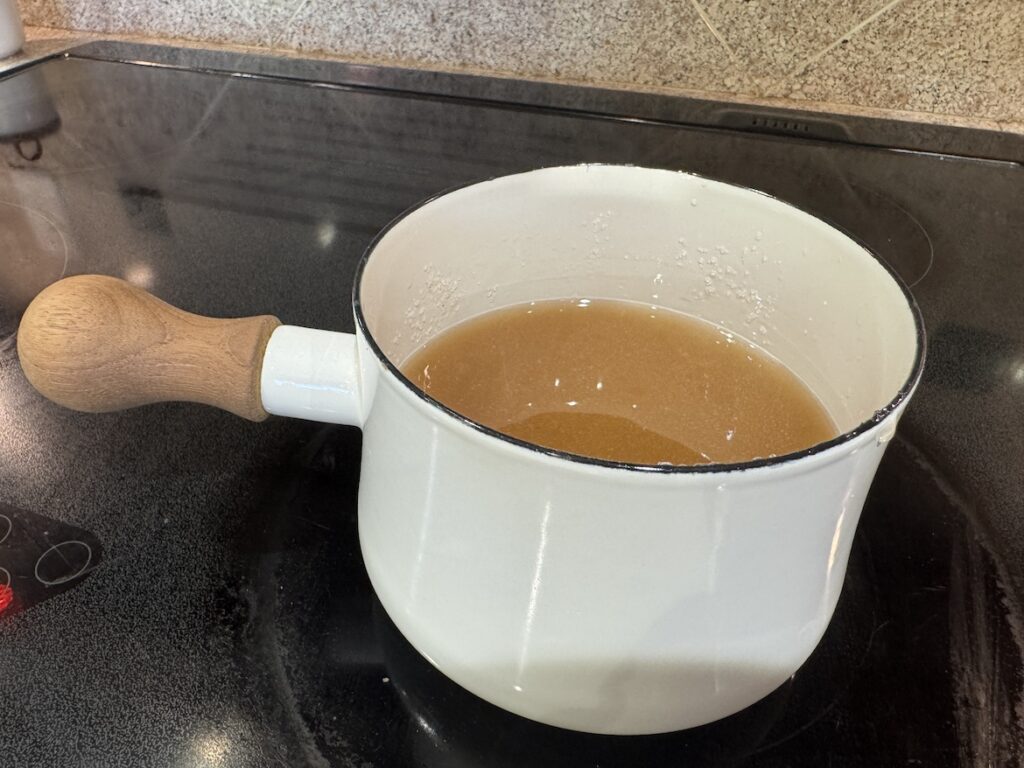
dansk kobenstyle small saucepan for marshmallow recipe IMG 8955
Heat everything over medium heat until your candy thermometer reaches 240 degrees.
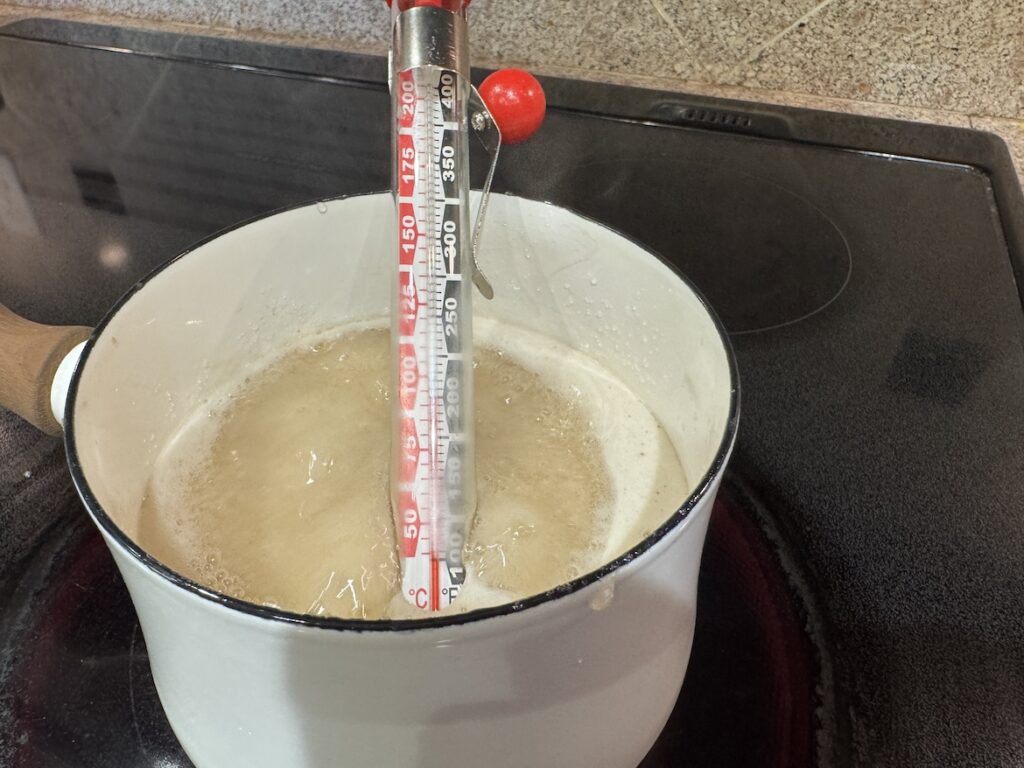
The moment of commitment: waiting for the sugar mixture to hit 240 degrees.
Where It Gets Good
Slowly pour that hot syrup into the gelatin mixture, whip it all together for about 15 minutes until it transforms into glossy marshmallow heaven, add a splash of vanilla, and you’re done.
The Unexpected MVP
This time around, I discovered what may be one of my favorite kitchen tools of the year: a flour duster.
Maybe everyone else already knew about these, but this was new to me.
It makes dusting confectioners’ sugar so ridiculously easy.
I used it to heavily dust the bottom of the pan, per Ina’s instructions.
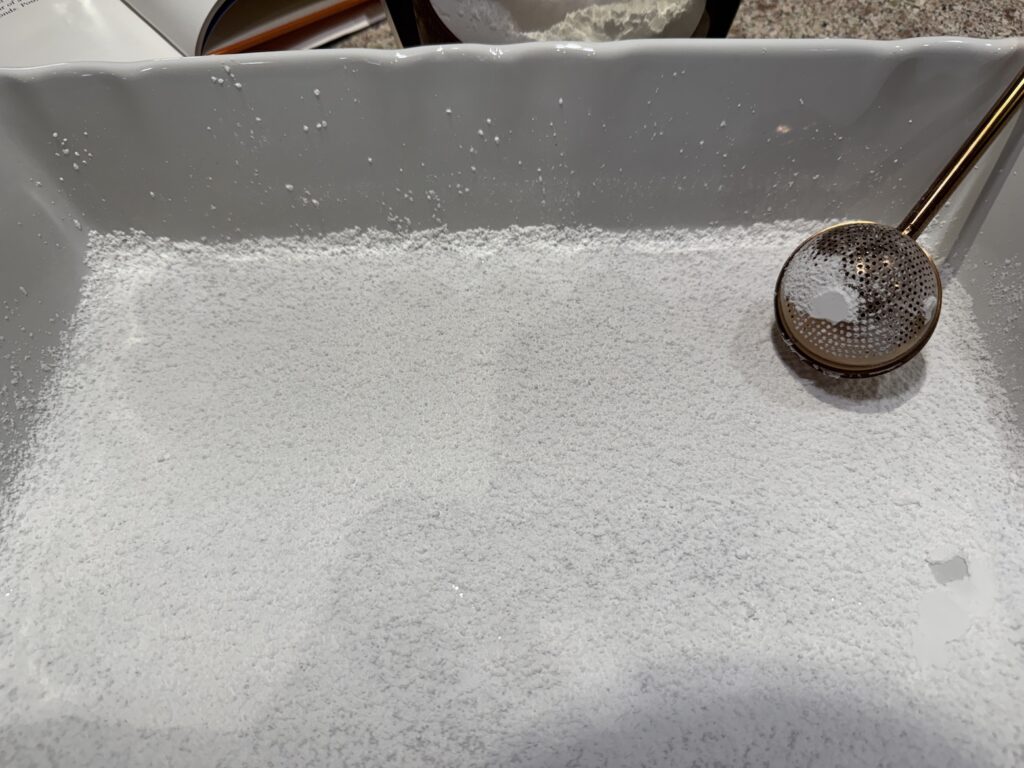
That little gadget is a flour duster. I used it to dust the pan with confectioners’ sugar, and it makes this whole process so much easier.
Next, add the mixture on top, spread it out, and then give the top a light snowfall of confectioners’ sugar as well.
Bottom layer. Top layer.
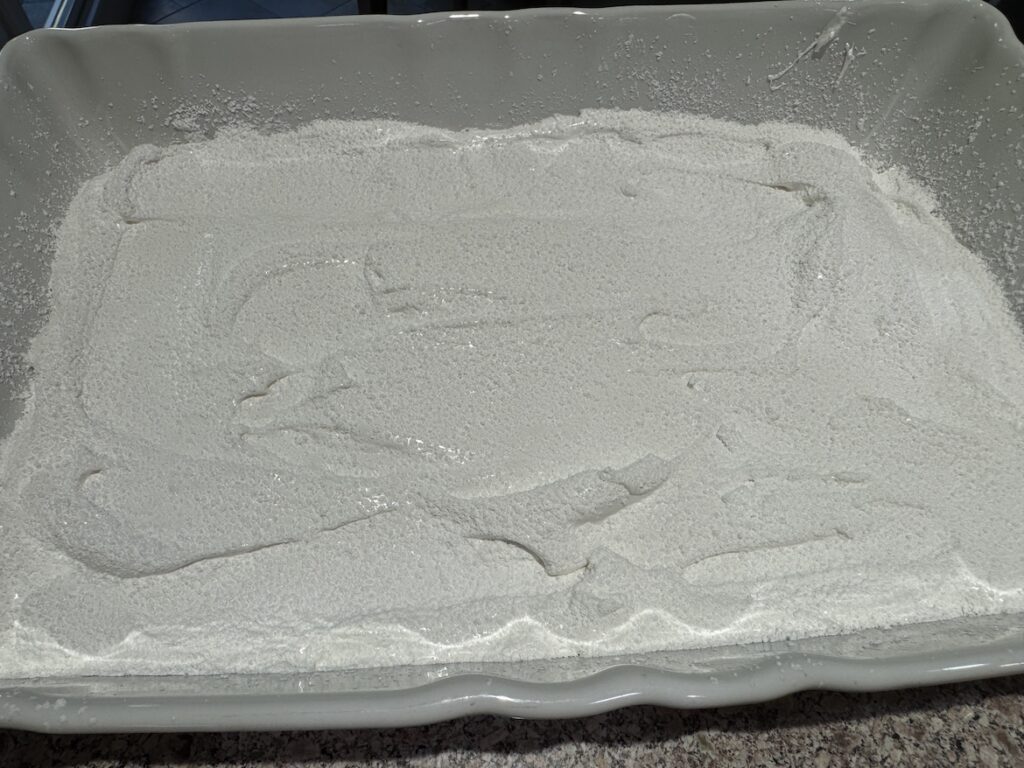
This is the glorious sticky stage where it finally starts looking like marshmallows.
Then you simply let the marshmallows rest overnight, cut them into squares the next day, dust them with more confectioners’ sugar so they lose that sticky cling, and pop them into a jar.
That’s it.
Ways I’m Using Them
Yes, there are the obvious uses.
S’mores around a fire, of course.
But I also love dropping one into my favorite latte mix, letting one melt into a hot cup of coffee as a sweet little indulgence, or doing something wonderfully unrefined: warming one in the microwave and dipping Annie’s graham crackers (Annie’s, because ingredients matter to me) straight into the gooey mess.
They’re ridiculously delicious.
And truly, once you’ve had homemade, store-bought just doesn’t compare.
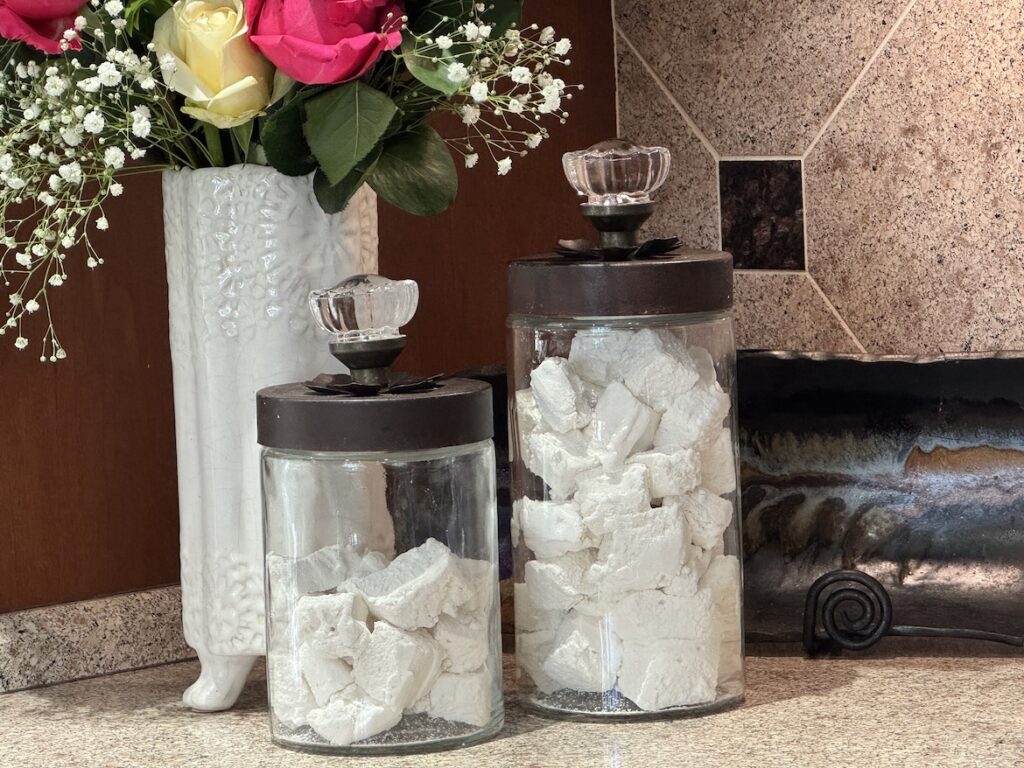
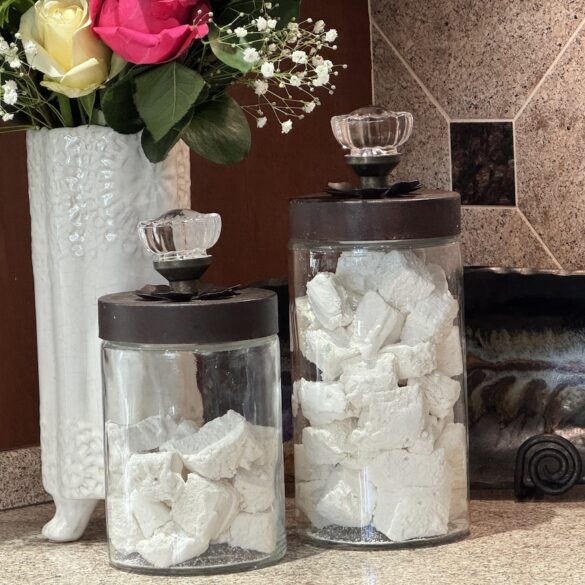
The finished marshmallows, ready for hot chocolate, lattes, or s’mores and more
Credit Where It’s Due
I have almost all of Ina Garten’s cookbooks, and this is the one with the marshmallow recipe.
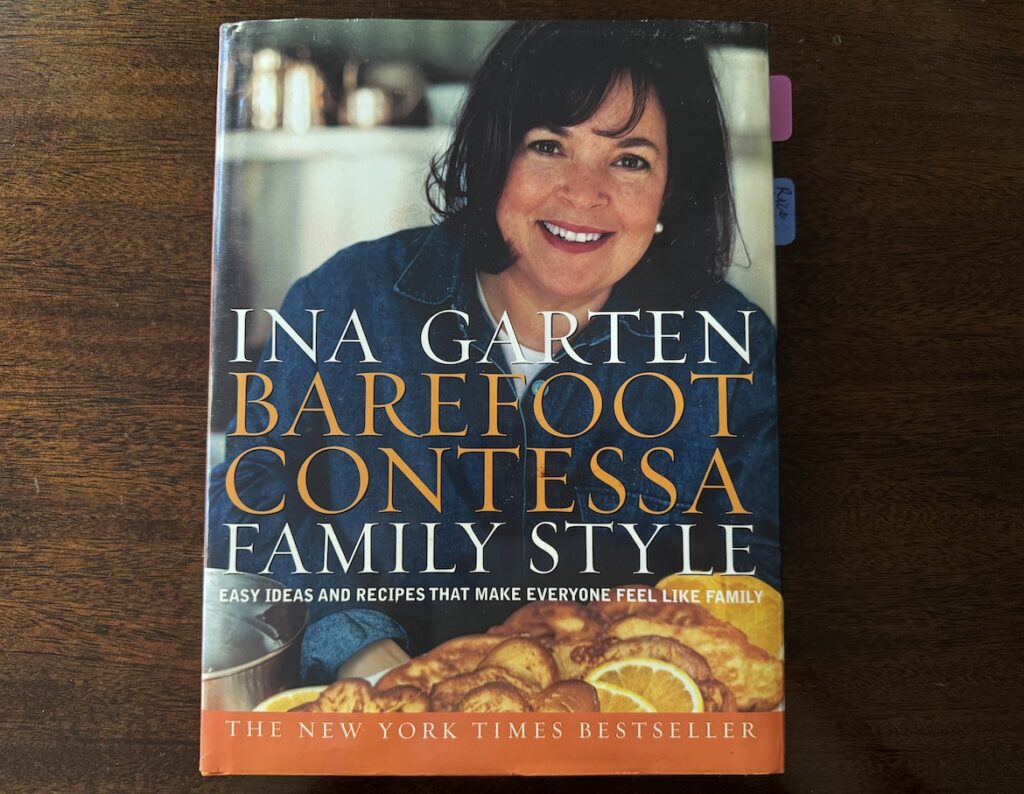
I have almost all of Ina Garten’s cookbooks. This is the one with the marshmallow recipe.
Recipe adapted from Barefoot Contessa Family Style by Ina Garten.
Ingredients
3 packages unflavored gelatin
1 1/2 cups granulated sugar
1 cup light corn syrup
1/4 teaspoon kosher salt
1 Tablespoon pure vanilla extract
Confectioner's sugar for dusting
Instructions
Combine the gelatin and 1/2 cup of cold water in the bowl of an electric mixer fitted with the whisk attachment and allow to sit while you make the syrup.
Meanwhile, combine the sugar, corn syrup, salt, and 1/2 cup water in a small saucepan and cook over medium heat until the sugar dissolves. Raise the heat to high and cook until the syrup reaches 240 degrees on a candy thermometer. Remove from the heat.
With the mixer on low speed, slowly pour the sugar syrup into the dissolved gelatin. Put the mixer on low speed to begin and then high speed and whip until the mixture is very thick, about 15 minutes. Add the vanilla and mix thoroughly.
With a sieve (I use a flour duster), generously dust an 8 x 12-inch nonmetal baking dish with confectioners' sugar. Pour the marshmallow mixture into the pan, smooth the top, and dust with more confectioners' sugar. Allows to stand uncovered overnight until it dries out.
Turn the marshmallows onto a board and cut them in squares. Dust them with more confectioners' sugar.
Notes
I store mine in a glass jar on my countertop. I use them in chai lattes, hot coffee, hot chocolate, melted as a dip with graham crackers, in s'mores, and more.
♥ DeborahBass.com
Why I Make My Own
I feel strongly about food ingredients (pay the farmer or pay the pharmacist and all that) and why I personally choose to make things like this from scratch. If you’re curious about that side of the story—including what changed the way I read food labels forever—keep reading.
What’s actually in store-bought marshmallows anyway?
Because once I started reading labels, I got curious.
Jet-Puffed Marshmallows Brand
Ingredients: Corn syrup, sugar, dextrose, modified cornstarch, water, gelatin, tetrasodium pyrophosphate, natural and artificial flavor, Blue 1
Tetrasodium pyrophosphate?
Blue 1?
Artificial flavors?
That’s not what I personally want in a marshmallow.
Campfire Marshmallows Brand
Ingredients: Corn syrup, sugar, dextrose, modified food starch, water, gelatin, natural flavor
Shorter list.
Still not for me.
“Natural flavor” tells me almost nothing, and vague ingredient labeling is one of my personal deal-breakers.
Dandies Brand
Often considered the cleaner specialty marshmallow: Tapioca syrup, cane sugar, water, tapioca starch, carrageenan, soy protein, natural vanilla flavor
Better? For some people, perhaps.
But carrageenan is the ingredient that made me start paying attention to labels in the first place, so even this isn’t a fit for me. Carrageenan is an absolute hard stop for me.
Why I care
Years ago, I finally figured out that carrageenan made me ill. No more Starbucks for me.
That ingredient changed the way I eat.
I became a label-reading, ingredient-researching woman dedicated to figuring out what I was actually putting into my body. And I’m better for it.
Carageenan may be derived from seaweed, but natural doesn’t automatically mean beneficial. Arsenic is natural, too.
Carrageenan remains controversial because some experimental research has raised concerns about inflammatory effects, and some critics have also questioned its potential long-term safety, including possible cancer risk.
I simply don’t, and won’t, eat it.
Thankfully, we have people like Ina Garten to show us the homemade way.
Enjoy.
❦
Another delicious favorite if you’re in the mood for something cozy: my homemade hot buttered rum mix recipe.
2 comments
Your homemade marshmallows were so yummy! Thank you for sharing!
Thank you, Emily. 🌷