
Jerry Jenkins, the writing mastermind behind more than two hundred books, lobbed a hand grenade into my inbox the other morning:
“If Writer’s Block were real, why would it affect only writers? Imagine calling your boss and saying, ‘I can’t come in today. I have worker’s block.’
You’d be laughed off the phone! And you’d likely be told never to come in again.
No other profession accommodates Block as an excuse to quit working—so we writers shouldn’t either.”
— Jerry Jenkins
Mind blown. Like, the universe tilted.
If Writer’s Block were a person, he’d be that buddy always wanting to cut class and help me get into mischief. My buddy would be the one to blame for skipping out on classwork.
And now, Mr. Jenkins is informing me that my buddy is made-up. I’ve really been on my own all along. Every skipped word, every delayed draft—my choice.
That’s both helpful and terrifying.
So, no excuses. All I have to do is write.
Except Writing Isn’t Easy — It’s Parental
Writing isn’t birth-a-baby hard, but each piece does feel like raising a child:
- You devote absurd hours to it and willingly give up all your free time.
- You want only the best reviews. After all that work, you just want your piece to be honored—like Student of the Month, just once in a while. To be acknowledged. To be appreciated.
- You wince at the thought of bullies in the comments section. There’d be no way to dodge their blows. A harsh critique could beat up your soul—or at least, we imagine it would. And that’s somehow worse.
- You’re tempted to plead, Look again—can’t you see the toil? The beauty? How hard it’s working?
And like children, our drafts never feel old enough to leave home. We want to protect them. They never seem ready for the real world. Not yet. They still need more experience.
I tweak, polish, hover—because once a piece is published, it freezes in time. My perspective grows up, but my words can’t.
So Why Keep Writing?
Because art needs an audience to live.
Stories are meant to circulate, bump into strangers, connect, reveal, intrigue, surprise.
Otherwise, they’re just diary pages.
Connection is the oxygen. Without it, the work suffocates—and, if I’m honest, so do I.
Some of us need to put our creations into the world. We can’t change this any more than we can change the color of our eyes. We send our work into the world and trust there’s someone on the other end—open to receiving it.
Resistance by Any Other Name
If “writer’s block” is a myth, something still jams the gears:
– Perfectionism — the fear that “good enough” will never be good enough.
– Vulnerability hangover — the wooziness and nakedness that follow telling the truth, however personal.
– Life itself — grief, joy, burnout, laundry—take your pick.
The point is: resistance is real—even if the label is wrong.
And some of the greatest writers we know feel the resistance, too.
In that, I’m in good company.
On Writer’s Block, These Stellar Authors Say:
“I don’t believe in writer’s block. I try and deal with getting stuck by having more than one thing to work on at a time. And by knowing that even a hundred bad words that didn’t exist before is forward progress.”
— Neil Gaiman
“I deal with writer’s block by lowering my expectations. I think the trouble starts when you sit down to write and imagine that you will achieve something magical and magnificent — and when you don’t, panic sets in. The solution is never to sit down and imagine that you will achieve something magical and magnificent. I write a little bit, almost every day, and if it results in two or three or (on a good day) four good paragraphs, I consider myself a lucky man. Never try to be the hare. All hail the tortoise.”
— Malcolm Gladwell
“Writing about a writer’s block is better than not writing at all.”
— Charles Bukowski
“I don’t sit around waiting for passion to strike me. I keep working steadily because I believe it is our privilege as humans to keep making things. Most of all, I keep working because I trust that creativity is always trying to find me, even when I have lost sight of it.”
— Elizabeth Gilbert
“The best way is always to stop when you are going good and when you know what will happen next. If you do that every day … you will never be stuck. Always stop while you are going good and don’t think about it or worry about it until you start to write the next day. That way your subconscious will work on it all the time. But if you think about it consciously or worry about it you will kill it and your brain will be tired before you start.”
— Ernest Hemingway
“What I try to do is write. I may write for two weeks ‘The cat sat on the mat, that is that, not a rat.’ And it might be just the most boring and awful stuff. But I try. When I’m writing, I write. And then it’s as if the muse is convinced that I’m serious and says, ‘Okay. Okay. I’ll come.’”
— Maya Angelou
“Put it [your writing] aside for a few days, or longer, do other things, try not to think about it. Then sit down and read it (printouts are best I find, but that’s just me) as if you’ve never seen it before. Start at the beginning. Scribble on the manuscript as you go if you see anything you want to change. And often, when you get to the end you’ll be both enthusiastic about it and know what the next few words are. And you do it all one word at a time.”
— Neil Gaiman
“The scariest moment is always just before you start.”
— Stephen King
“You can always edit a bad page. You can’t edit a blank page.”
— Jodi Picoult
“Every day, writing. No matter how bad. Something will come.”
— Sylvia Plath
“Who is more to be pitied, a writer bound and gagged by policemen or one living in perfect freedom who has nothing more to say?”
— Kurt Vonnegut
They all preach the same gospel:
Show up, words or no words.
The block loosens because persistence breaks it free.
But maybe the block isn’t real at all—maybe just hearing about “writer’s block” ad nauseam, as if it’s a real thing, convinces us that getting stuck is part of the process. A loathsome fact of being a writer.
That’s the power of suggestion.
If we’d never heard of it, would we even experience it?
What I Believe Now
Writer’s block isn’t a medical condition.
It’s just stage fright.
The cure is motion—ugly sentences, wonky metaphors, illogical flow, and just plain foolish words we’ll delete tomorrow.
Forward is forward.
I’m keeping Jenkins’ email pinned above my desk to remember: there is no such thing as calling in to work blocked.
“Can’t write today—got writer’s block.”
I just need to get to work.
One Word at a Time
If we don’t have writer’s block, perhaps we just care too much.
Fine. I’ll risk it.
Today’s progress: this paragraph, this sentence, this word.
Tomorrow? Same plan—minus the excuse.
❧
Related reading:
If you found this post interesting or simply like the genre of writing, you might like this one about stream-of-consciousness writing, wild neural pathways, and a rainbow of gel pens.
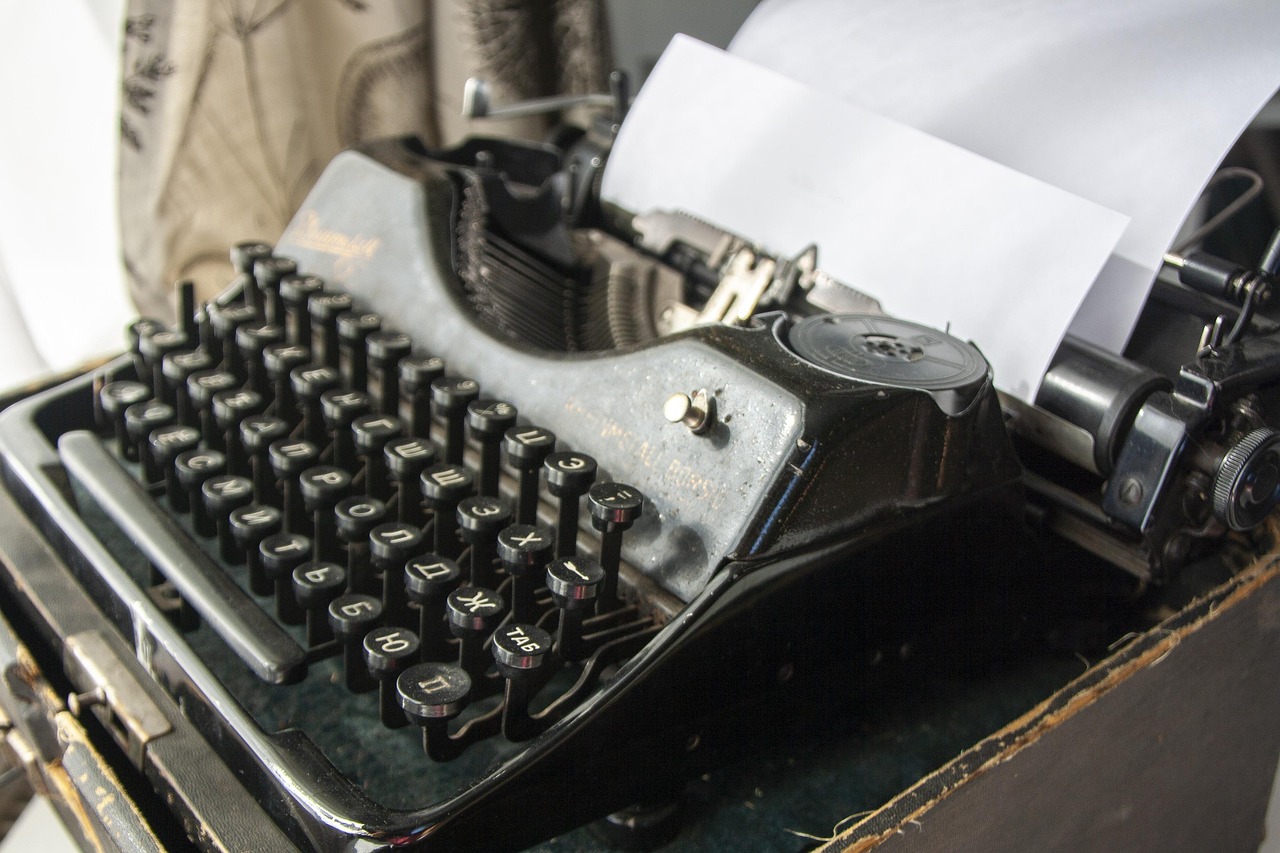
Featured image by Ирина Шутько via Pixabay. Used under Pixabay’s free use license.