
I happened upon this lovely book strolling through Barnes & Noble on a beautiful summer day. Bookstores always promise magic. Simply wander the paper forest and see what beckons you. On this day, it was a volume titled Flower Color Theory (Amazon had it for half the price) that caught my attention, and it has been blooming in my mind ever since.
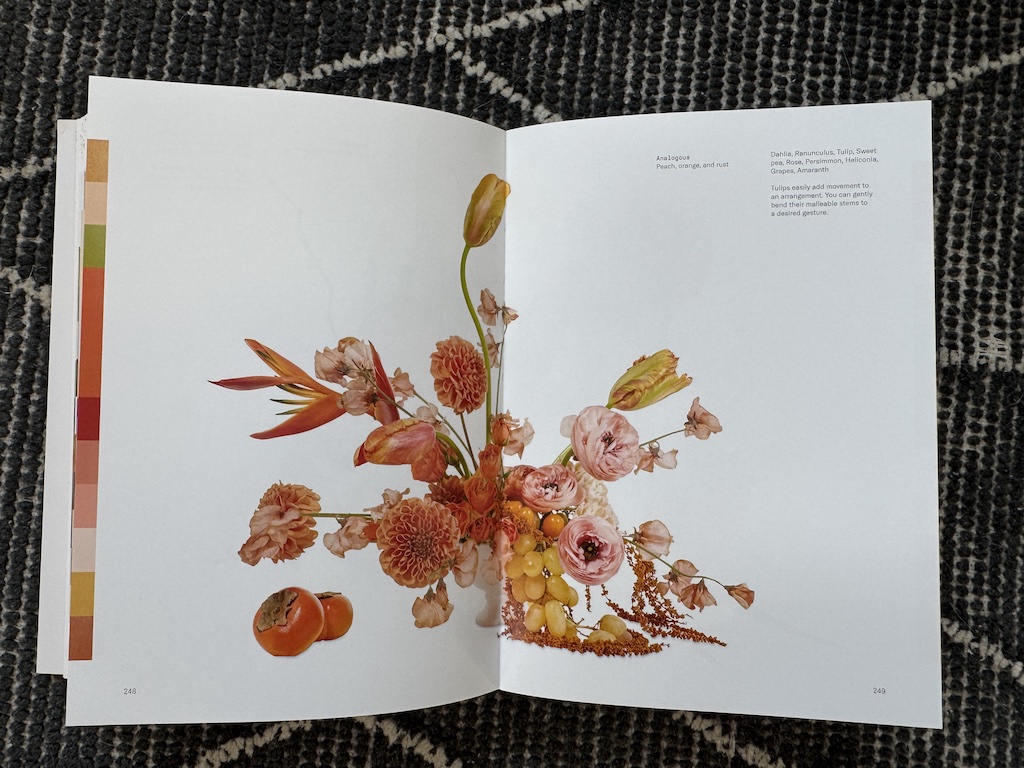
The book is a collaboration between floral designers Taylor and Michael Putnam, and it reads like a visual symphony. I find that each page shows how color can guide emotion, shift a mood, and transform a simple arrangement into something beyond cut flowers—into abstract art that sets a mood.
Below, tap a picture to view them all full size. These images are best experienced in gallery view, where you can scroll through.
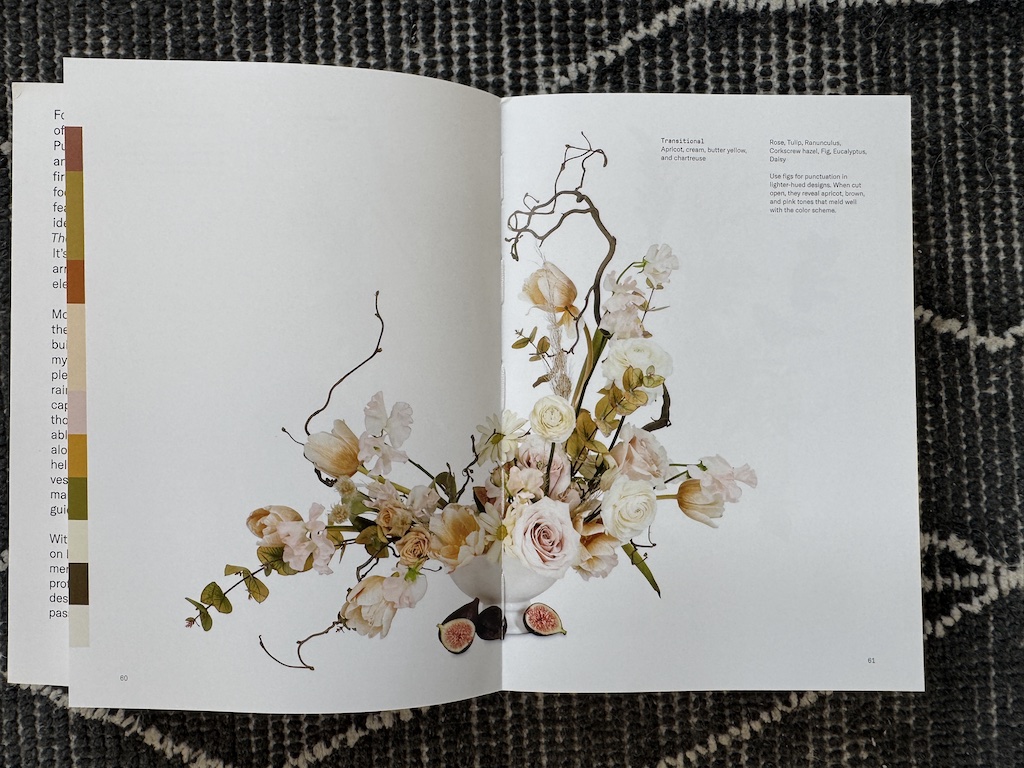
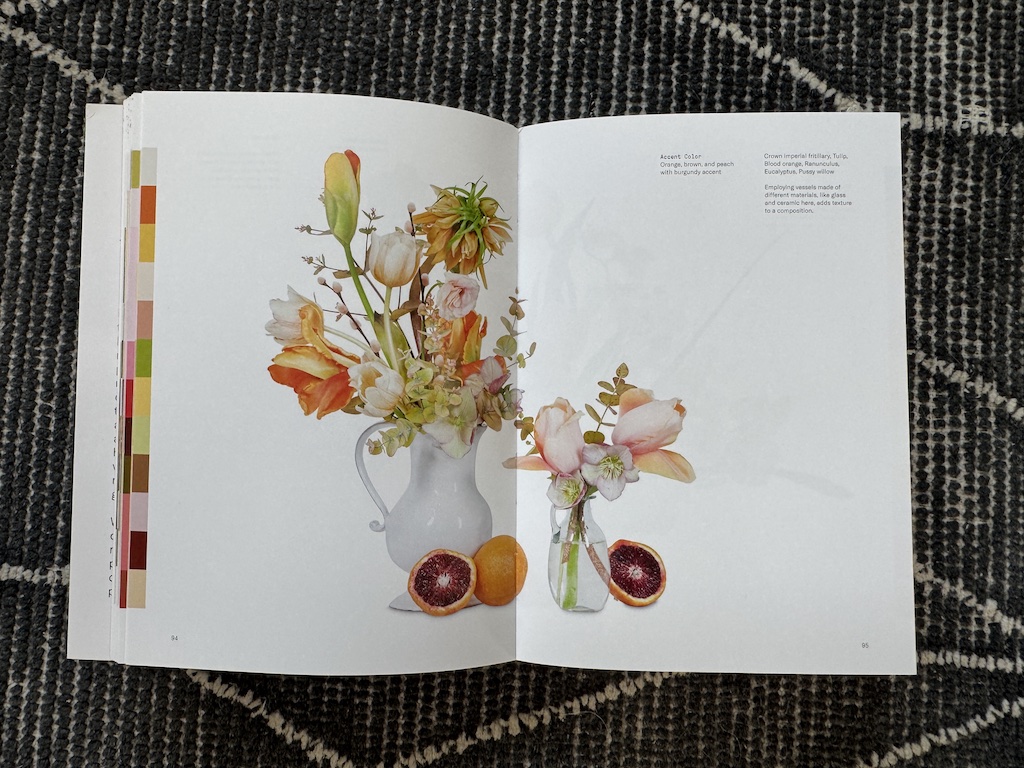
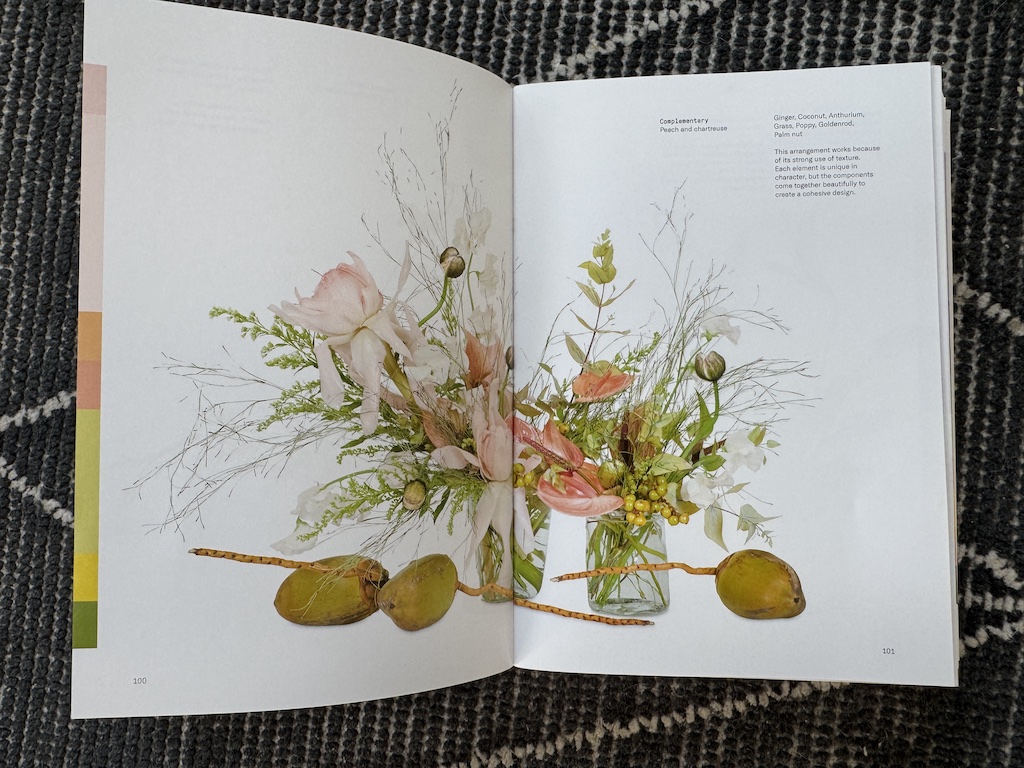
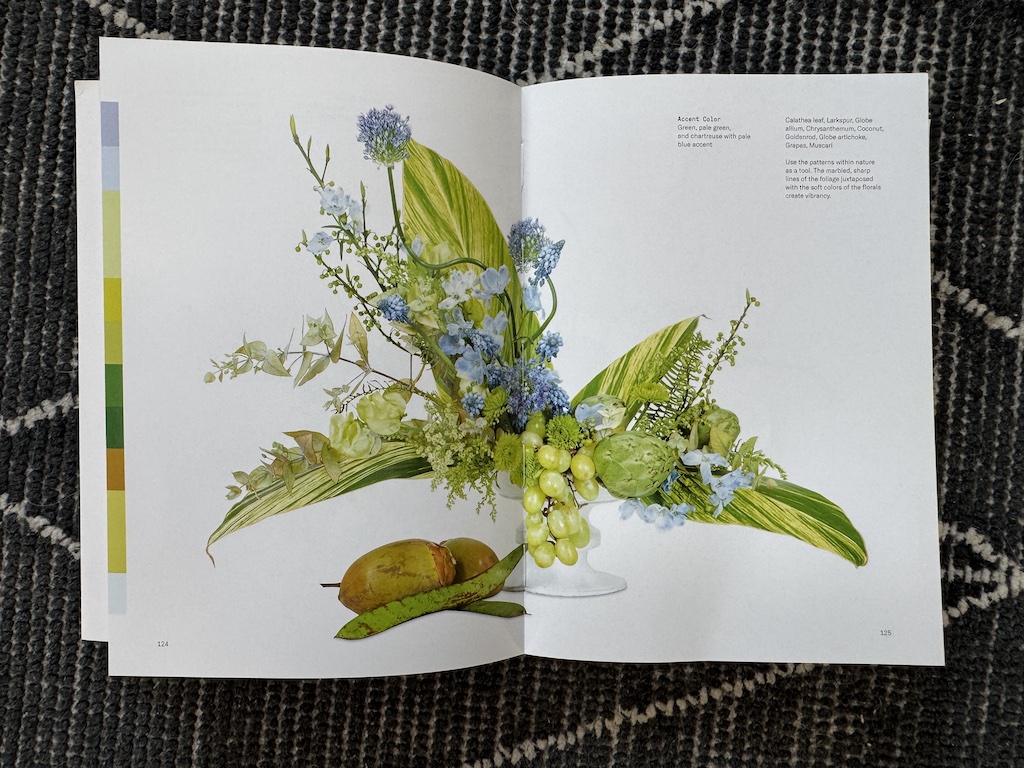
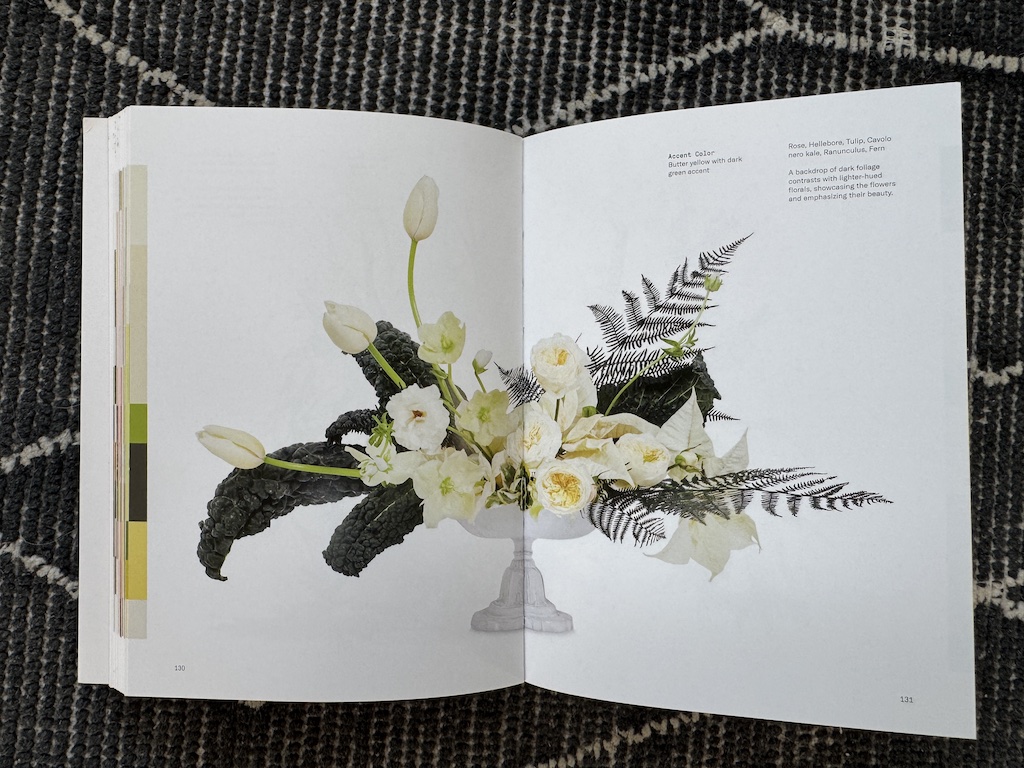
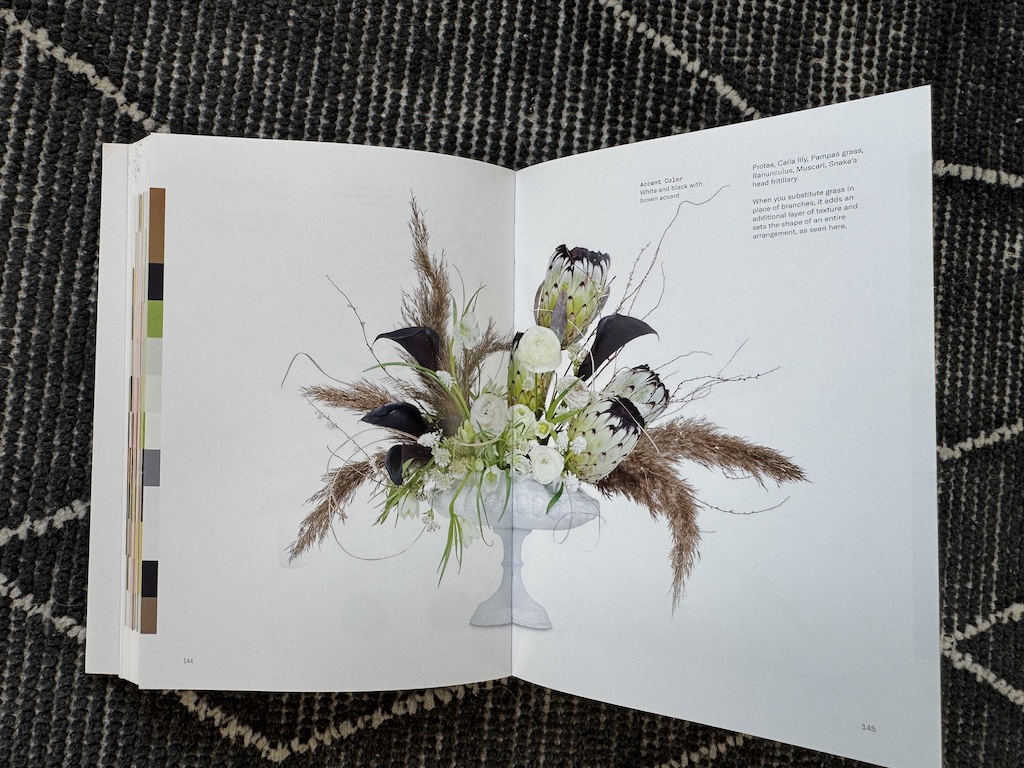
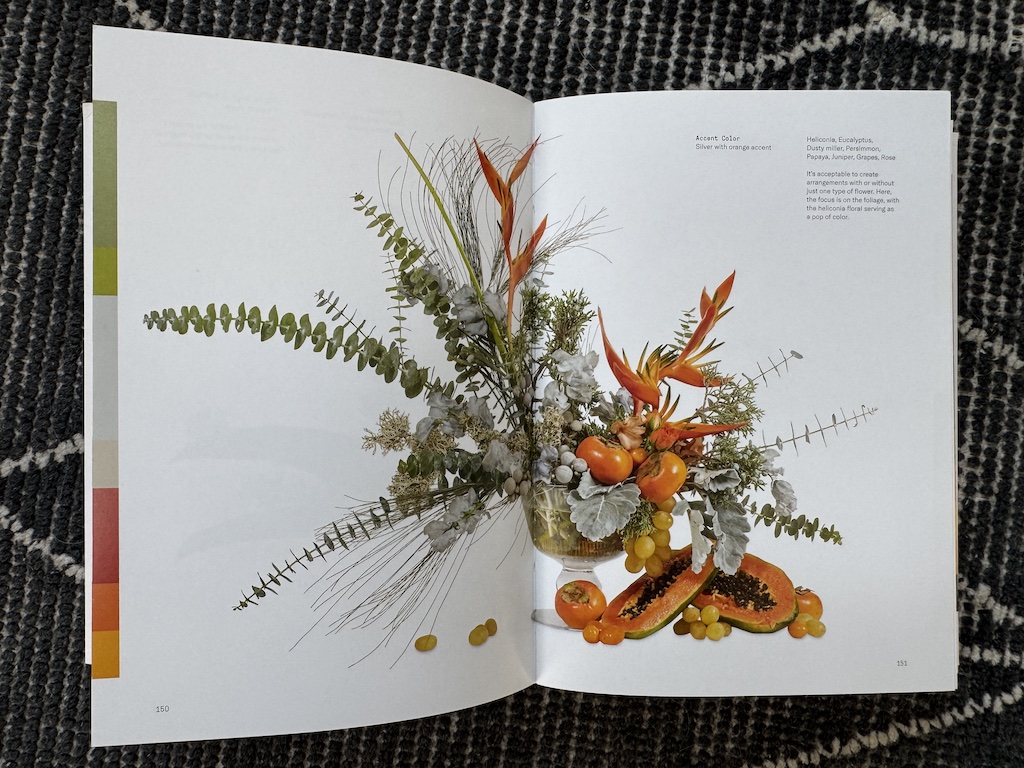
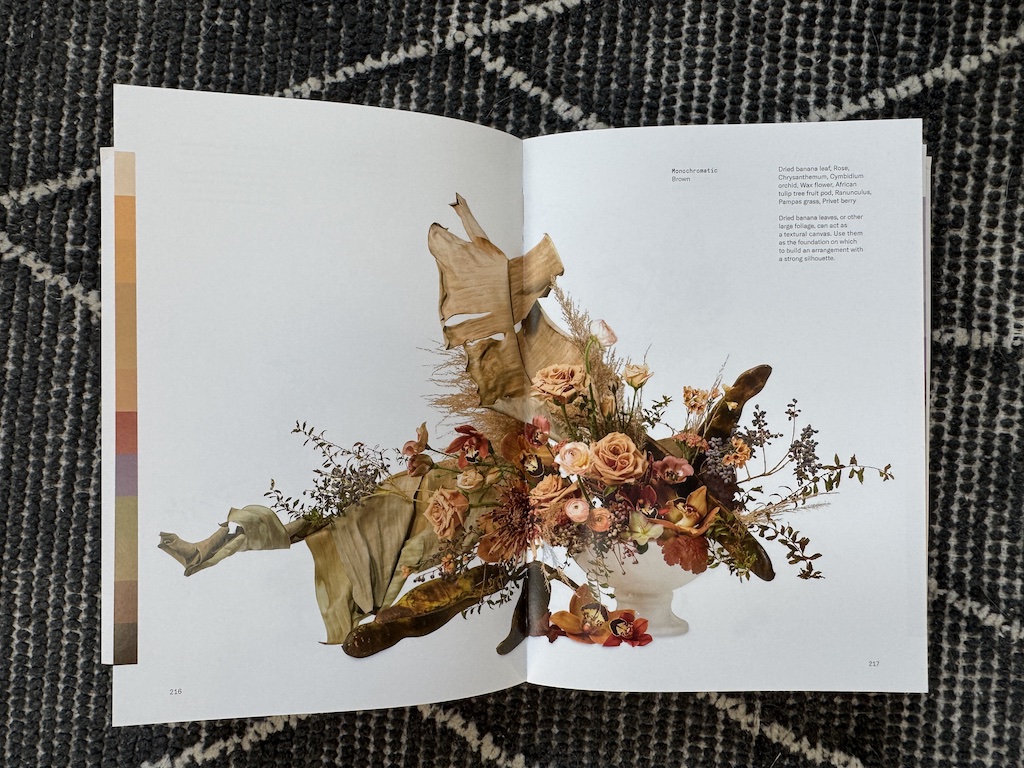
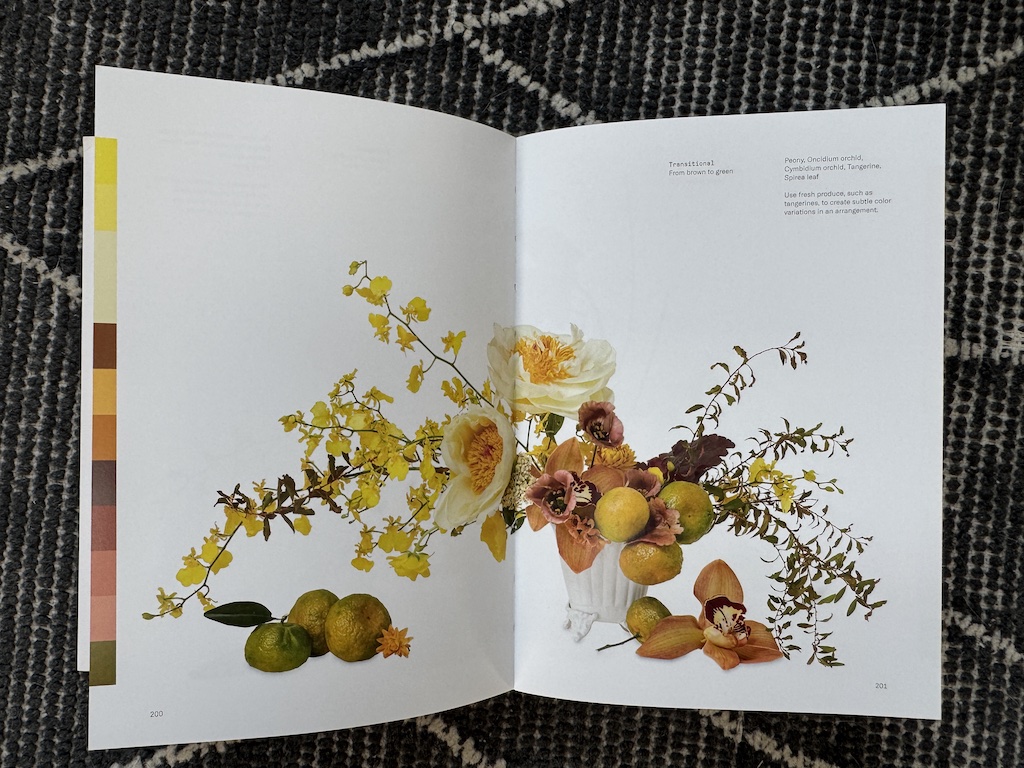
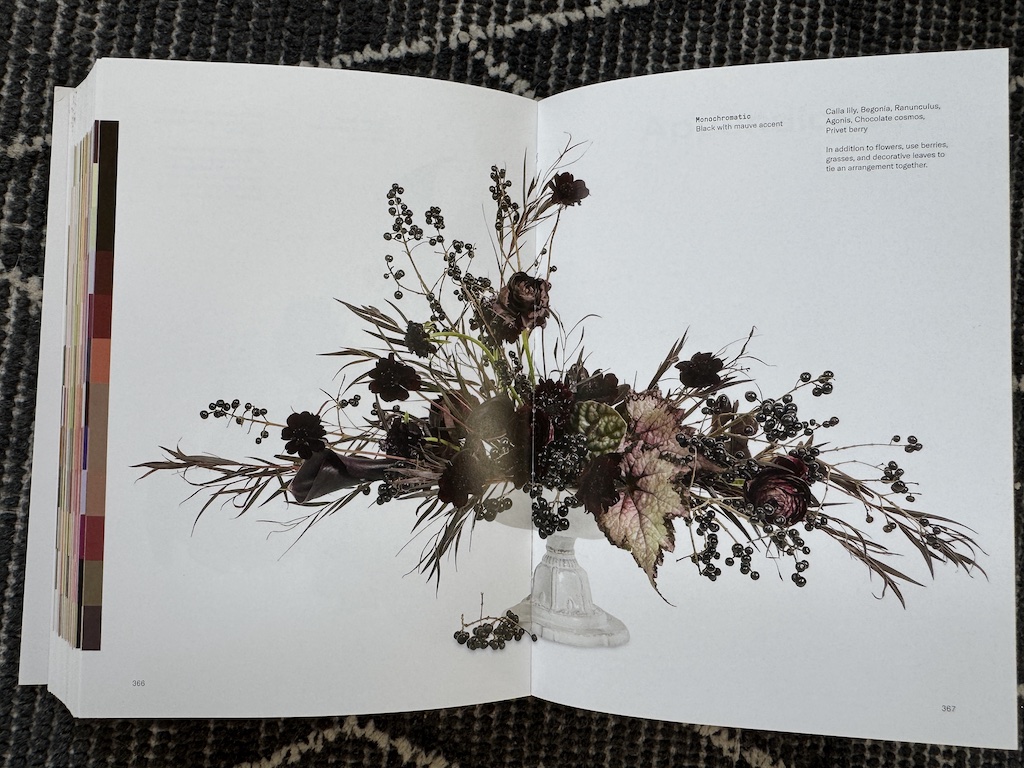
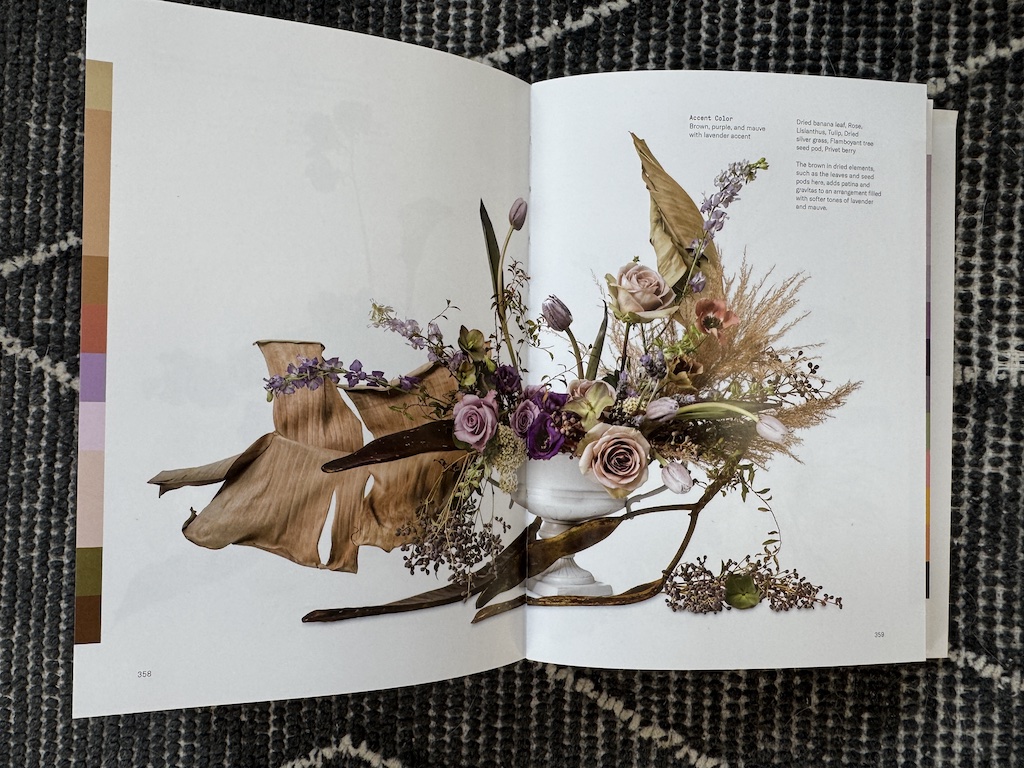
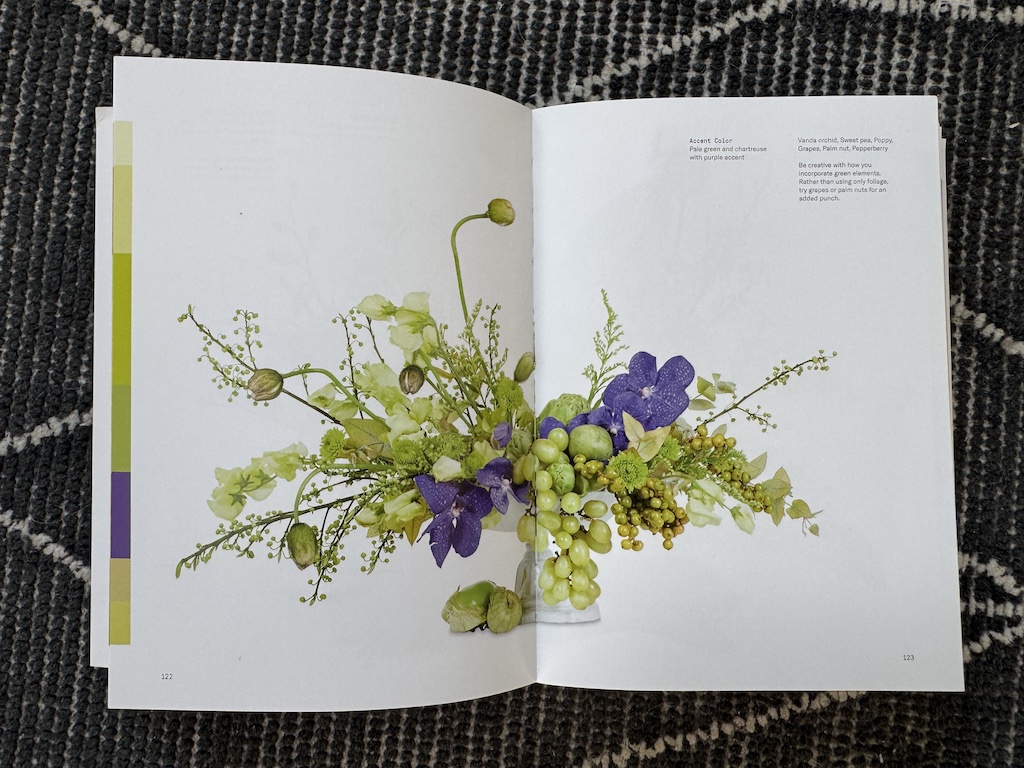
Inside Flower Color Theory
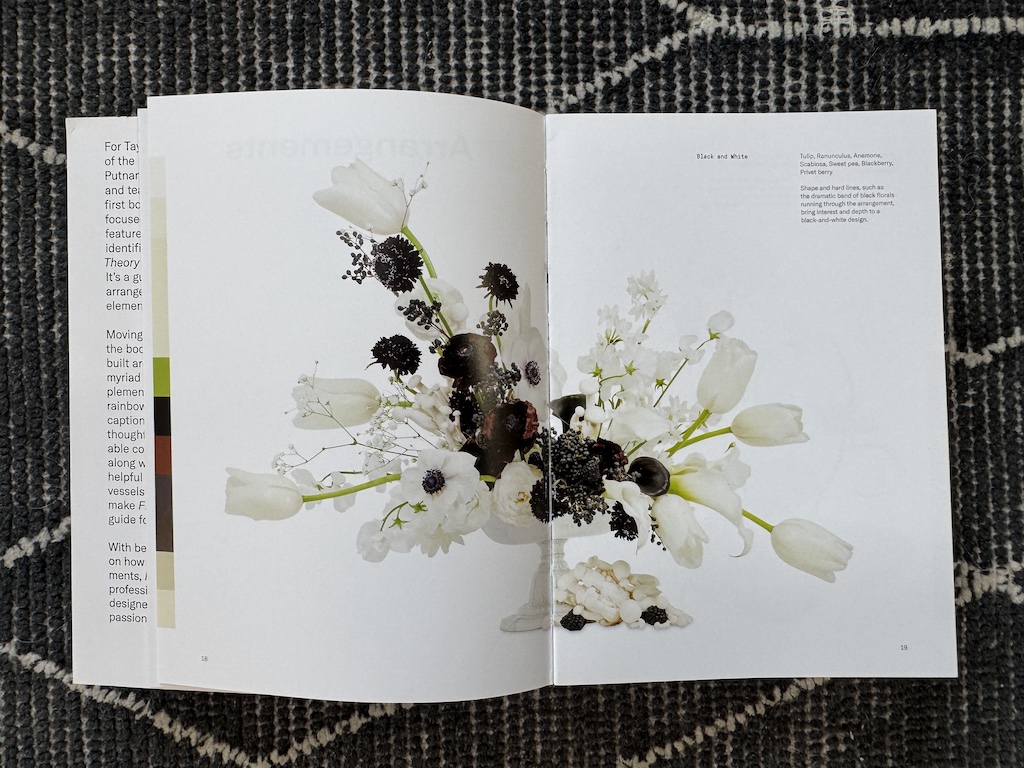
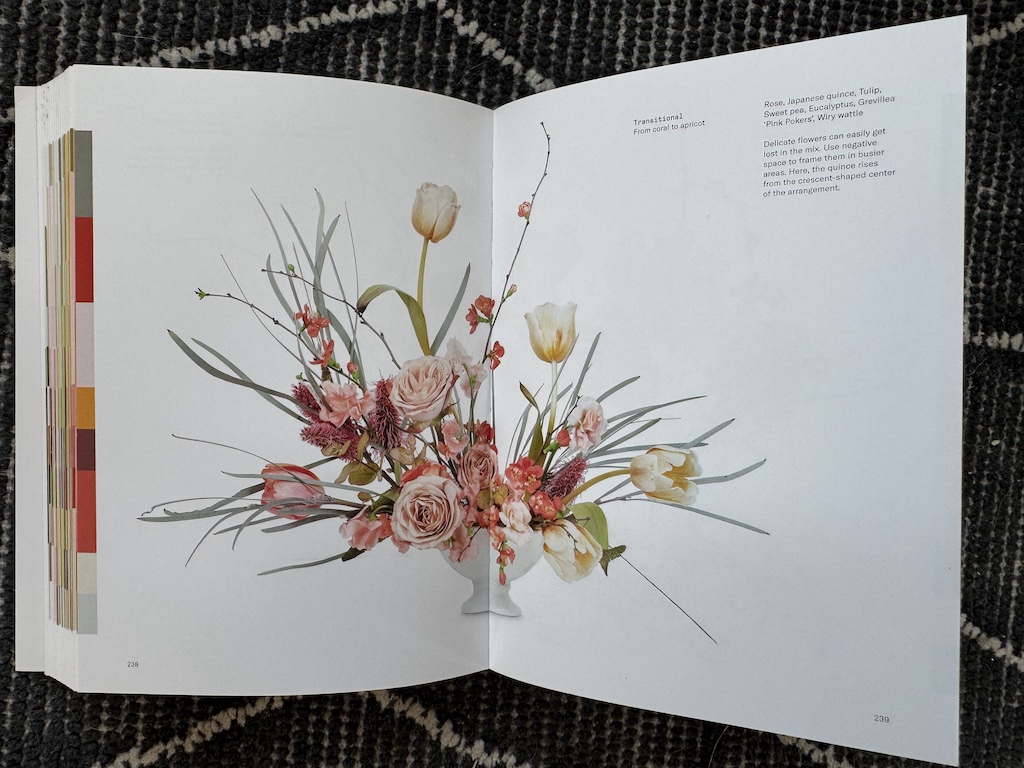
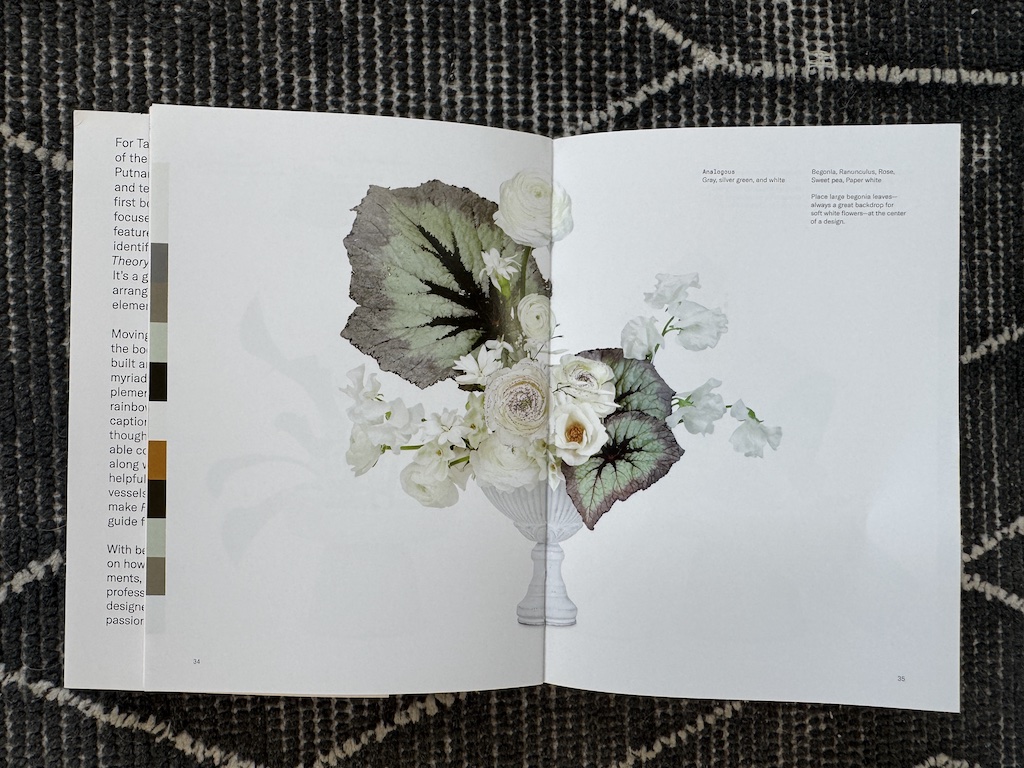
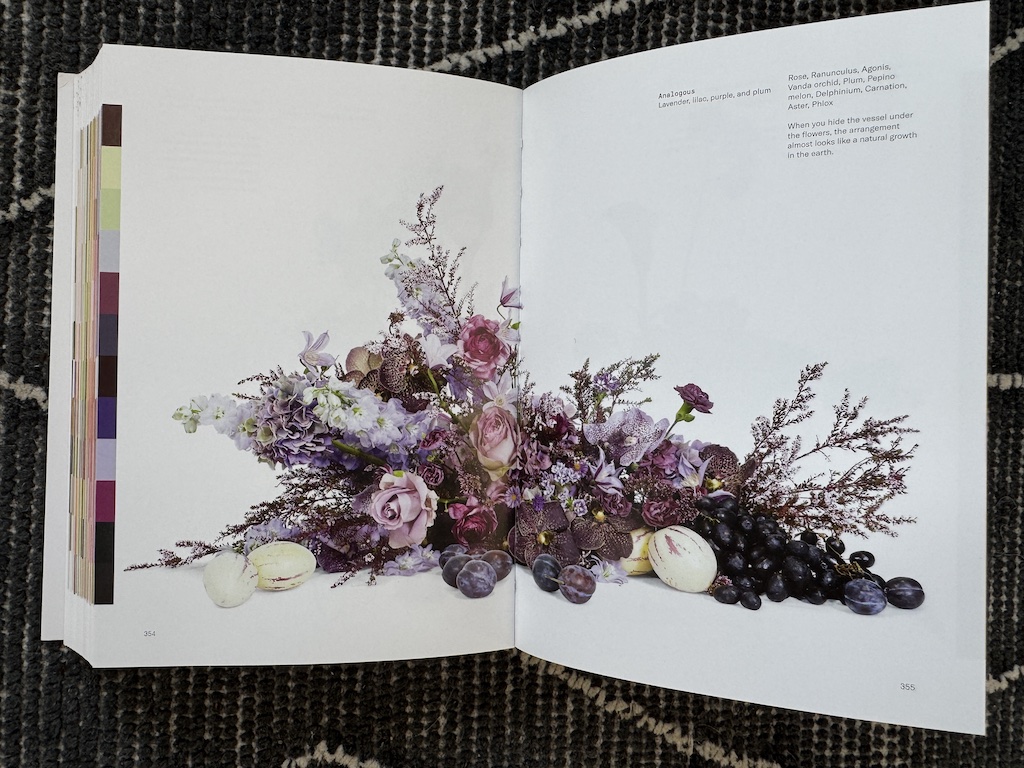
This is where Flower Color Theory shines. Each arrangement is like a color chord. Some pages showcase monochromatic schemes—black flowers with mauve accents. Others revel in analogous palettes, like lavender, lilac, and plum.
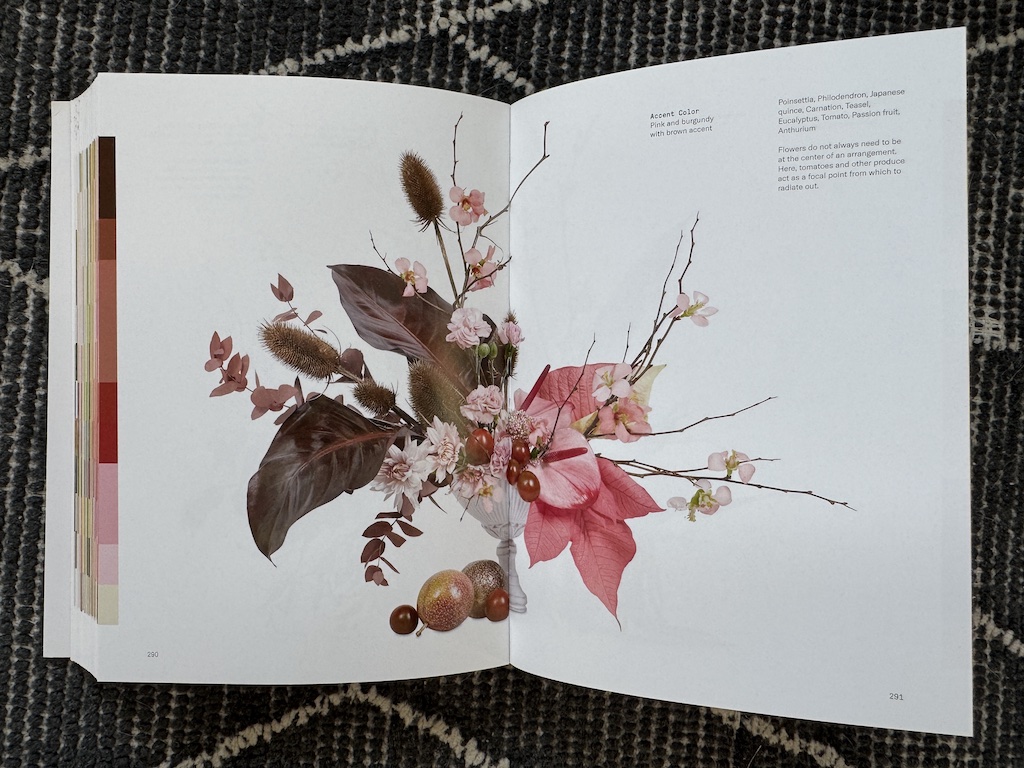
And then there are surprises: butter yellow paired with dark green, or blush pink set against burgundy.
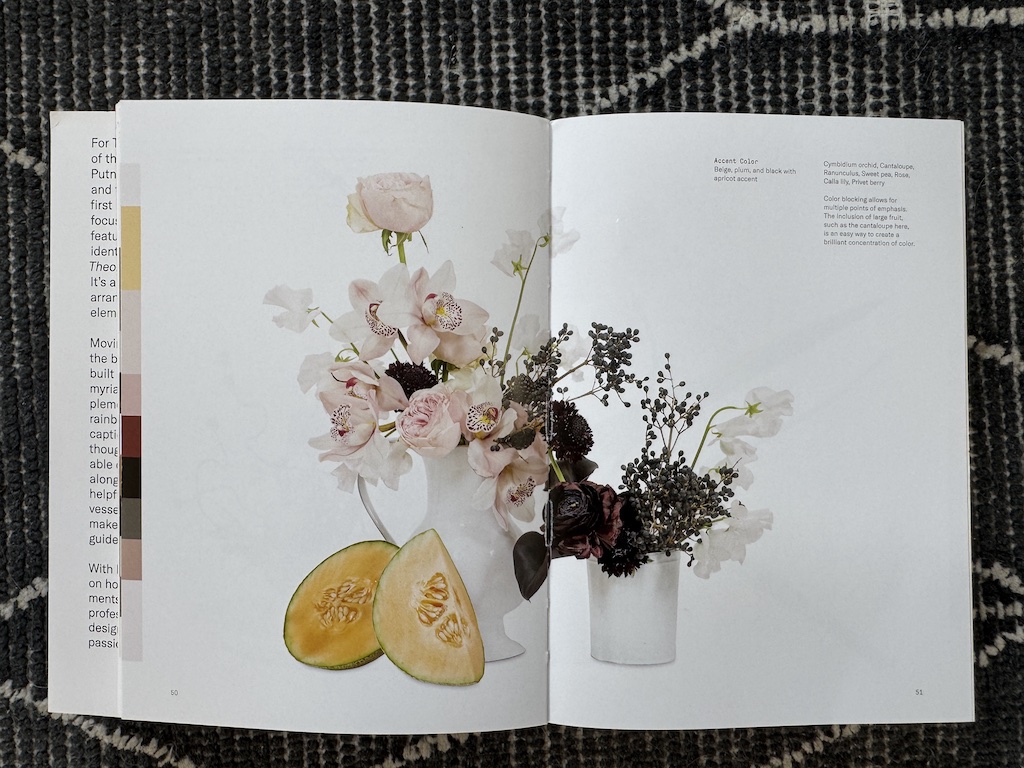
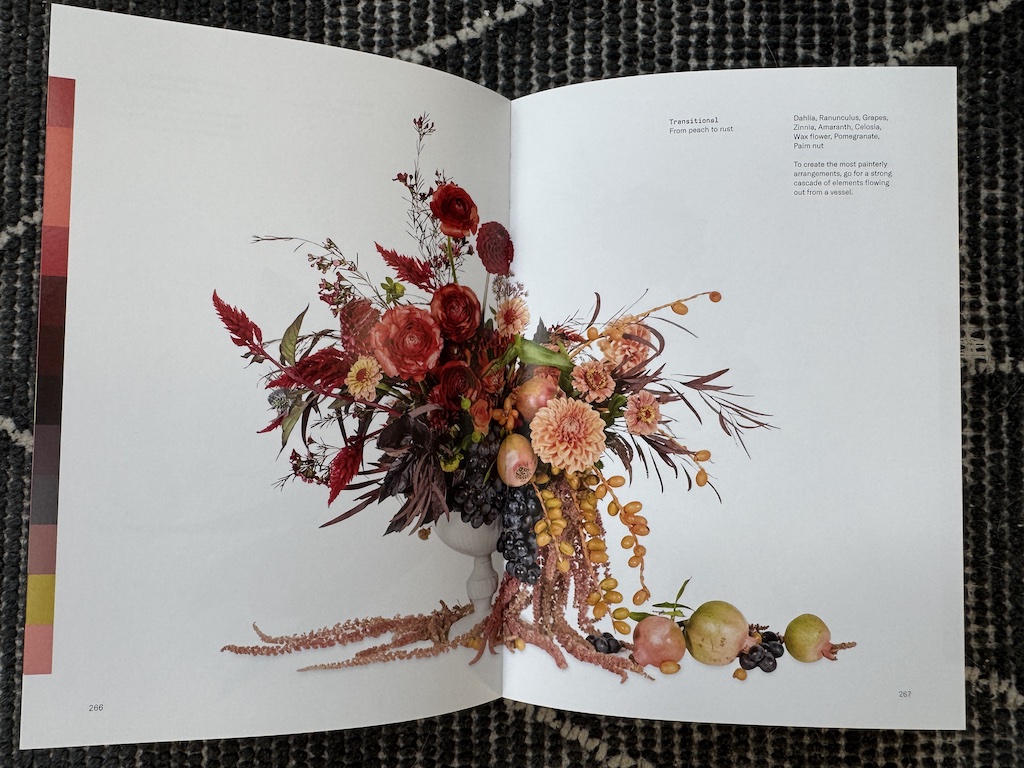
The Putnams don’t just rely on blossoms either. Look closely and you’ll see fruit woven into the arrangements—grapes, berries, and other natural elements that extend the palette in surprising ways. At first, I thought: “Of course! Why have we not done this before?” Then I worried about the food waste. And then I realized—flowers and fruit both have short, beautiful lives. We harvest them for nourishment, whether of body or spirit, and I’m okay with that.
And truly, why not see blackberries as art? Their near-black purple hue, their clustered form, like tiny grenades waiting to burst. Nature is an apt artist.
But will the “art” attract insects?
I was intrigued enough to investigate: were the Putnams really suggesting we cut up fruit and lay it next to the vase? From what I found, not exactly. The fruit shown beside arrangements in the book is more of a stylistic flourish for the photography—visual storytelling to extend the palette. The real suggestion is to incorporate fruit into arrangements, where it adds texture, depth, and surprise. Which makes sense. Blackberries, fine. But a chunk of cantaloupe sitting on the table? Yikes—that’s just an open invitation for fruit flies. Still, I love that apricot color from the cantaloupe shown with the pinks, plums, and blacks. This is one of my favorite arrangements, both for color and for feeling.
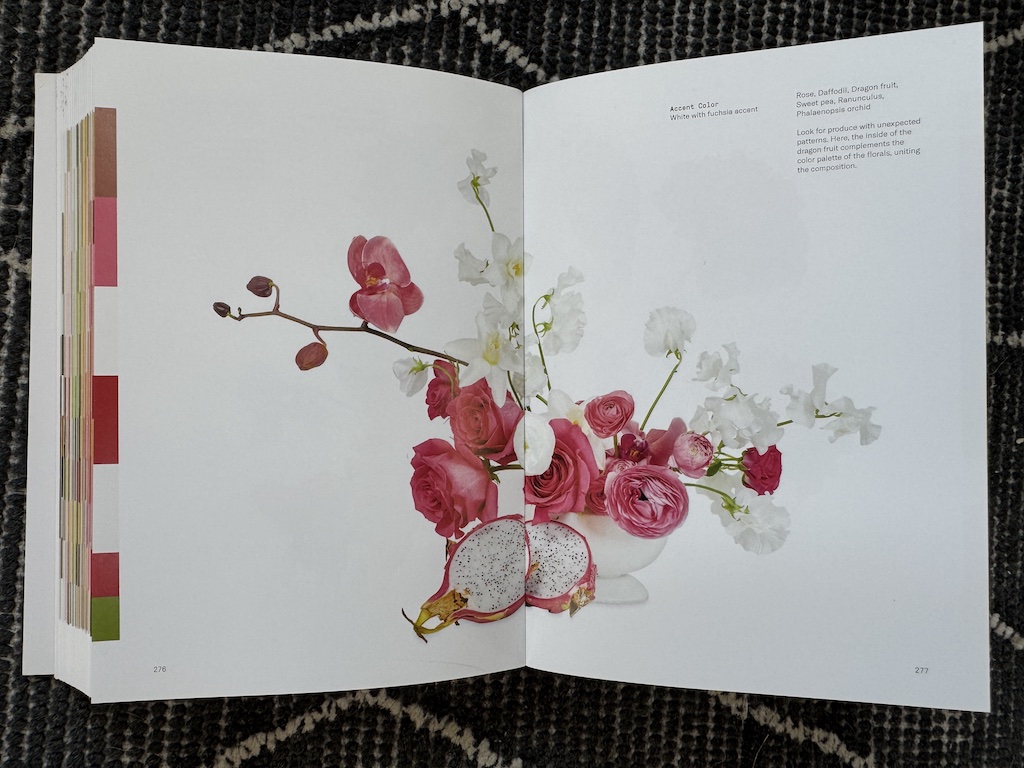
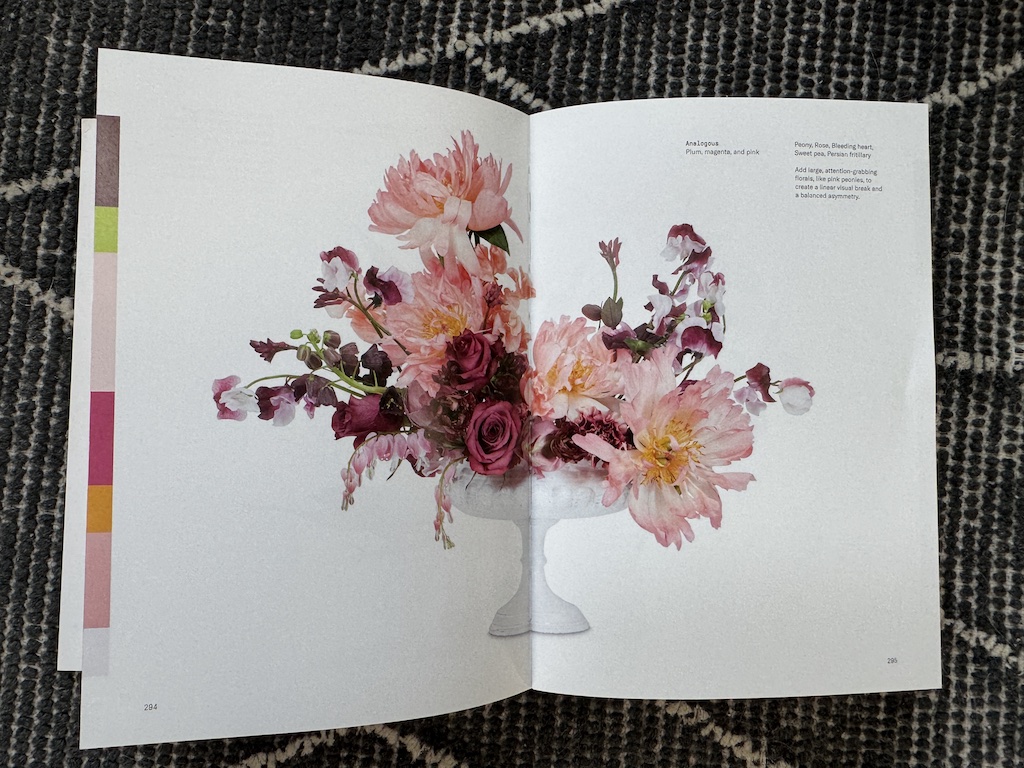
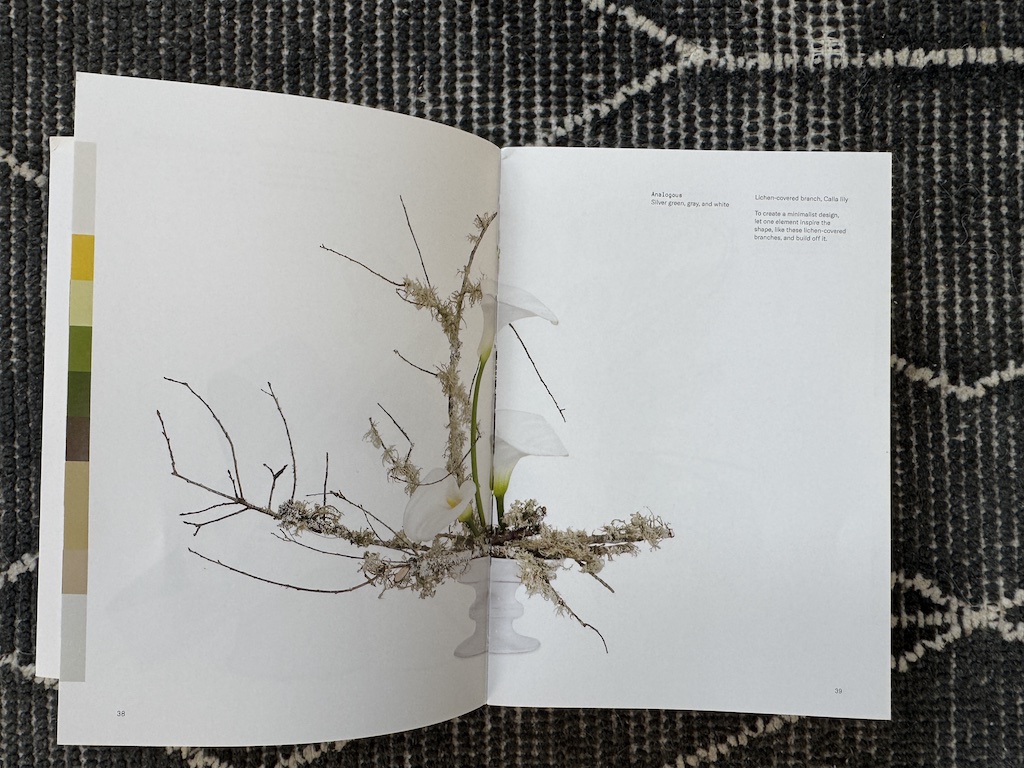
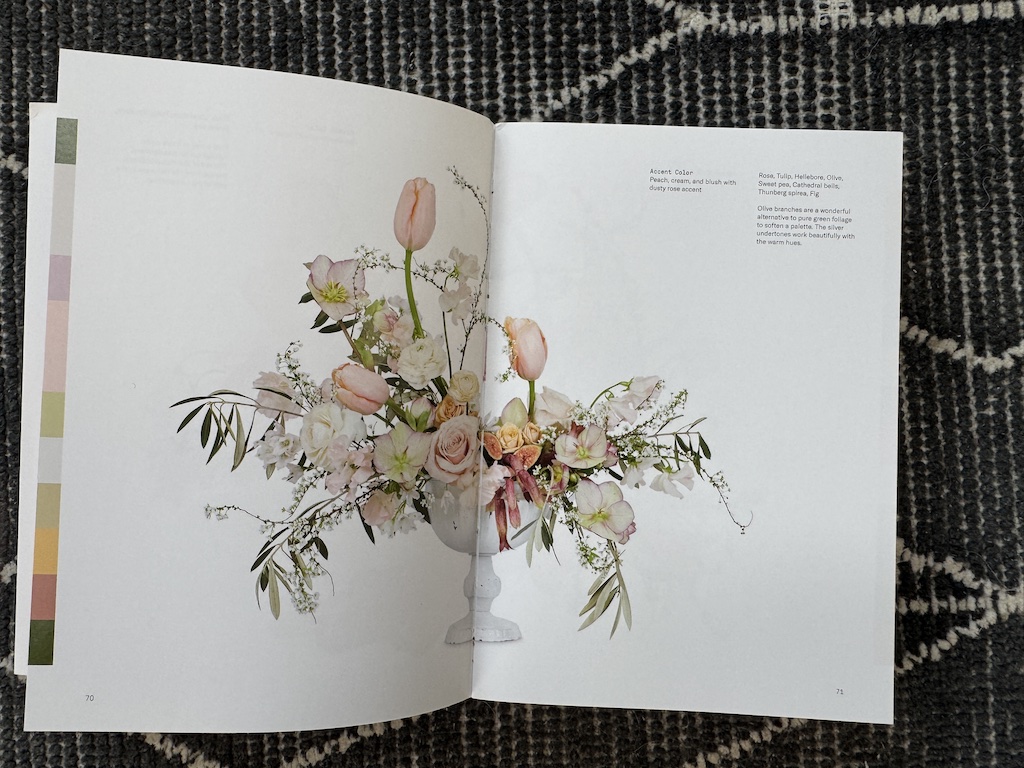
The photos I’ve taken don’t do the actual book justice, but they’ll give you a glimpse of how beautifully color is handled throughout its pages.
.
And the book itself is just as layered. Flower Color Theory includes 175 arrangements built around classic color schemes—monochromatic, complementary, analogous, and more. Each spread not only shows the arrangement but also names the flowers included, so you can actually work with the same blooms. Alongside each photo is a color bar—a strip of the palette distilled from the design—so even a novice like me can take the inspiration and build an arrangement. At the back, there are detachable color swatches and an appendix full of tips on everything from choosing vessels to seasonal flower identification. It’s as practical as it is beautiful.
They also teach you the color schemes related to the color wheel, as well as a glossary of flower categories. The terms are surprisingly evocative—like “Painterly: artistic; having qualities of a painting, such as color, form, and texture,” or “Optimism: a joyous feeling often evoked by bright colors and upward movement.” One of my favorites is “Juxtaposition: placing two elements together to create a contrasting effect.” Another is “Ethereal: a light and delicate look with an otherworldly feel.” I like that they use these categories with each arrangement—it helps me understand the terms connected to the style I like. And it’s fun to identify my style, because it makes creating easier when I can define it.
The Science and the Art of Color
I studied color theory in my college art class and the subject continues to fascinate me. Is color theory science? Yes. It’s also art.
The science lives in the physics of light, the biology of human vision, and the way our brains process color in culture and context. The art is in what those combinations do to us emotionally. For me, color is deeply personal. Certain pairings bring me a specific satisfaction, like the way the final note in a song rings true and final. The right colors feel like a kind of “rightness” in the world.
Of course, it’s all subjective. Yellow, for instance, universally suggests brightness and happiness—a sunny day. Yet for me, yellow feels jarring. I recognize its importance in balancing and juxtaposing other colors (like on the color wheel), and for this I generally lean toward a golden tone or perhaps the softest shade of buttercream. But give me a stack of yellow Post-it notes and I’ll promptly toss them in the garbage (yes, I’ve done it). Wasteful, I know. Every glance into my desk drawer brought angst. It just doesn’t rock my vibe. And besides, an organized drawer can be beautiful, too.
I’ll take aubergine, mauve, or cerulean any day. Not quite purple, pink, or blue, but more layered, more nuanced.
Speaking of cerulean, do you remember the scene in The Devil Wears Prada where Meryl Streep’s Miranda Priestly educates Andy about the color of her sweater? Every time I think of this color, I think of that moment—and how Miranda paired the cerulean-teal belt with the reddish-orange (dare I even try to name it?) dress. Gorgeous. Unexpected. That dress. That jacket. That belt. Fresh, surprising, so sophisticated.

A Quick Refresher: Color Basics
Remember back in school when we were told the primary colors were red, yellow, and blue? That was the crayon-box version of the story. It’s not wrong, but it’s not the whole picture either.
Here’s the real deal:
-
With light (think glowing screens), the primaries are red, green, and blue. Mix them all together and you get white.
-
With ink and paint, the primaries shift to cyan, magenta, and yellow. Combine them and you head toward black (or at least a muddy dark).
So why were we taught red, yellow, and blue? Because it works well enough for mixing paints in art class. Think of it as the beginner’s set. Science later refined the recipe.
Primaries are simply the building blocks—the ingredients you can’t make from anything else. Every other color is born from them.
- Color is like baking. Primaries are the flour, sugar, and butter. Basic alone, but combine them and you get cakes, cookies, pies—the full menu.
- Color is like music. Primaries are the root notes. On their own they’re simple, but together they create chords, harmonies, and symphonies of color.
That’s all primaries really are—the pantry staples or the opening notes. Once you have them, the whole spectrum is yours. But basics are boring. Elementary.
I’ll admit it: I prefer the in-between hues. The minor keys. The complicated chords. They sing more deeply to me.
My Own Flower Habit
Each week, I buy flowers from Trader Joe’s and make my own arrangements. I go for the odd, the unusual—something beyond a Groundhog’s Day arrangement.
“Anything different is good.”
My family knows what I love. For my 60th birthday few years ago, my son Brandon told the florist simply: “Something fancy; No yellow.” He knows me.
Like the Putnams, I’ve discovered that flowers and color are more than decoration. They’re living art full of feeling.
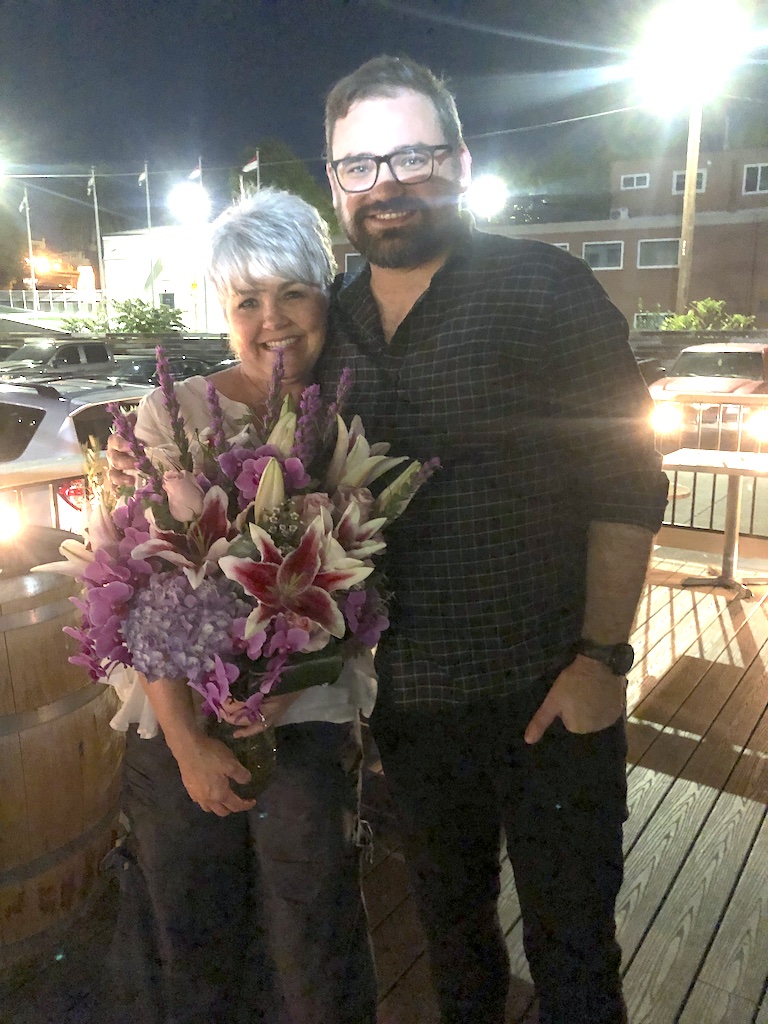
Me and my son Brandon, 2022 — the 60th birthday arrangement he ordered with the request: ‘something fancy; no yellow.’
Final Thoughts
Flower Color Theory is part science, part art, and fully inspirational. It illustrates how color can comfort, challenge, and delight—how a flower arrangement can be more than flowers, more than color. It can be an emotional composition.
You’ll even find unexpected pairings, like an arrangement with mushrooms—velvety, rich, and grounded in white earth tones.
It’s a book that delights on every page.
If you’d like to explore it yourself, you can find Flower Color Theory here.
If you liked this post, you might enjoy this one:
4 comments
How fun to make arrangements on a weekly basis!
Flowers light up my space so joyfully. 💫
What a beautiful book! Are those arrangements paintings or photographs?
I am deeply in love with certain shades of dark green. It brings me happiness when I see it! I have to stop myself from buying things that are just the perfect shade of green, because then I just keep buying things that I don’t need but are pretty 😉
They are photographs. The book is so lovely. It has 175 photos of arrangements! My pictures do not do them justice. It’s all so simply stunning and inspirational to me. 💫
Green is an important factor. I like the gray, silver-greens the best because they look best with cool-toned flowers which are my favorites.
PS – Your key words: “It brings me happiness” is what it’s all about. You’re not just buying pretty things, you’re enjoying them. Joy rarely blossoms from practicality. 🌷