

“Des Menschen Seele / Gleicht dem Wasser…”
—Johann Wolfgang von Goethe, German poet and statesman, Gesang der Geister über den Wassern, 1779Goethe wrote these words after witnessing Staubbach Falls in Lauterbrunnen. The poem’s opening line, translated as “The human soul is like water,” was inspired by the nearly 974 feet cascade plunging from the valley’s cliffs, dissolving into mist as it fell.
This post is part of my 33 Days in Europe series. Visit the hub page to follow along, see the full itinerary, and sign up for email updates.
Today was a travel day to Lauterbrunnen. We headed to the Alps!
We left Lucerne in the rain, and it turned out to be the perfect weather for a train ride. For 2½ hours we sat in a spotless car with wide windows and watched Switzerland roll by—villages tucked against hillsides, turquoise lakes slipping in and out of view through the trees, fields so green they looked unreal, like someone had turned up the saturation dial. The lakes’ water gets that striking blue-green color from fine particles ground down by glaciers and carried into the lakes by mountain streams.
Swiss trains don’t just glide; they climb. On the steepest stretches between Lucerne and Interlaken, hidden cogwheels lock into the rails like gears in a watch, one of the ways Switzerland’s trains handle mountains so gracefully. The ride was so smooth we never noticed—it’s really just a fun fact for engineer nerds like Ron. And when the tracks can’t reach? Gondolas take over. I can’t wait to show you the video from our gondola ride on Day 7—stay tuned!
Click (or tap) any photo to open the gallery, see the full image, captions, and scroll through the set.
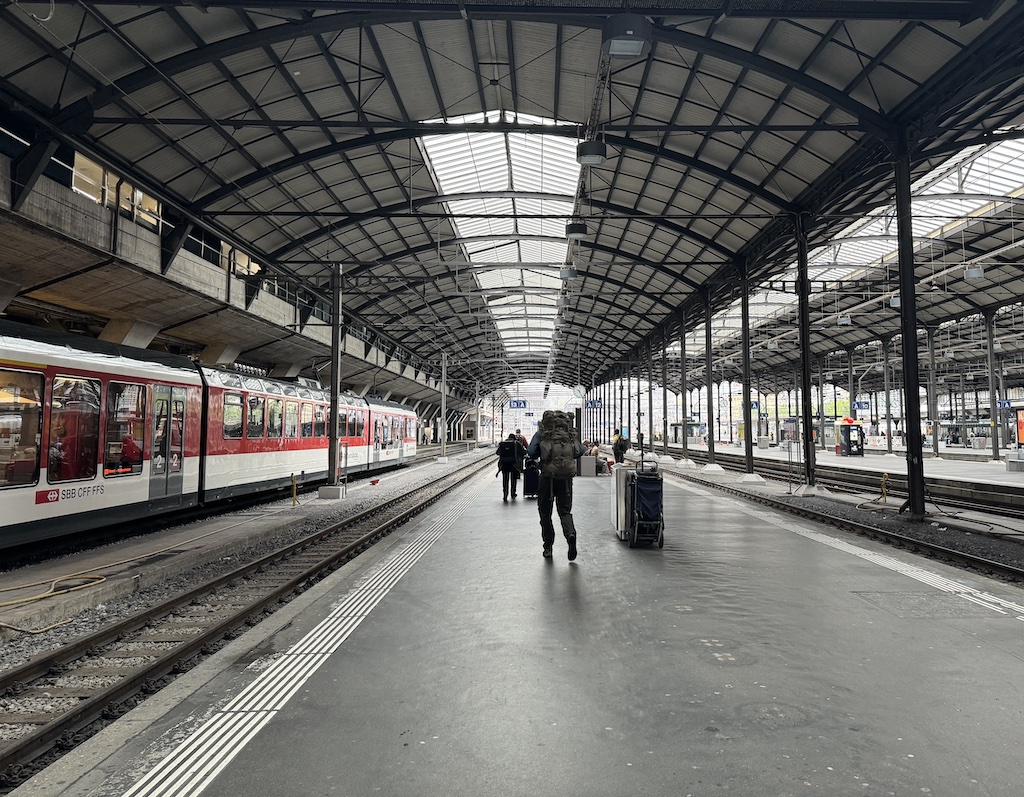
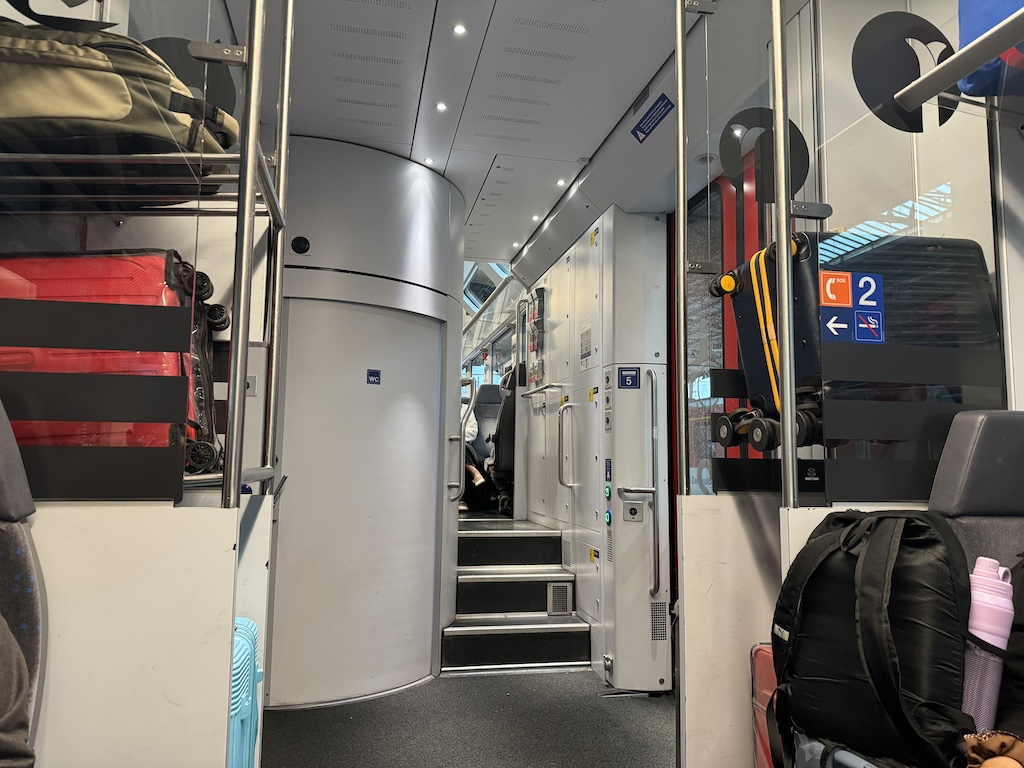
Surely you know by now that Ron and I love to travel by train. It’s simply the most comfortable way to go—better than planes, freer than cars. I videotaped part of our journey and then edited the footage—my first edited video, complete with blurred passengers for privacy—so you can see just how serene Swiss train travel feels. Peaceful, luxurious. Magical, really.
Arrival in Lauterbrunnen
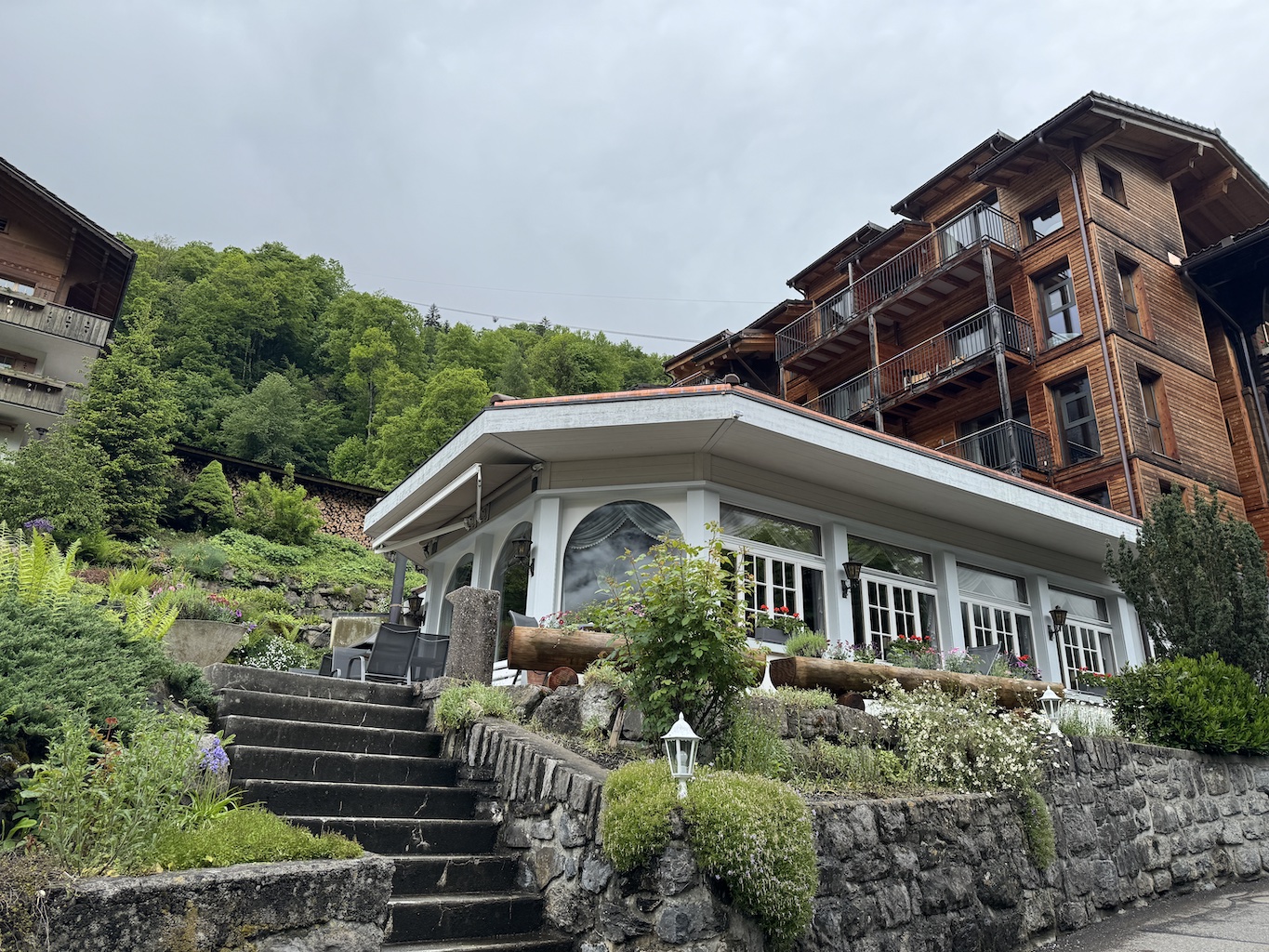
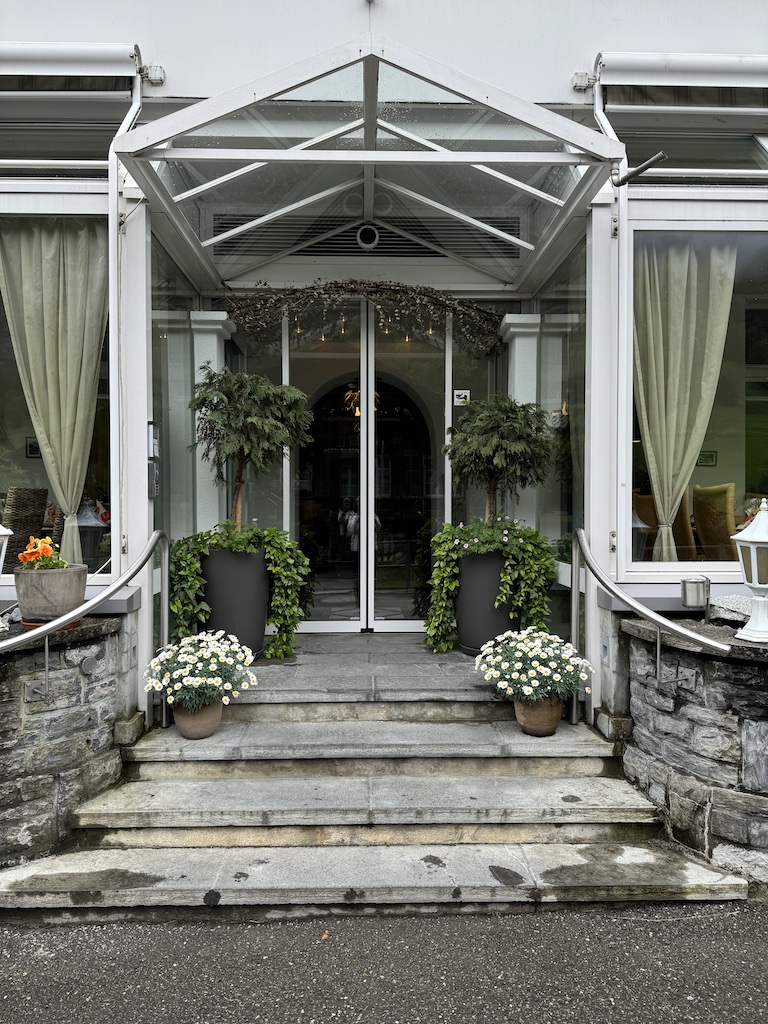
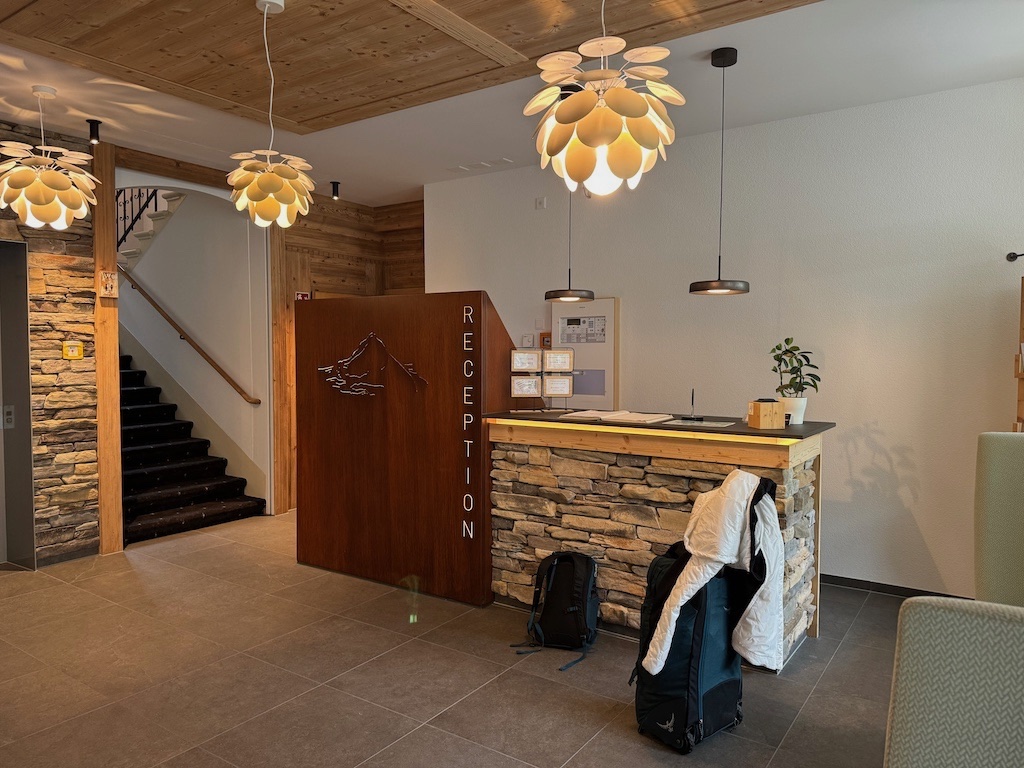
From the station it was only a three-minute walk to our hotel, the Silberhorn. Built in 1897, it’s been hosting travelers for more than a century. Back then people arrived by mule or on foot. Today it’s a modern alpine retreat with a rustic exterior, perched just above the tracks so you’d never know you were near the station.
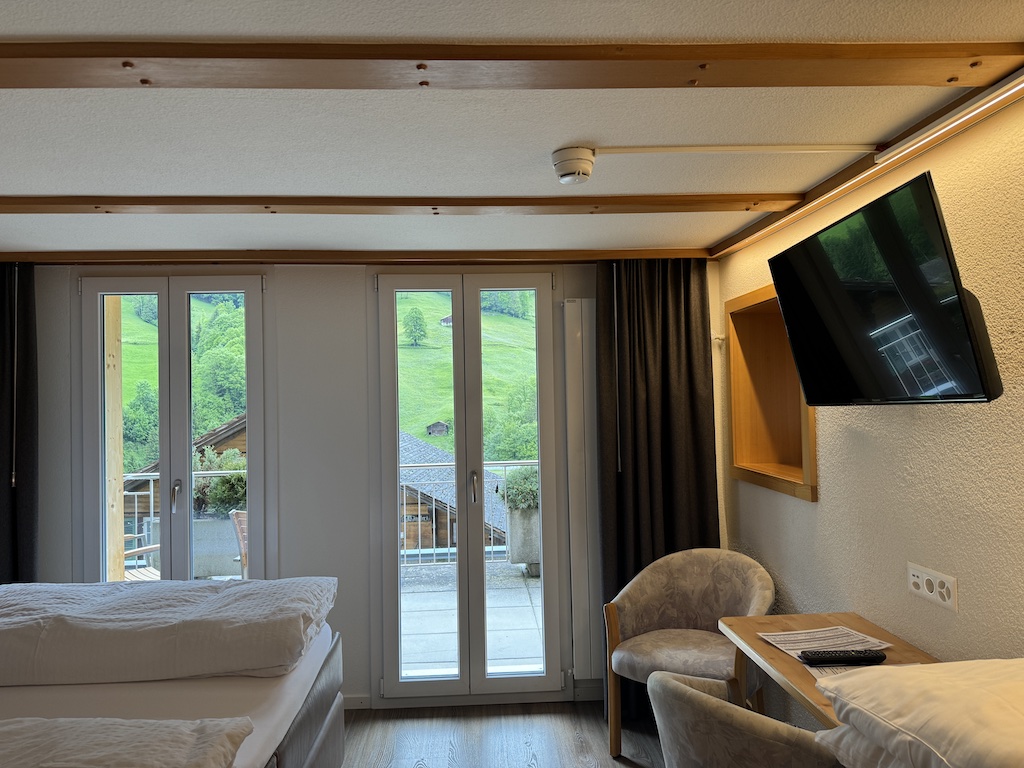
The beds were true to the European experience—a Swiss double, two singles pushed together under one headboard. Honestly? It was quite nice. No tug-of-war with the covers during roll-overs, and we both slept well. Of course, we were weary travelers. Studies even back it up: couples in the U.S. cling to one big mattress, but research shows separate duvets lead to better rest and fewer midnight disturbances. Europe may be onto something.
The view in Lauterbrunnen felt otherworldly. Clouds drifted right across the village, wrapping the cliffs like breath. We weren’t above them; we were in them. The valley floor here sits at about 2,600 feet, and in spring the moist air meeting the sheer rock faces makes clouds form right at this level. They slip through the valley, brushing past windows and waterfalls alike. It happens in few places as dramatically as Lauterbrunnen, where the walls funnel and trap mist. That’s what astonished me most—that here in the Alps, you are literally inside the clouds.
Those small sheds scattered across the slopes aren’t random outbuildings. They’re granaries—tiny barns farmers once used to store grain. By spreading them across the valley, they could avoid losing an entire harvest in an avalanche. Once the railway arrived and imported food became easy to get, the need faded, but the little houses stayed, reminders of alpine ingenuity.
Click (or tap) any photo to open the gallery, see the full image, captions, and scroll through the set.
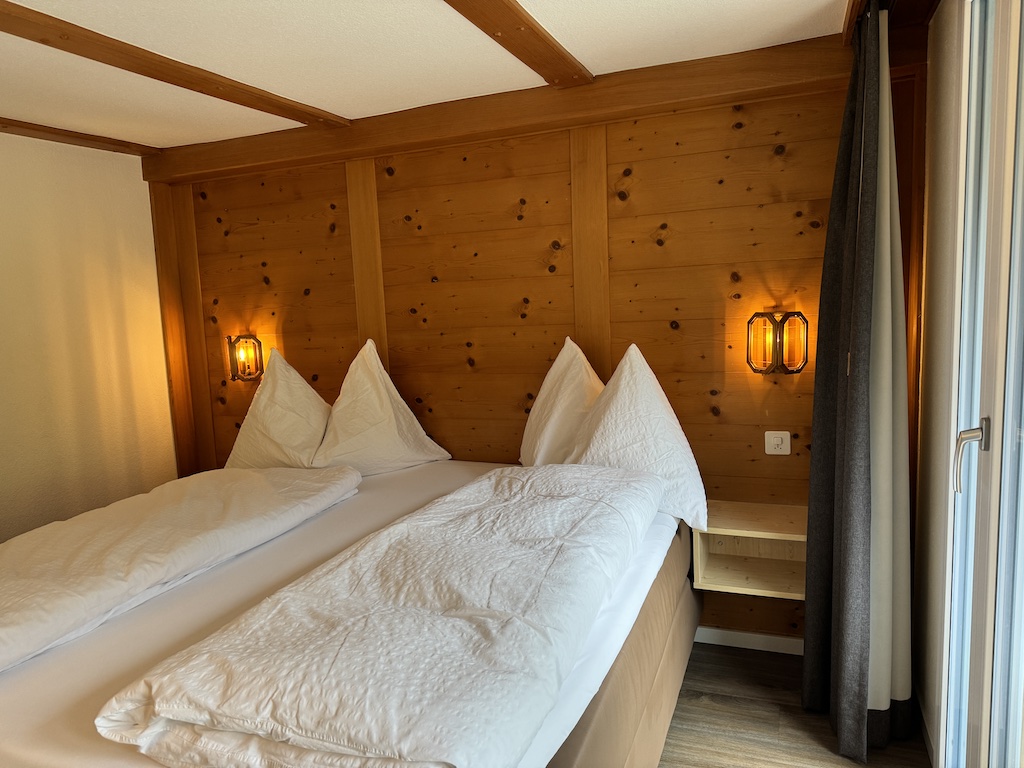
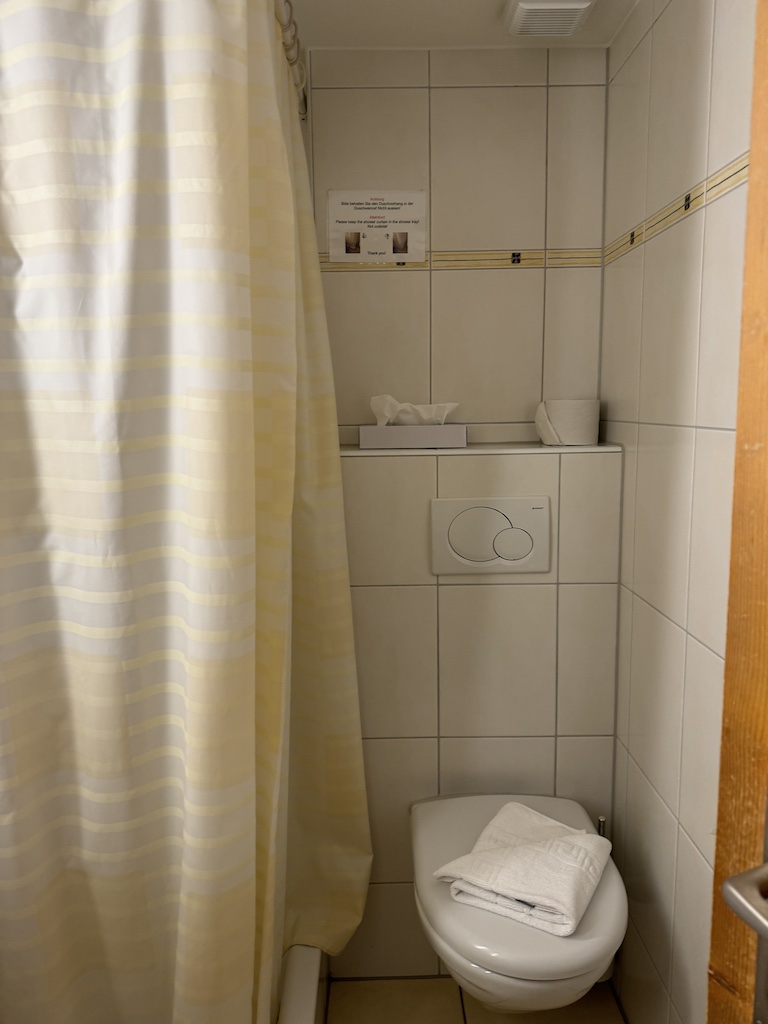
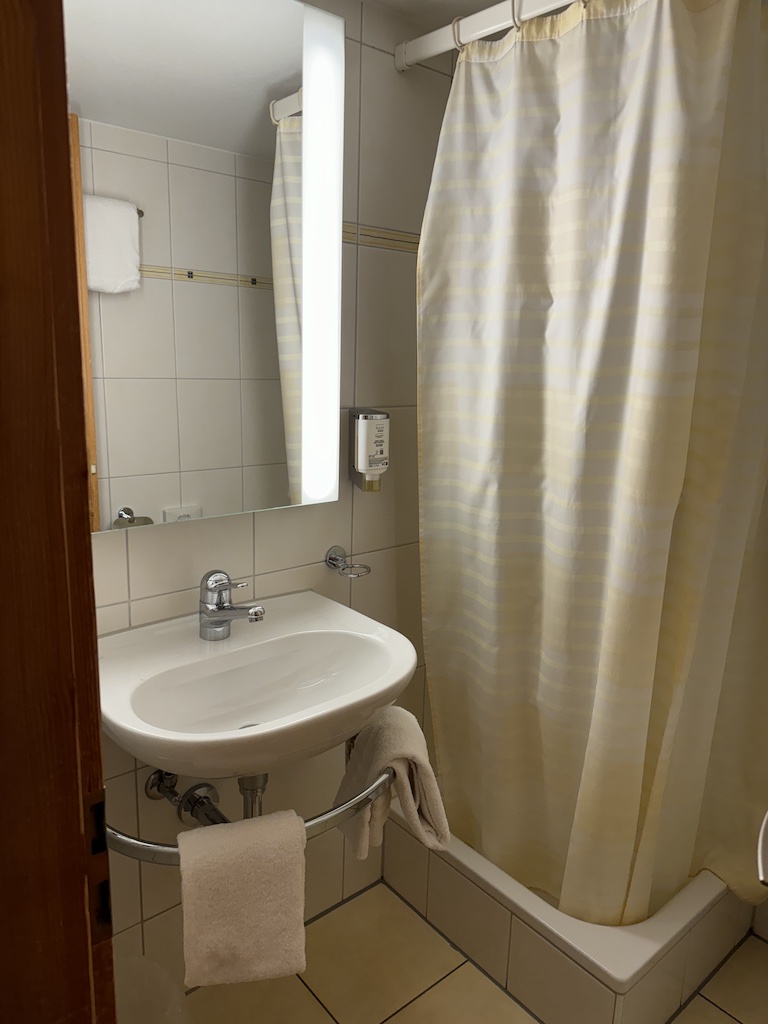
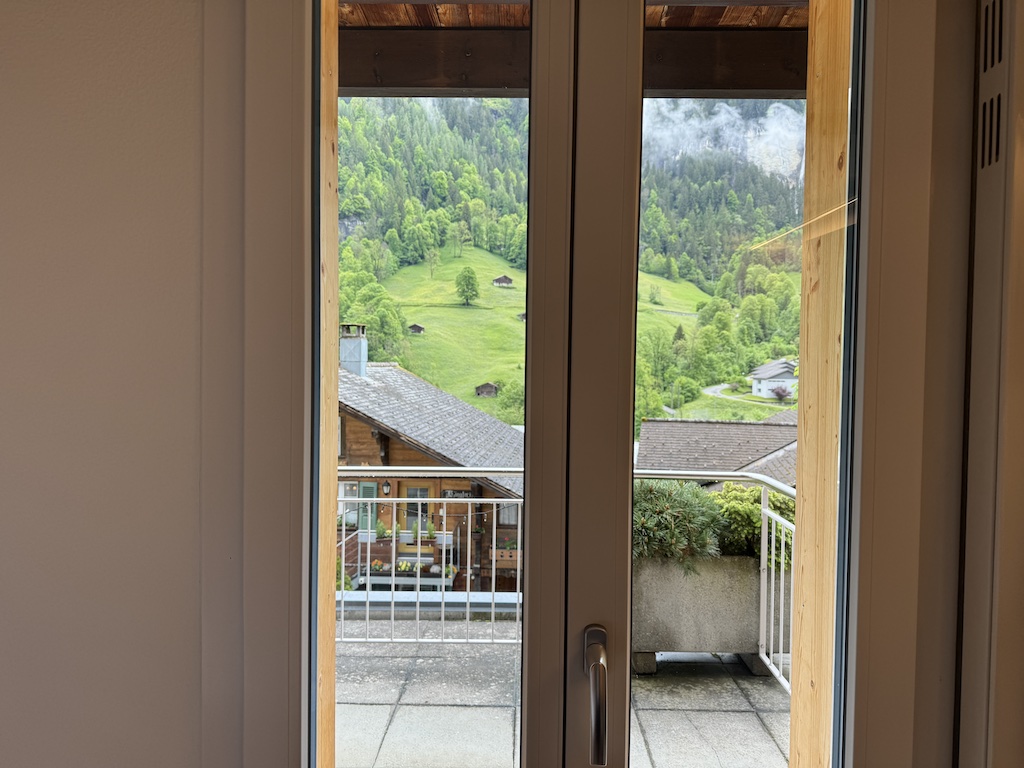
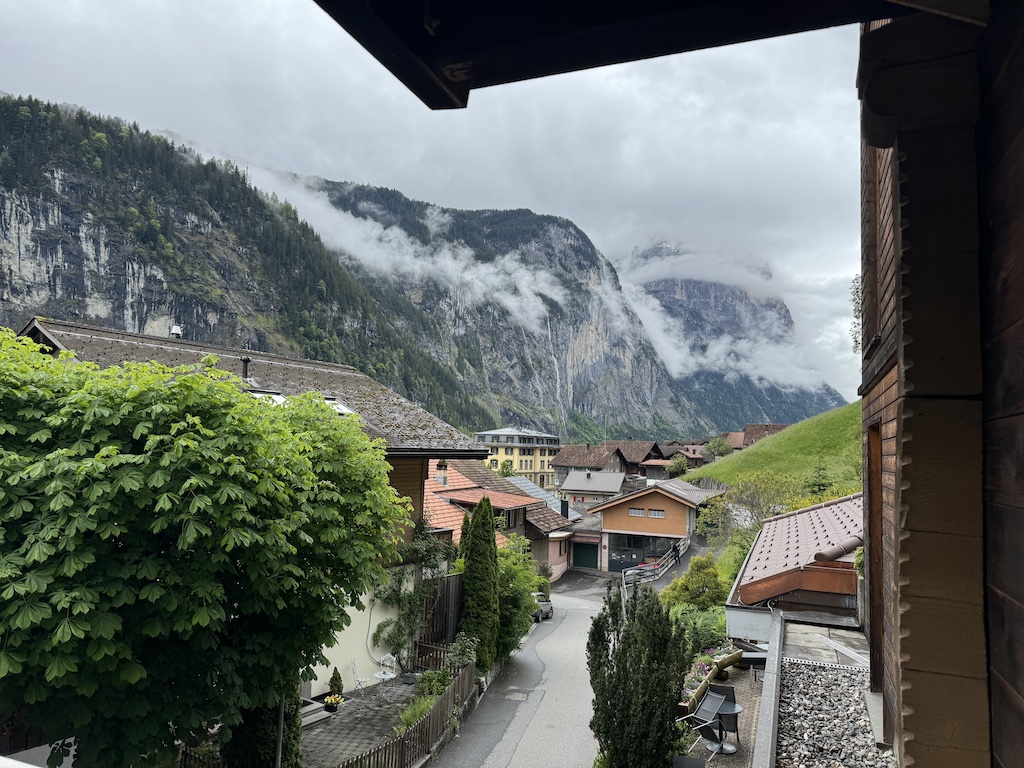
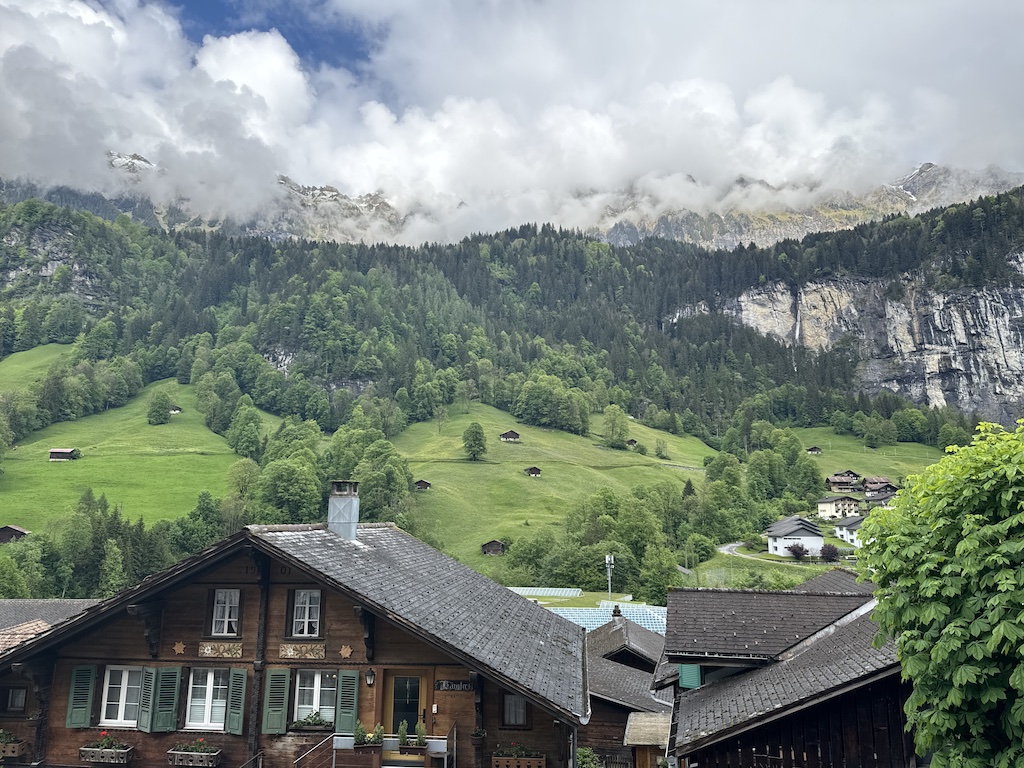
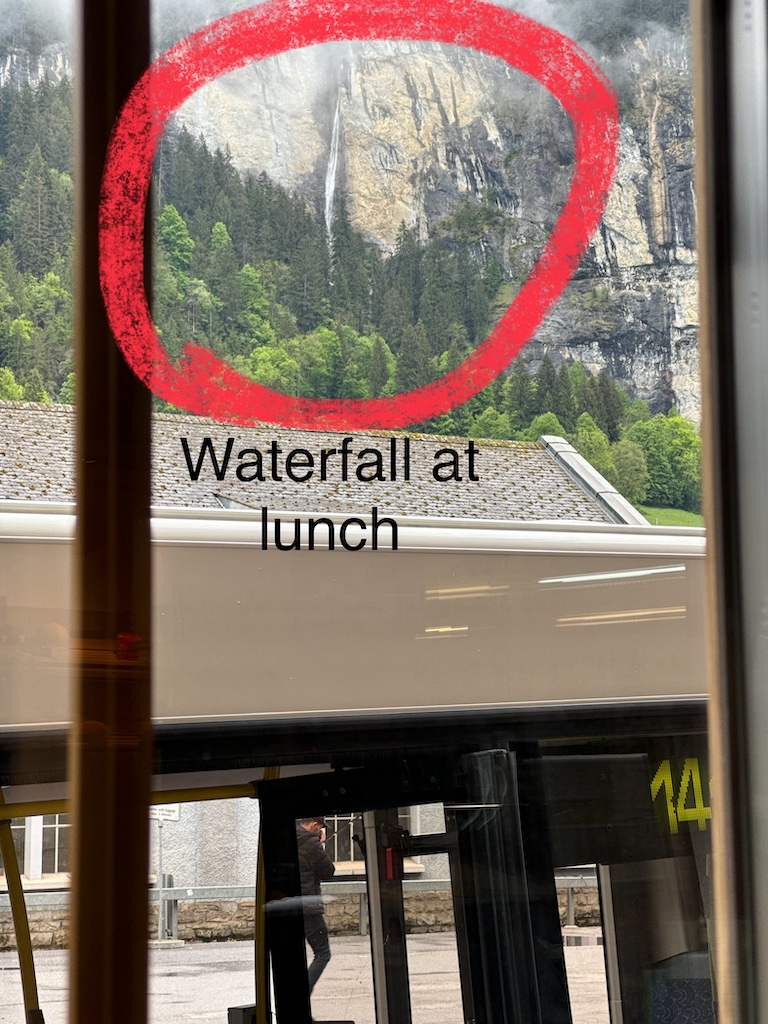
We ate lunch at a café a few doors down, where a waterfall filled the view. Imagine living with that backdrop every single day. This valley is unreal. I was so taken, I took a picture and circled it like a giddy tourist to show my family. Little did I know I’d see much more impressive ones—and several to boot.
Click (or tap) any photo to open the gallery, see the full image, captions, and scroll through the set.
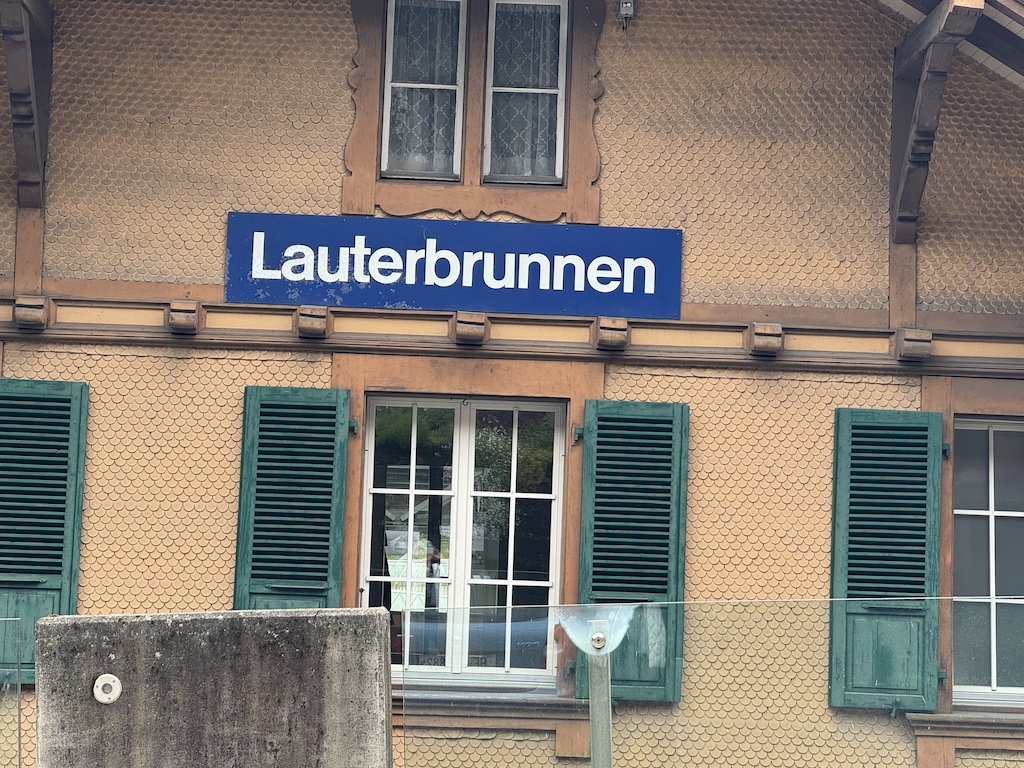
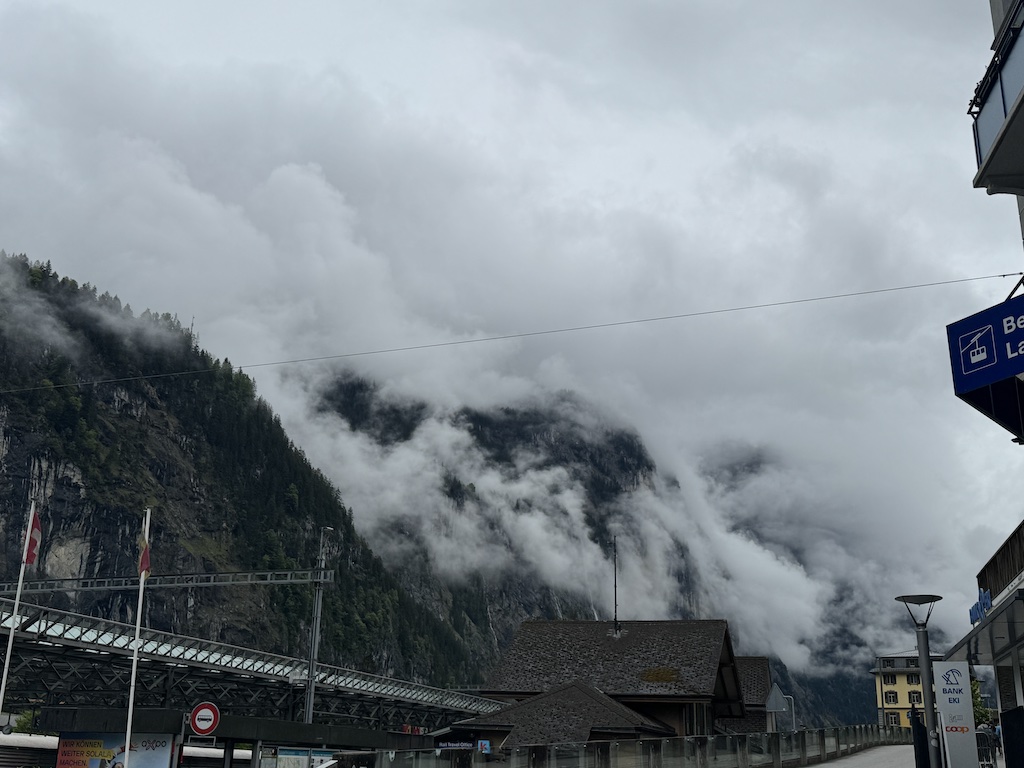
A Village in Motion—A Village Walk
It was May, which meant workers were out in full force—bulldozers, diggers, neon jackets—taking advantage of the short building season between the snow of winter and the rush of summer visitors. Rain didn’t slow them down, and it didn’t dampen our mood either. I like seeing a place in all its stages—the real ones—to understand what it’s really like to live there. Here you realize how little time they have to keep everything repaired and ready, how nature dictates necessity.
We took a short walk through the village just to get a feel for the place before dinner. And we wanted a closer view of Staubbach Falls—Lauterbrunnen’s signature cascade, 974 feet high and one of the tallest free-fall waterfalls in Europe. It plunges straight down from the cliffs above the valley and is the very waterfall that inspired Goethe’s 1779 poem Gesang der Geister über den Wassern, quoted at the top of this page.
The Valley of 72 Waterfalls
Lauterbrunnen sits inside one of the most dramatic trough valleys in the Alps, sheer cliffs rising on both sides. It’s called the Valley of 72 Waterfalls, and the name is no exaggeration. From almost anywhere you look, a ribbon of water plunges from rock to meadow. The air itself feels misty and new, as if the valley were breathing freshness into you. The energy invigorates, but also calms.
Is this the place that quenches the whole world?
Experiencing new places transforms me, awakening not only a deep appreciation for different cultures but also for Earth’s magnificent beauty—an infinite churning of vitality.
The surrounding area is one of Switzerland’s largest nature conservation zones, dotted with alpine meadows, secluded hamlets, and mountain inns. Even a short walk takes you past cascades that most towns would claim as their singular treasure. Here, they’re everywhere.
Here’s Staubbach Falls a bit closer, just down the street from our hotel. Worth the pause.
Dinner
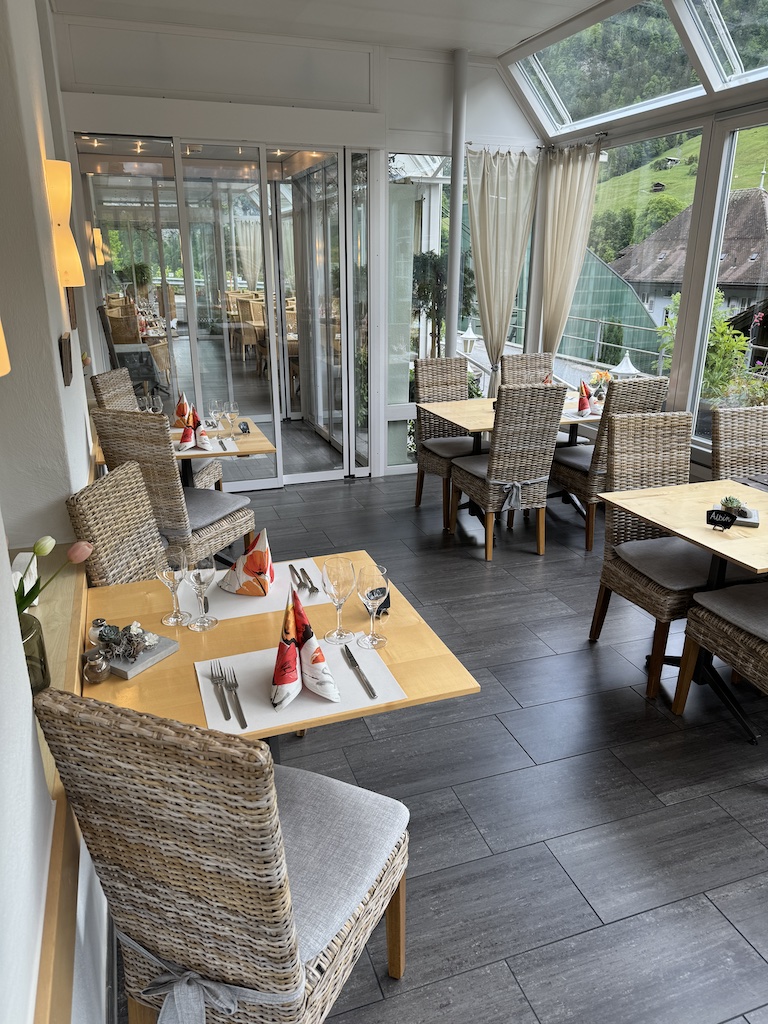
We headed back to the Silberhorn for dinner.
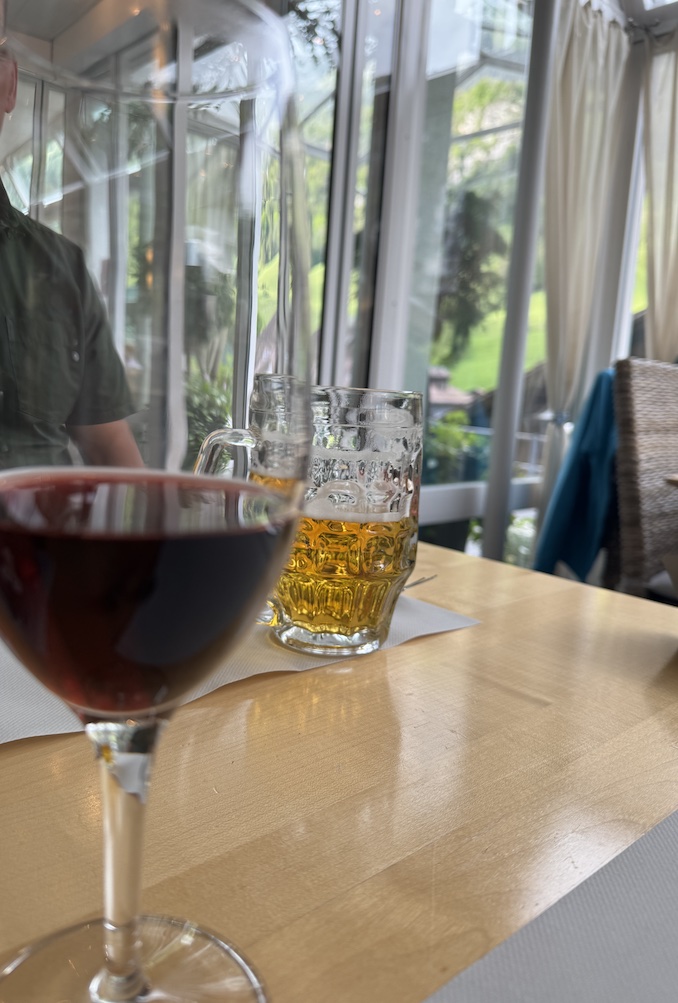
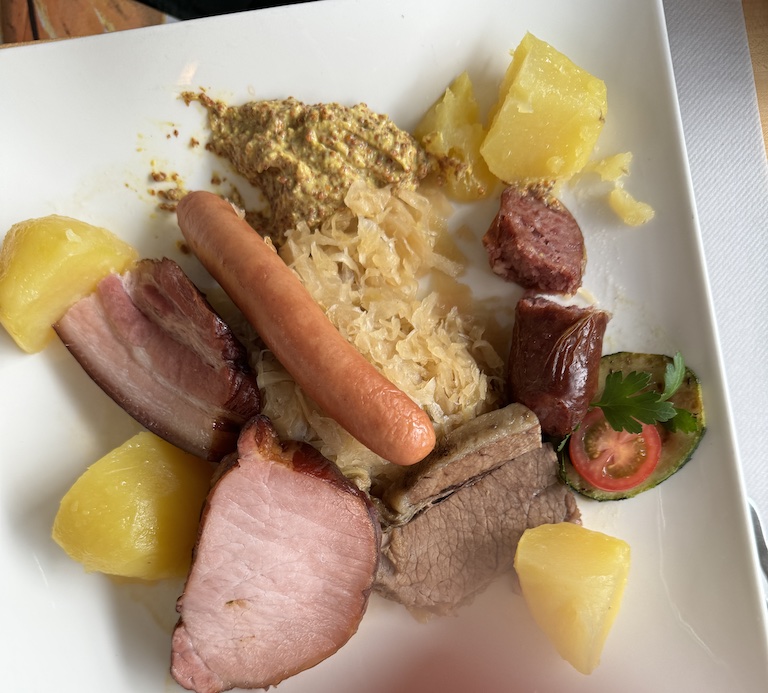
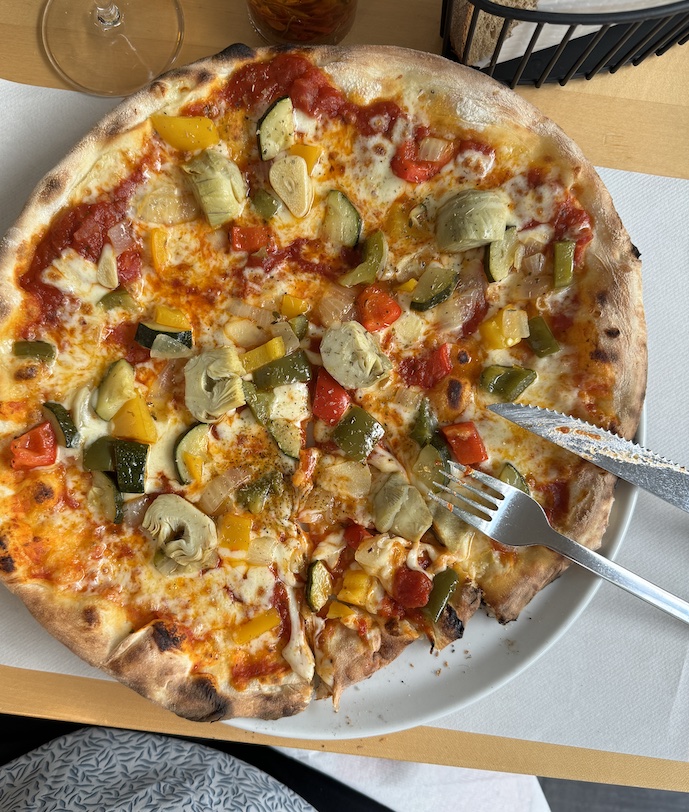
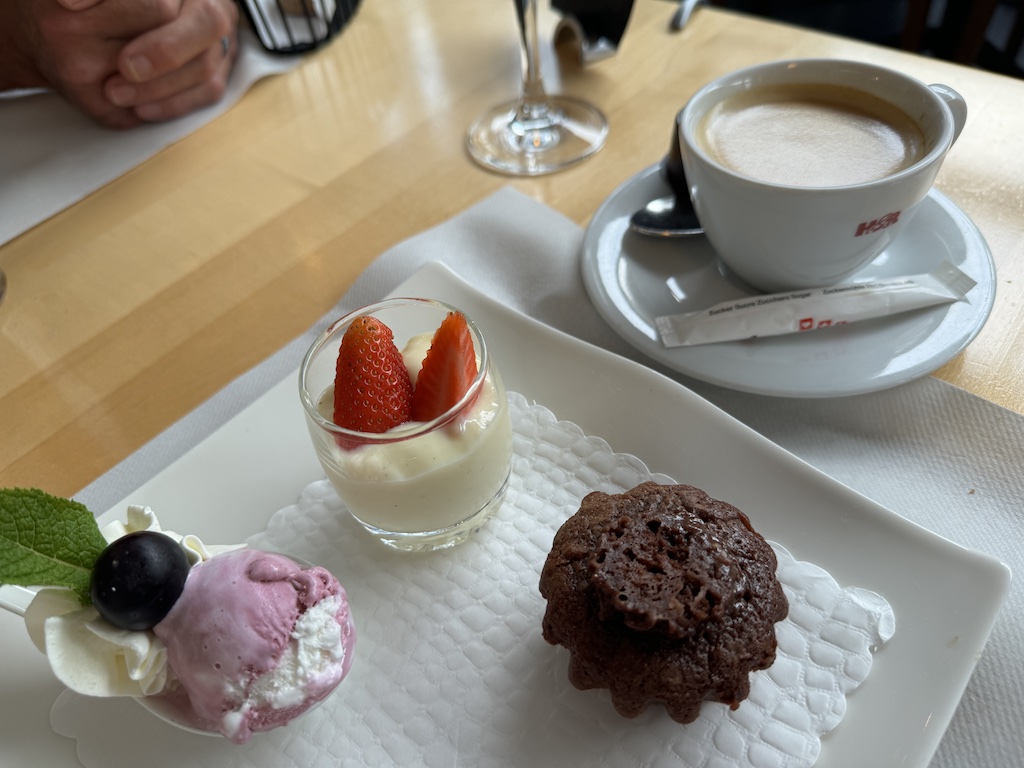
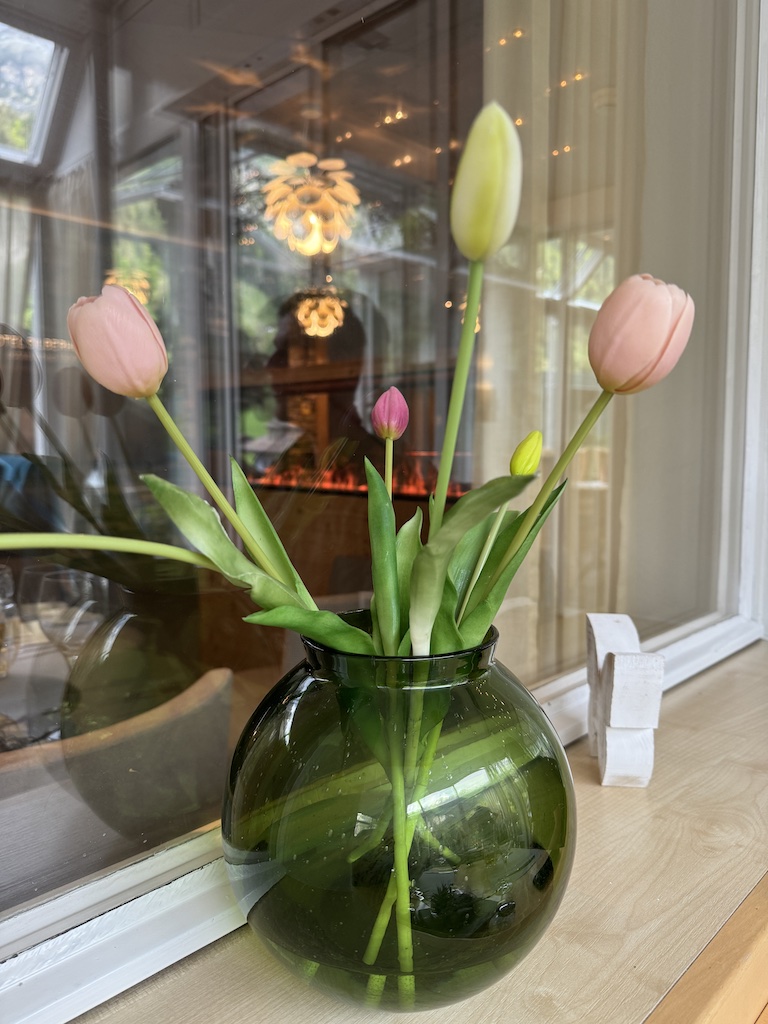
One of the small delights of traveling is the mix of the familiar and the unfamiliar. I ordered pizza, Ron chose a more traditional Swiss plate, and we clinked glasses of local wine and beer over a table dressed with fresh tulips. Tulips! We leaned on our phones and Google Translate to read the menu—a reminder that sometimes the best travel tool isn’t in your suitcase, it’s in your pocket.
Click (or tap) any photo to open the gallery, see the full image, captions, and scroll through the set.



Works of Art in My Wallet
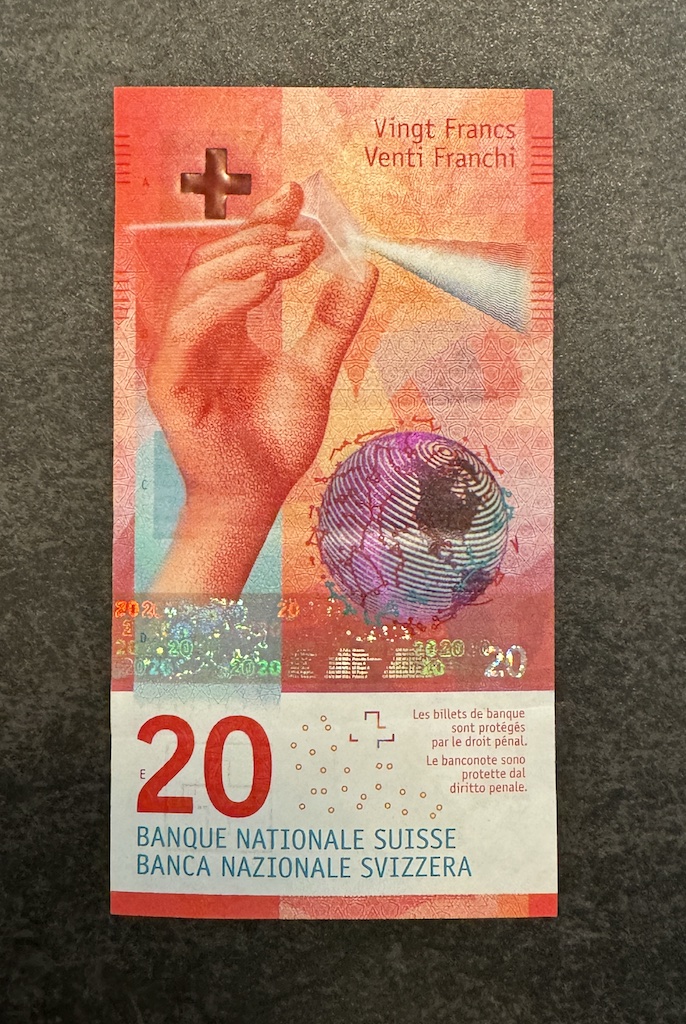
Swiss banknotes are almost too beautiful to spend. Bright colors, intricate designs, and thoughtful details turn every bill into a little piece of art. The 10s and 20s we carried looked more like something you’d frame than something you’d hand over at the bakery. Aren’t they gorgeous? Pure works of art. And butterflies!
Click (or tap) any photo to open the gallery, see the full image, captions, and scroll through the set.
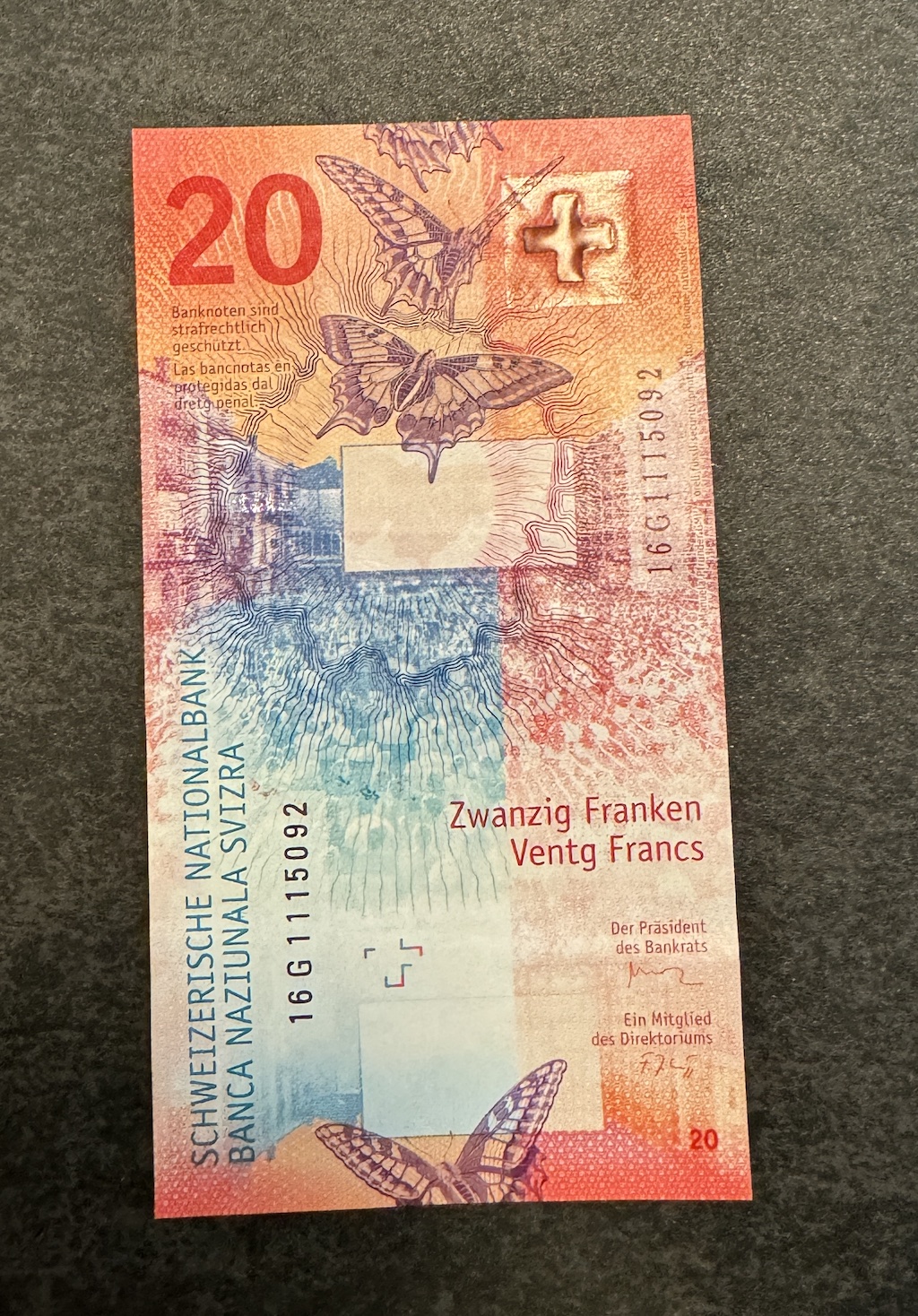
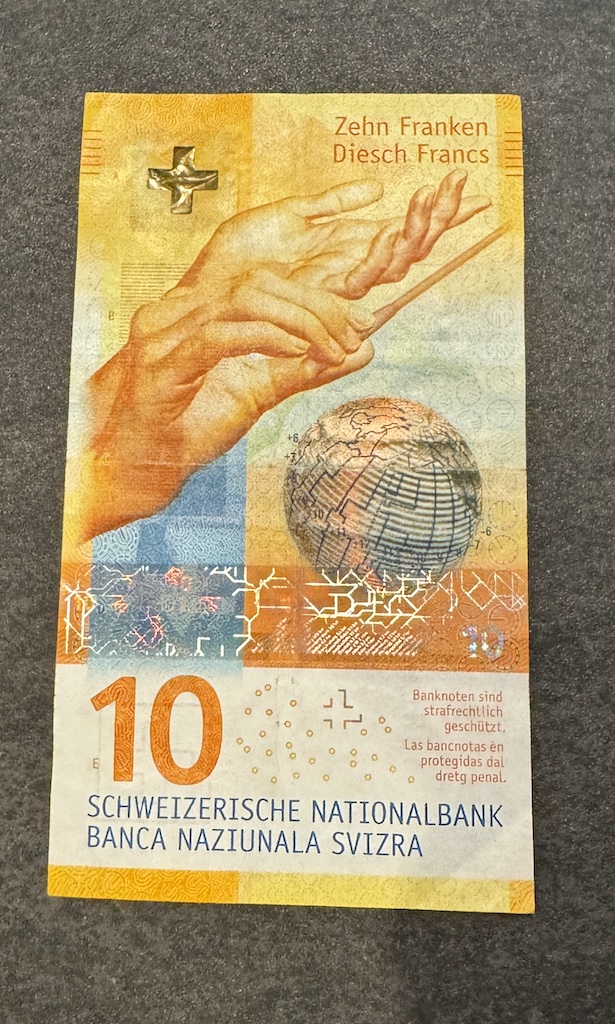
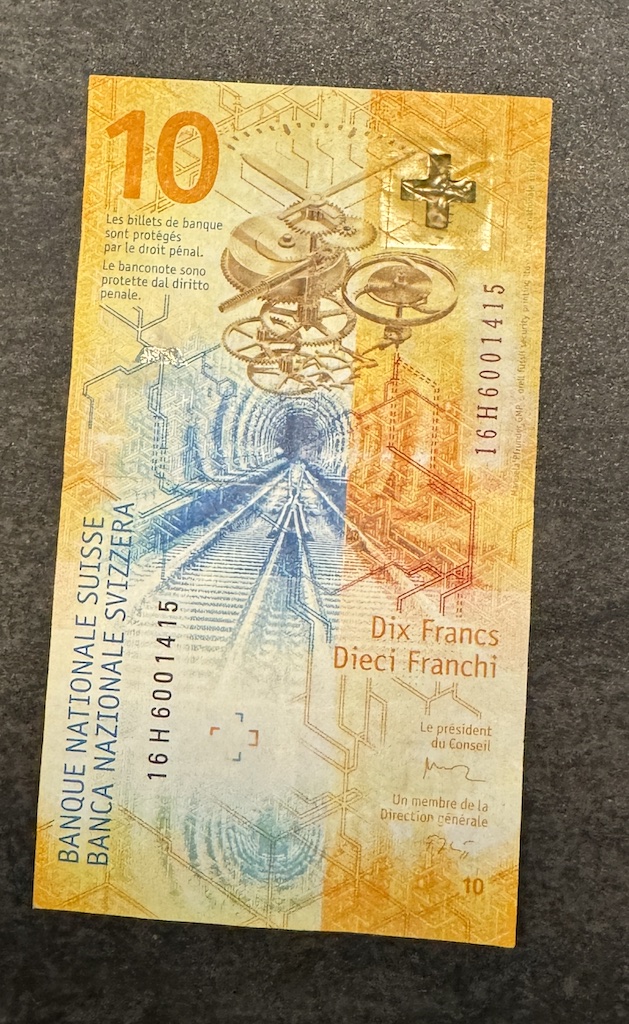
That’s a wrap for Day 6 of our 33 Days in Europe series.
Next Up- Day 7
Travel days are far from boring. I love the trains, checking into a new hotel, exploring the area. Tomorrow we head to Mürren and Gimmelwald, two mountain villages Rick Steves raves about. We’ll ride the gondola up and down, just as the residents do—rising out of Lauterbrunnen Valley the way milk, mail, and schoolchildren have for generations—to reach the car-free villages strung along the slope. Then we’ll hike between them. If the gushing waterfalls and neon-green meadows we’ve already seen are only the beginning, the Alps are bound to exceed our expectations.
Onward to Day 7 of our 33 Days in Europe series—to the clouds and beyond!
Gear I Recommend
See all my travel gear and essentials here: Things I Love & Recommend
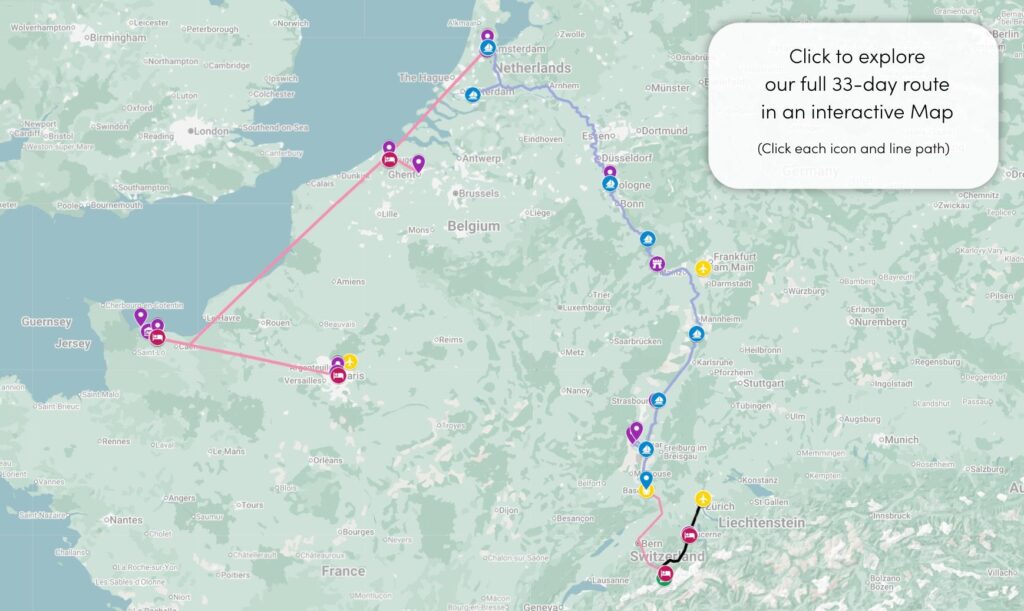
Detailed Map of the Entire Journey
Below is a visual summary of our full 33-day route—hotels, attractions, Viking cruise path and stops, as well as transit modes and paths—hiking, train, plane, gondola.
Click to explore the interactive version and wander through the journey pin by pin.
2 comments
Oh my goodness it’s GORGEOUS. I think I will tell Brandon that we need to put this on our travel list!
Oh, stay tuned. On Day 7, we traveled to Mürren and Gimmelwald via the Gondola, which I share in a video. Switzerland mesmerized us and I’m thrilled to share our adventures. Ron even proclaimed Switzerland one of his all-time favorite places and said he’d consider moving there. 🌈 Indeed, it captured our hearts.