“Switzerland is a country where the mountains whisper and the lakes sing.” — Lord Byron
This post is part of my 33 Days in Europe series. Visit the hub page to follow along, see the full itinerary, and sign up for email updates.
The rainy weather today was a contrast to yesterday, but we were prepared—and didn’t give it a moment’s distraction.
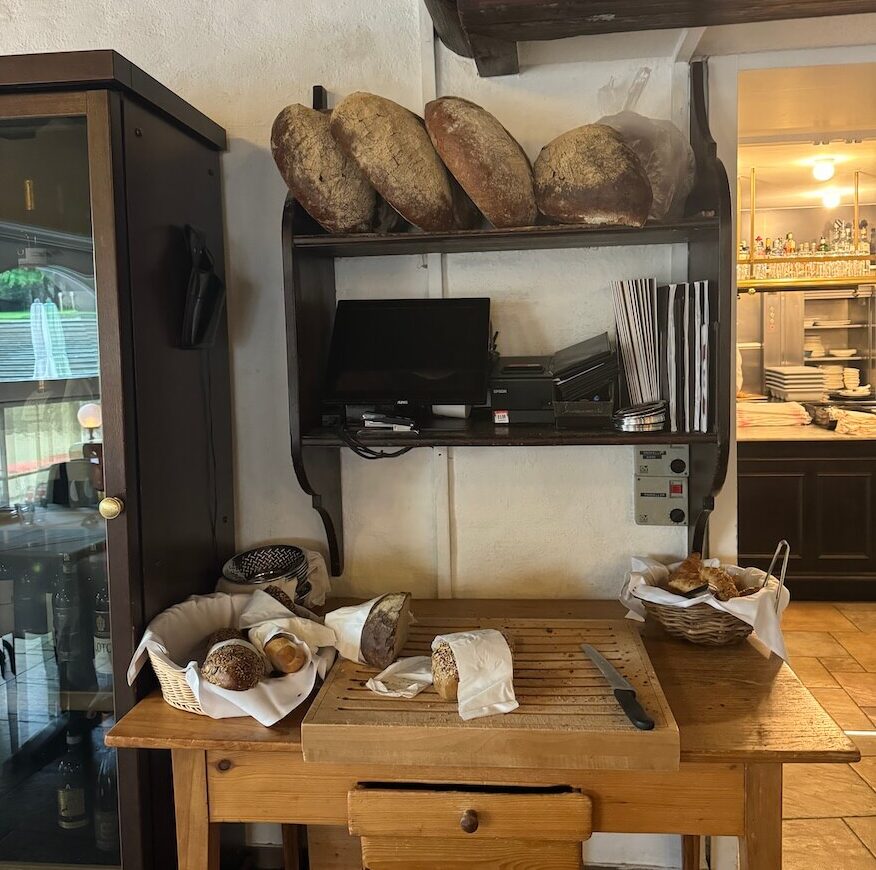
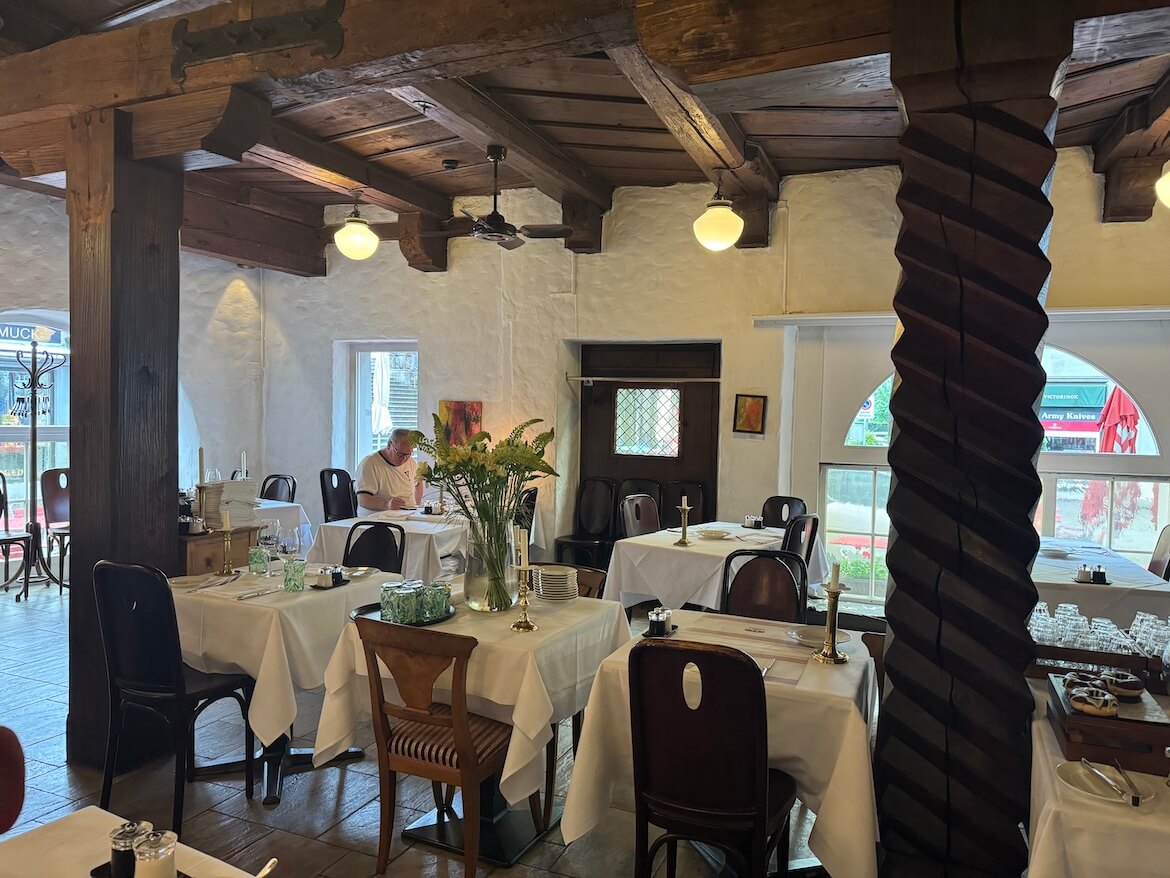
We dined once again in the hotel. After all, Hotel Rebstock is a historic gem in its own right. It dates back to the 1300s, making it one of the oldest inns in Luzern. The timber-framed structure, with its creaky floors and carved beams, holds centuries of stories. Its breakfast leaves nothing to desire.
In much of continental Europe—especially Switzerland—breakfast leans light and carb-forward. Think: breads or croissants, cheese or cold cuts, yogurt and muesli, and maybe fruit. Eggs? Not exactly a staple.
At most hotels we’ve visited, eggs are offered with an attitude that feels optional, like an accommodation more than a norm. I suspect they’re mainly for international guests, particularly Americans.
The food is always fresh—and nothing feels more European than cutting your own loaf of bread. The jams? Natural, vibrant, often homemade, and utterly delectable.
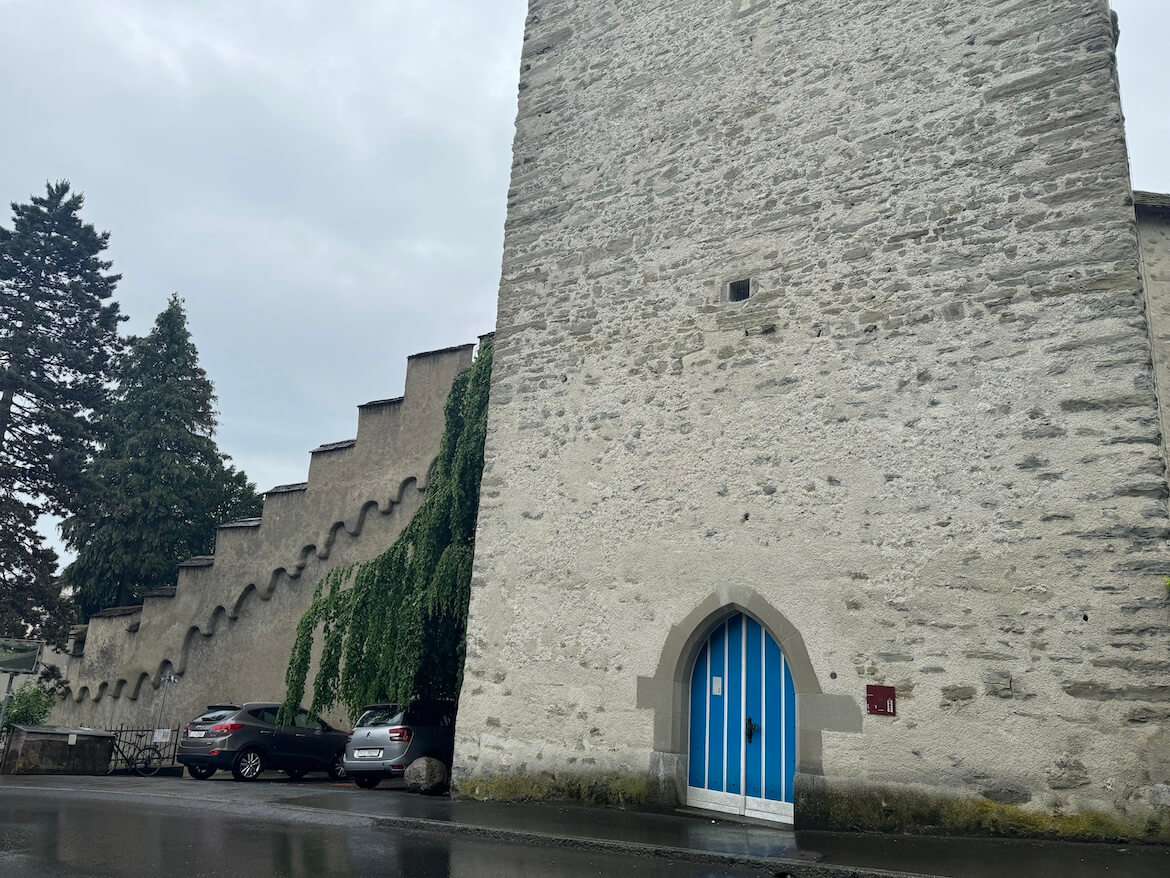
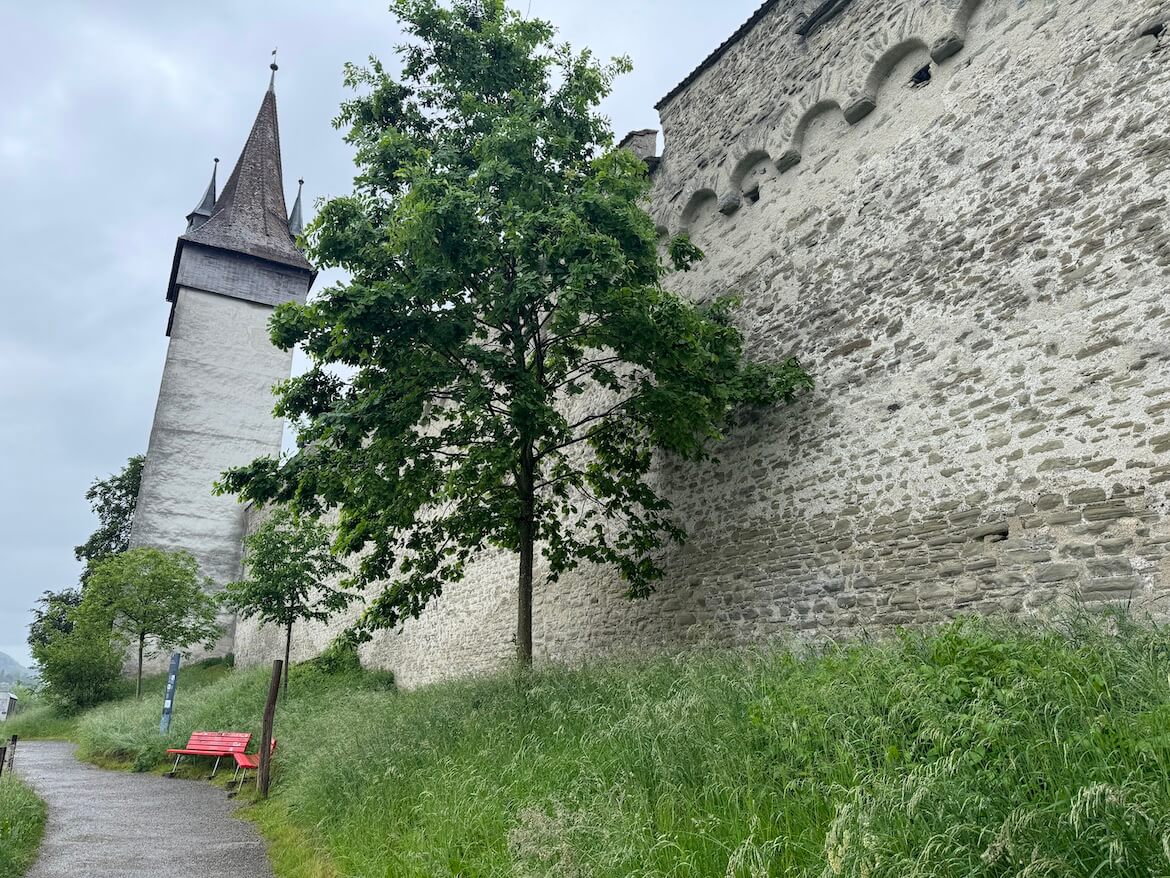
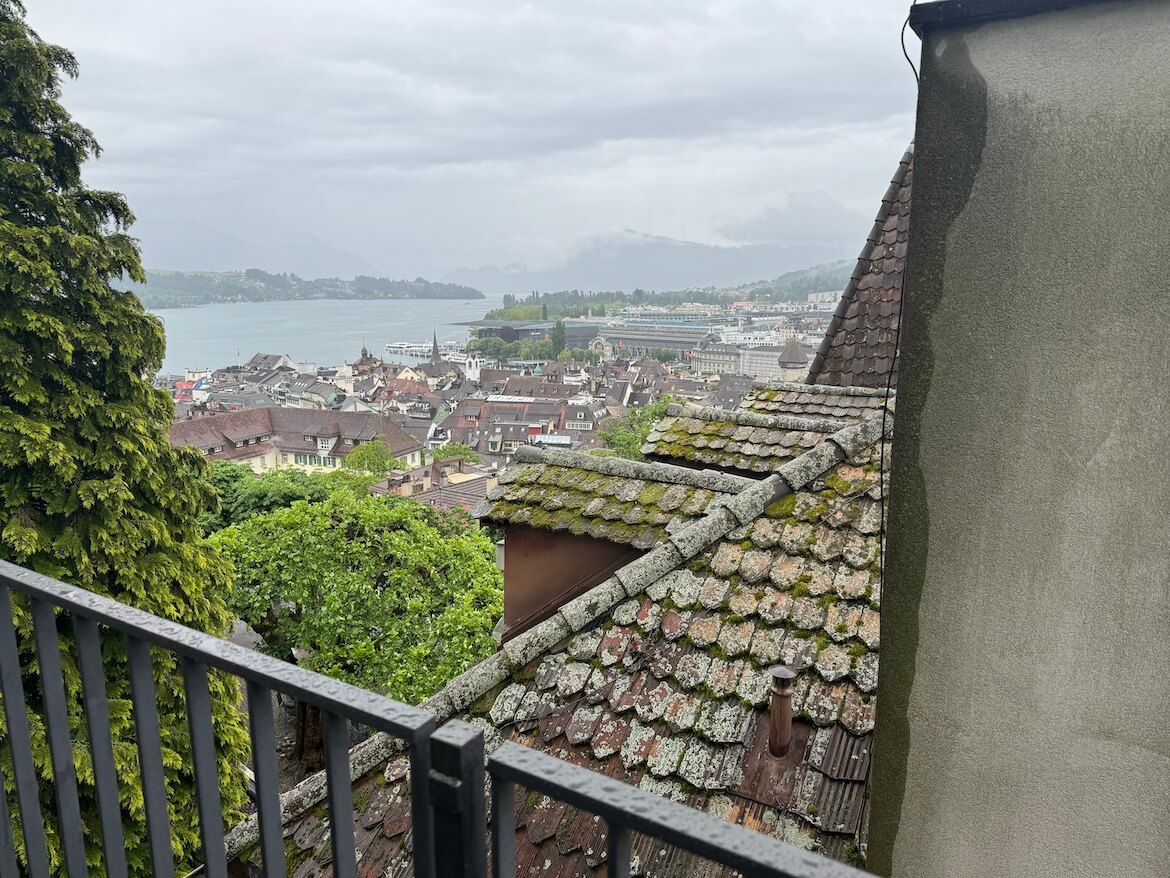
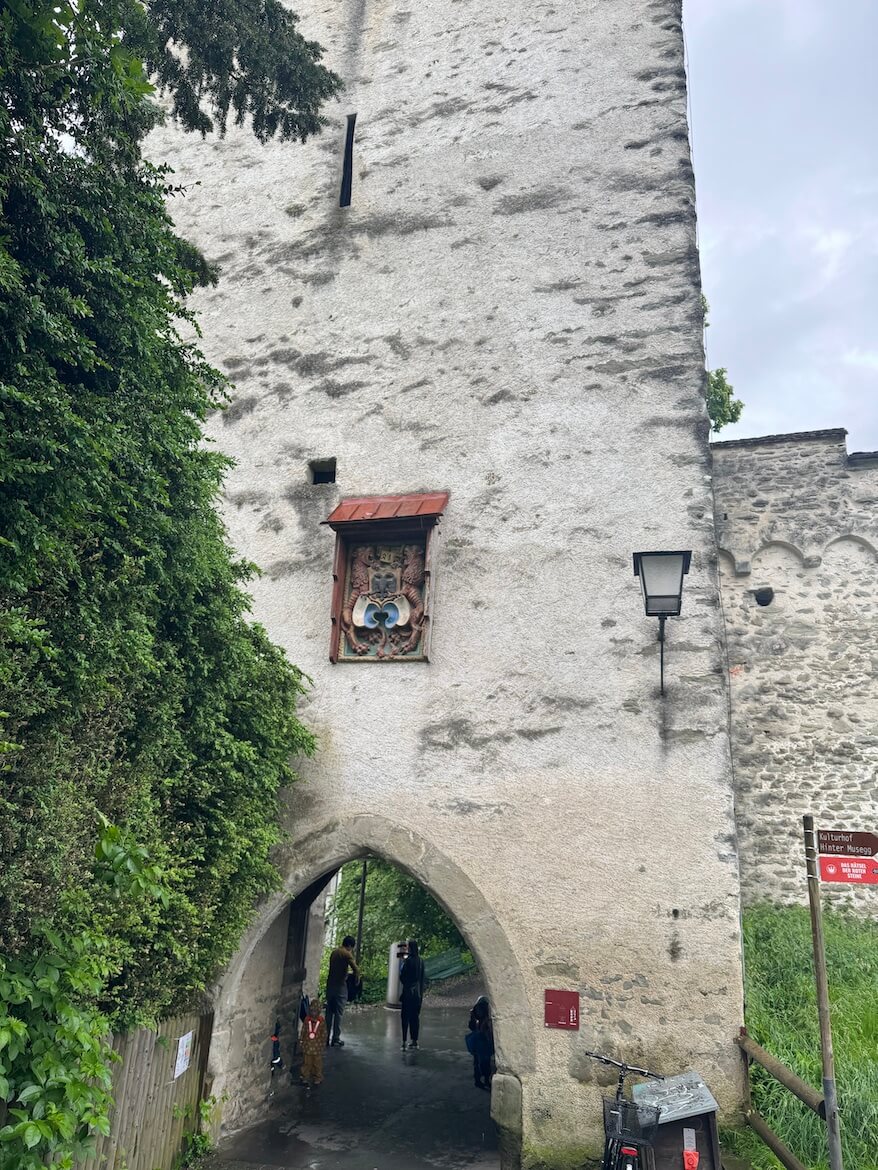
After breakfast, we trekked about a third of a mile uphill in a very charming walk to the Musegg Wall, a medieval fortification built in the 1300s to protect the city. It’s quite impressive and offers panoramic views of Luzern, the lake, the Reuss River, and the surrounding mountains. Only nine towers remain. Modern houses settle in like puzzle pieces, and the wall and towers seem to still stand as protector over the city even now.
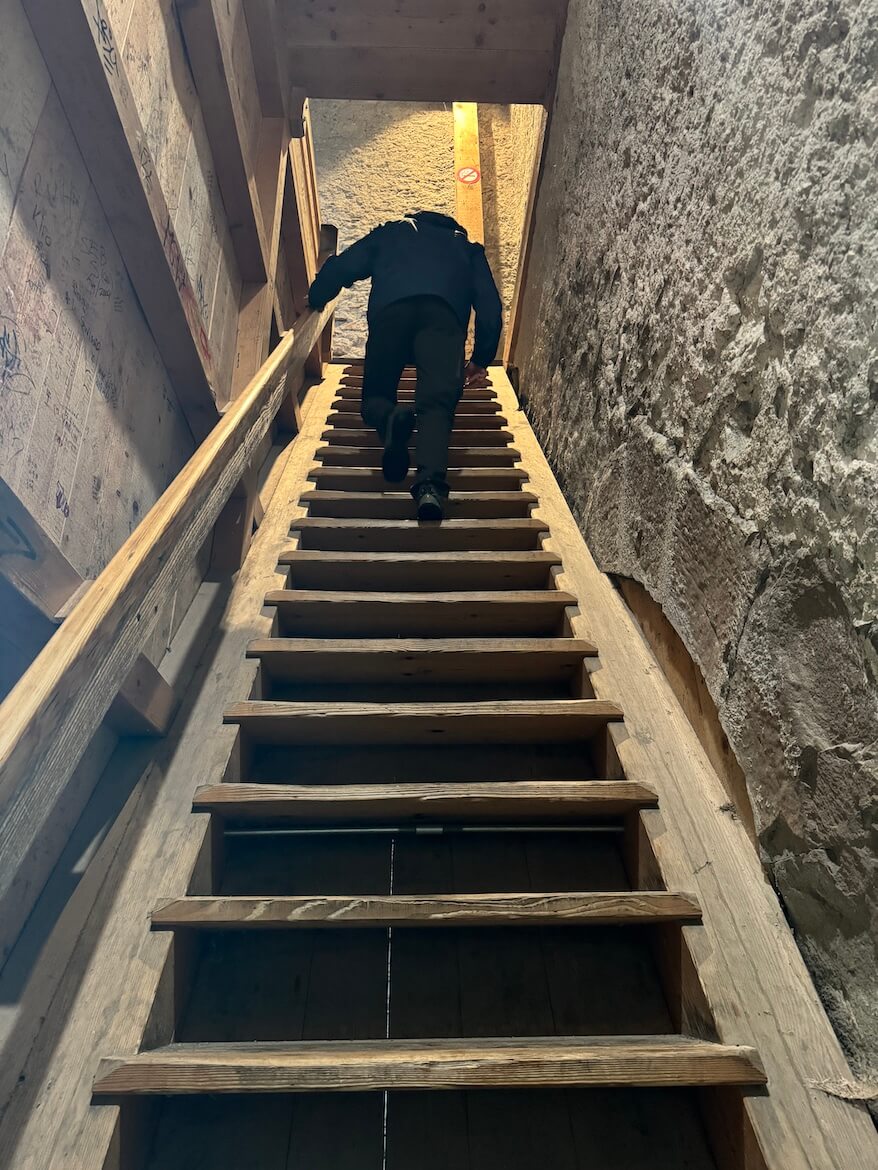
Reaching the tops of the towers takes a bit of stamina—not because they’re tall, but because the steps are short and steep. I wear a size 8 shoe, and my feet hang off the edge by a good three or four inches. My hands go clammy and my heart flutters—not from the climb, but because I’m afraid of heights. Pair that with steep steps and my adventure becomes a full-body experience.
In a few places, I had to descend backwards. Ron, of course, bounded up and down with nary a thought to his demise.
I paused often at the arrow slits, trying to imagine a time when someone else stood right here—watching for invaders, bow drawn, ready to protect their home. It wasn’t just a lovely view then. It was defense: I picture arrows slicing the air, boiling oil poured in haste, rocks dropped from the heights with intent.
Today, I marvel at the view of peace and serenity through mist and clouds and the peaceful river flowing.
Still flowing. New water, always. I imagine the Reuss has carried fresh water—and with it, life—for thousands of years. It serves as a kind of talisman for change and renewal.
Life goes on. Life is change.
Tap to view full size. These images are best experienced in gallery view, where you can scroll through the day as we saw it—frame by frame.
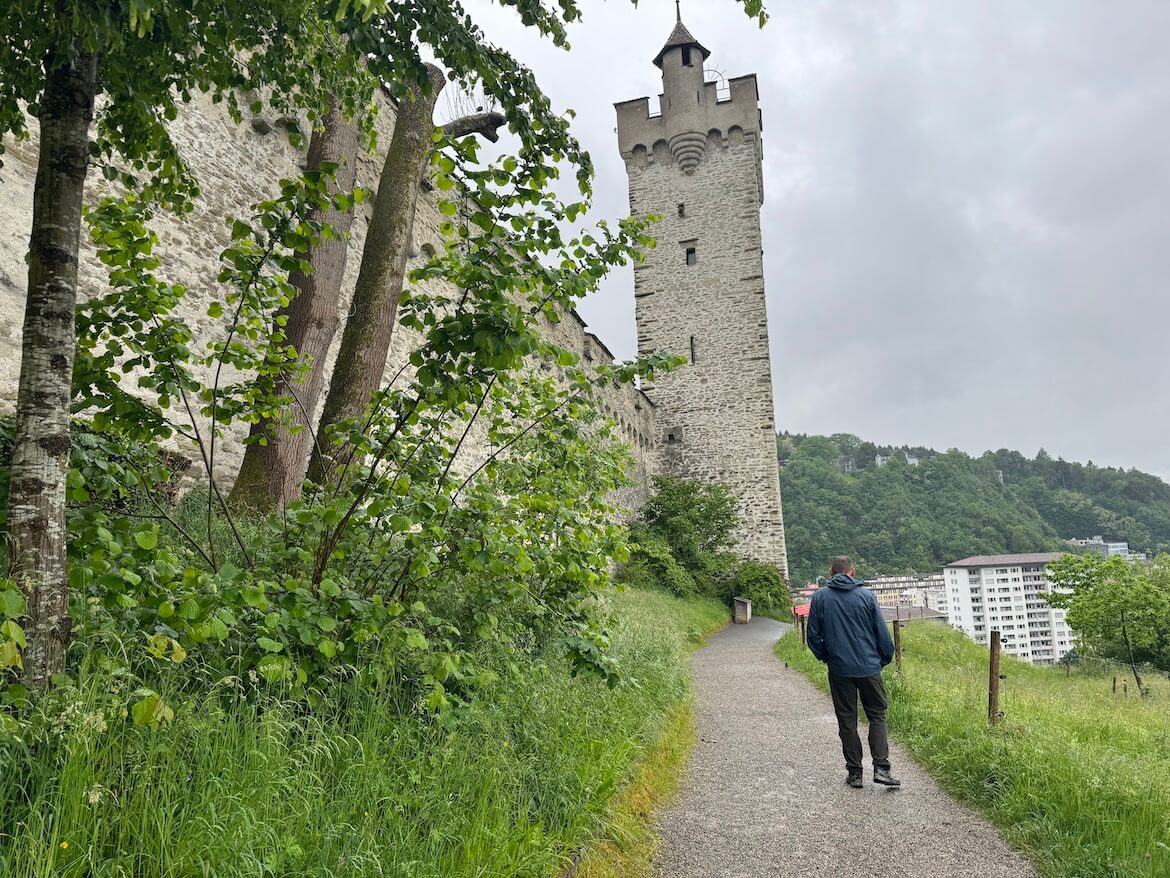
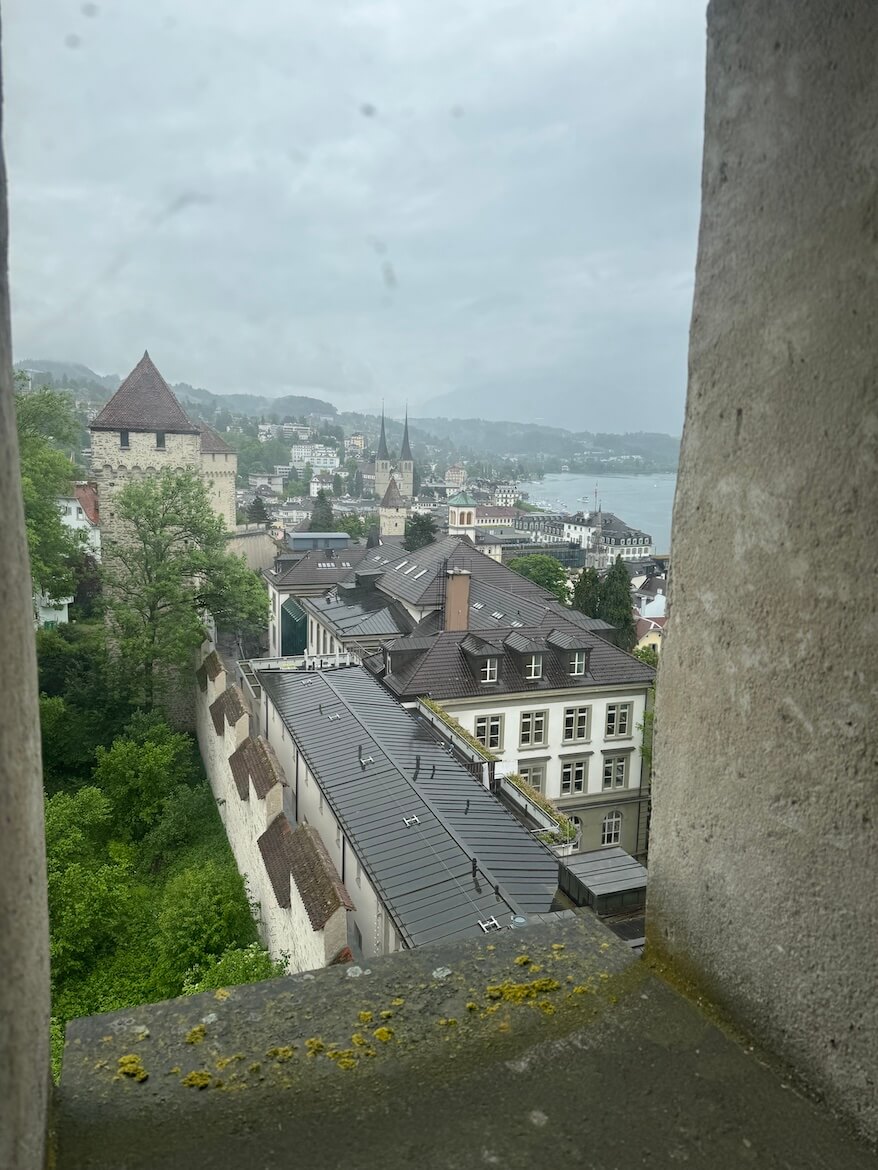
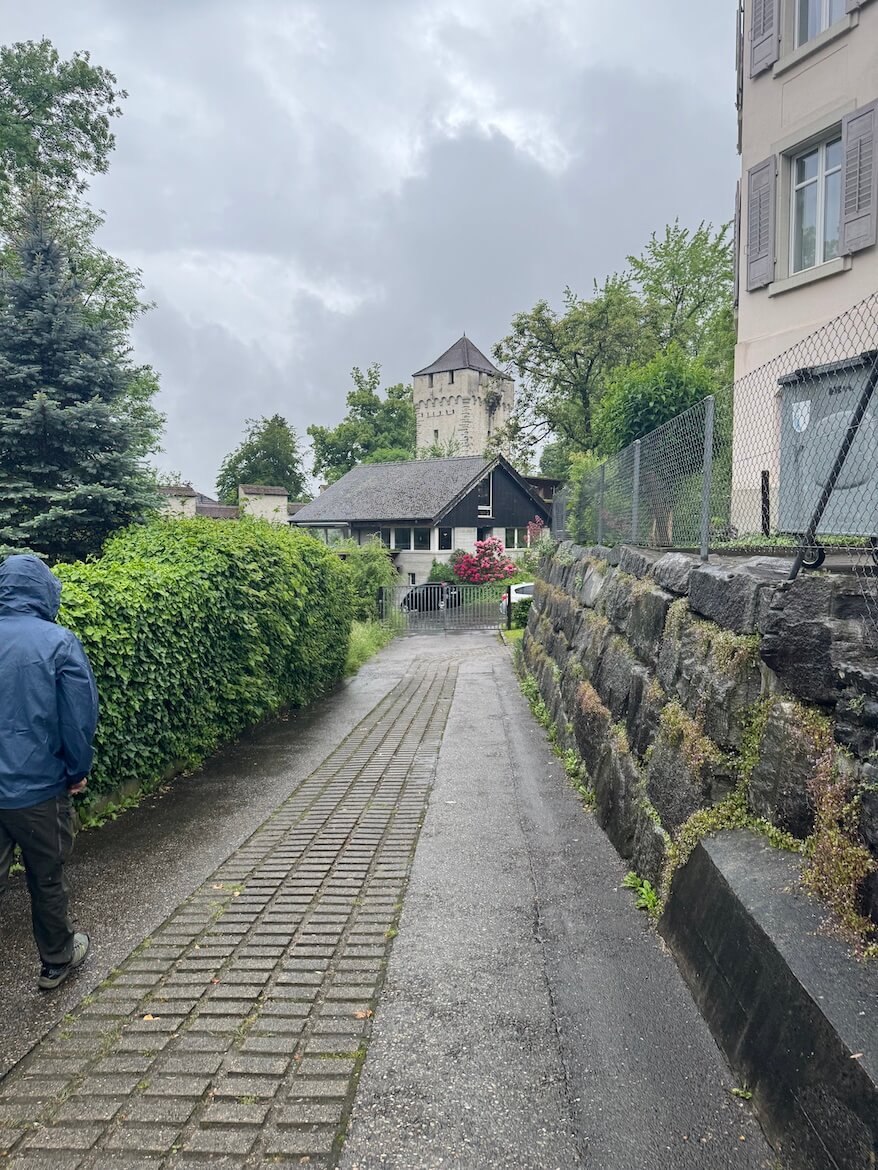
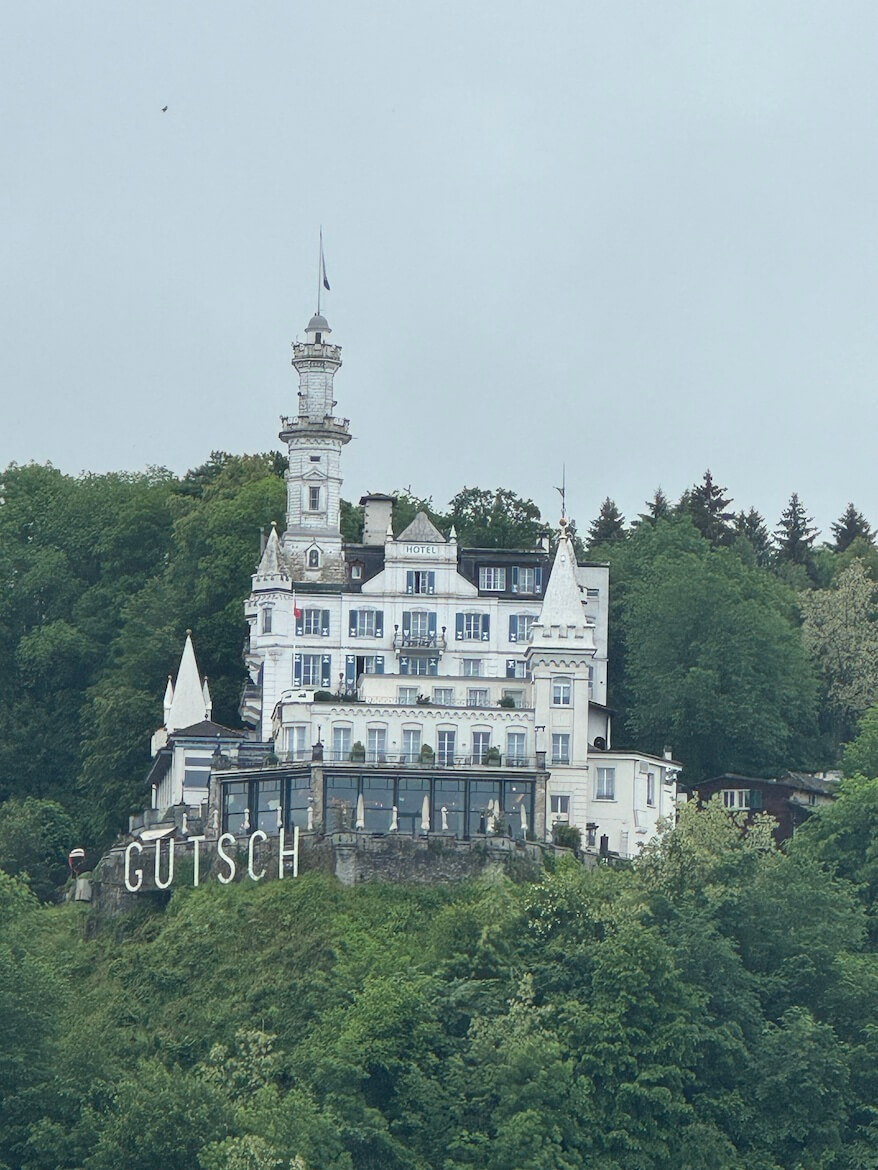
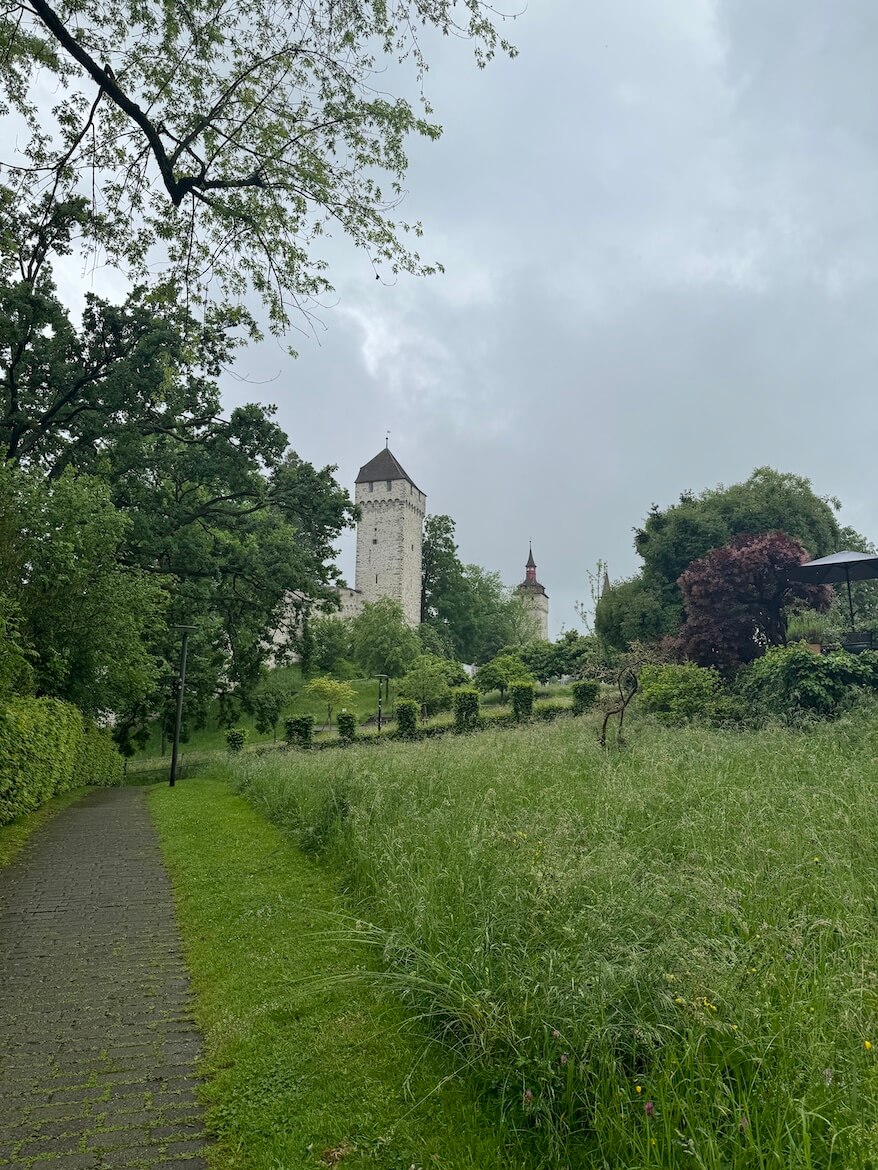
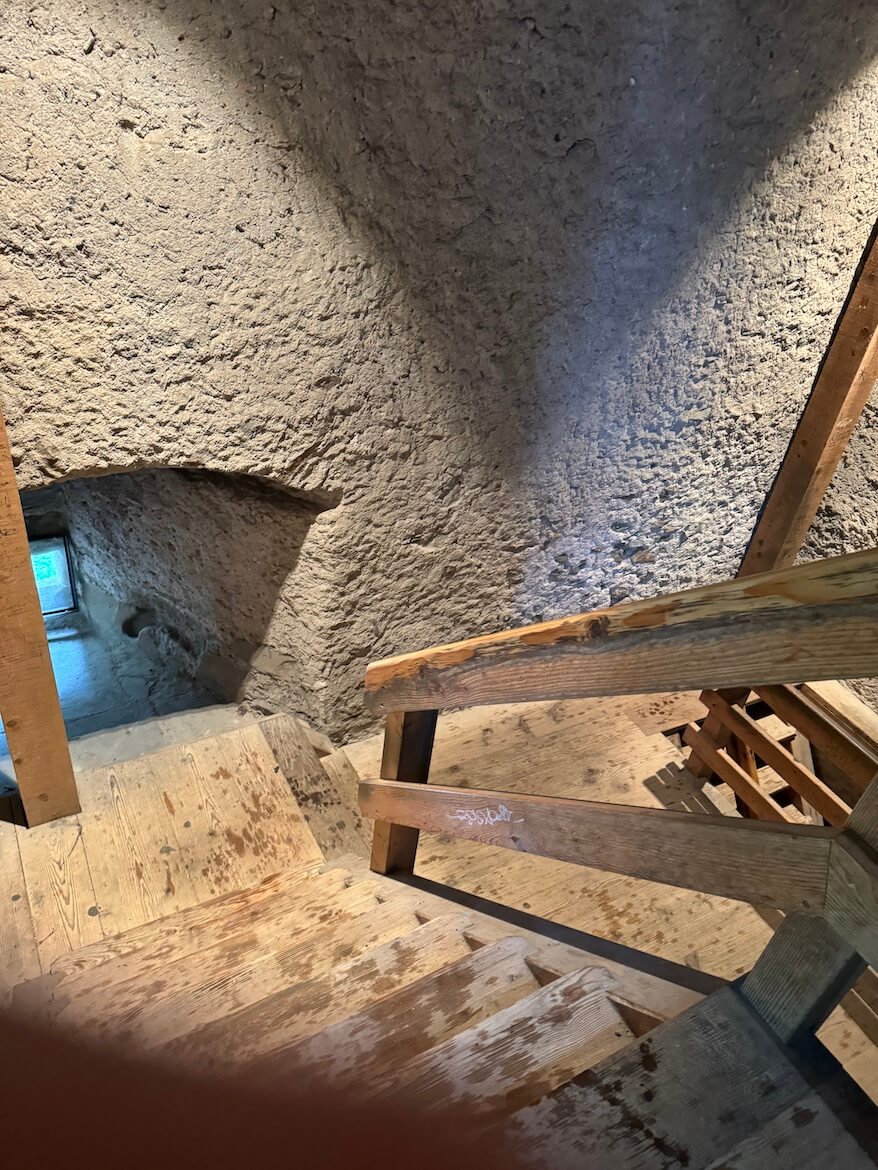
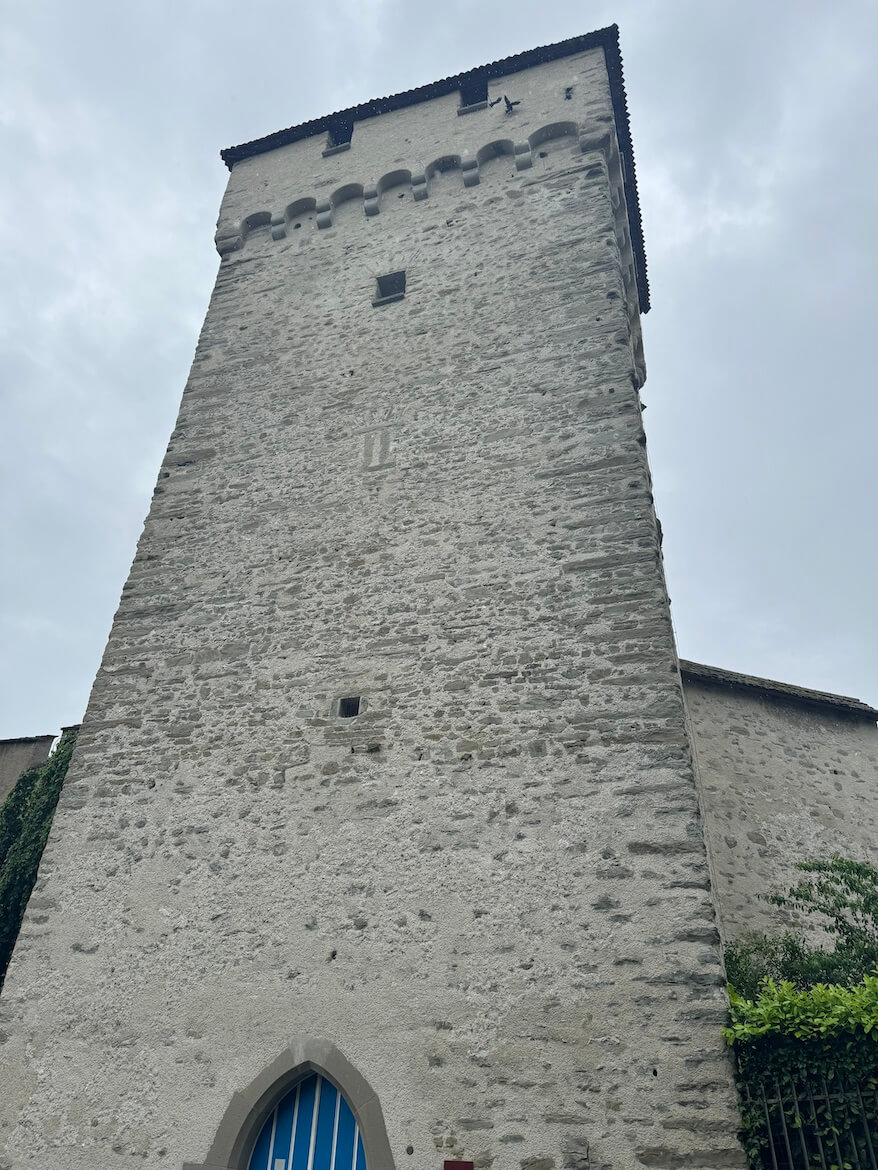
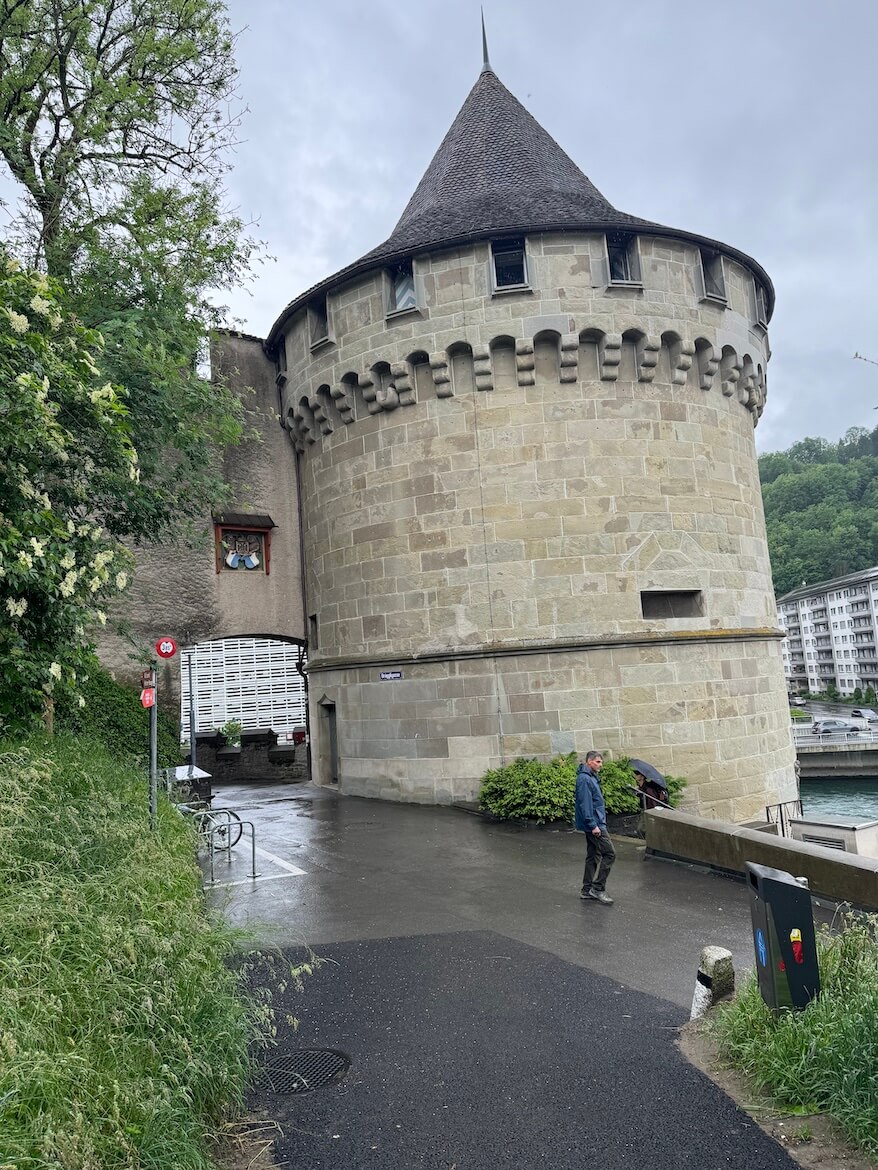
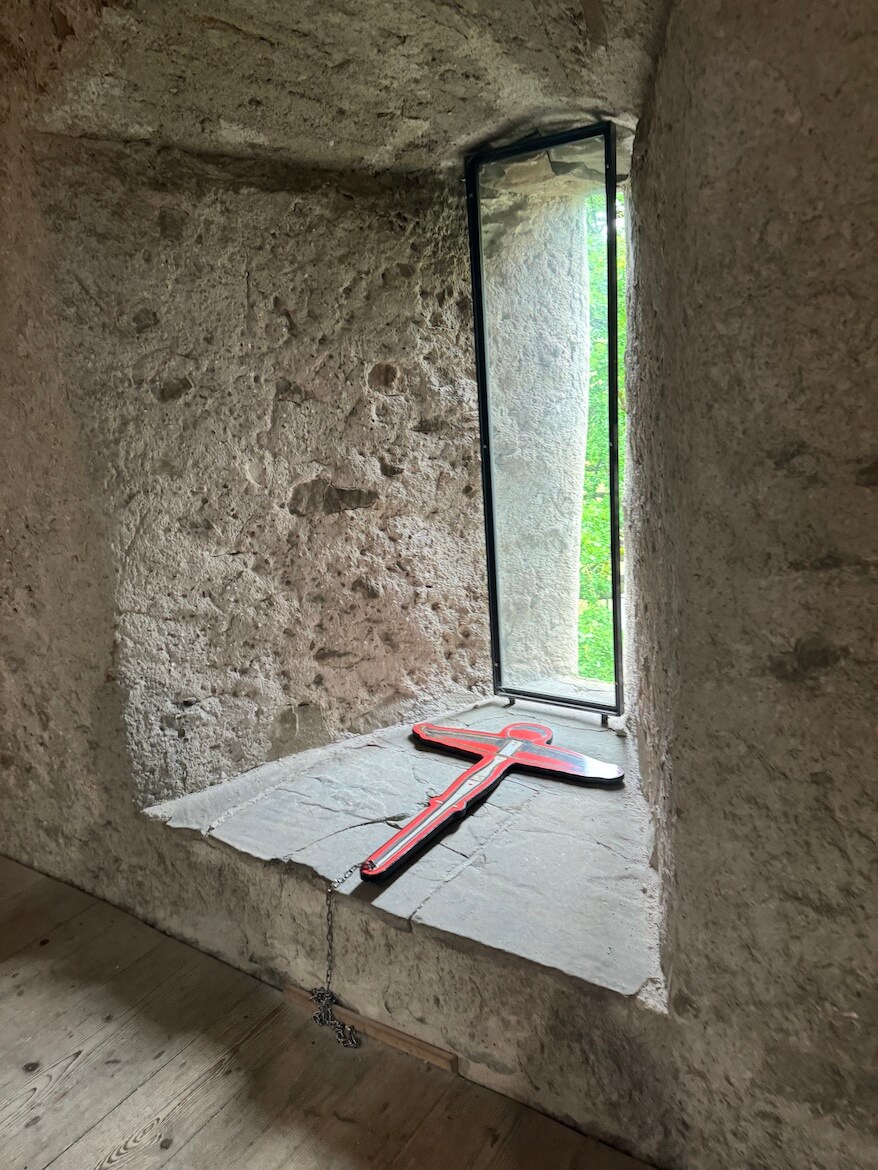
Check out this video which shows my view from an arrow slit.
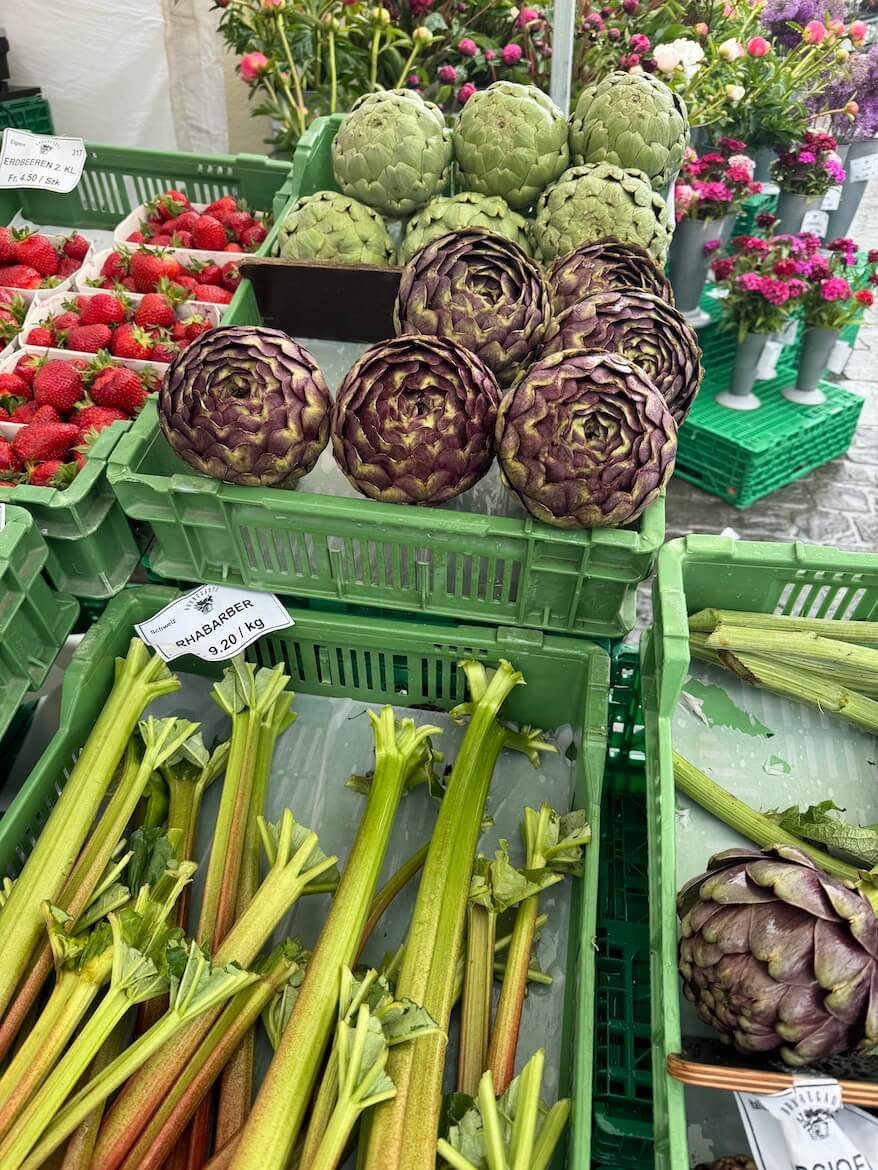
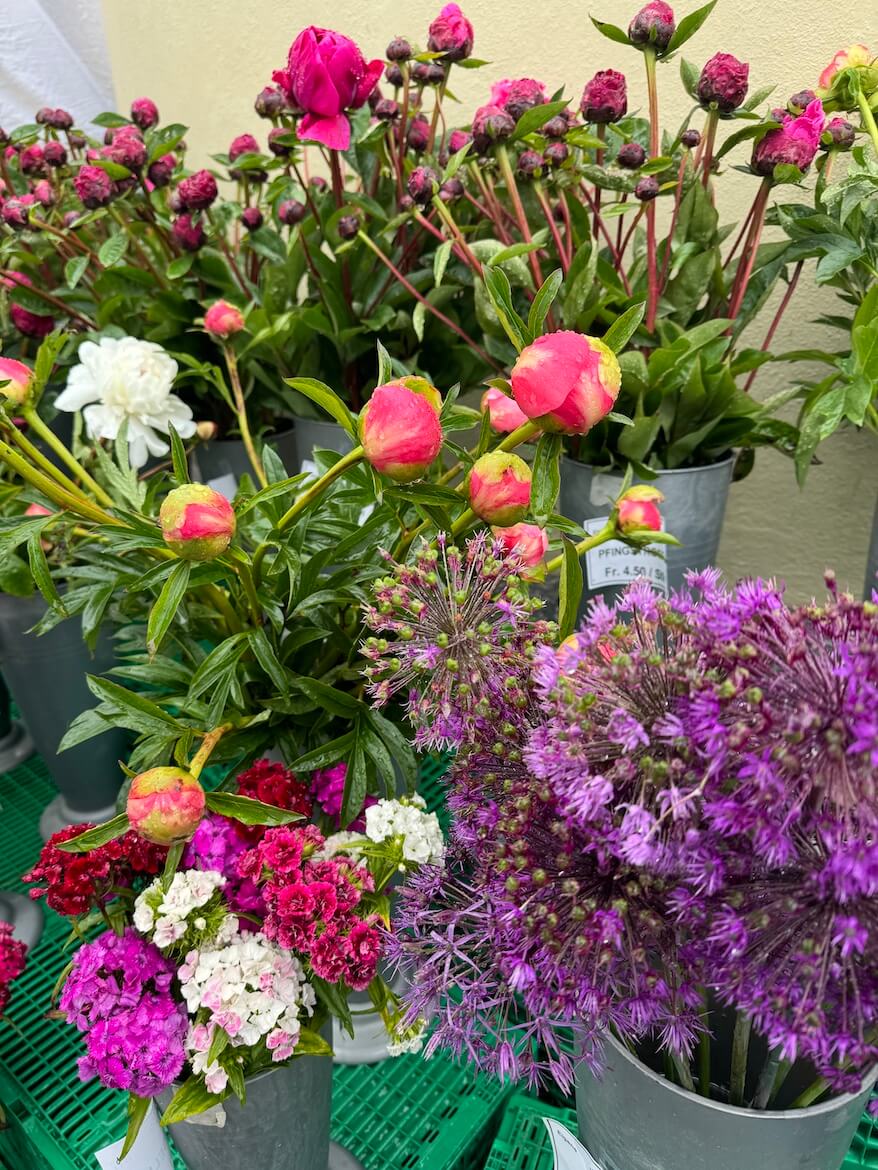
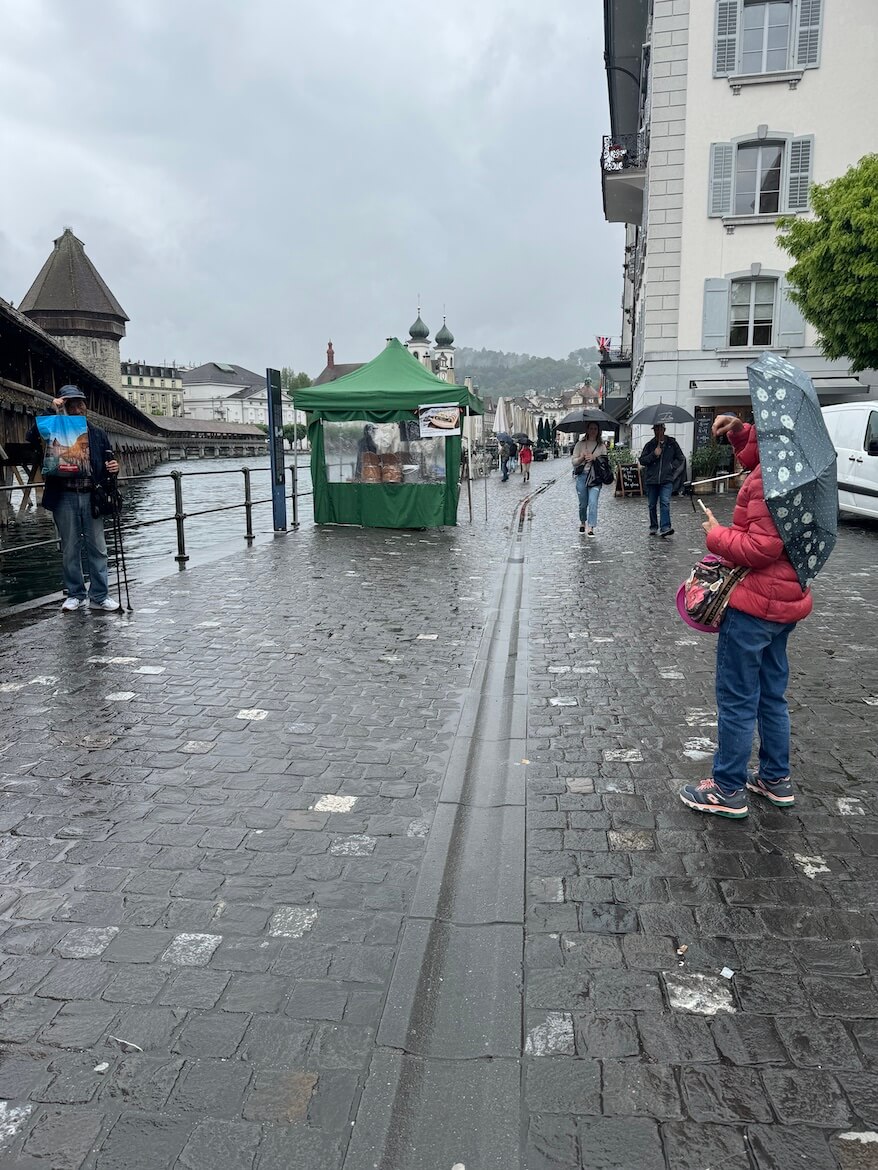
Back down in the city, we happened upon a farmer’s market near Chapel Bridge. Fresh produce, flowers, and locals bundled under umbrellas—it gave us a glimpse of everyday life. The rain only made it feel more local, more lived-in. I love seeing a place in all its moods.
For lunch, we wandered across the bridge to a cozy café near the ferry and train stations, with views of the lake and the boat landings. Locals moved through the drizzle with that particular grace of people who’ve seen a thousand rainy days. The food was thoughtfully prepared, organic and fresh—fine dining to us, seemingly just another Tuesday to them. Meh to them. Man! to me.
Just a block away, we visited Kunstmuseum Luzern, a sleek, modern building of glass and light. Its massive windows reflect the lake and flood the interior with natural brightness. Inside, we found a collection of thoughtful, stirring artwork.
Tap to view full size. These images are best experienced in gallery view, where you can scroll through the day as we saw it—frame by frame.
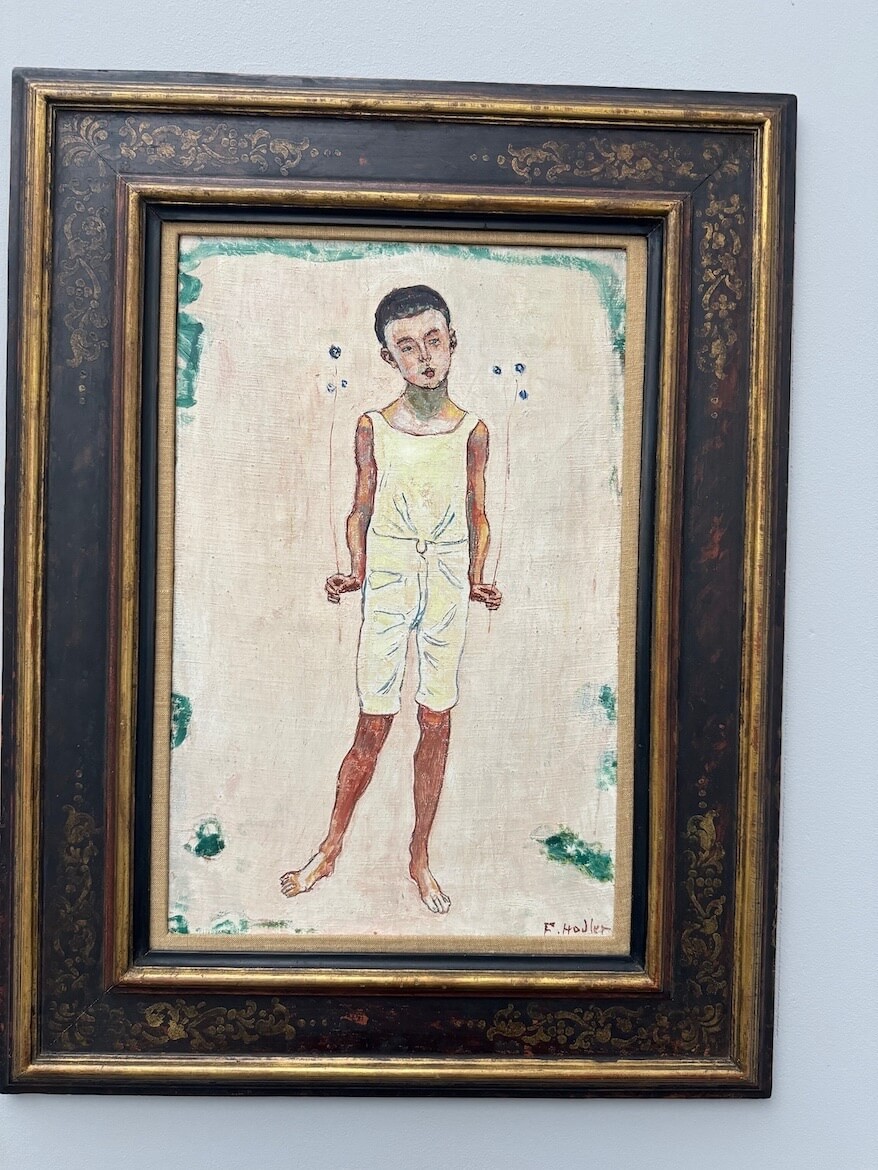
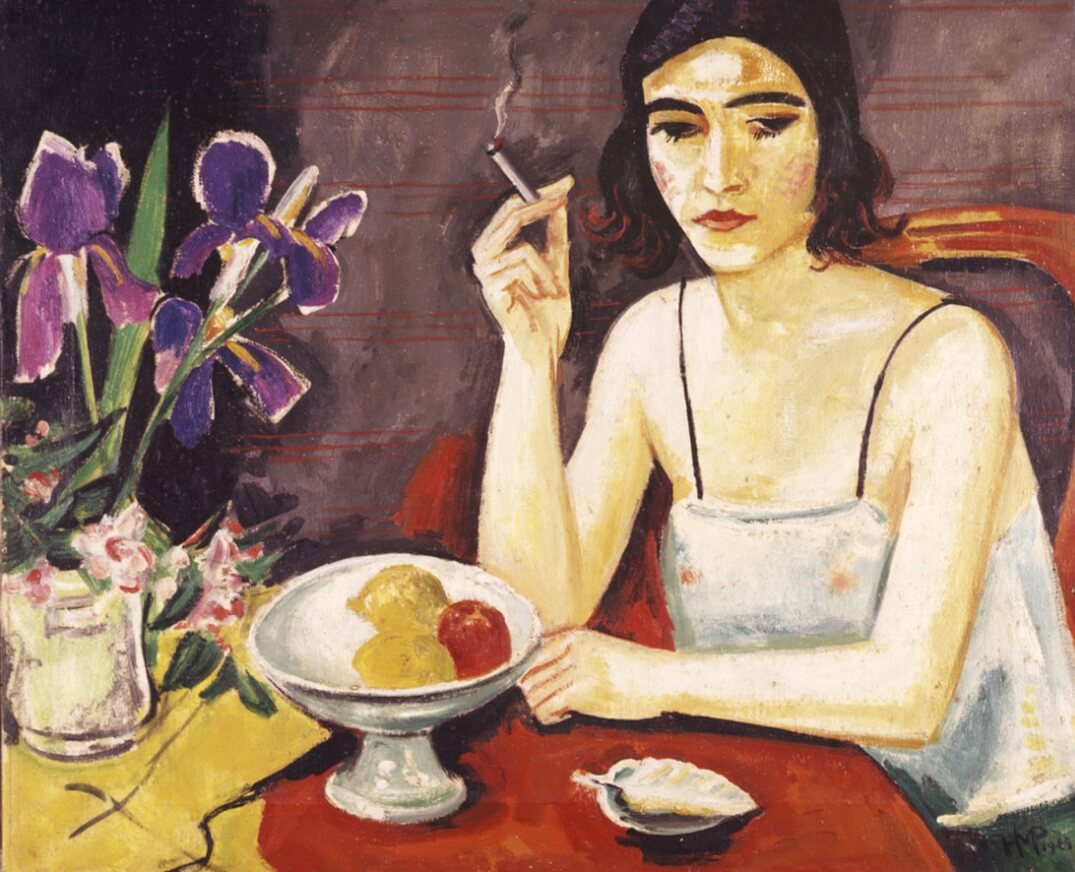
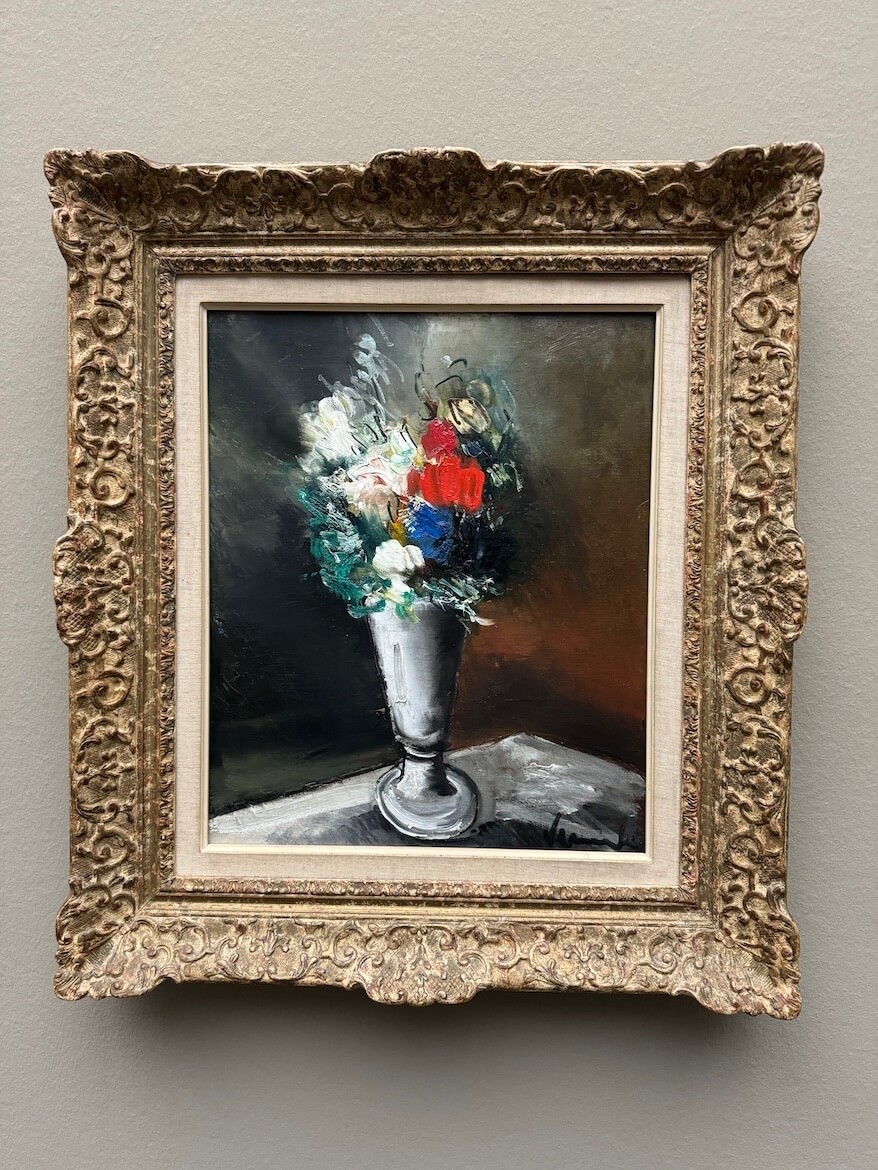
We slogged back across the bridge, intent on visiting the Sammlung Rosengart Museum, famous for its Picasso and Klee artworks. But first, a cappuccino was in order. Just a block away, we found the db Public House, an artfully luxurious “urban living room” café-bar, located—curiously, literally—inside the ground floor of a bank. I loved the modern velvety seating. The vibe was casual yet elegant, and it seemed to appeal to both locals and tourists alike.
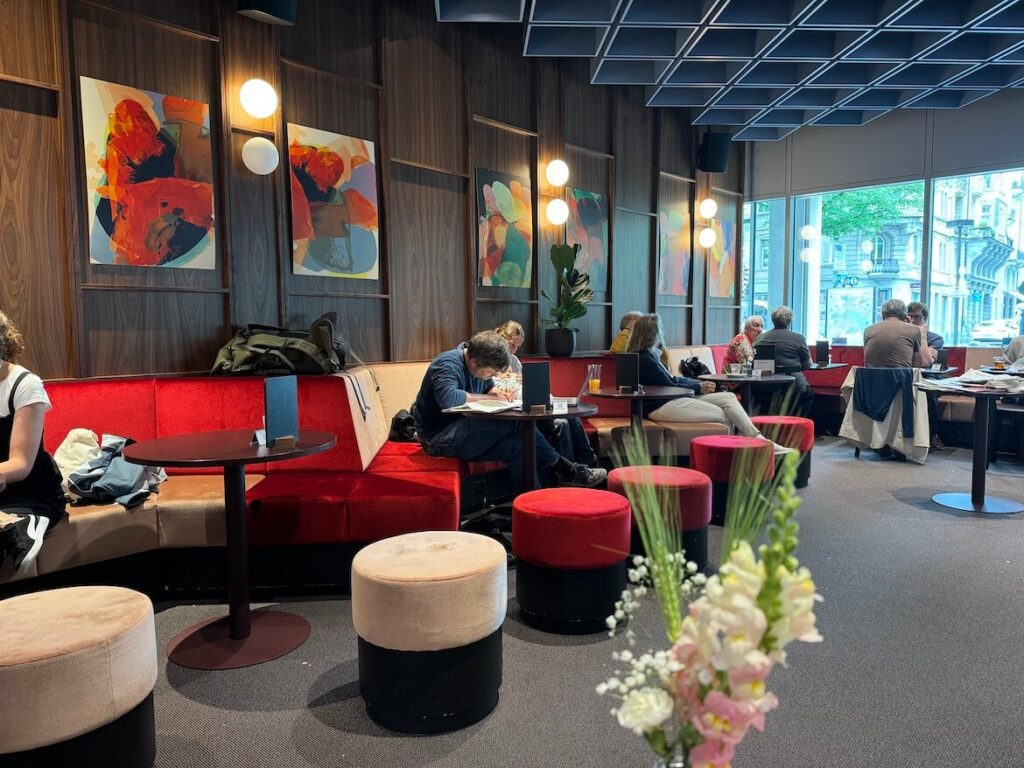
After the Rosengart Museum: rain outside, cappuccinos inside, and the dbPublicHouse bar and café so warm and stylish it stitched the whole day together. I can still taste the espresso—and feel the hip vibe—when I look at this.
Next up—ART! I felt excited to put the zillion tower steps and rainy walk over the bridge (and back again) behind me. The juxtaposition was striking: the amplified sound of rain, car tires swishing puddles along the street, people walking faster than usual with that determined, damp-day stride—and then, silence.
Inside, the museum felt still. Reverent.
We stored our umbrellas and coats in a locker and purchased our tickets, shaking off the rain like a dog just in from a lap in the pool. I took a deep breath, slowing myself to match the reverence of the place.
So many Picassos! An entire floor is dedicated to his work, mostly from the 1950s through 1970s. But what captivated me most were his earlier pieces from the 1900s and 1920s. They don’t look like his work. His signature cubist style—the distorted faces, the gravity-defying body parts—is nowhere to be found. Instead, it’s pure realism. Portraits. Classical compositions.
The art at this museum offered a look away from his typical wonky work—which is still my favorite—and gave me a fuller glimpse of his evolving talent, even though those pieces were included too.
I’ve seen his evolution across many museums, and this one deepened the mosaic. Picasso’s willingness to experiment, to push boundaries, to ignore trends—it’s what I admire most.
The museum doesn’t stop at Picasso. Paul Klee is here, too, along with works from more than 25 modernist and impressionist artists. Small museum, big punch.
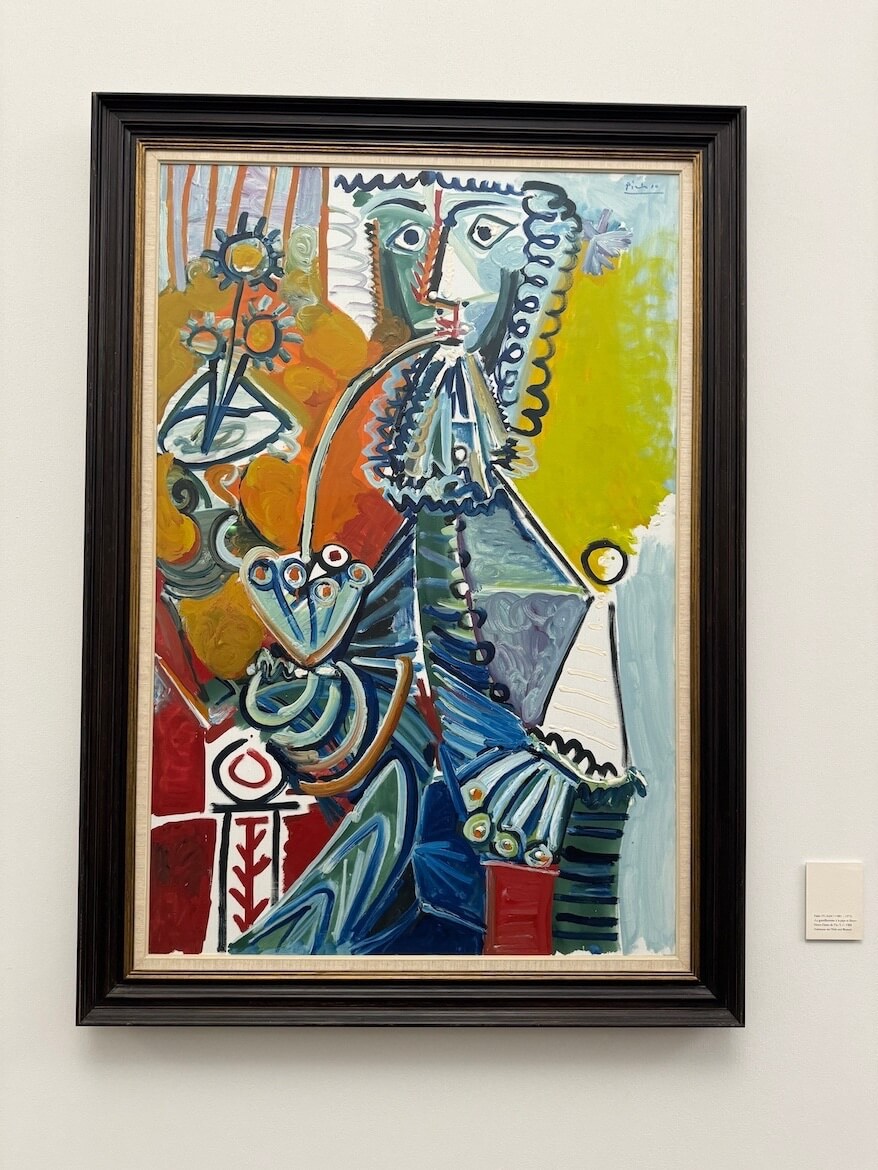
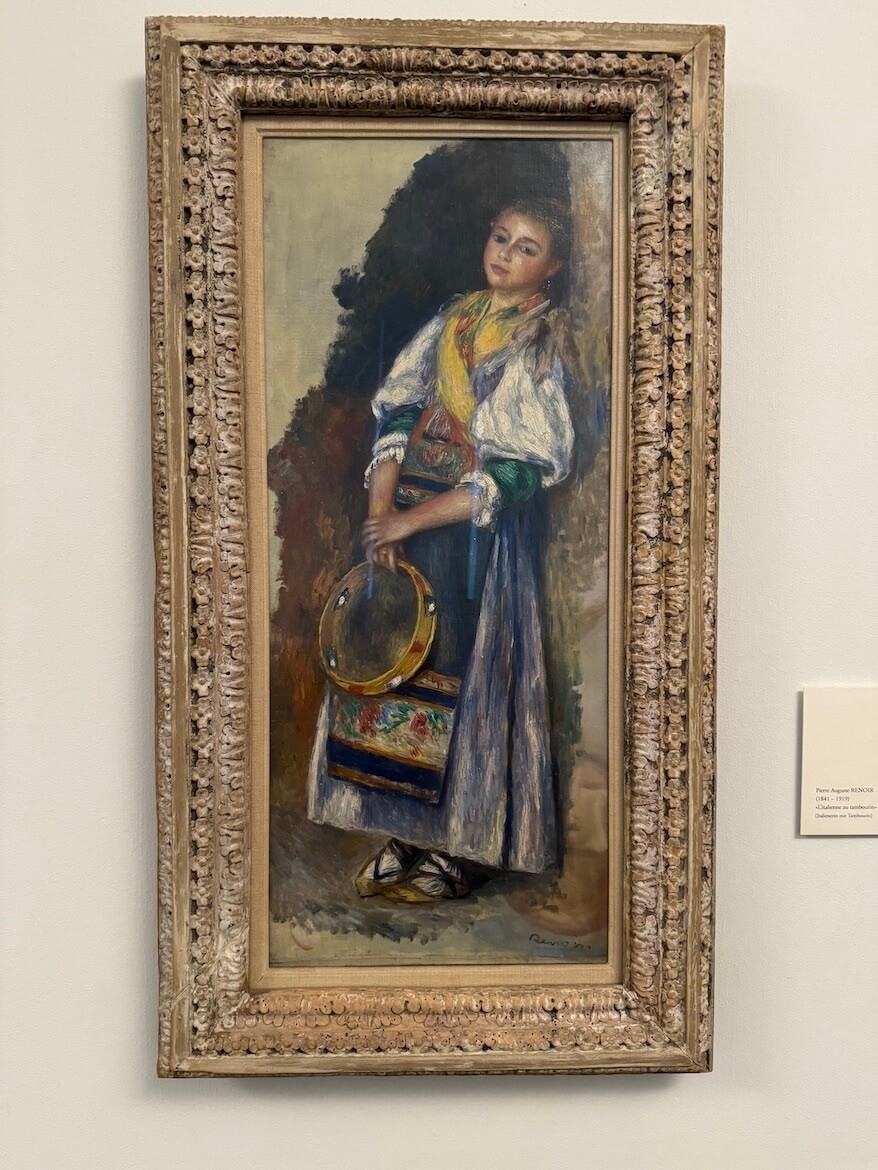
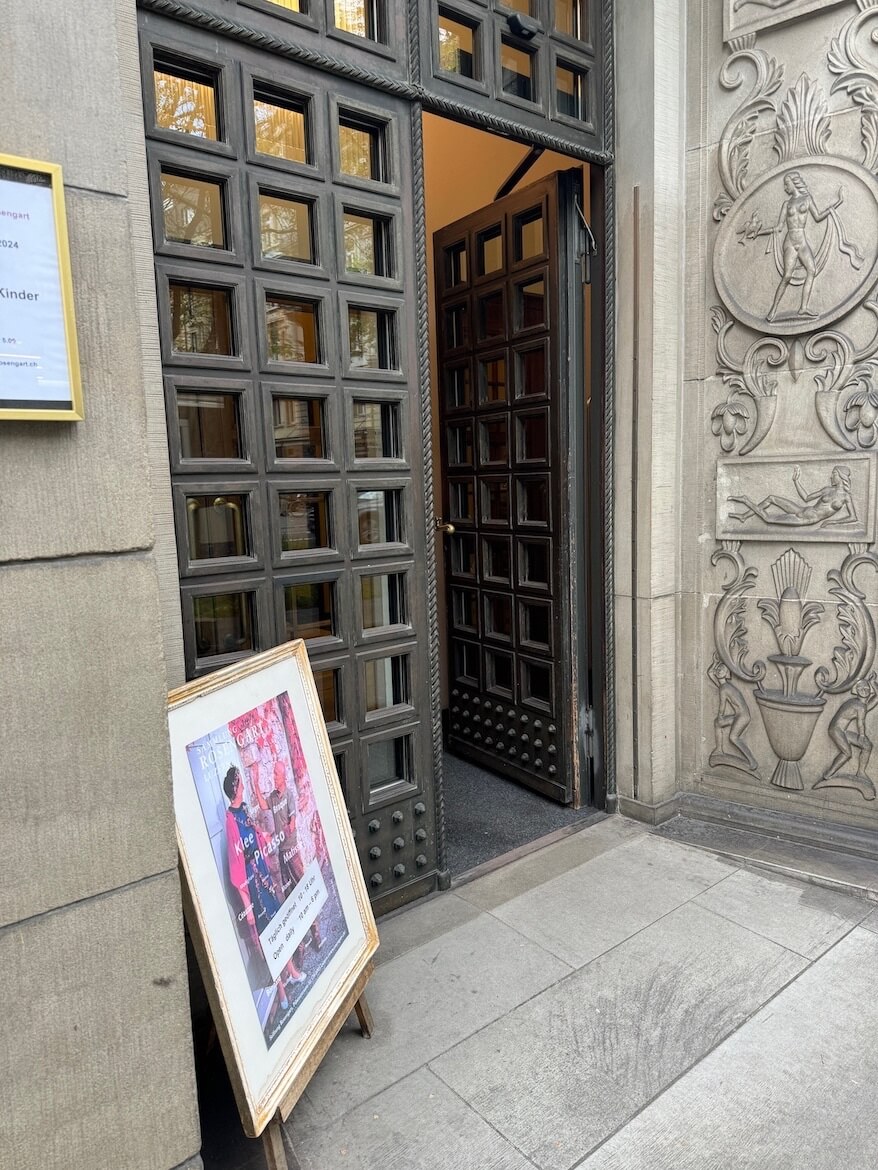
After exploring the museum thoughtfully and fully, we needed more refreshments before our dinner reservation.
Perusing art museums takes emotional fortitude. I try to absorb so many elements about the art—standing on hallowed ground, knowing full well how lucky I am to witness such revered pieces in person. Beyond brushstrokes, there’s so much to consider: the artist, the time it was created, the “why” behind it.
Sometimes, it’s not so serious. Sometimes, it’s just a doodle on a napkin that makes its way to stardom.
I always leave a museum and wonder: what makes some art so famous and some art ignored? Street art sometimes appeals to me more than what’s housed in museums. And the whole experience expands my eye and opens my heart to so much more beauty than I once realized.
Anyway, we stopped at Bistro Krienbrüggli for drinks, right around the corner from our dinner spot. The whimsical environment, infused with a lively vibe, fit perfect after the quiet museum and helped us get our second wind for the night. We loved this place and ended up coming back a few times.
One of my favorite things to do when in an unfamiliar place is to ask the barista what is popular or what they recommend. In this case, the server recommended the spicy matcha drink which is now, still, one of my all-time favorite drinks. According to their menu it contains: coconut milk, fresh orange juice, mango, matcha, lime juice cordial, and a hint of chili. So delicious I tell you!
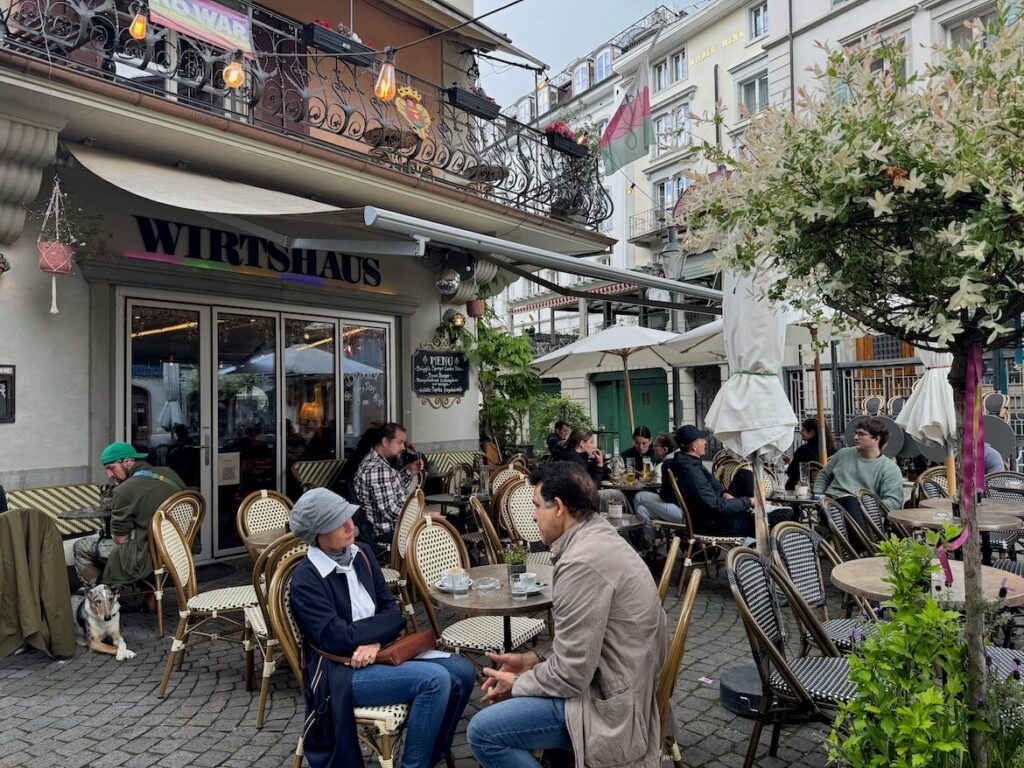
Wirtshaus Krienbrüggli restaurant—a lively spot where whimsy and modern touches meet grounded tradition. We loved it so much, we returned several times during our visit.
Look at these delectable drinks. The Spicy Matcha drink is my new favorite.
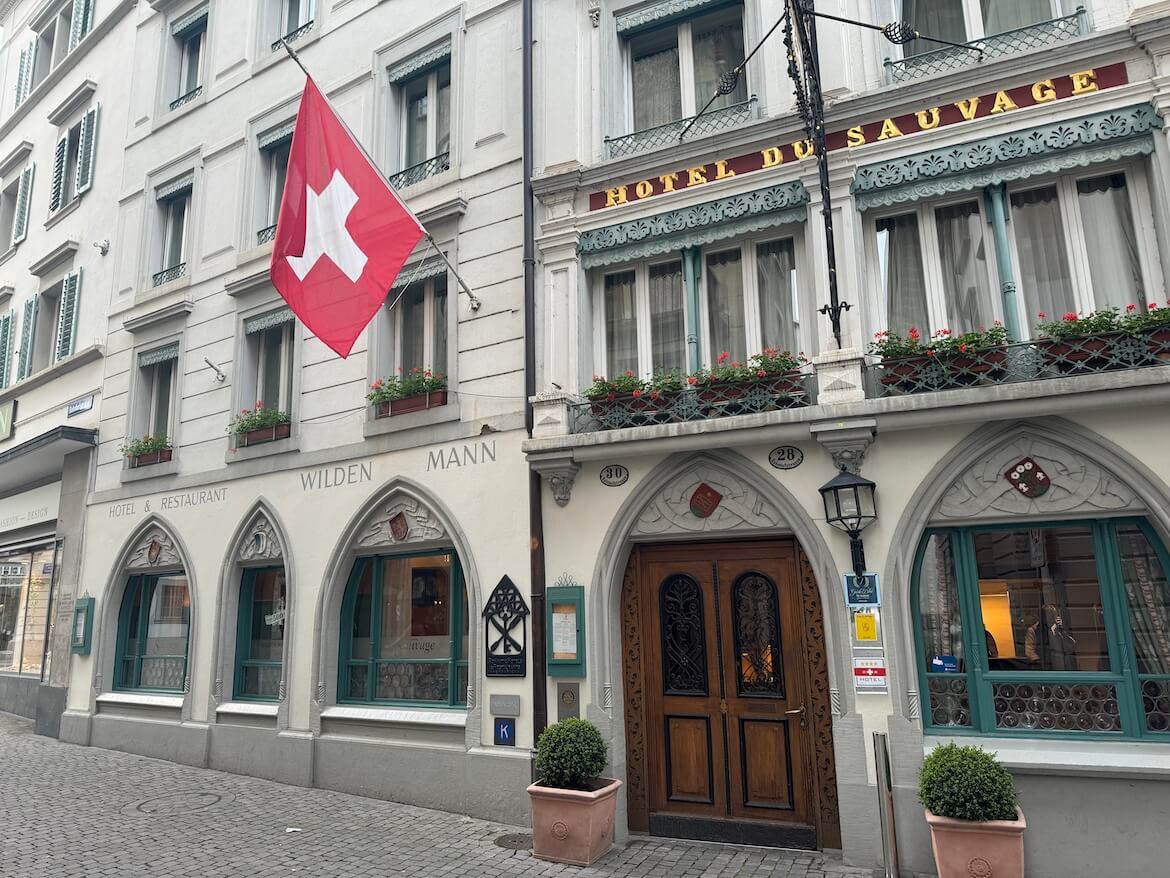
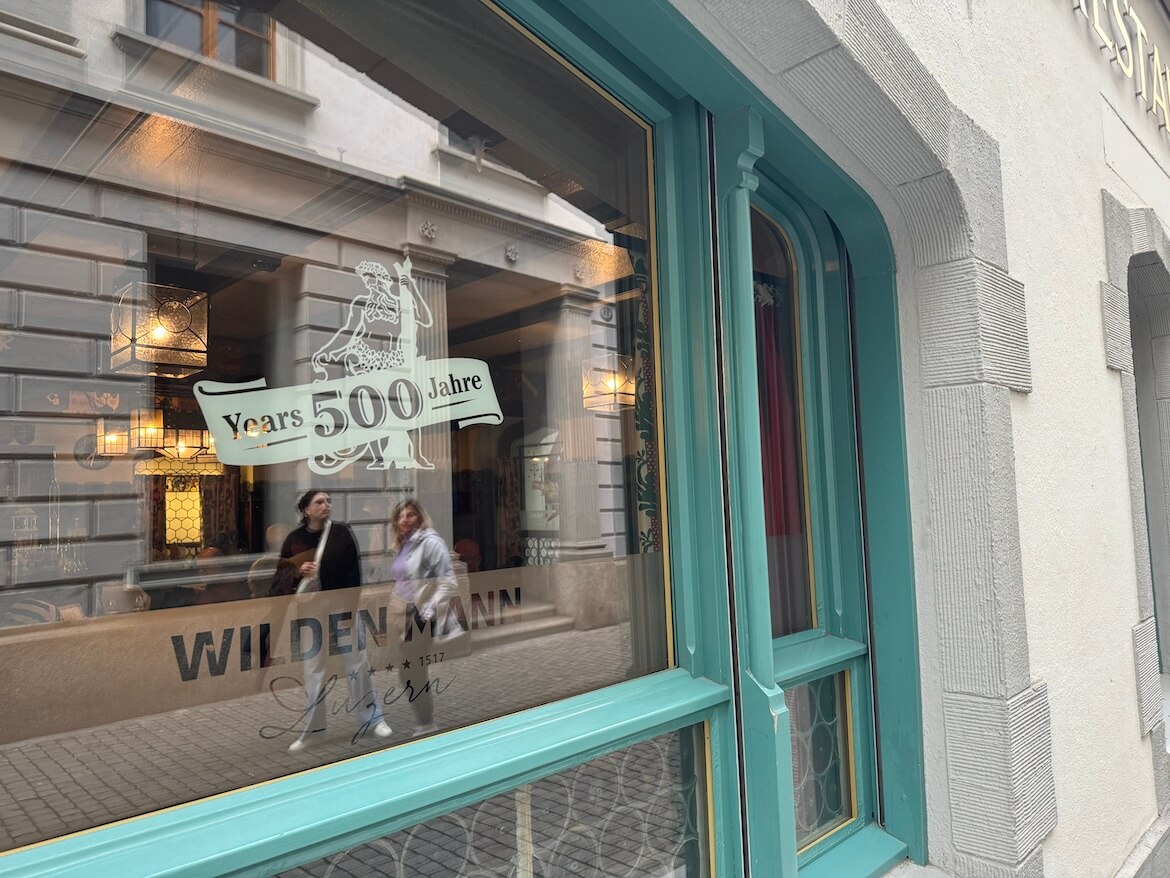
Next up: a traditional dinner at Burgerstube, the restaurant inside Hotel Wilden Mann. I don’t remember how we landed on this spot—but I’m glad we did. The hotel has been a fixture in Luzern’s cityscape for over 500 years, making it one of the oldest continuously operating hotels in Switzerland.
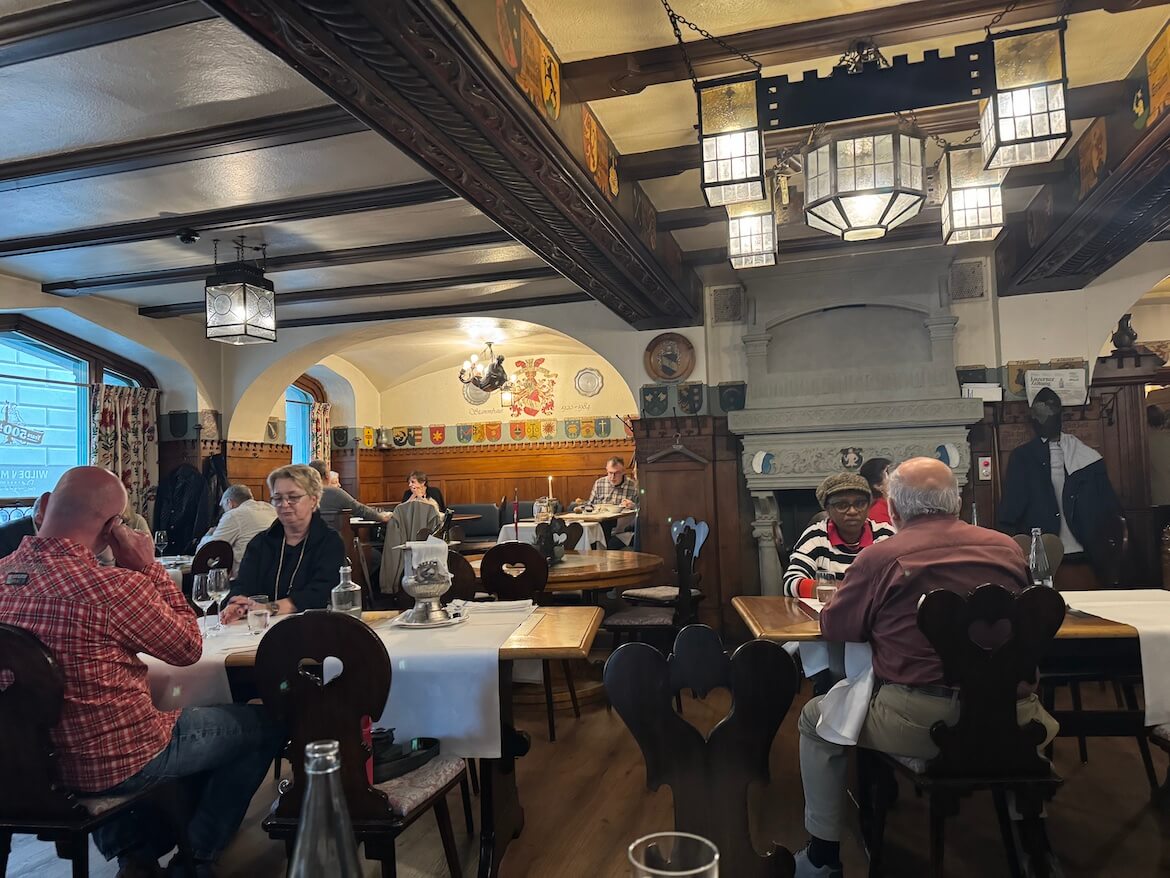
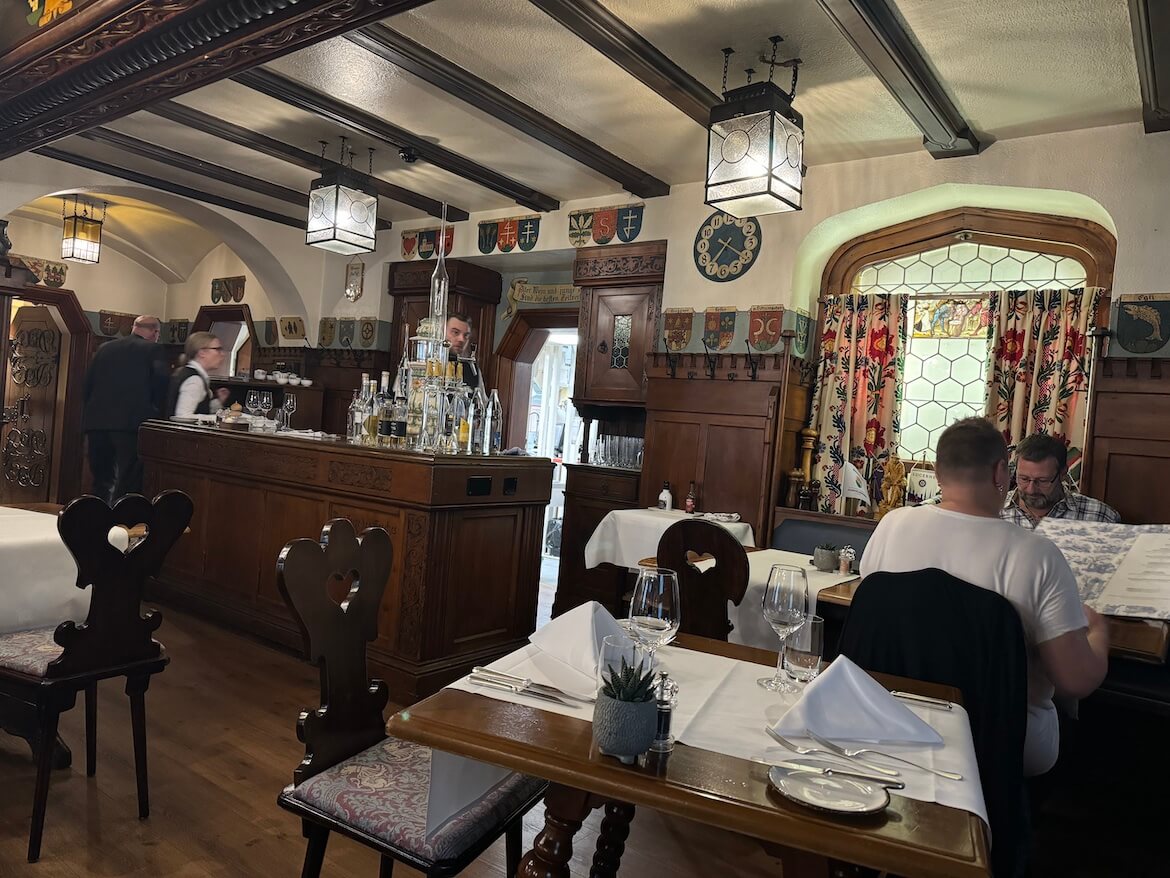
The Burgerstube offers classic, elegant dining with a menu of refined, traditional Swiss dishes. The atmosphere is cozy and rustic, lit just dimly enough to feel like time might be standing still.
I loved that we got to taste a genuinely historic Swiss meal in a setting that’s remained largely unchanged for generations. The building first opened as a tavern in 1517, and you can feel that history in the timbered ceilings, worn stone, and hushed energy of the room. The food was thoughtful and delicious, but the ambiance—dark and reserved—lent itself more to reflection than celebration.
It was my least favorite dining experience in Luzern, simply because I prefer something livelier. But still—what a gift to dine in a place that’s seen centuries pass through its doors.
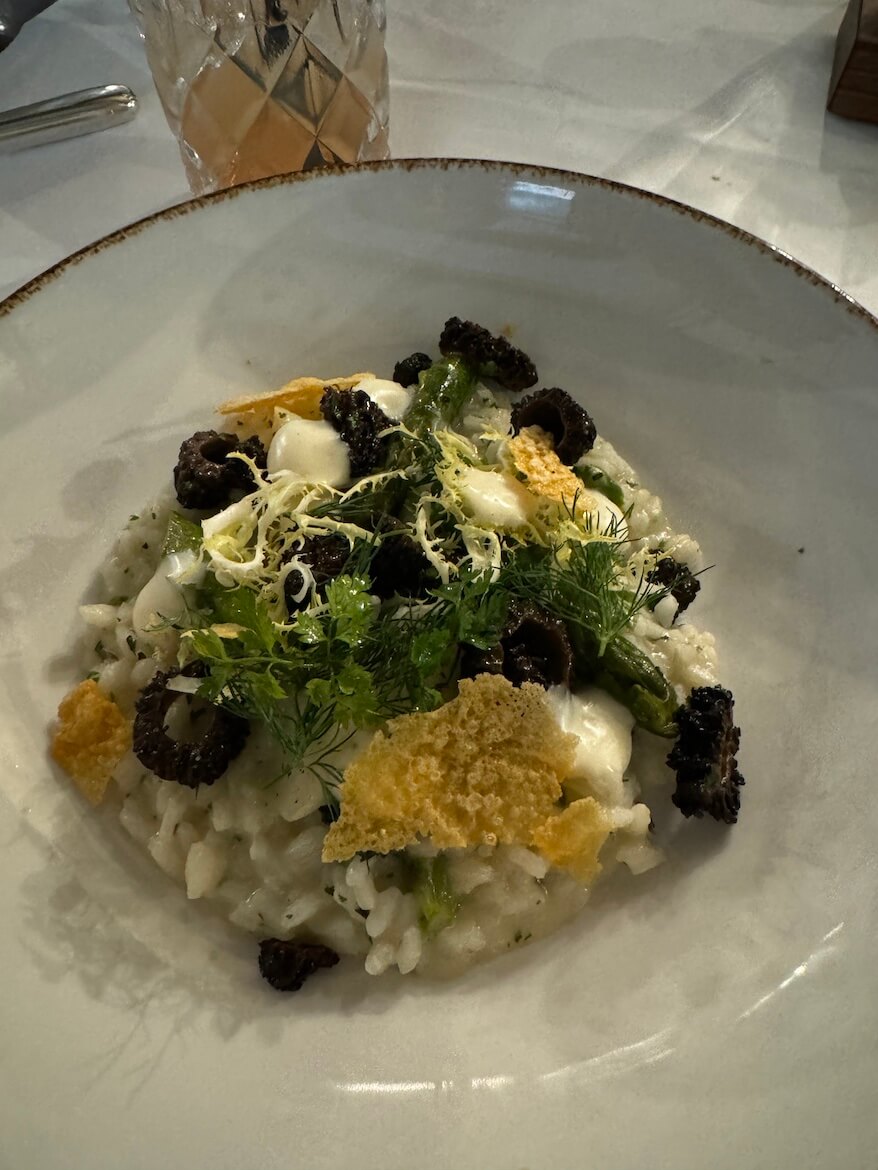
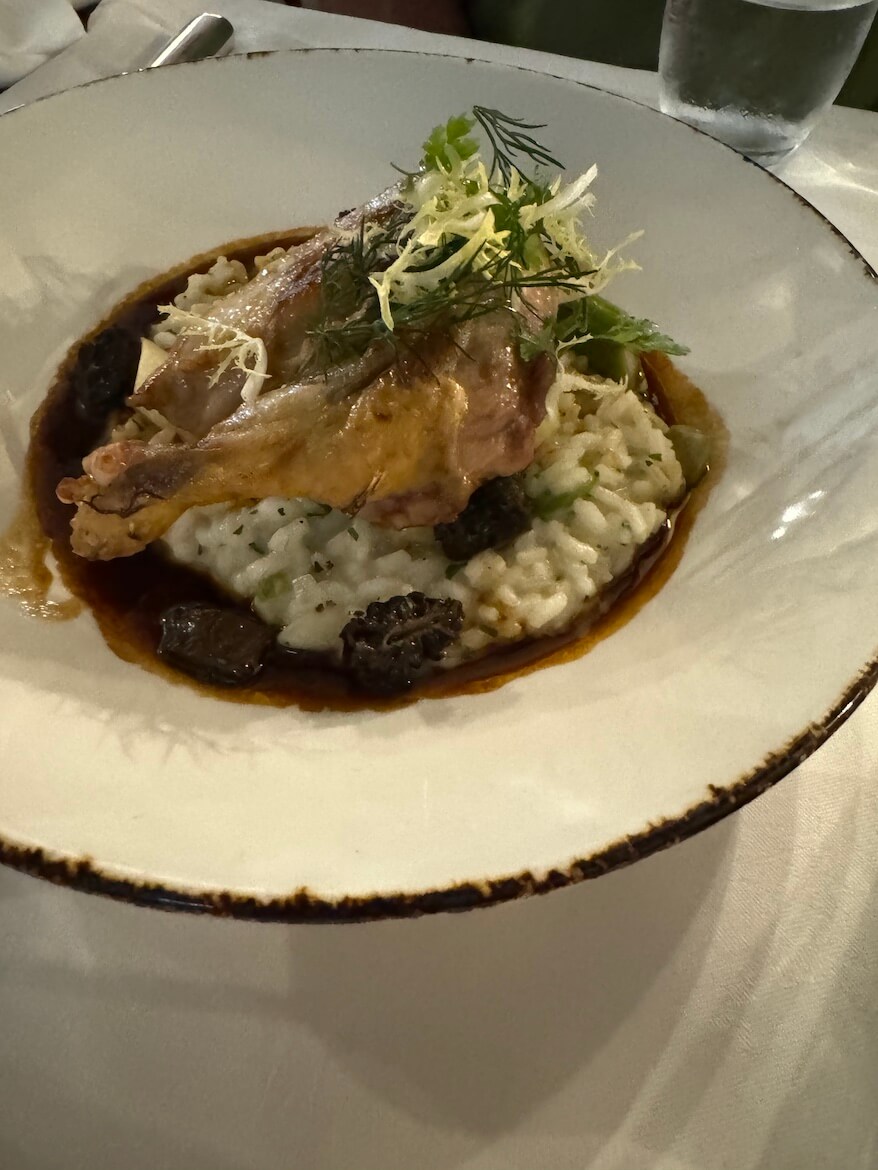
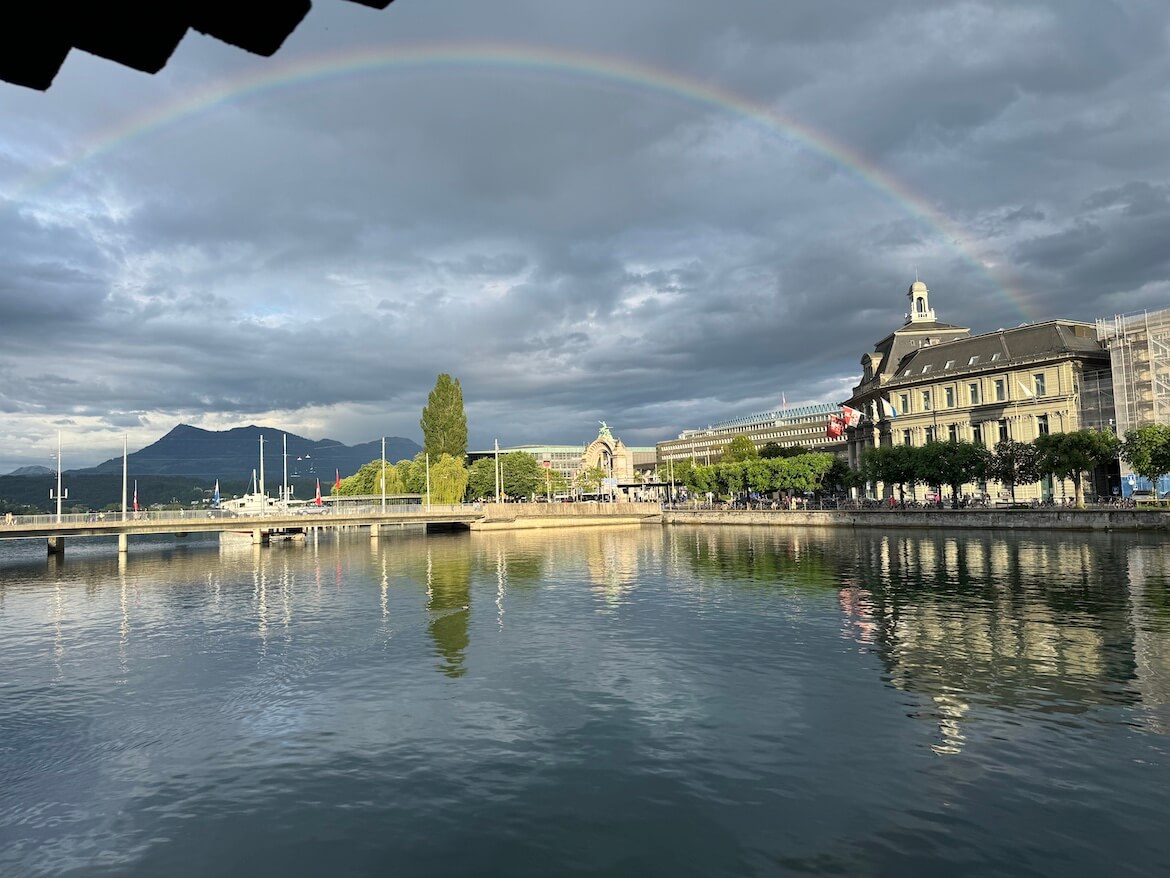
After our dinner, we meandered back to the hotel and happened upon a rainbow! Such a fitting end to an absolutely phenomenal day. I feel so grateful and stand in awe.
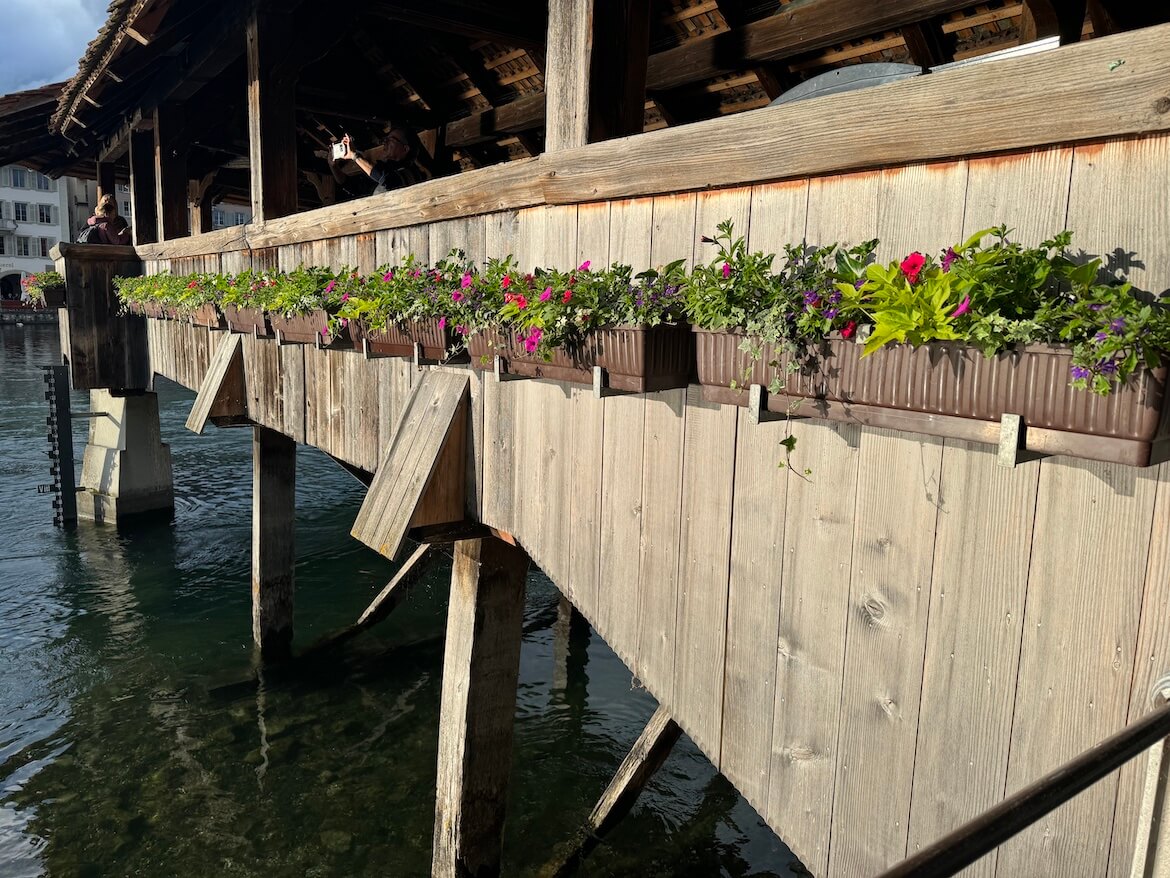
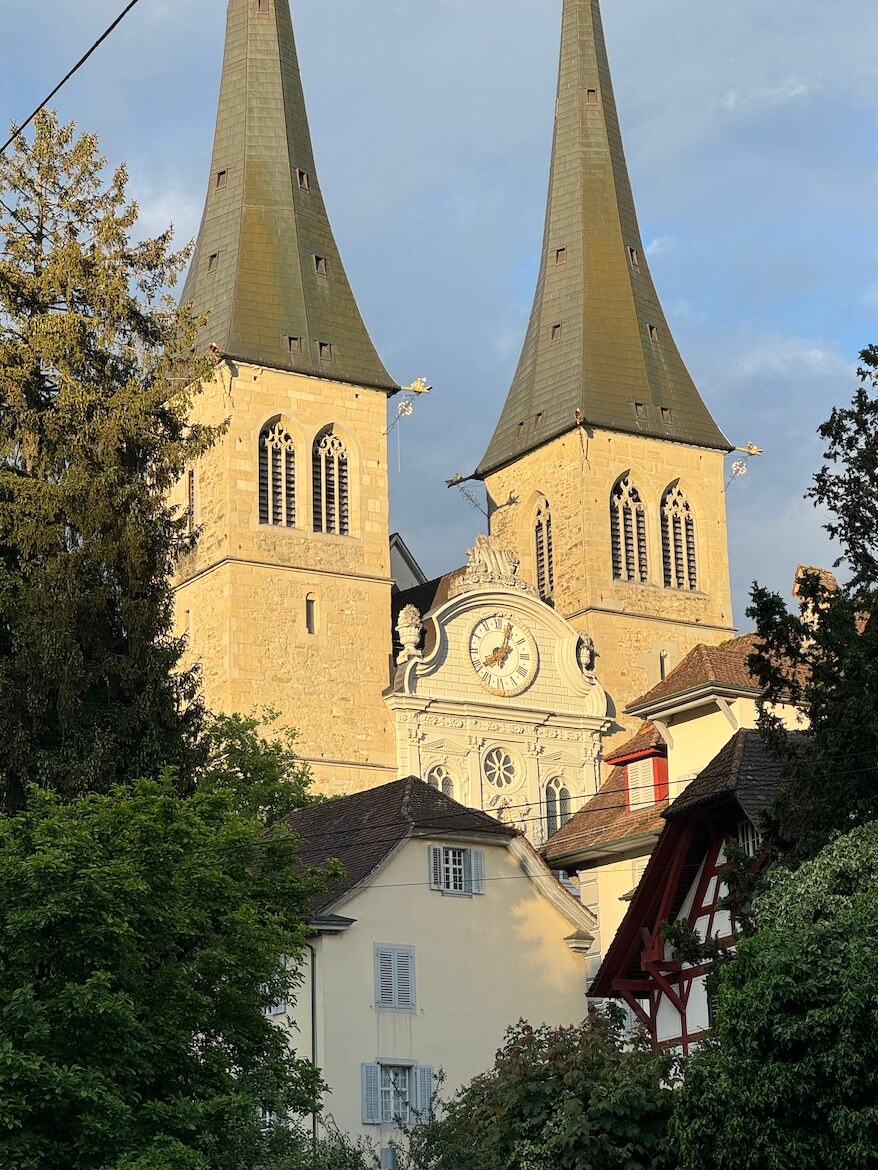
Next up: Day 5—Lucerne’s Timeless Scenes: Bourbaki Panorama, Glacier Stories, and Farewell Bells
See all my travel gear and essentials here: Things I Love & Recommend
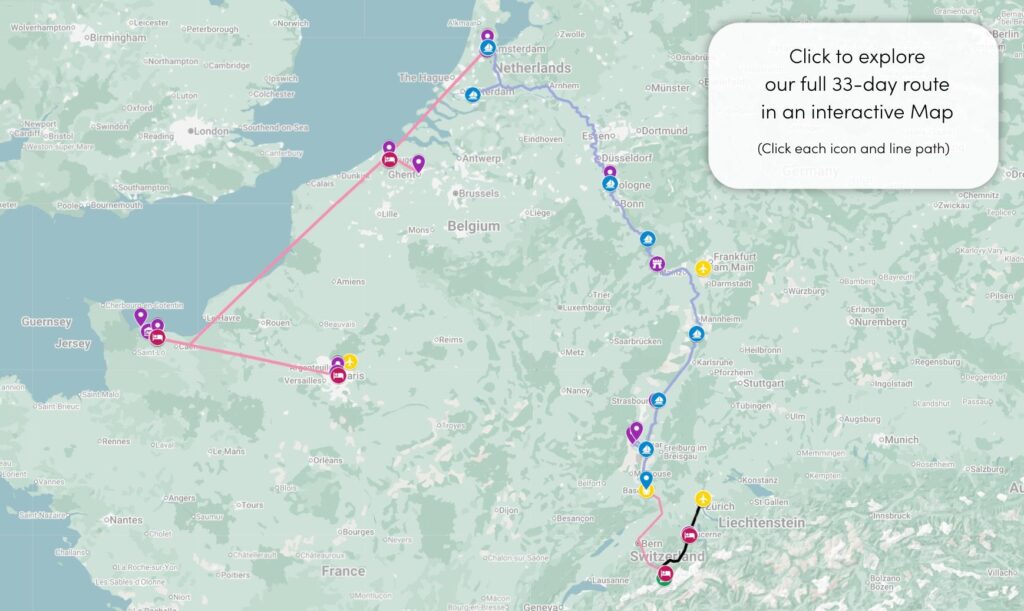
Detailed Map of the Entire Journey
Below is a visual summary of our full 33-day route—hotels, attractions, Viking cruise path and stops, as well as transit modes and paths—hiking, train, plane, gondola.
Click to explore the interactive version and wander through the journey pin by pin.