
Lucerne is a charming place, and so clean that one could eat off the streets.
—Mark Twain, who visited in the 1870s
This post is part of my 33 Days in Europe series. Visit the hub page to follow along, see the full itinerary, and sign up for email updates.
We came to Lucerne to explore after consulting Rick Steves’ guides for inspiration. And here we are—on our first day in Lucerne, part of our 33 days in Europe.
The day unfolded in layers: a bridge, a ferry, a museum, a promenade, and moments that felt like they belonged to a different century.
In hindsight, I can’t imagine a more perfect day.
The Morning: Chapel Bridge and the Reuss River
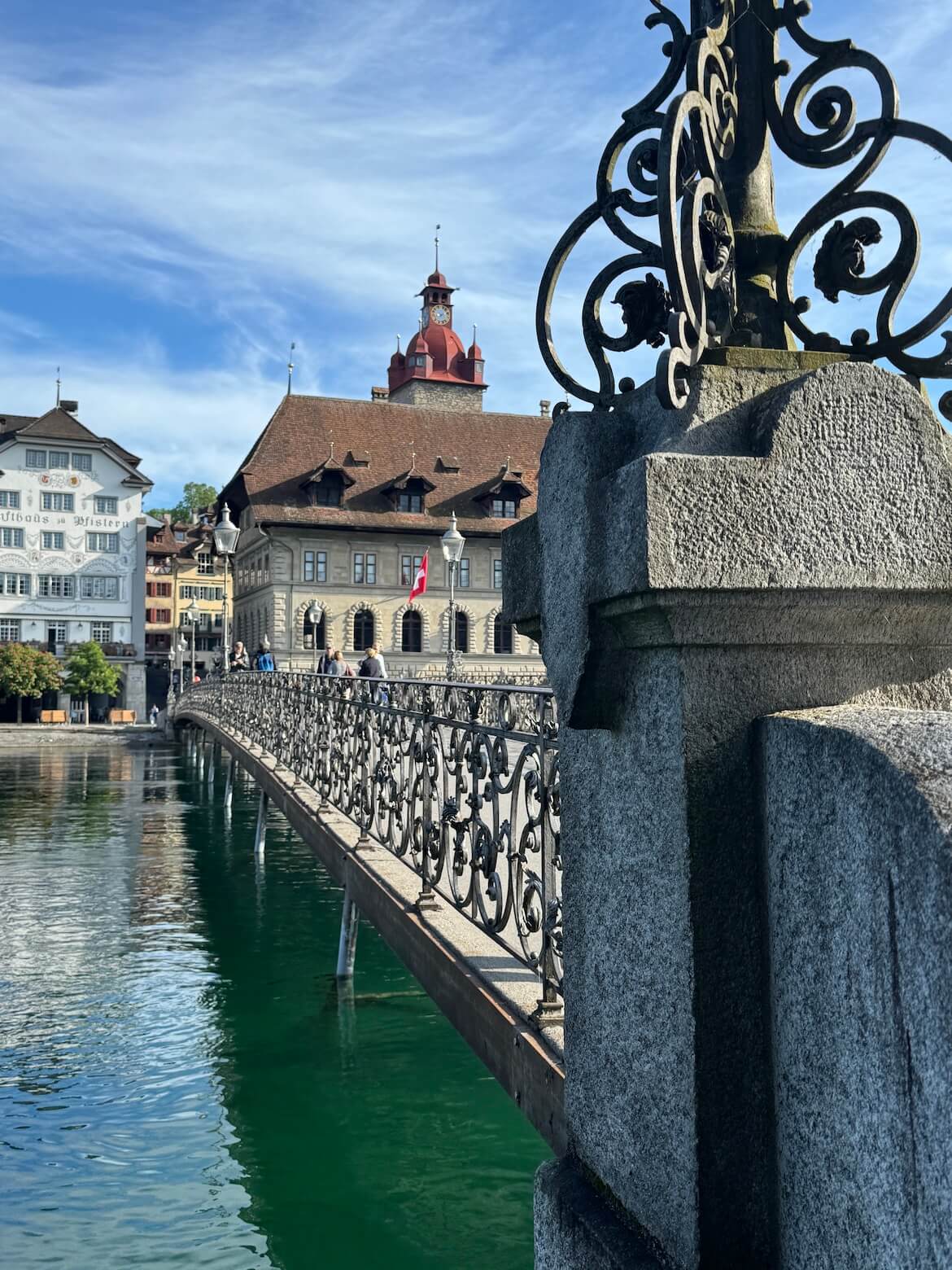
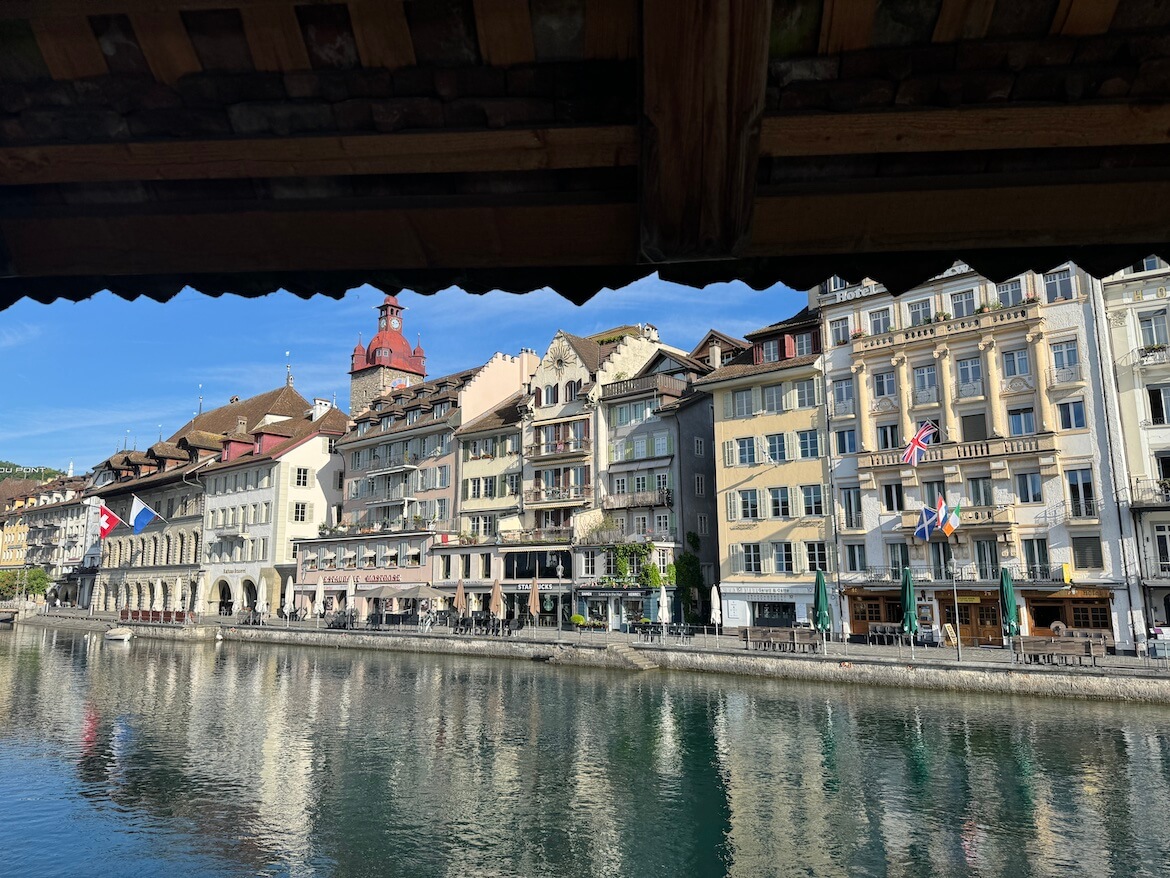
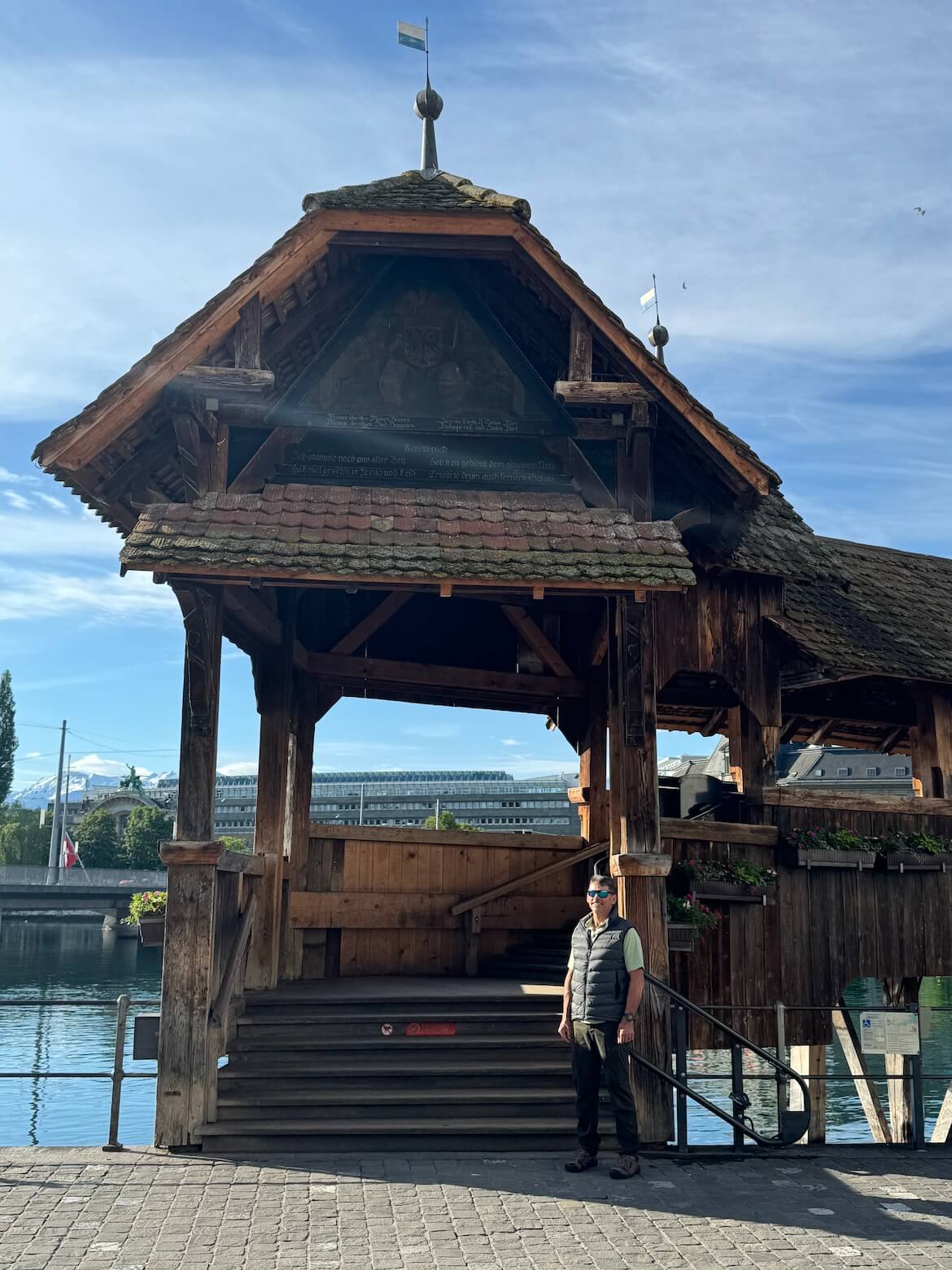
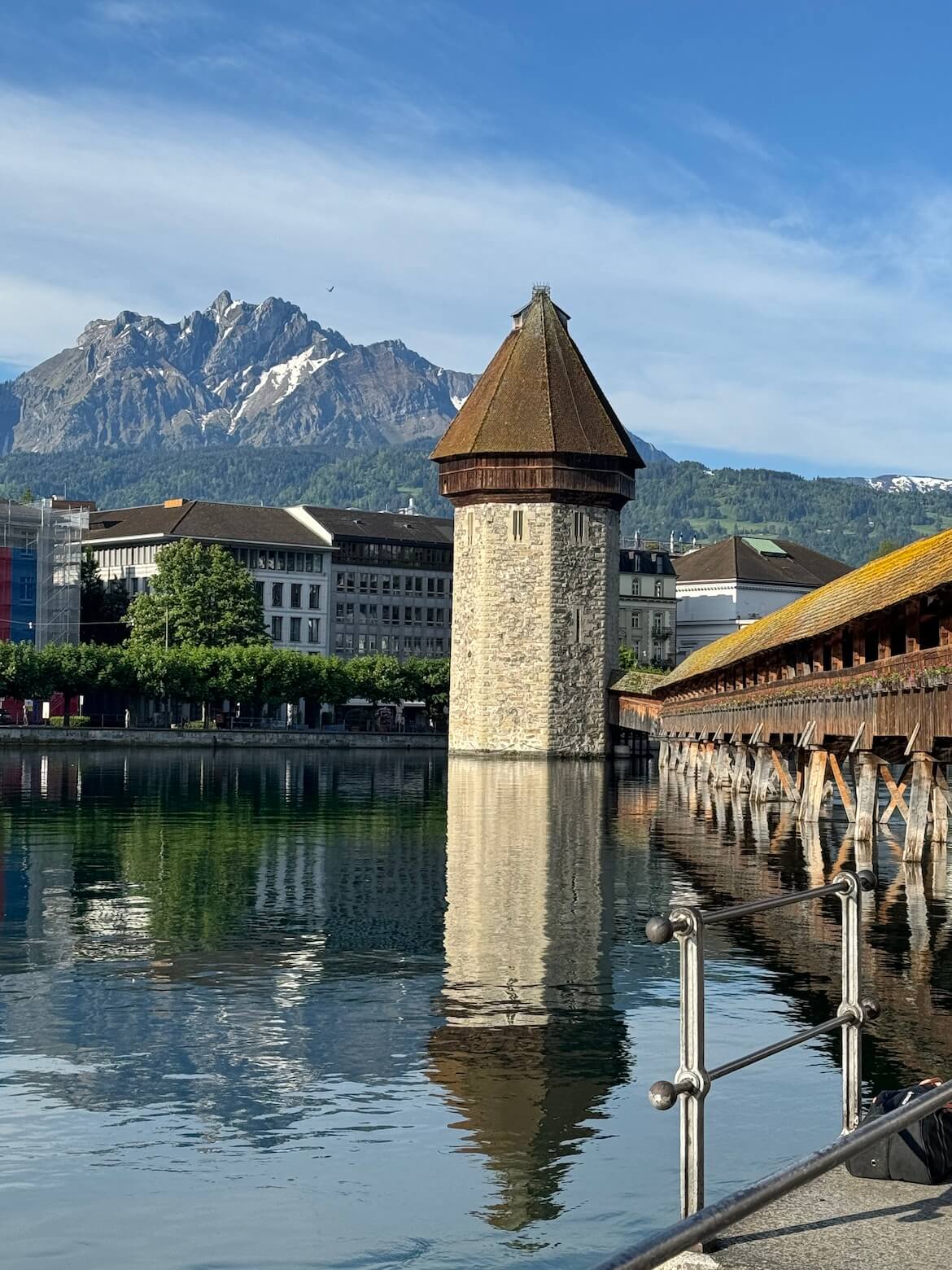
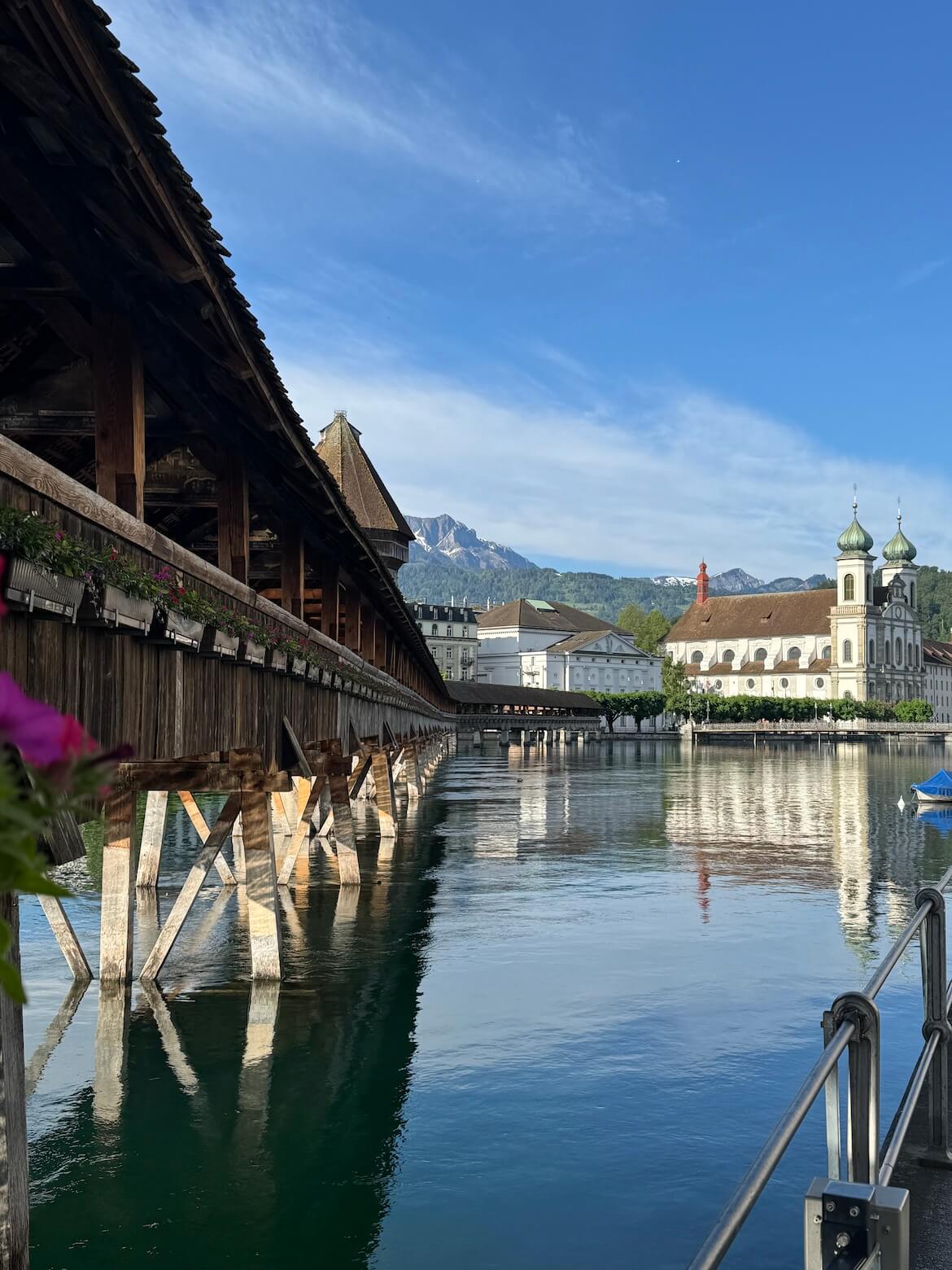
We started the day with a walk across the 14th-century Chapel Bridge (Kapellbrücke)—built in the year 1333 to be exact. It is the oldest surviving wooden covered bridge in Europe.
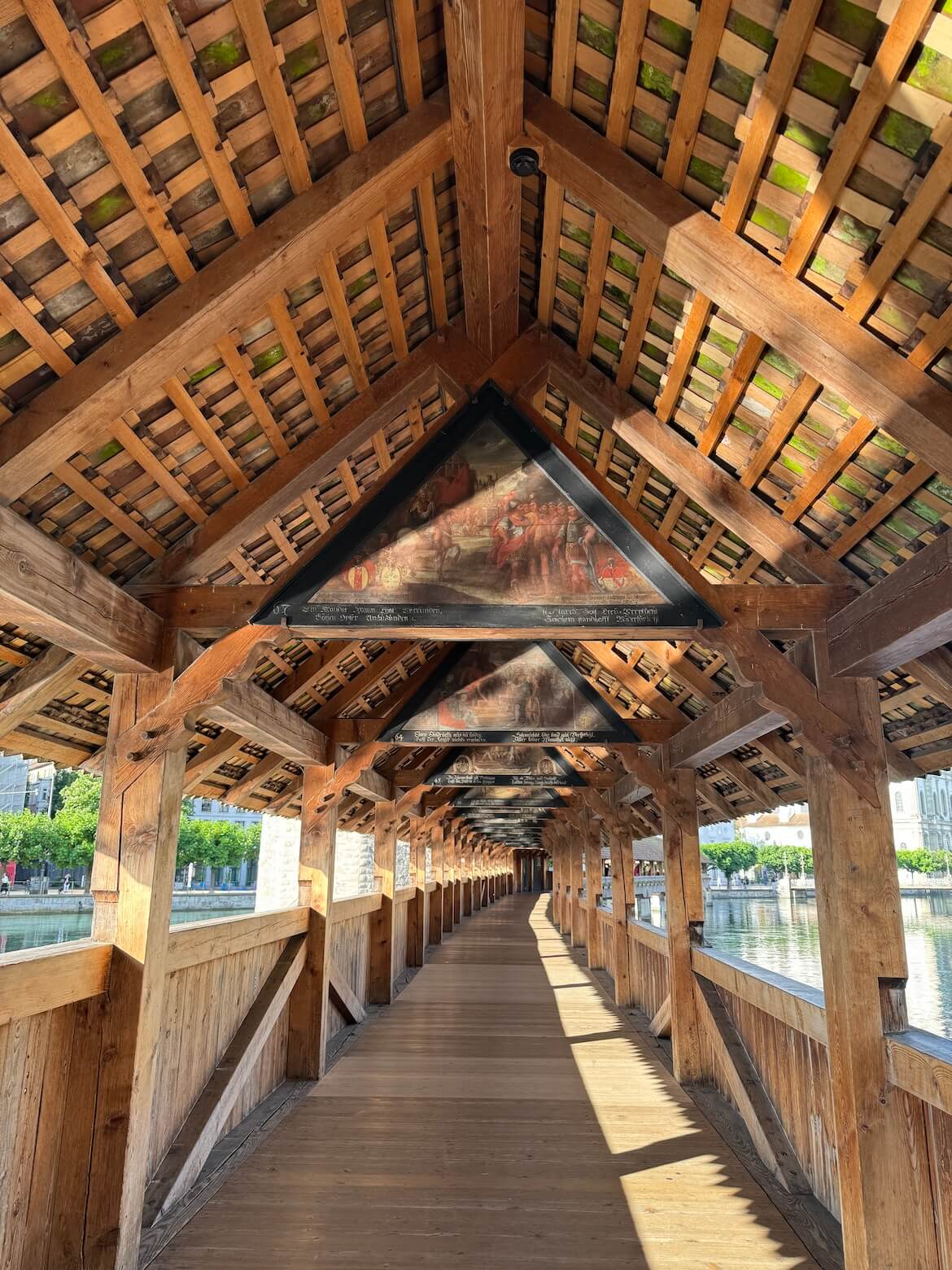
Most people think of it as a photo stop—the flowers, the tower, the reflection on the river. But there’s more happening overhead. Inside the bridge, a series of triangular paintings tell Lucerne’s history.
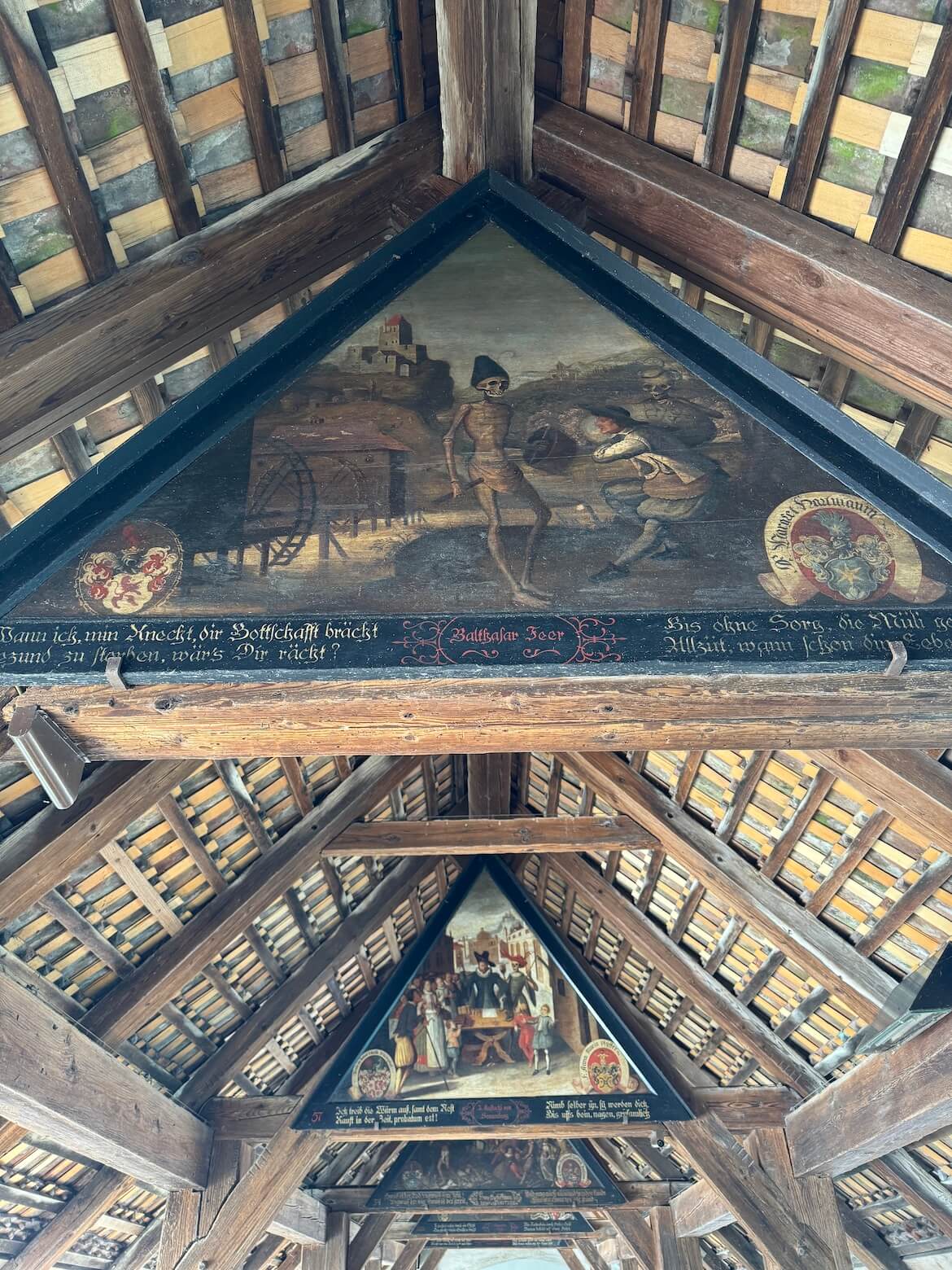
Many of the paintings from the 16th and 17th centuries have skeletons in the scene. Not scary skeletons, happy ones, or least benign ones, depicted in everyday life.
I learned that these panels have a purpose—to remind you that life is short.
One panel shows a skeleton, personifying Death, tapping a man on the shoulder. The caption reads (translated):
Can I, now thin and wasted, bring you God’s message
in time for you to change your ways?Life without care—the effort fades—
but death comes for you no matter what.
These verses reflect a common theme in European art from the 16th and 17th centuries, known as memento mori, Latin for remember you will die. It wasn’t meant to scare people, just to encourage them to live with intention. The purpose is to remind viewers to live thoughtfully, stay humble, and keep their spiritual life in order.
The tower next to the Chapel Bridge is called the Wasserturm, which means Water Tower in German. Despite its looks, it’s not a church tower. Many visitors mistake it for one because of its shape and position near the bridge.
It was built in the 1200s and so it’s actually older than the Chapel Bridge itself. It’s octagonal and stands right in the middle of the Ruess River. Over the centuries, it has served many roles, and I quote: “Watchtower, prison and torture chamber, city treasury and archive”.
Nowadays, we so casually mention its history “torture chamber” with nary a change in voice pitch, which I find disturbing. It should read “Watchtower, prison and TORTURE CHAMBER (!!!), city treasury and archive.
As a side note, I don’t know if I could spend my days in any structure where people were once tortured. I suspect I’d blame every unfortunate occurrence—brisk wind, odd smell, splinter or anything else—on the evil mojo I imagine lurking about. Perhaps its existence serves as a reminder of darker days not to be revisited. But I digress…
Want the best view? Click any photo to open the gallery. You’ll see the images larger, and you can scroll side to side.
How Lucerne Controls Its Water: A Walk Along the Weir
Ferry Across Lake Lucerne and the Train and Hans Erni Museums
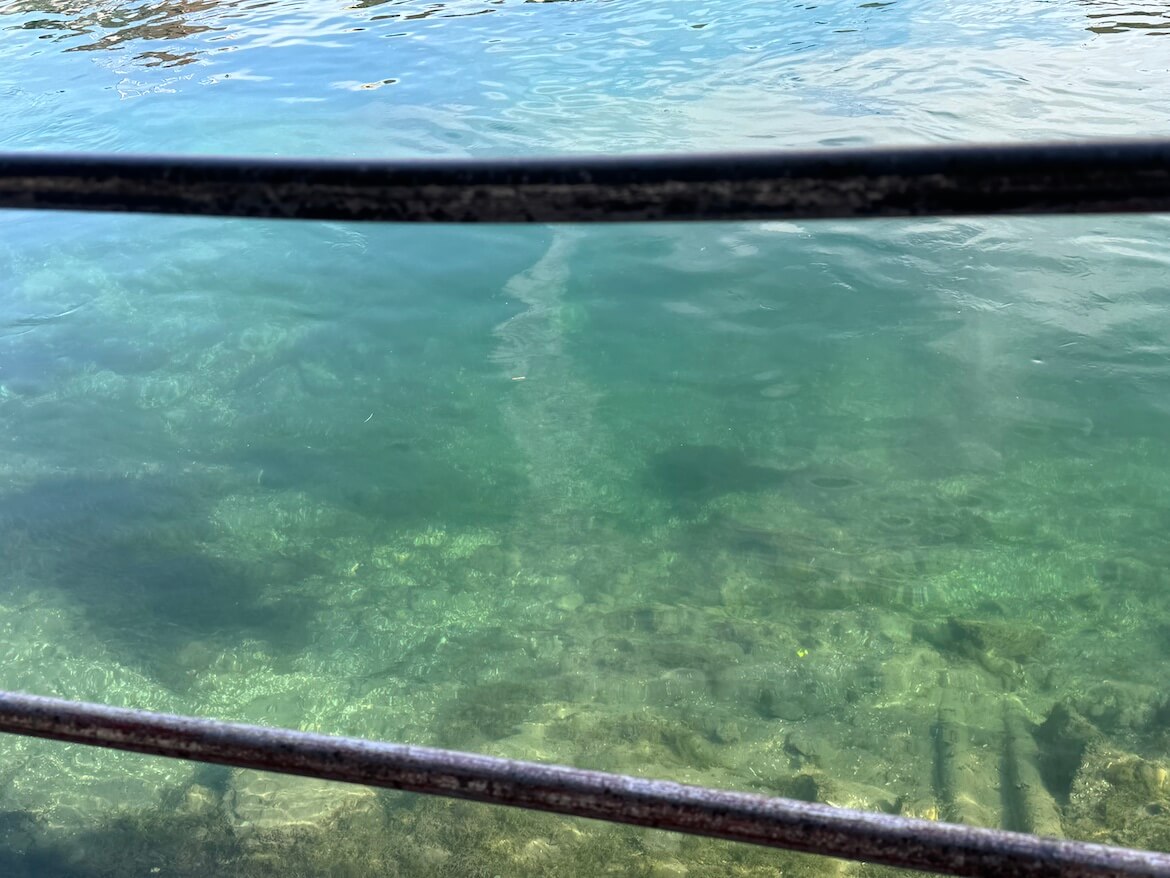
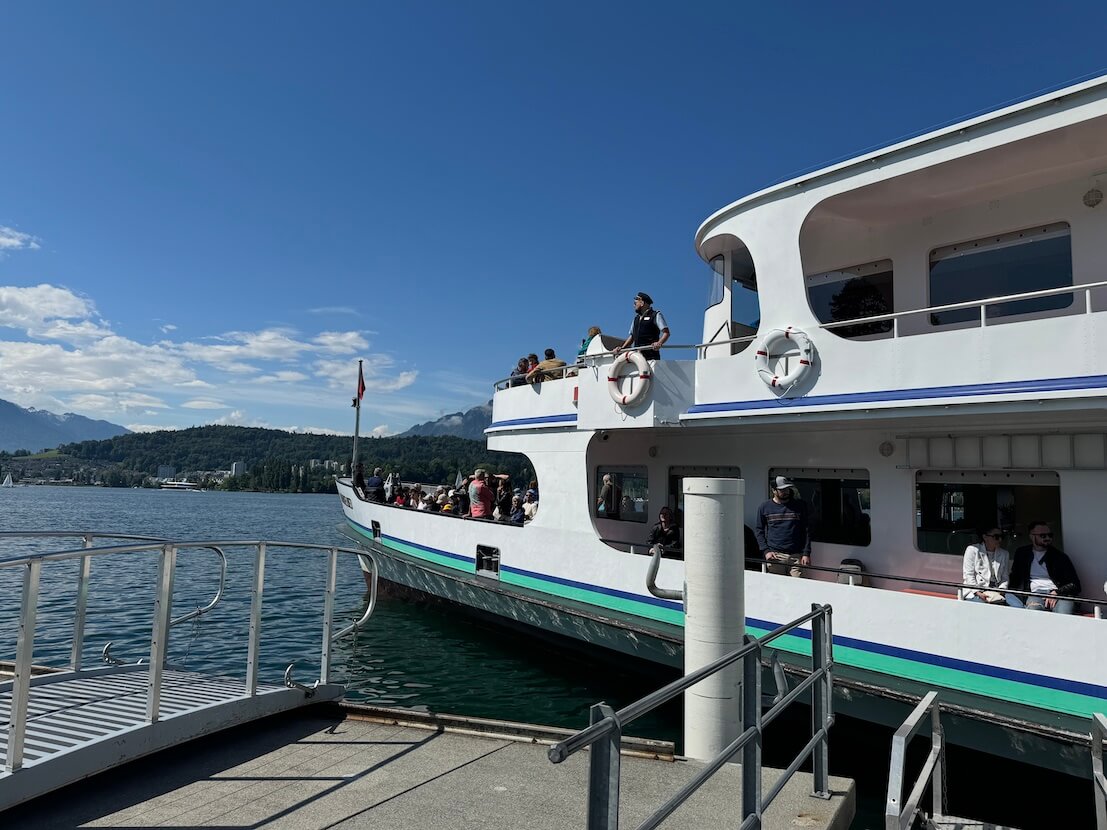
After the bridge, we boarded a ferry across Lake Lucerne, watching the water shimmer like glass. It was so clear! I wondered (read: worried) what the ducks eat when there’s nothing visible in the water. They seemed to nibble at nothing and might as well have been nibbling at the air for all I knew.
We visited the Swiss Museum of Transport, a massive collection of planes, trains, automobiles, and Swiss transportation history. Ron loved this place!
For me, the real surprise was the Hans Erni Museum, a small, single-artist gallery tucked inside the transport museum campus. Hans Erni was a Swiss modernist known for his murals, paintings, and ceramics.
I find it difficult to explain his art because he lived so long (106 years) and created so much. He adhered to no single style whatsoever. I found his art meaningful and fascinating. Erni is proof that art is essential to humanity.
Want to learn more? Check out this interview with Hans Erni and see his museum here.
Want the best view? Click any photo to open the gallery. You’ll see the images larger, and you can scroll side to side.
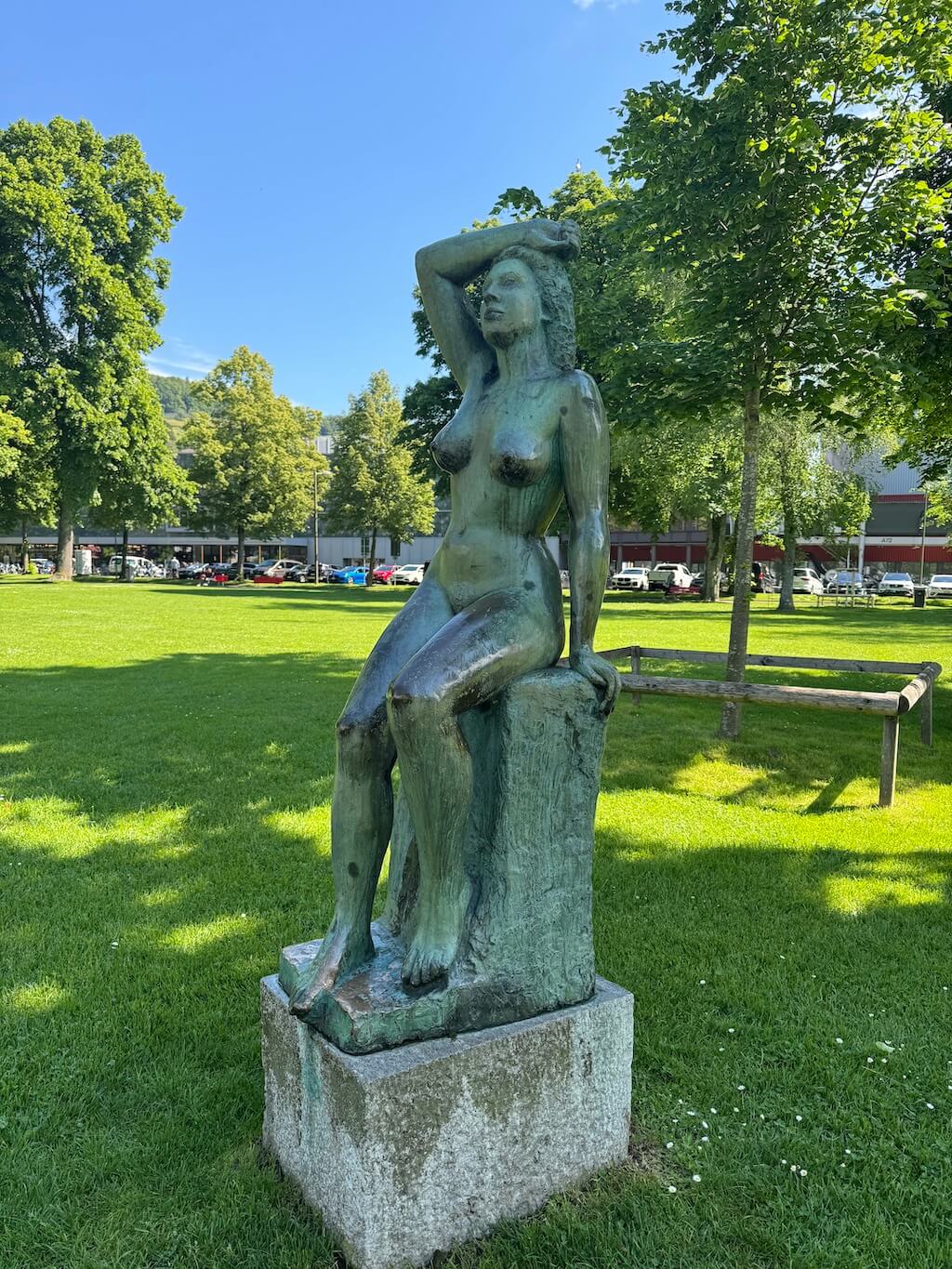
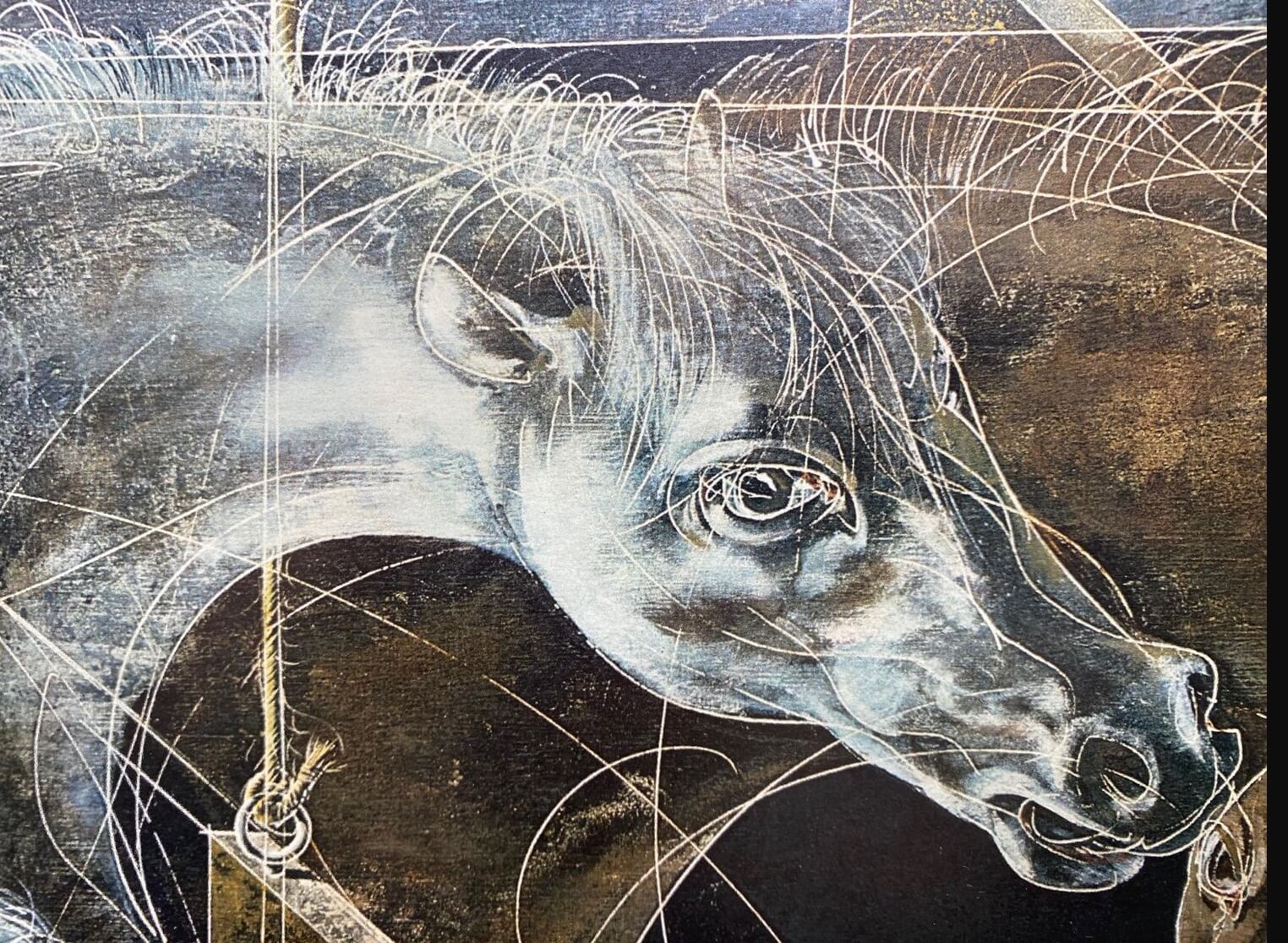
A Promenade Walk (with Ice Cream)
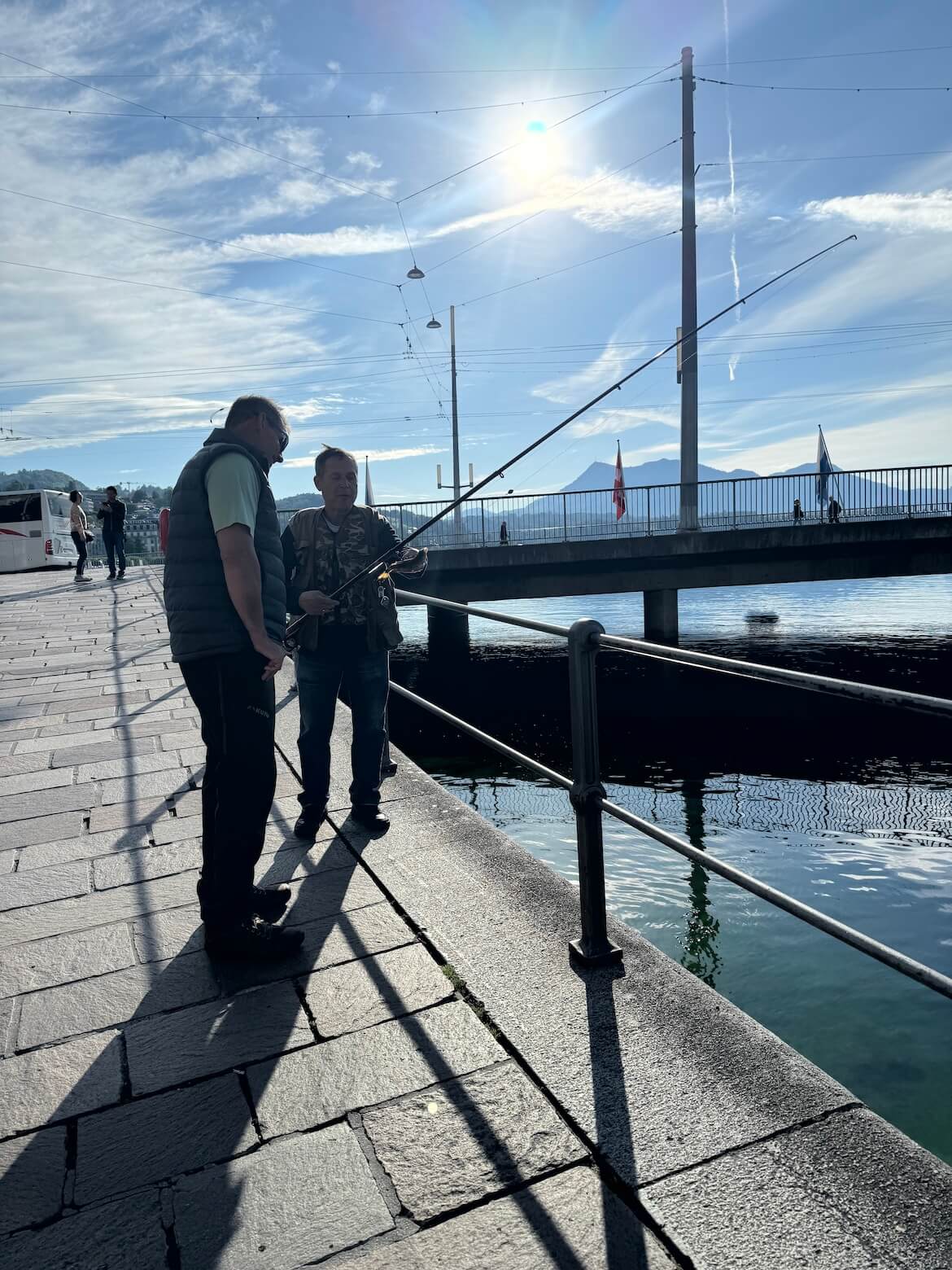
After the museum, we wandered Lucerne’s beautiful lakeside promenade, ice cream in hand. It’s practically a rule here: if you’re walking along the Reuss River, you’re supposed to have a cone.
The promenade stretches along the shores of Lake Lucerne, offering scenic views of the lake, the Alps, and the city. It’s a popular spot for walking, jogging, and cycling, and it’s lined with trees, cafes, and restaurants.
The promenade was just-right busy with locals, tourists, kids, and dogs. Somehow, it was both bustling and peaceful at the same time.
Dinner at Anchor: Flames, Food, and Fun
For dinner, we dined at Anchor Restaurant (Anker)—a spot we found through Rick Steves’ book, who described it as “hip.” It was hip—modern, industrial, with a hat tip to the old world sprinkled with a bit of whimsy. That’s my take anyway.
We shared a huge chef’s-choice platter: ribs, chicken, beef, prawns, grilled vegetables, asparagus, and sweet potatoes. The whole thing came on a raised stand with tiny candles underneath to keep it warm. During dinner we reminisced about the spectacular day so far.
When the check came, they brought out tiny marshmallows to roast over a personal flame. Unexpected. Silly. Perfect.
Want the best view? Click any photo to open the gallery. You’ll see the images larger, and you can scroll side to side.
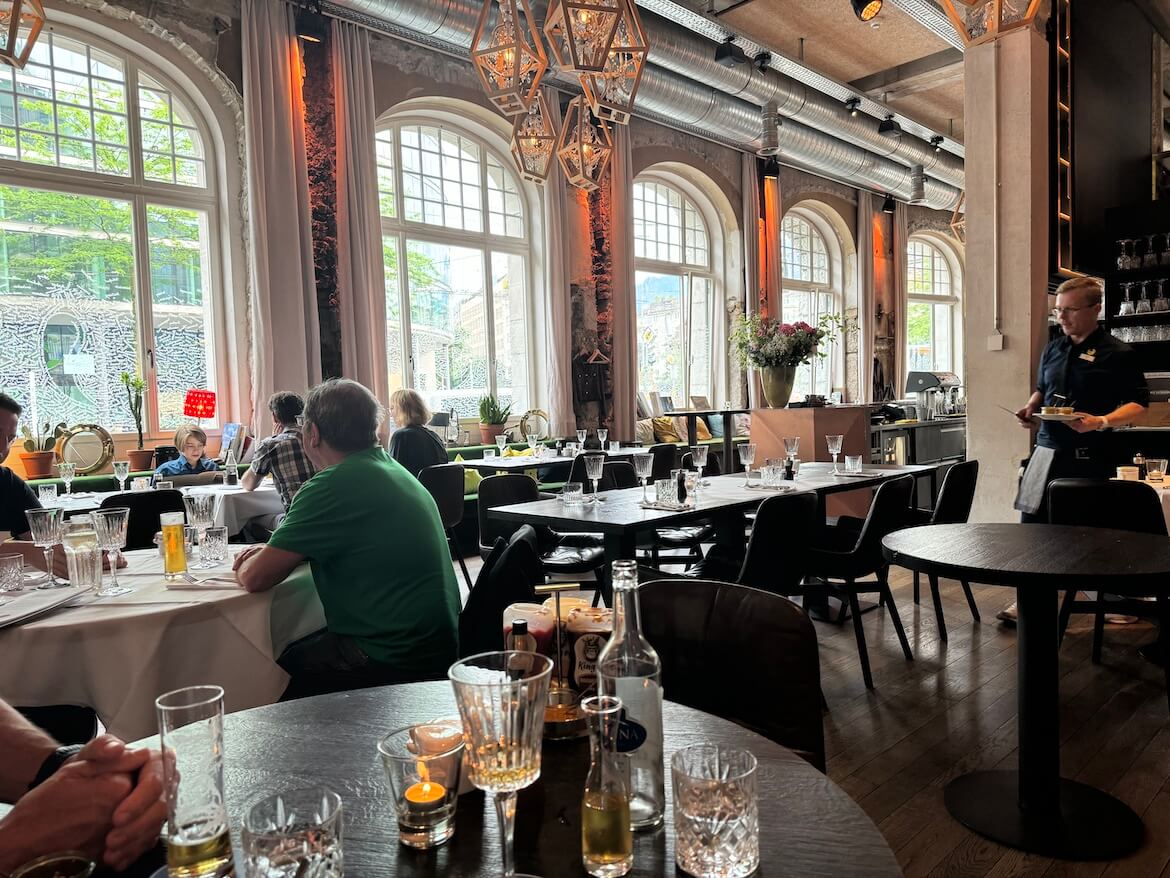
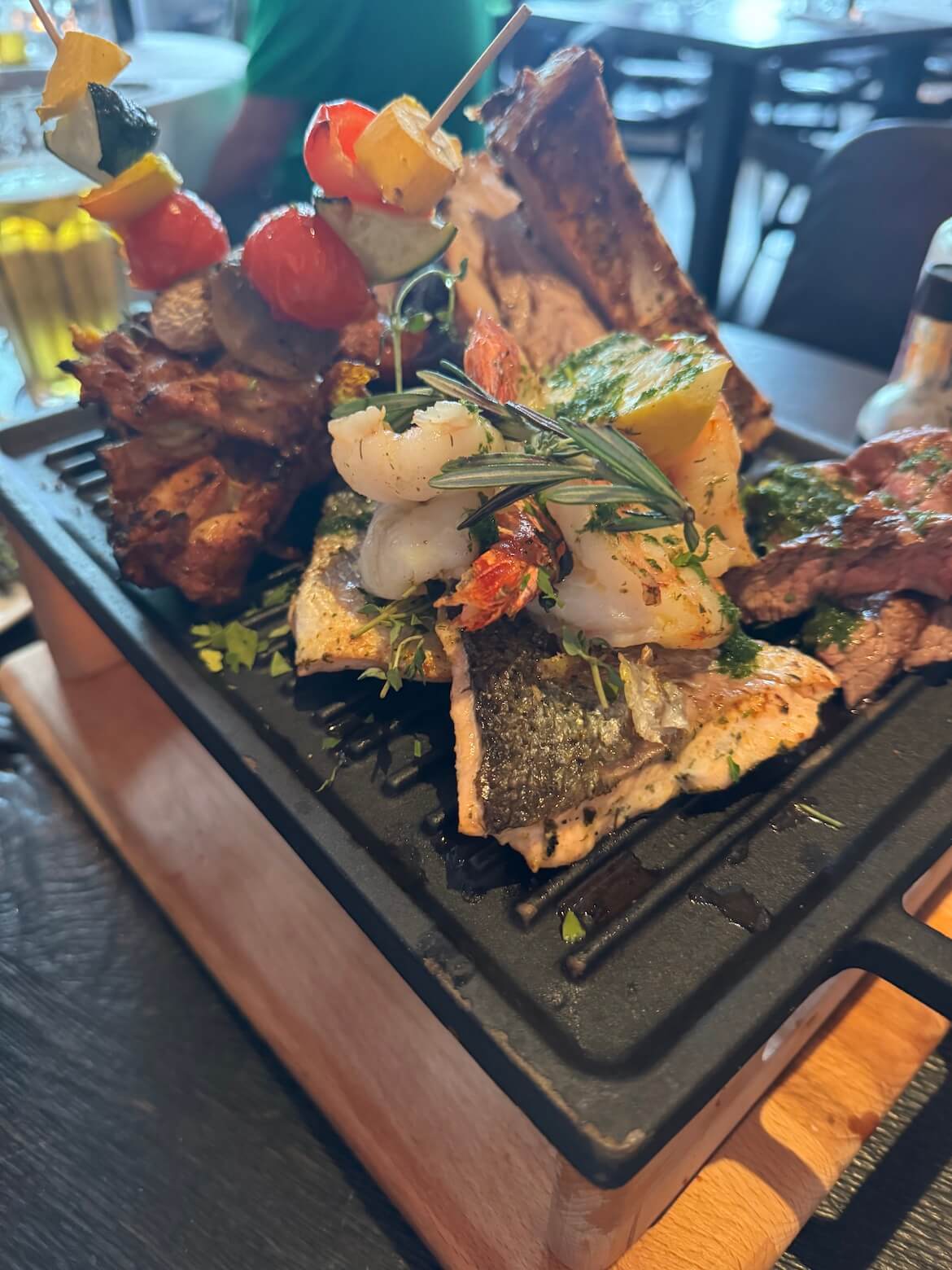
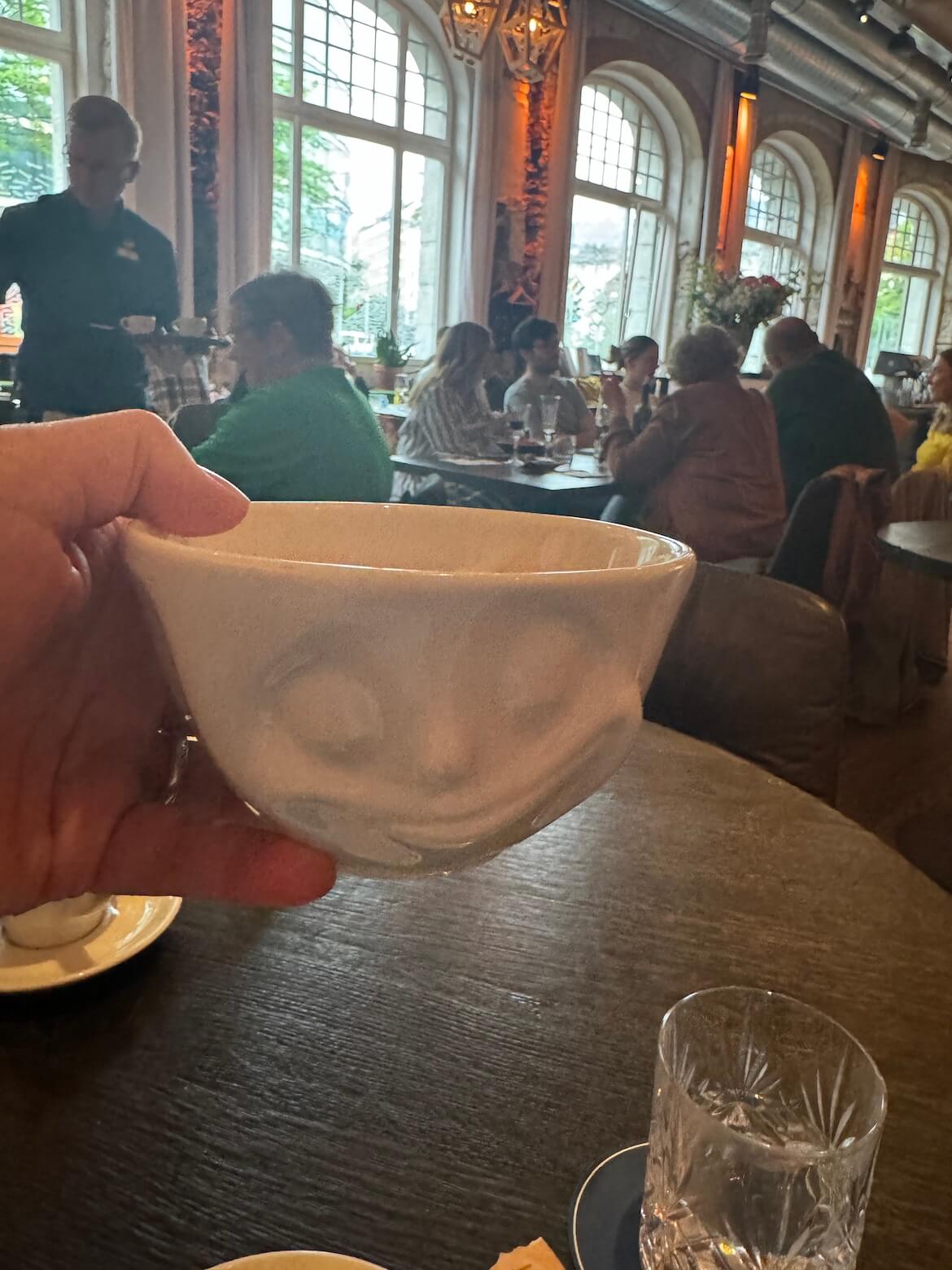
Check, Please! An Unexpected Flaming Finale
Stroll Through Lucerne to See the Lion
After dinner, we walked swiftly to the Lion Monument—Lucerne’s most famous sculpture—before darkness fell.
The Lion of Lucerne and Real Life Travel Moments
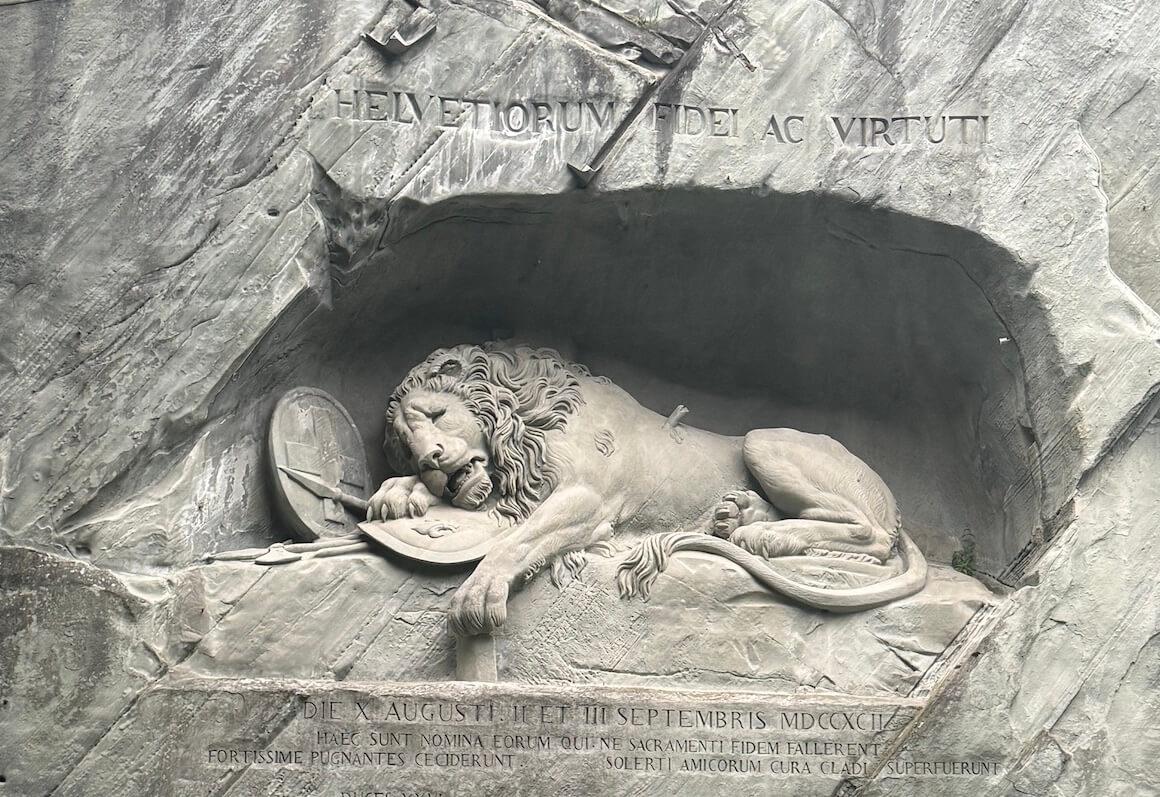
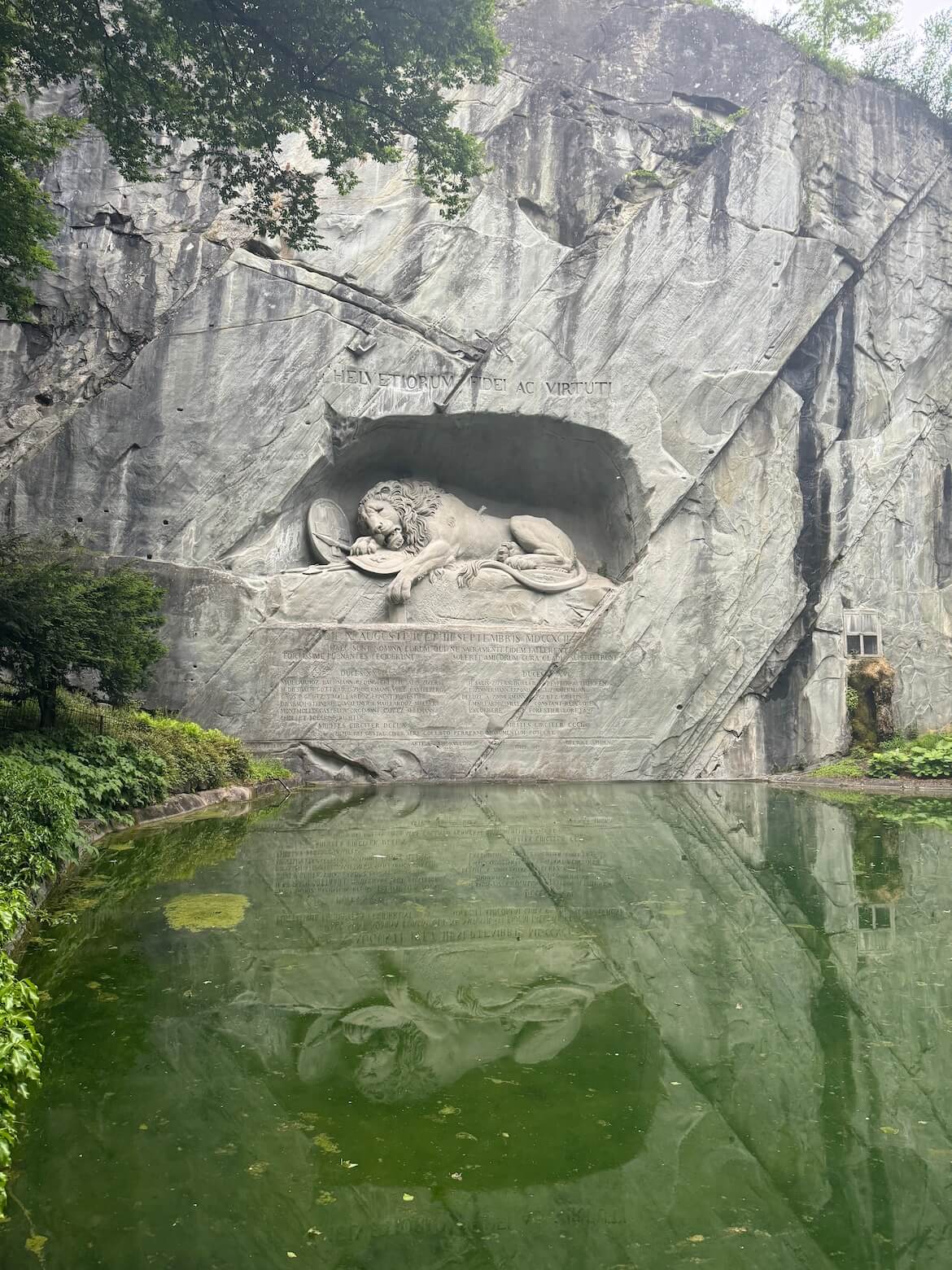
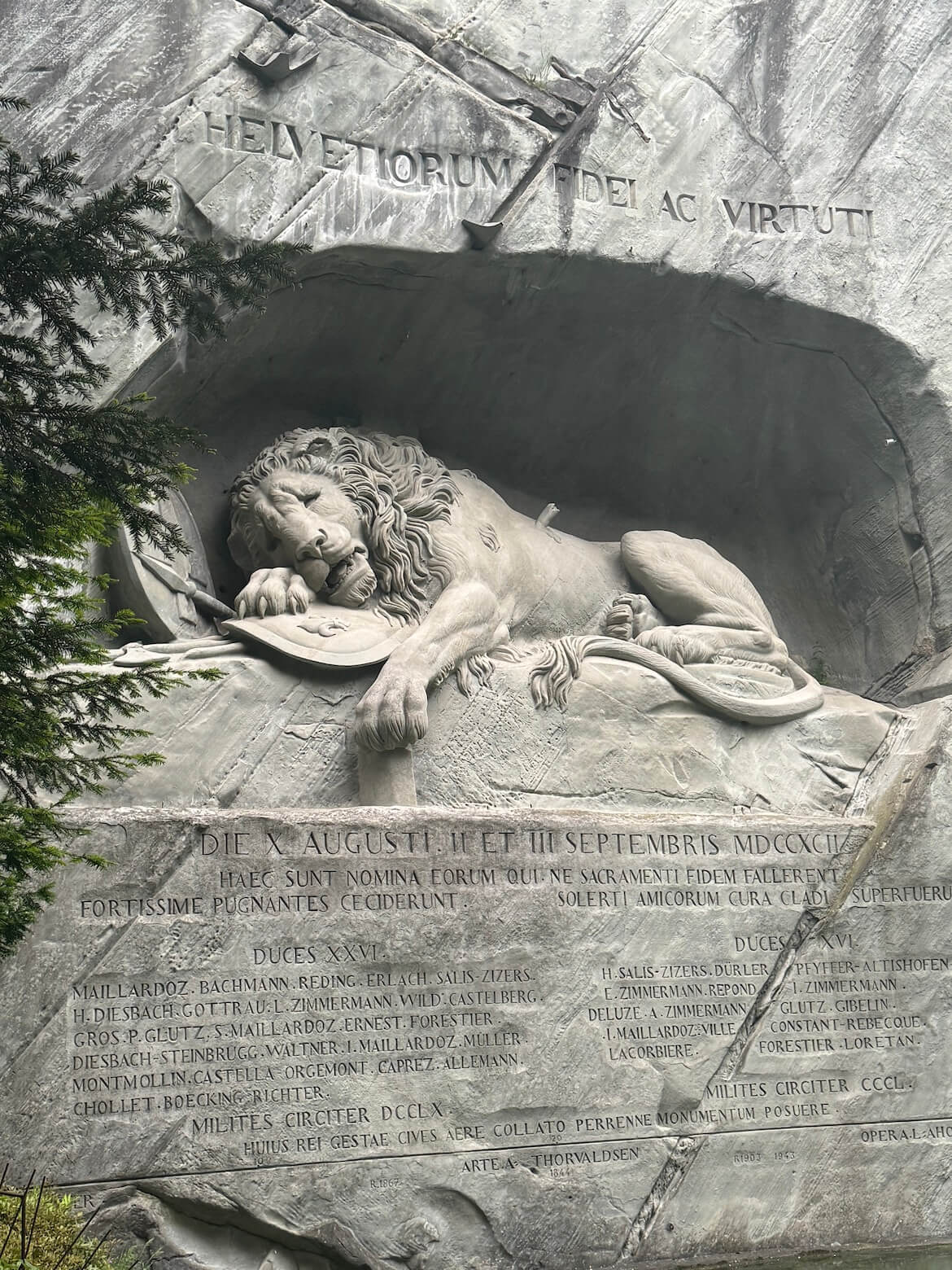
A dying lion, carved into stone, commemorates the Swiss Guards who died in 1792 during the French Revolution. About 760 guards in total: over 600 killed, the rest wounded or captured.
The sculpture shows the lion slumped against a shield, a broken spear piercing its side. Above it is a Latin inscription: Helvetiorum Fidei ac Virtuti, which translates to To the loyalty and bravery of the Swiss.
The shield and spear represent courage, sacrifice, and the cost of loyalty.
About 1.4 million people visit the monument each year. We stood there among them, letting the weight of it settle.
Nearby, a sign reminded us of a broader history: between the 15th and 18th centuries, 500,000 Swiss mercenaries served in foreign armies. Most of them never came home.
The pond in front of the lion was green. Of course—given my former profession—I worried about mosquitoes, but none were found, even in that time right before dusk.
And, birds. Birds chirping and singing. There seem to be more birds, happy ones at that, than there are trees in all of Lucerne to support them.
The most mournful and moving piece of stone in the world.—Mark Twain, on the Lion of Lucerne
Watch the video below as no photo captures the magic and breathtaking beauty well enough.
Want the best view? Click any photo to open the gallery. You’ll see the images larger, and you can scroll side to side.
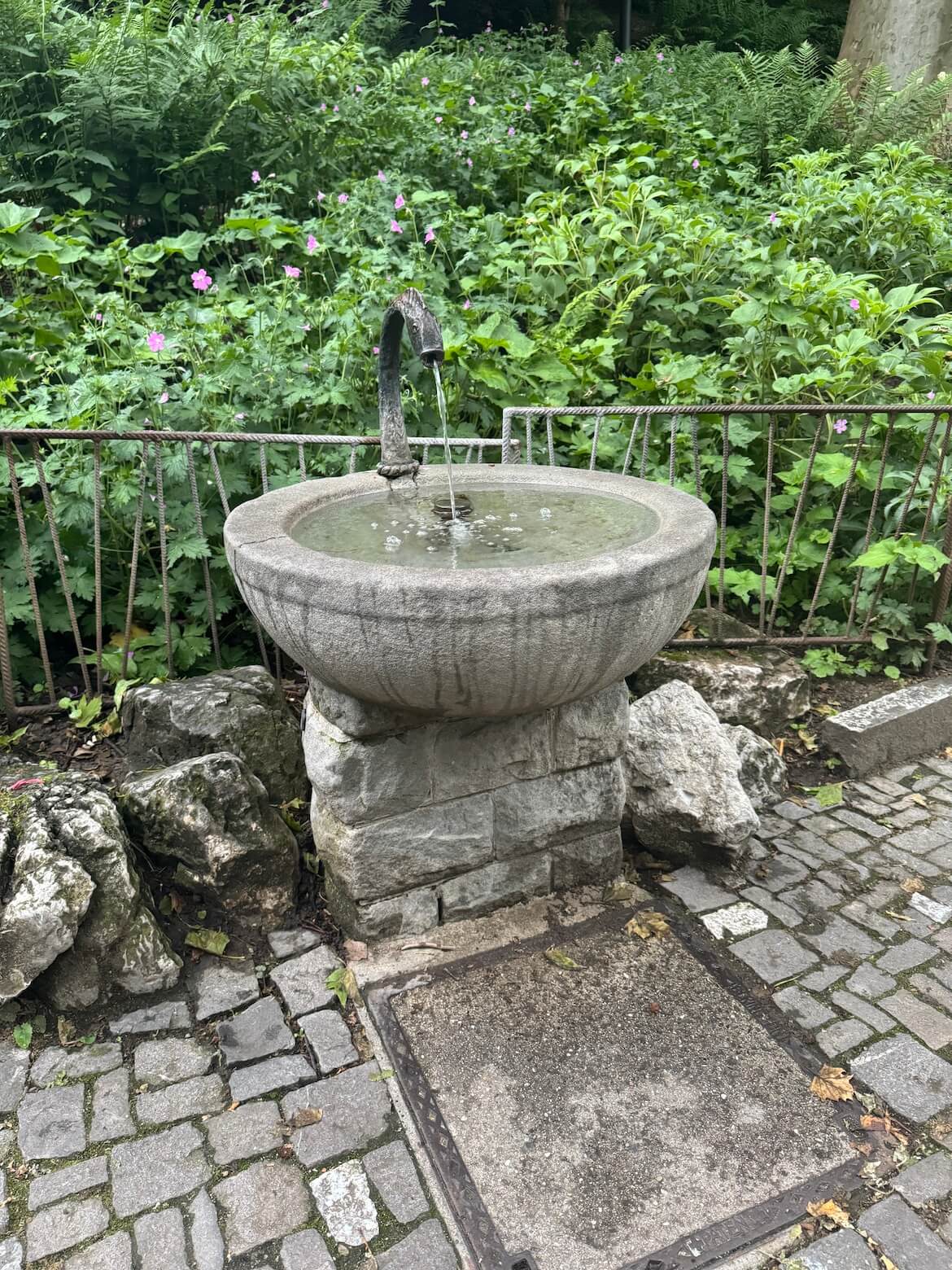
Leisurely Stroll Back to the Hotel
By then, we’d walked 20,161 steps—which probably canceled out the ice cream. Maybe.
We’re loving our stay so far. What a stunning day.
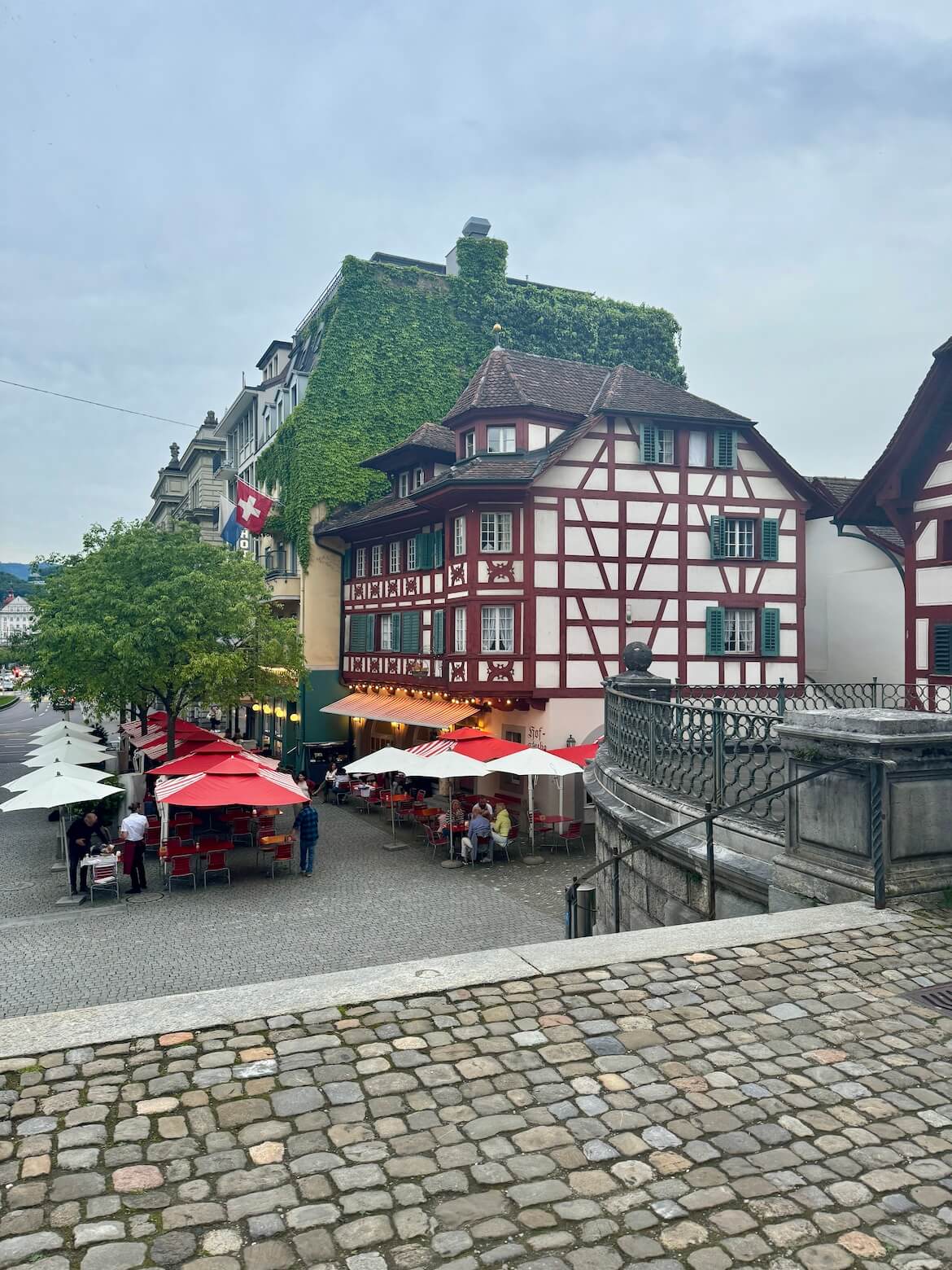
Hotel Rebstock is one of Lucerne’s oldest hotels, with a history dating back to 1408. It’s located just steps from the Hofkirche (St. Leodegar Church) and the shores of Lake Lucerne.
The building itself is a traditional half-timbered structure—one of the few remaining examples of medieval architecture in Lucerne. Its signature red-and-white façade has been meticulously preserved through centuries of change, making it an architectural gem in the city’s Old Town.
Originally a tavern, Hotel Rebstock has hosted travelers for over 600 years, long before Lucerne became a tourist destination. Today, it’s a boutique hotel known for blending historic charm with modern comfort.
Tomorrow, the forecast calls for much cooler air (by 16°!) and rain all day and night.
We’re looking forward to it.
Want the best view? Click any photo to open the gallery. You’ll see the images larger, and you can scroll side to side.
Next up: Day 4 — Rainy Luzern: Towers in the Mist, Picasso in the Frame
Gear I Recommend
See all my travel gear and essentials here: Things I Love & Recommend
Detailed Map of the Entire Journey
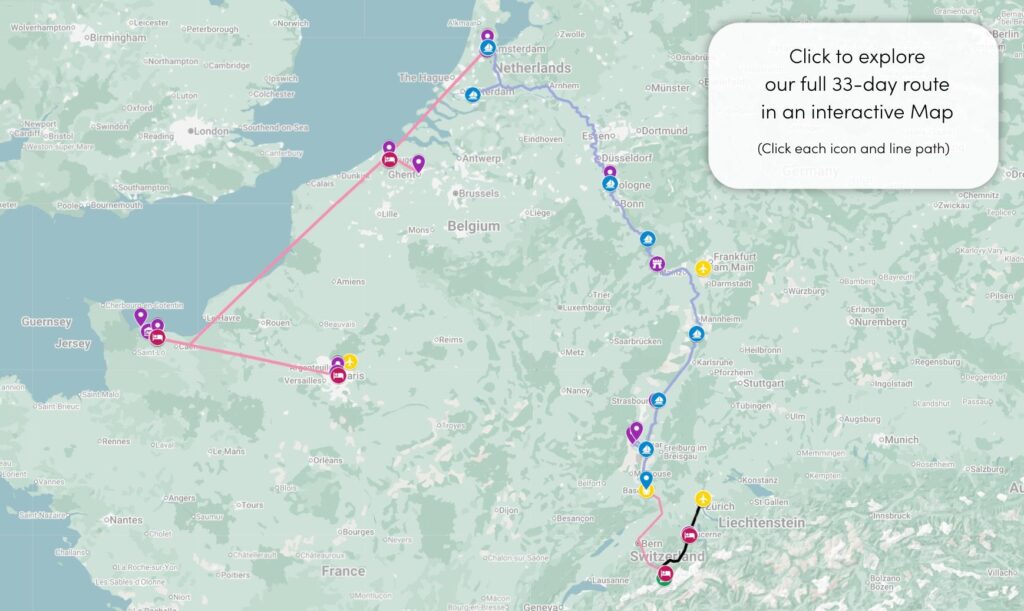
Below is a visual summary of our full 33-day route—hotels, attractions, Viking cruise path and stops, as well as transit modes and paths—hiking, train, plane, gondola.
Click to explore the interactive version and wander through the journey pin by pin.