If it were not for Eau de Cologne, I would not know how to live.
— Napoleon Bonaparte (1769–1821), Emperor of France
This post is part of my 33 Days in Europe series. Visit the hub page to follow along, see the full itinerary, and sign up for email updates.
Day 13 of our 33 Days in Europe brought us to Cologne. I knew about the cathedral. I knew about the fragrance. I hadn’t really connected the dots. We stepped off the longship for a morning walking tour, and as usual, our Viking Cruise guide’s expertise and enthusiasm set the tone for the day. I tend to shy away from organized tours, confident I can manage on my own — thank you very much.
Alas, experience keeps proving me wrong.
So That’s Why It’s Called Cologne!
Our guide began with the name.
Cologne traces back to 50 AD, when the Romans established a settlement here called Colonia Claudia Ara Agrippinensium. “Colonia” meant colony. Over centuries, it softened into Köln in German and Cologne in English. Long before Gothic spires pierced the skyline, this was a Roman stronghold.
But the name carries another, more familiar claim to fame.
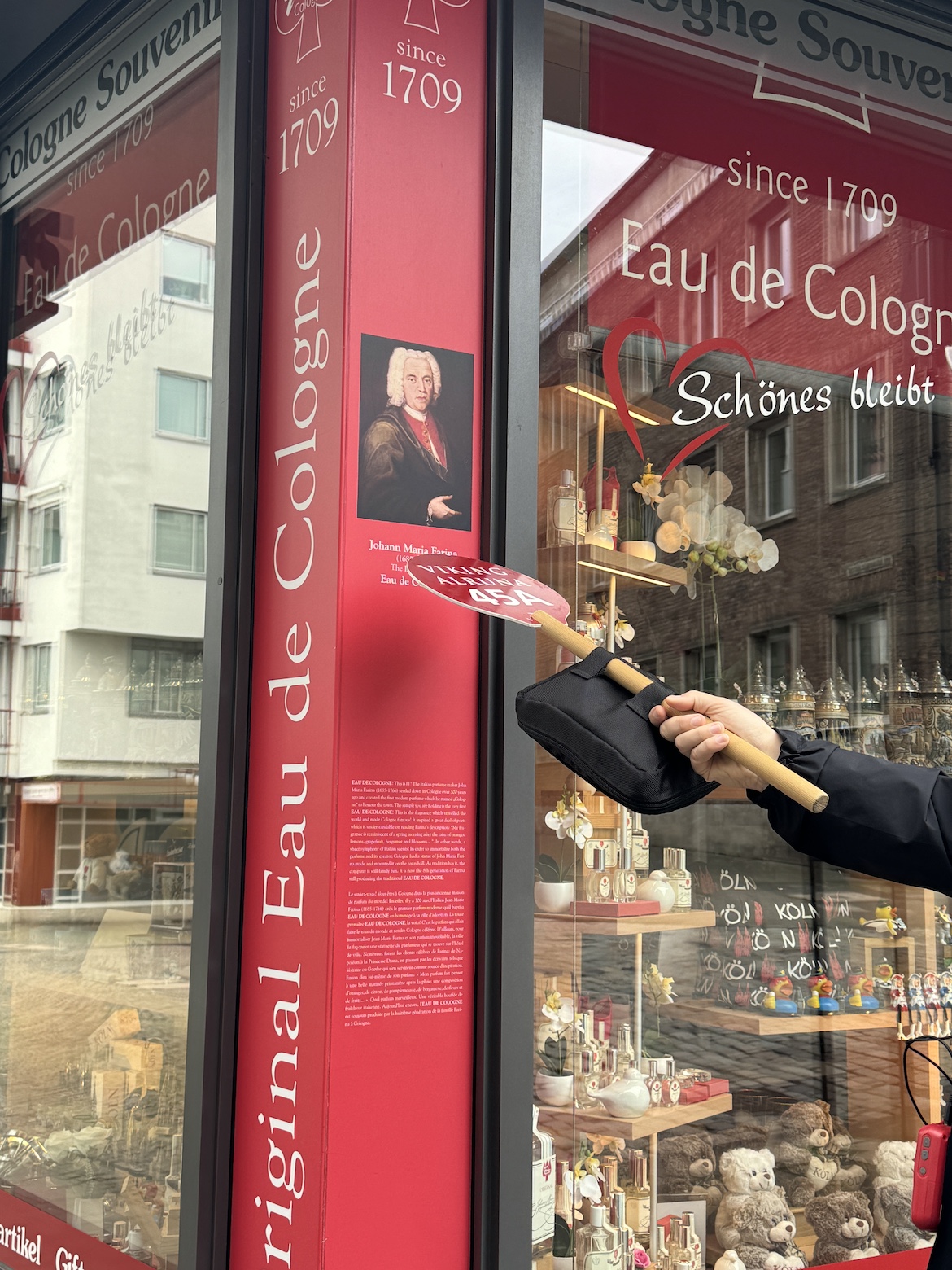
In 1709, Johann Maria Farina, an Italian perfumer living here, created a fragrance unlike anything else in Europe at the time. Most perfumes were heavy, musky, and animal-based. Farina introduced something radically lighter: citrus-forward, clean, almost sparkling. He described it as “a morning in Italy after the rain.”
He named it Eau de Cologne — “Water of Cologne” — and it quickly became a sensation across Europe. The Farina 1709 house still operates in Cologne today.
This wasn’t the first fragrance in history. People had worn scent for centuries. But this was different. It was alcohol-based, bright with bergamot and lemon, and it evaporated quickly on the skin, leaving a fresh impression rather than a lingering cloud. In a time when bathing habits were not what they are today, that freshness mattered.
It was also expensive. At first, it circulated among royalty, aristocrats, and military leaders — a luxury carried in small glass bottles across Europe.
Napoleon Bonaparte (1769–1821), who later became Emperor of France, was famously devoted to it. He reportedly declared, “If it were not for Eau de Cologne, I would not know how to live.” He ordered it in large quantities and used it generously — splashed on his body, in his bath, even consumed as a tonic.
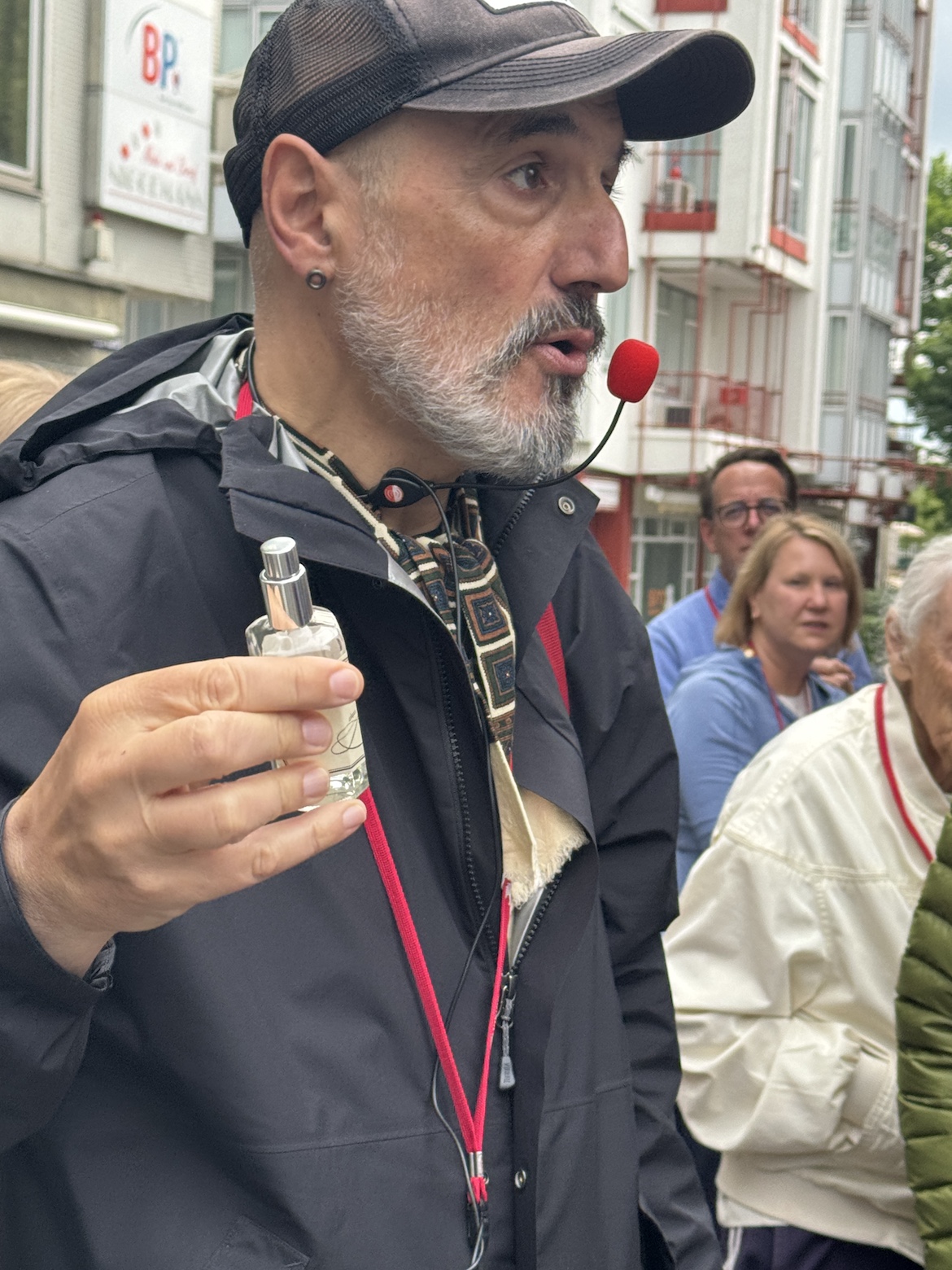
Our guide passed around a sample as he spoke. We didn’t just hear the history — we smelled it. Let’s just say I admire it more as a revolution than as a personal fragrance. To my modern nose, it smelled like so many fragrances today — perfectly pleasant, just nothing remarkable.
That little citrus concoction changed the fragrance industry forever. What’s surprising is how little the basic idea has changed. Centuries later, we’re still building fragrances on the same foundation.
Click (or tap) any photo to open the gallery, see the full image, captions, and scroll through the set.
Cologne Cathedral: Impossible and Still Standing
And then, of course, there is the cathedral.
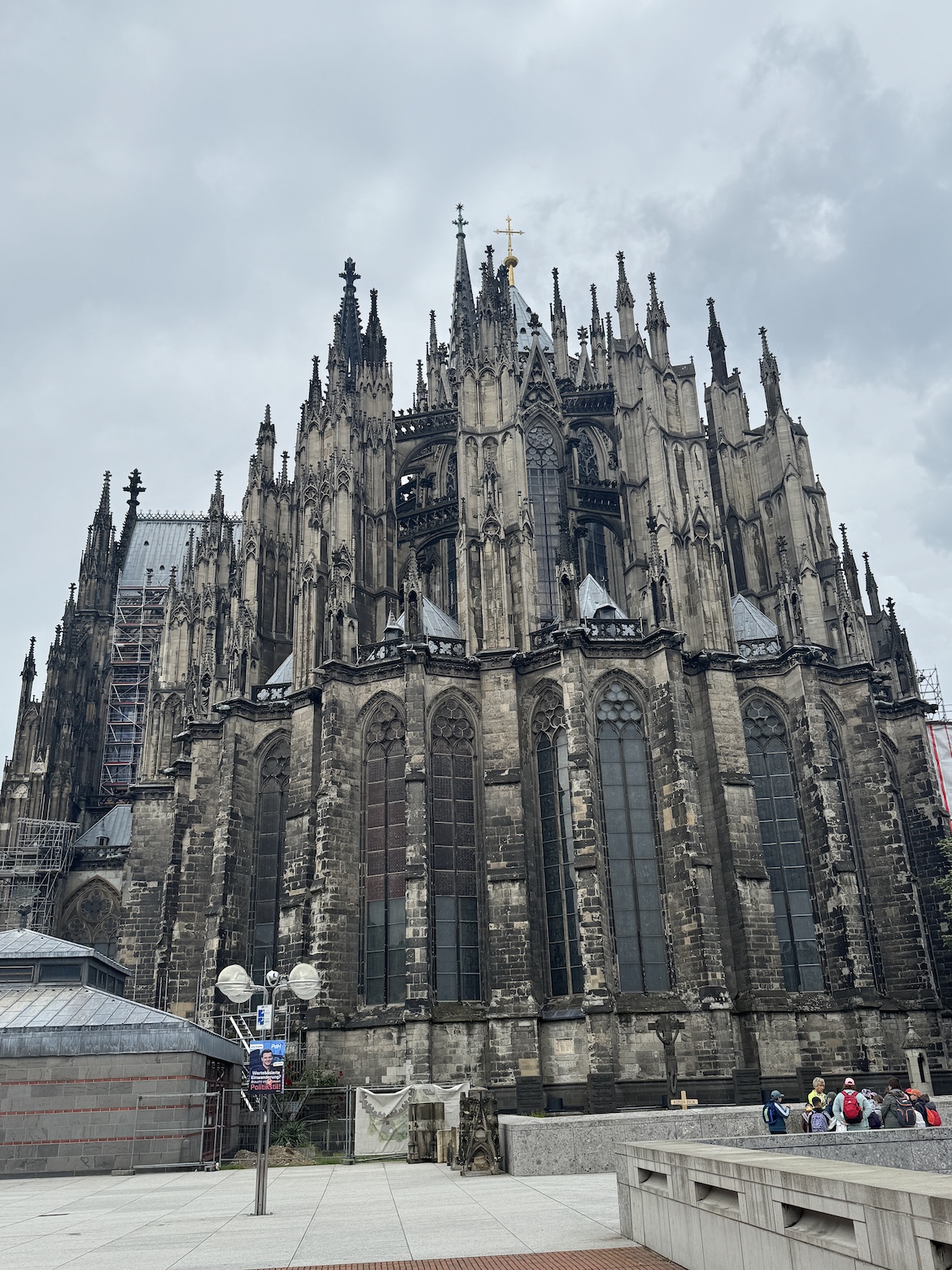
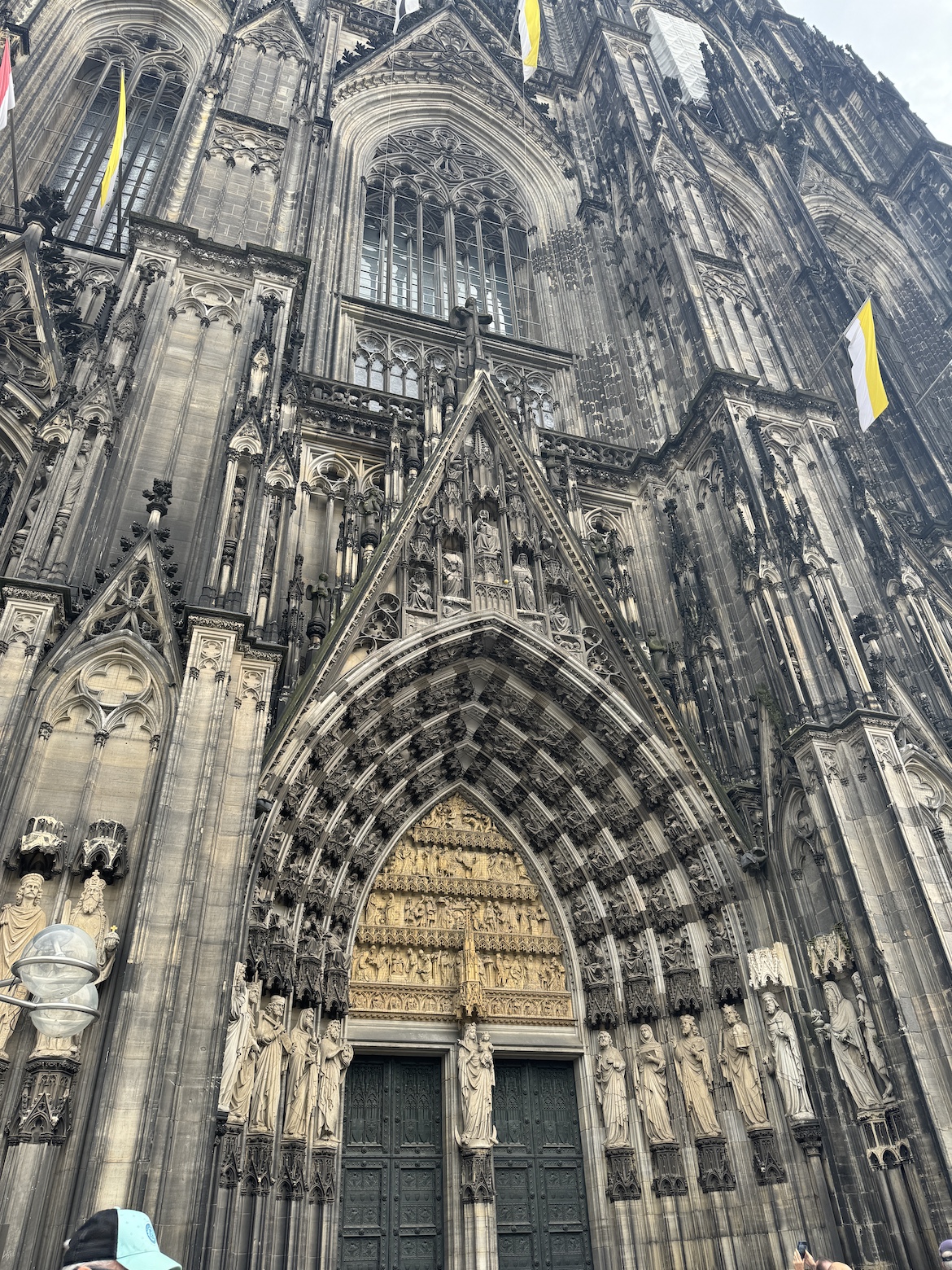
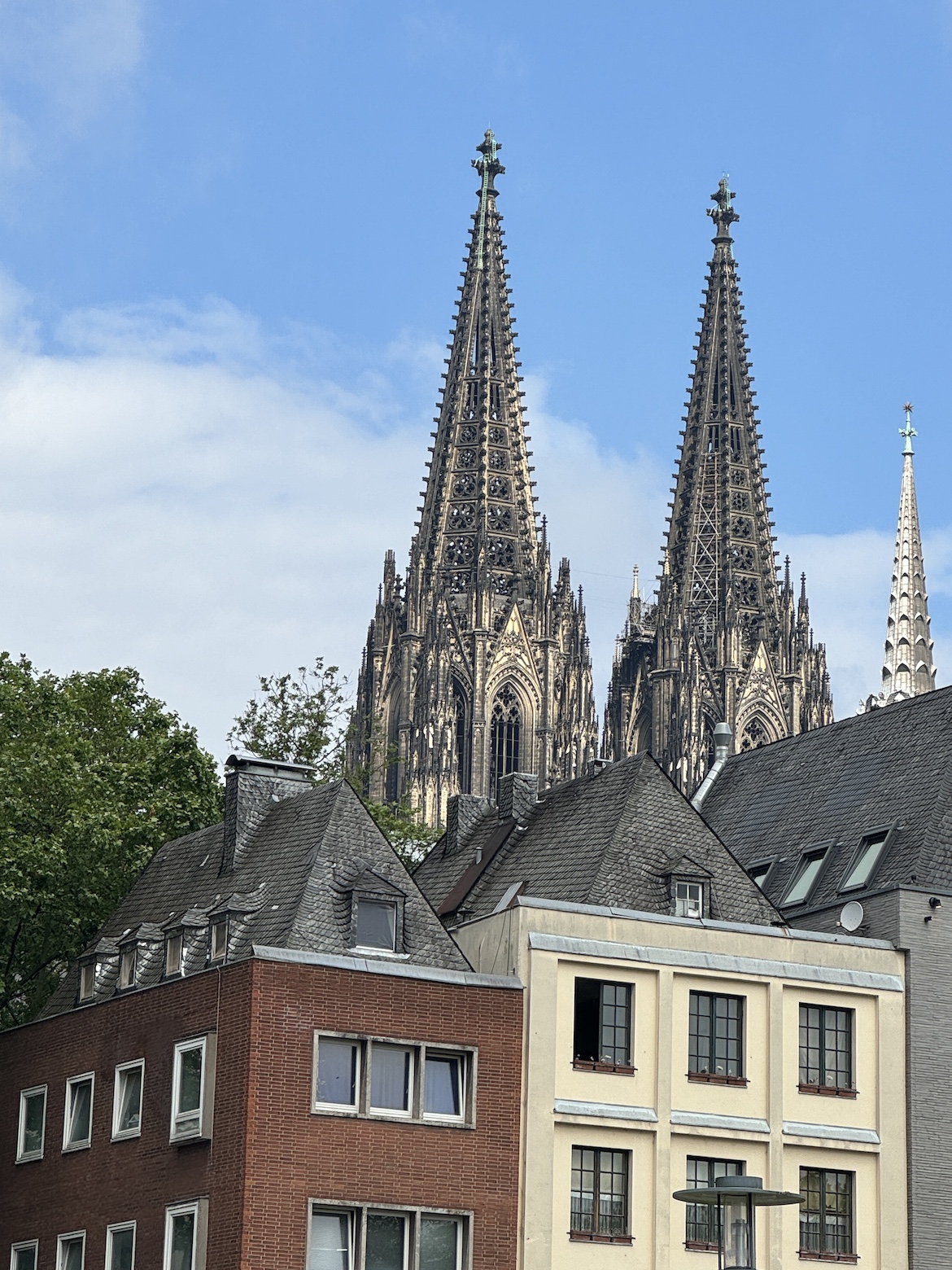
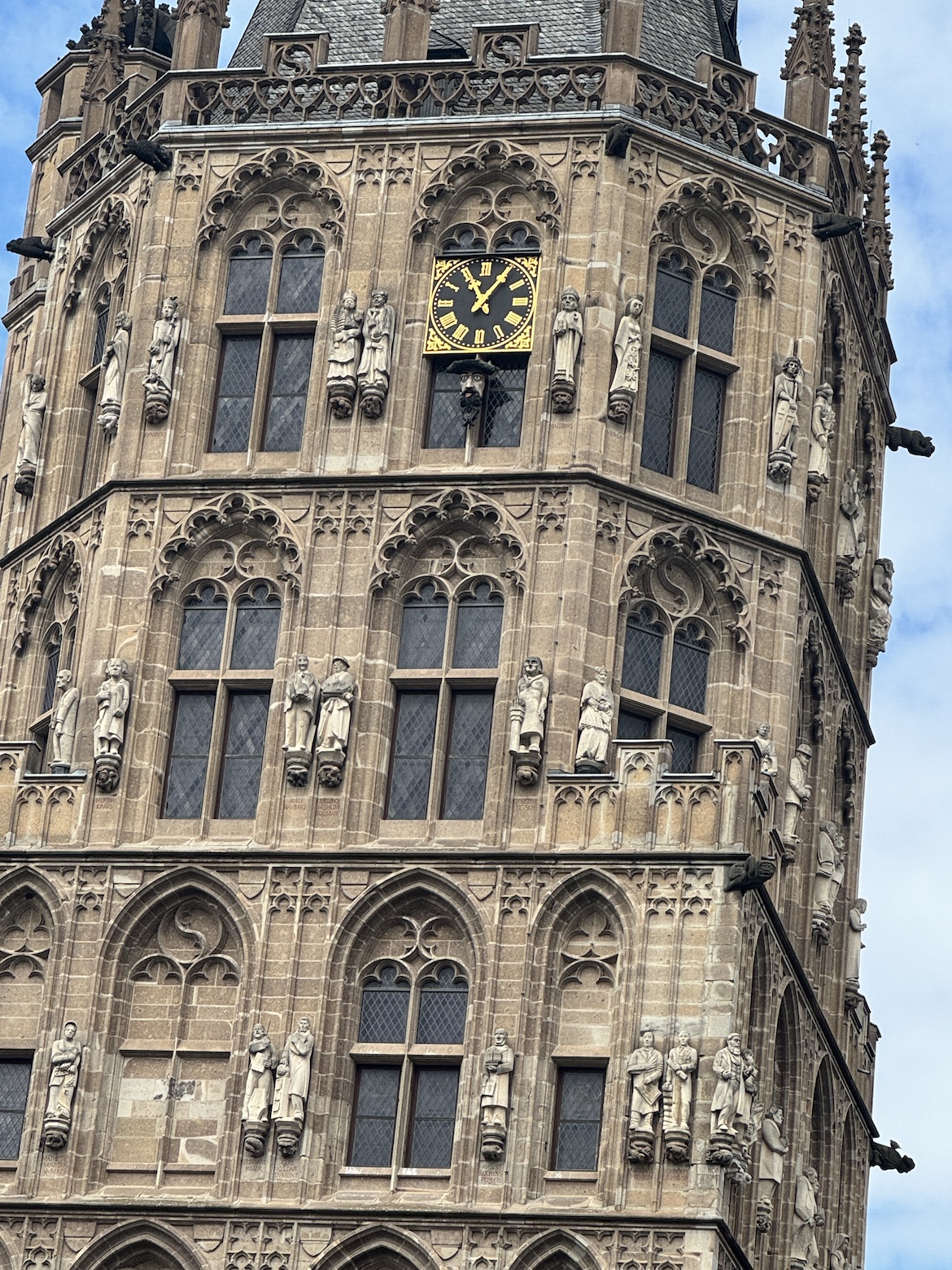
Cologne Cathedral began in 1248 and wasn’t fully completed until 1880. Its twin spires rise 515 feet. When it was finished, it was the tallest building in the world.
But what strikes me most is this: it survived World War II.
All around it, Cologne was devastated by bombing. The city suffered immense destruction. Yet the cathedral remained standing — damaged, yes, but intact. Pilots reportedly used it as a navigational landmark, which may have contributed to its survival.
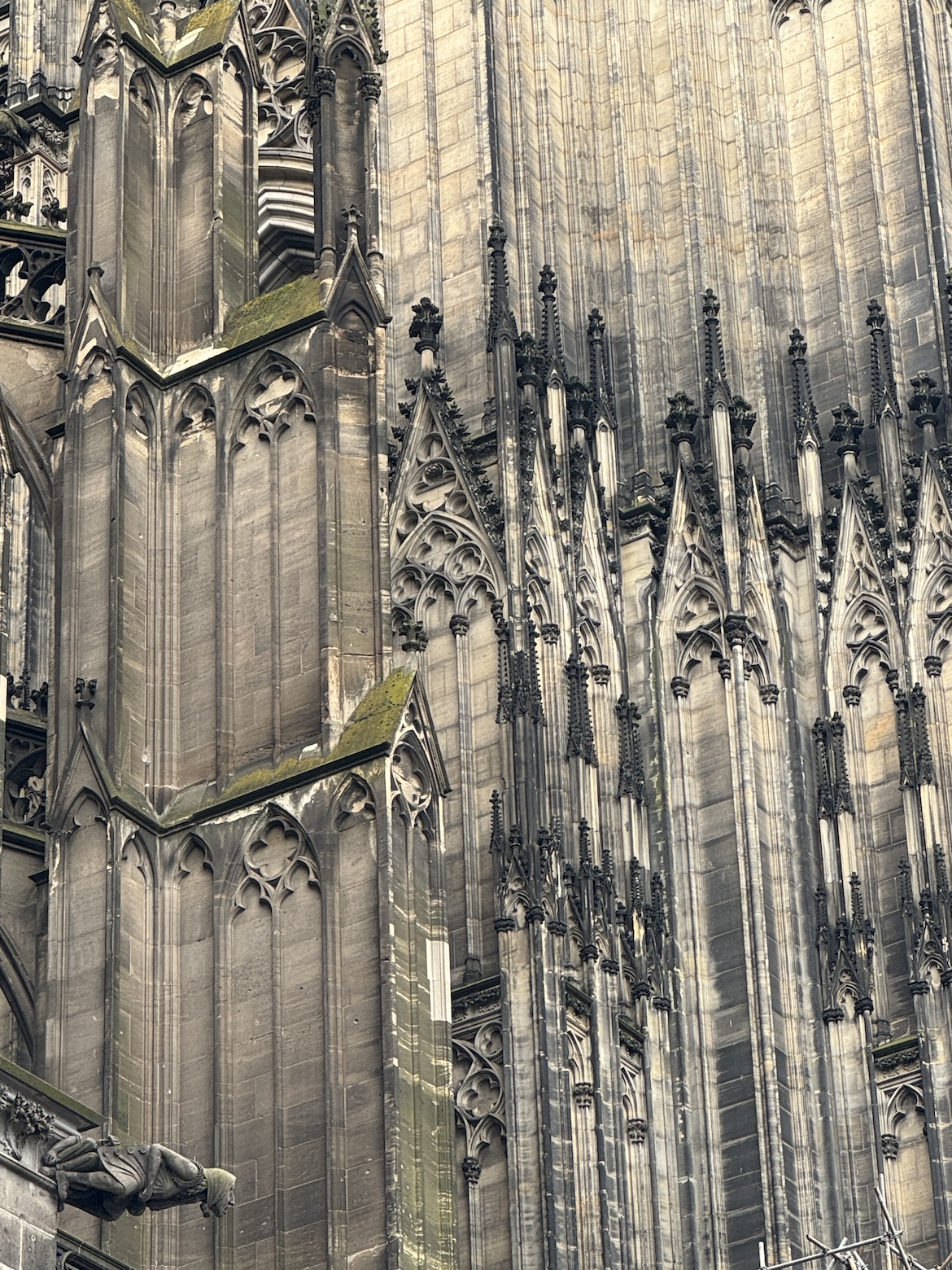
Standing beneath it, looking up at flying buttresses and carved stone and moss clinging to ledges, you feel two things at once: awe and exhaustion. There is so much detail it almost overwhelms the eyes. You could stand there all day and never take it all in.
Click (or tap) any photo to open the gallery, see the full image, captions, and scroll through the set.
Streets Where Centuries Overlap
After the tour, we wandered.
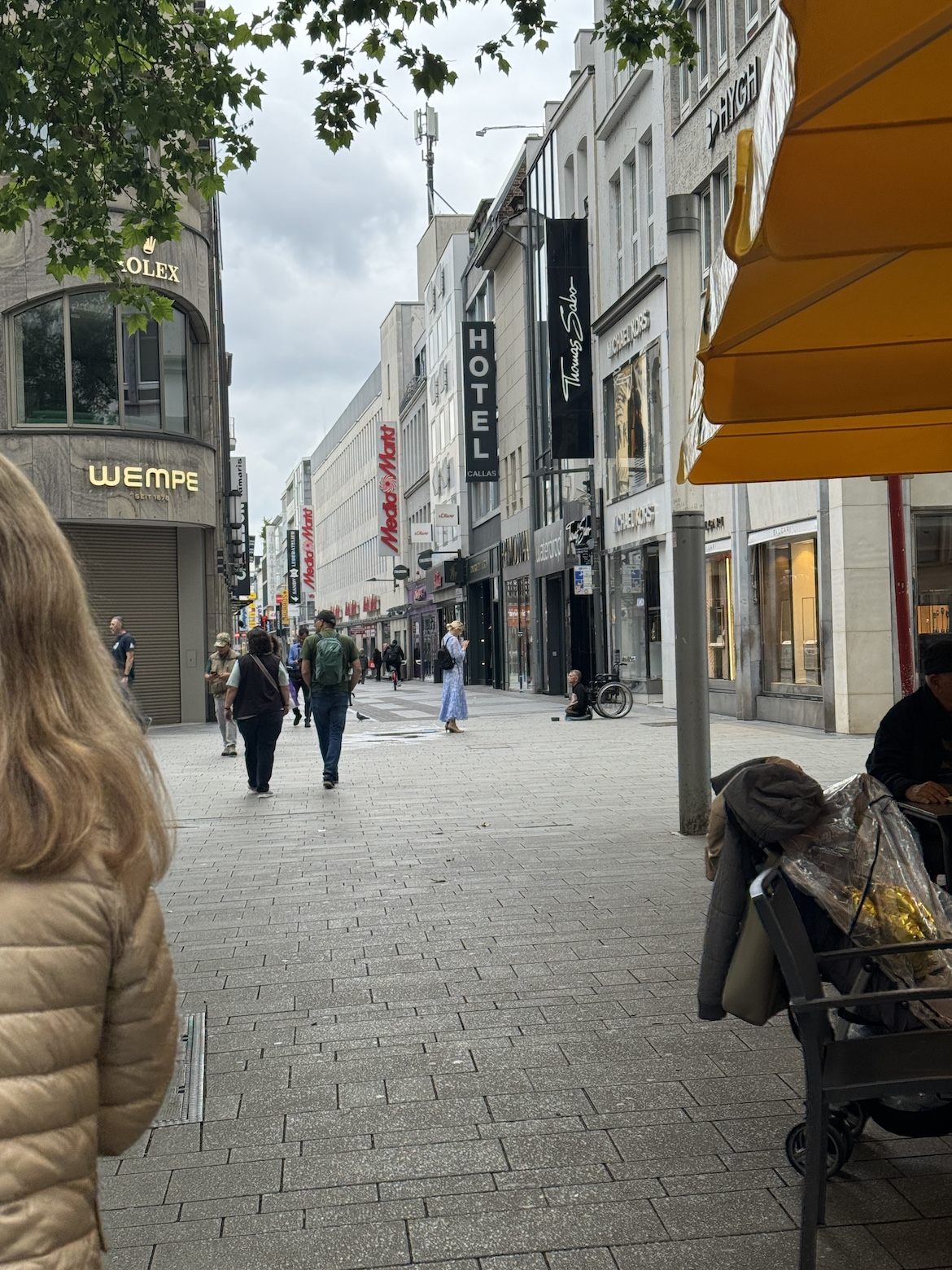
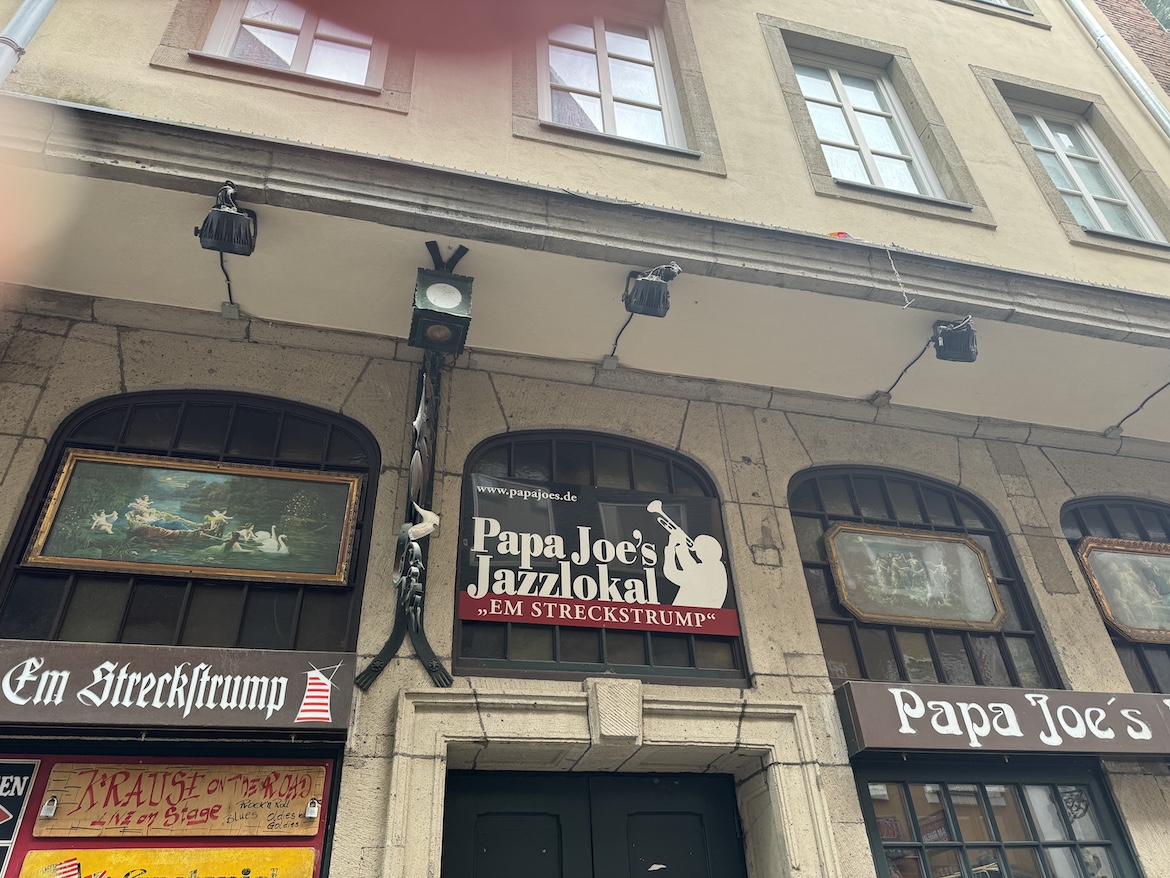
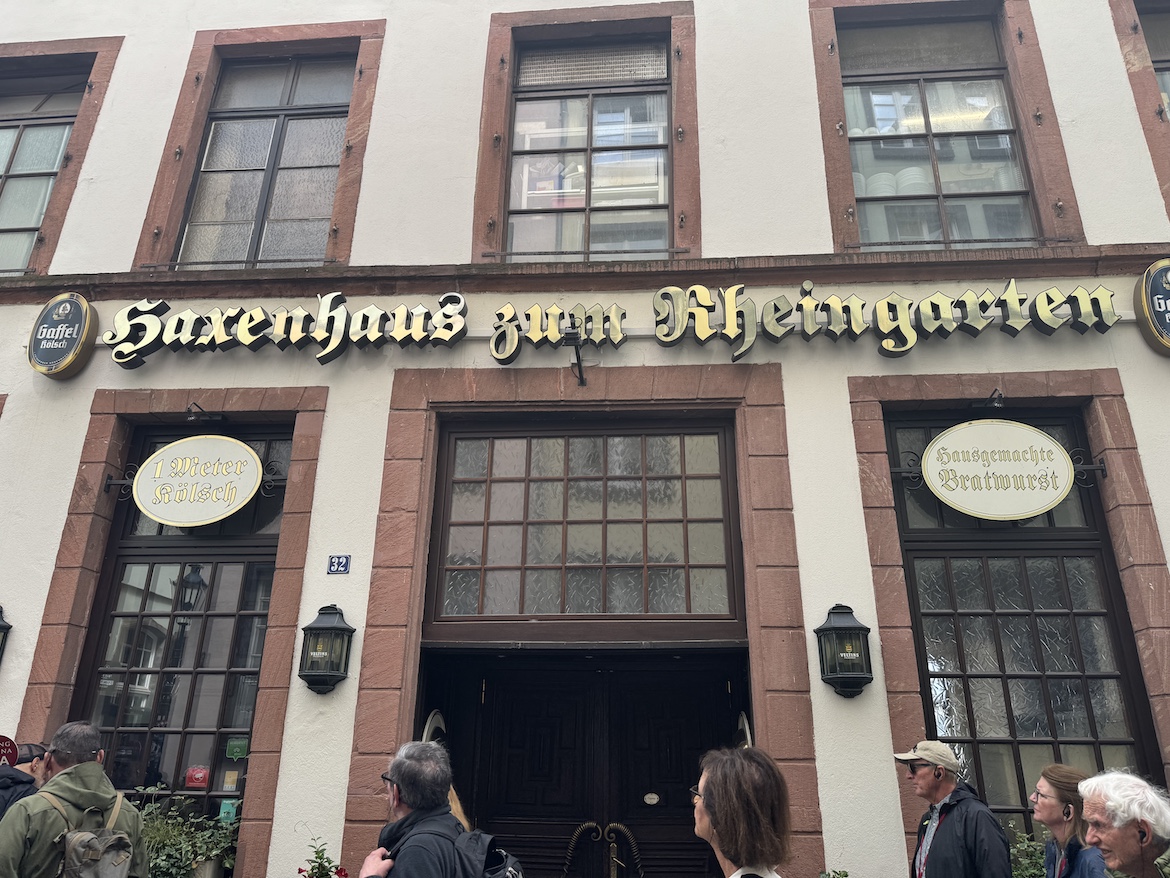
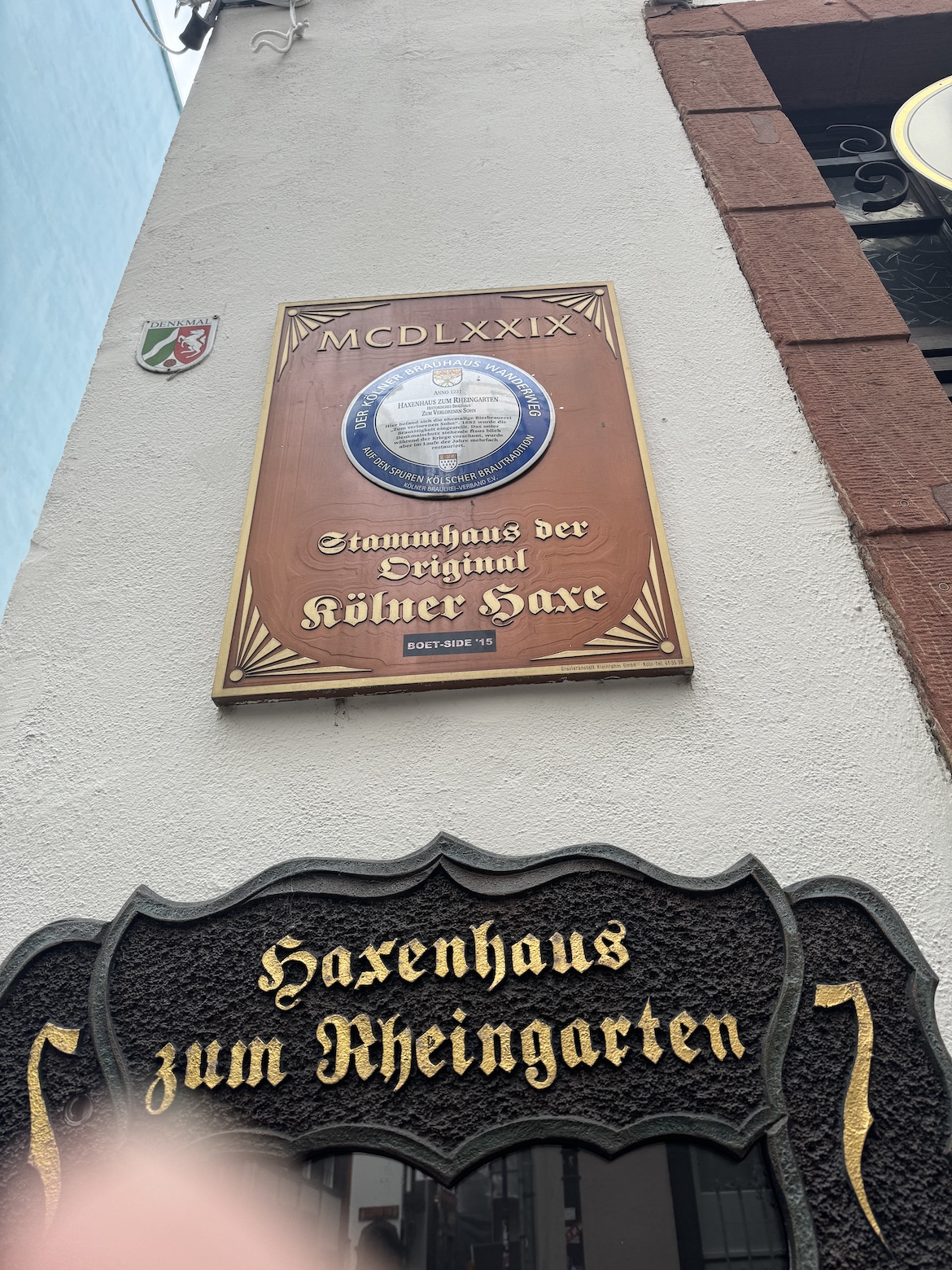
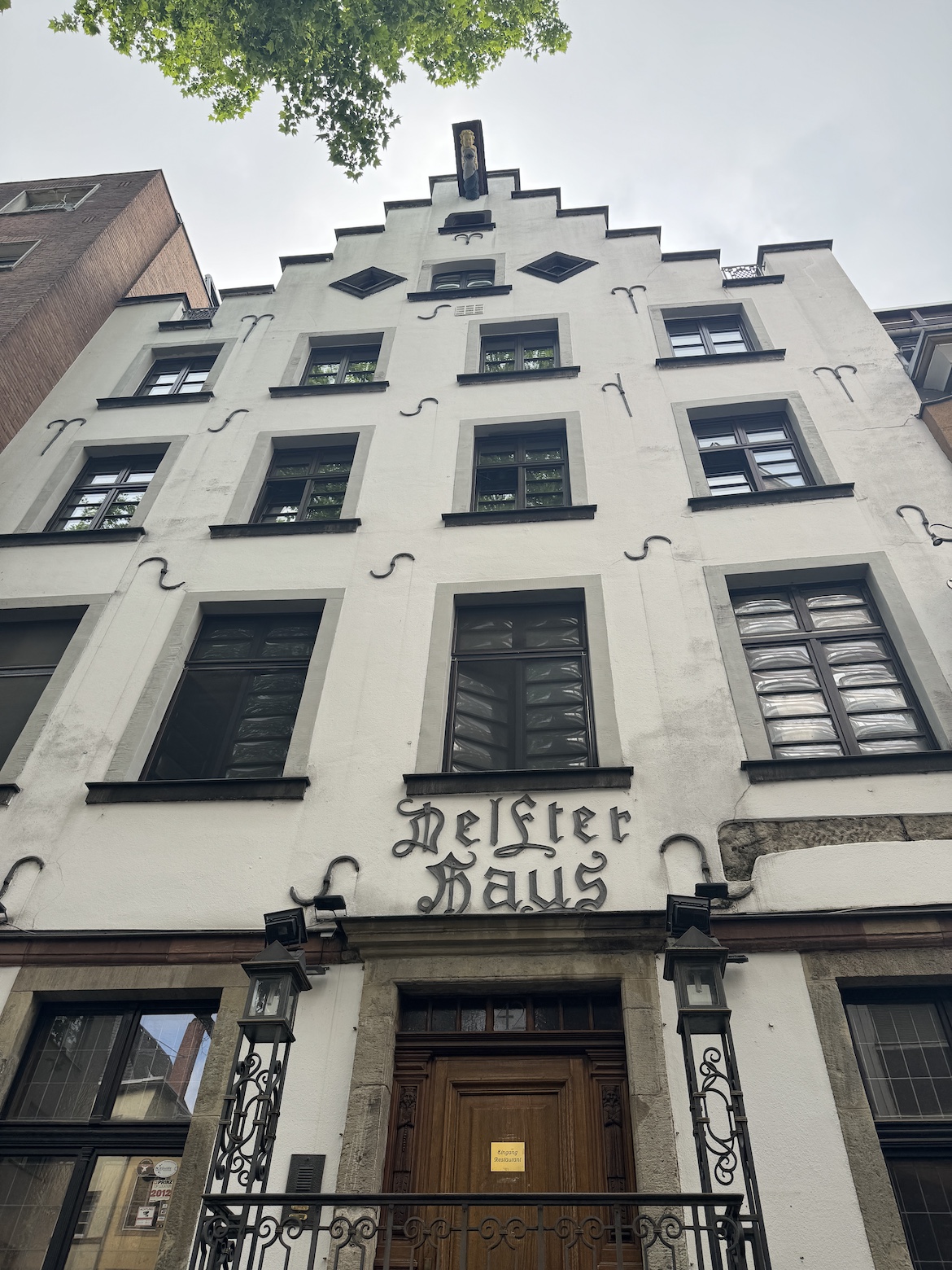
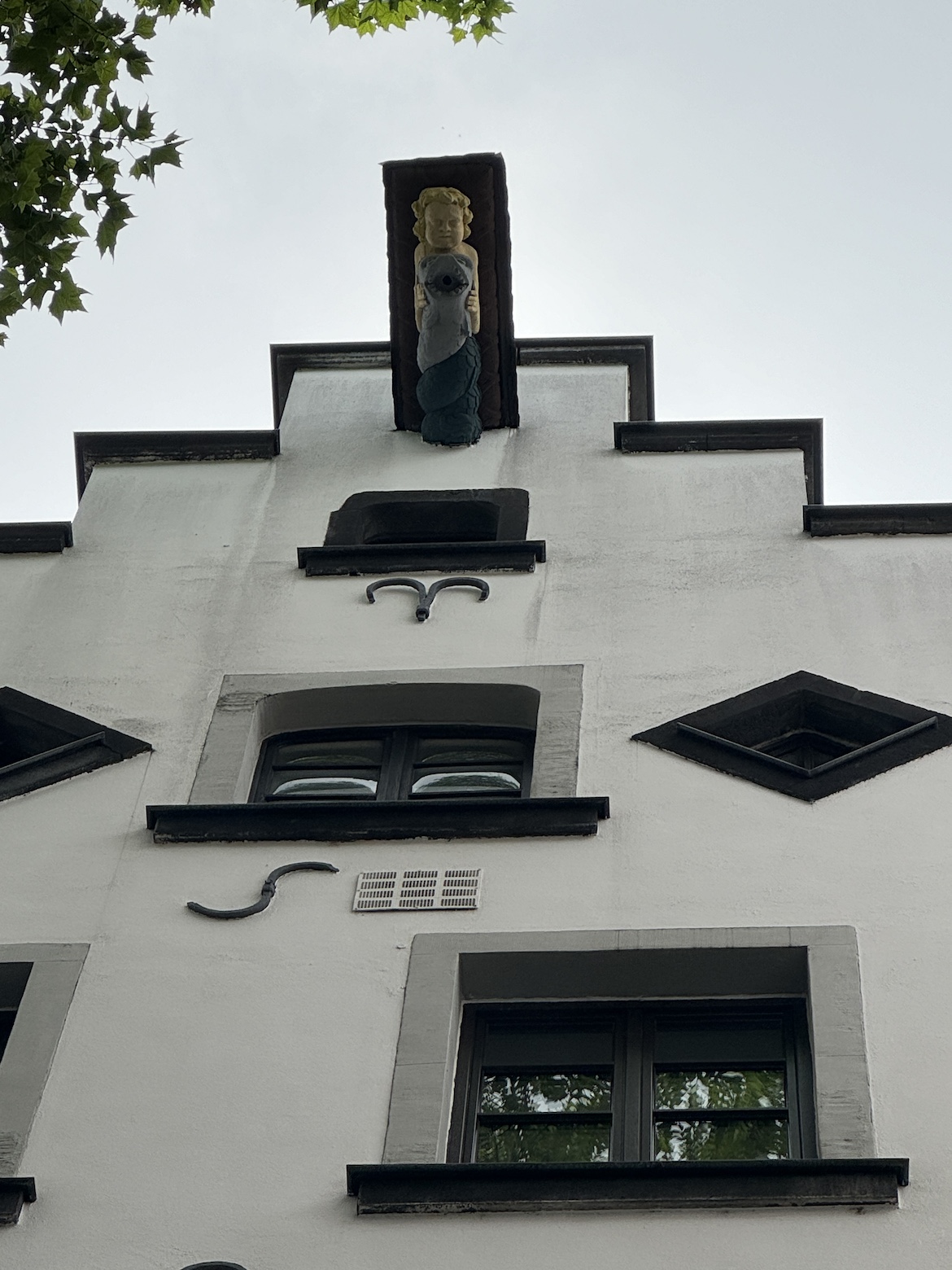
Some street names and building inscriptions felt impossible to decipher. Gothic lettering, dates carved in stone, plaques whose context we didn’t yet know. But you can sense the age. The bones of the buildings tell you.
What fascinates me most is this: Stone walls raised in the 1500s now house espresso machines and modern menus.
I love that. History doesn’t retire. It just gets new table settings.
That continuity moves me. The layering of time. The fact that ordinary life continues in places that have witnessed war, empire, revolution, and rebuilding.
Click (or tap) any photo to open the gallery, see the full image, captions, and scroll through the set.
Robert Blum: A Revolutionary Remembered
One plaque we encountered commemorated Robert Blum.
Blum was a German democratic reformer and journalist during the revolutions of 1848 — a wave of uprisings across Europe demanding constitutional government and civil rights. He advocated for democracy and national unity. Authorities arrested him in Vienna during the uprising, and in November 1848, they executed him by firing squad.
His execution shocked Europe. Many viewed him as a martyr for democratic ideals.
The memorial plaque in Cologne honors his legacy.
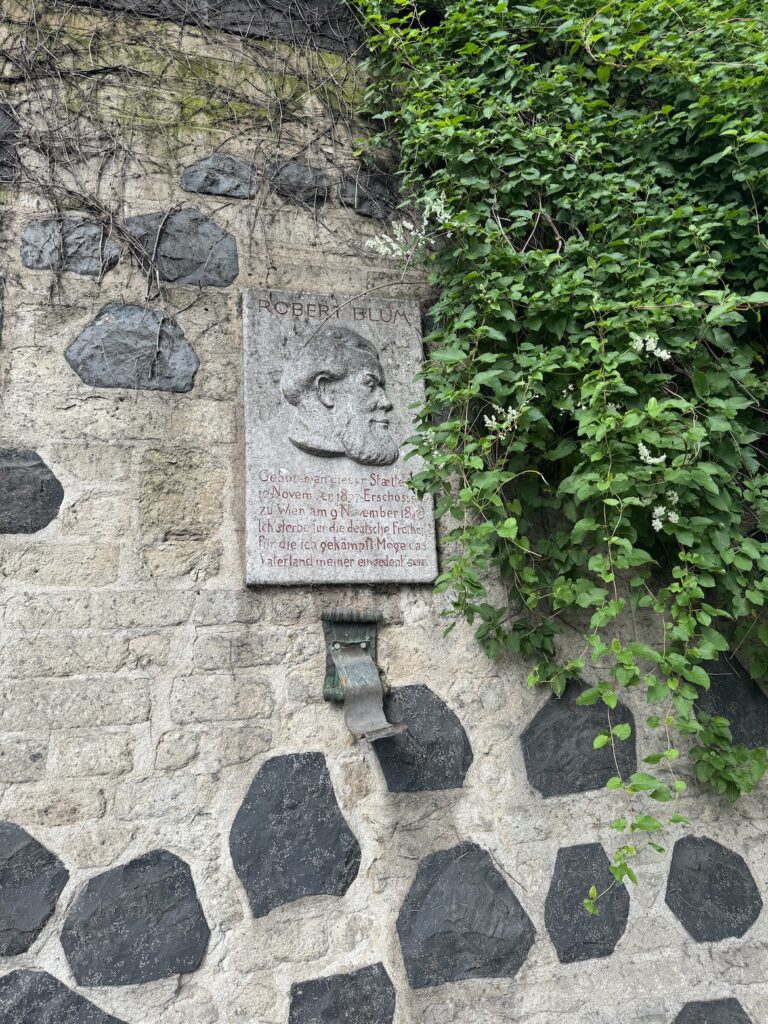
Robert Blum was a Cologne-born democratic politician and writer executed in Vienna during the Revolutions of 1848 for his role in the fight for popular rights and a unified Germany — a local son and historical figure remembered here.
Love Locks on the Hohenzollern Bridge
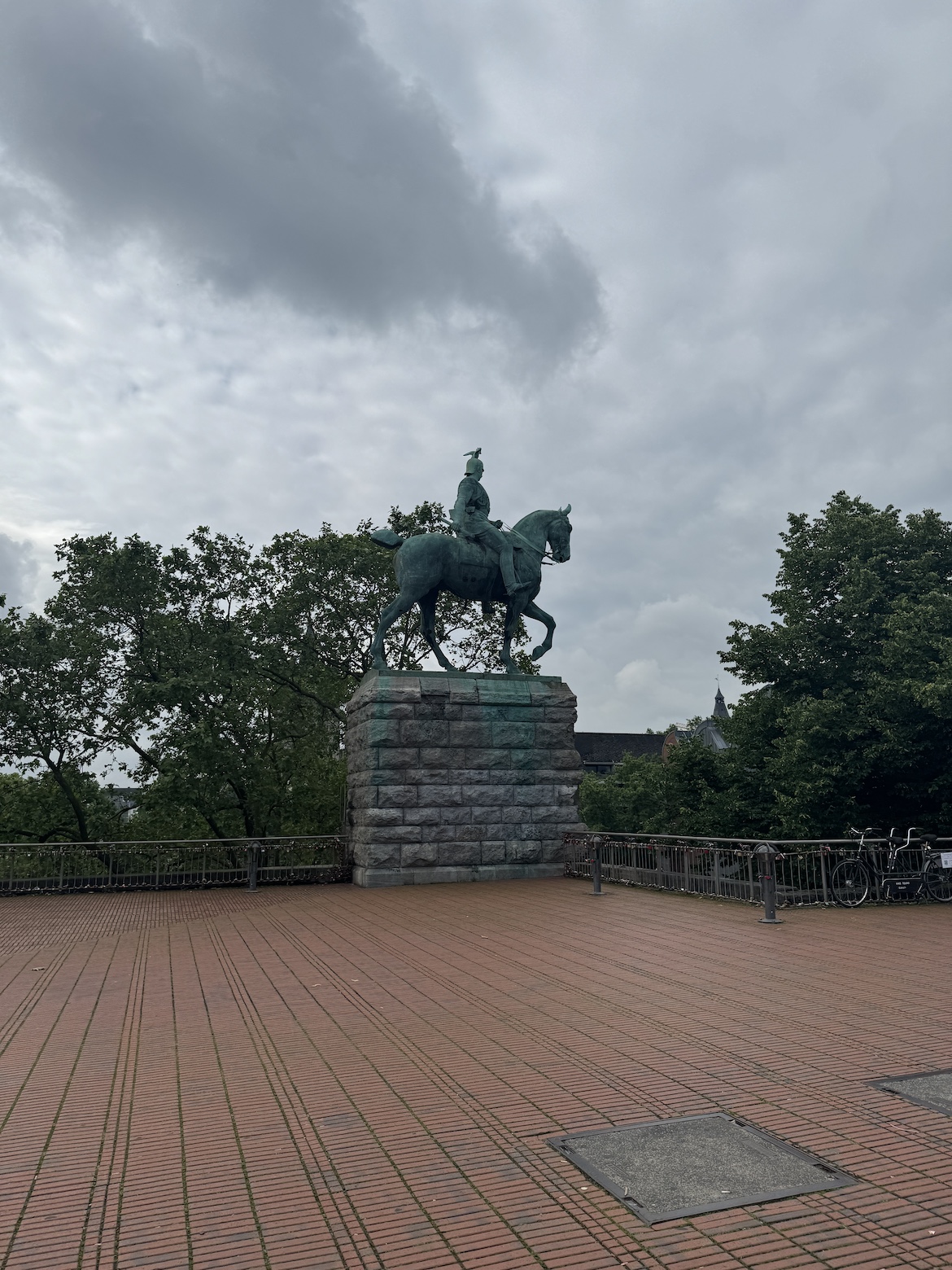
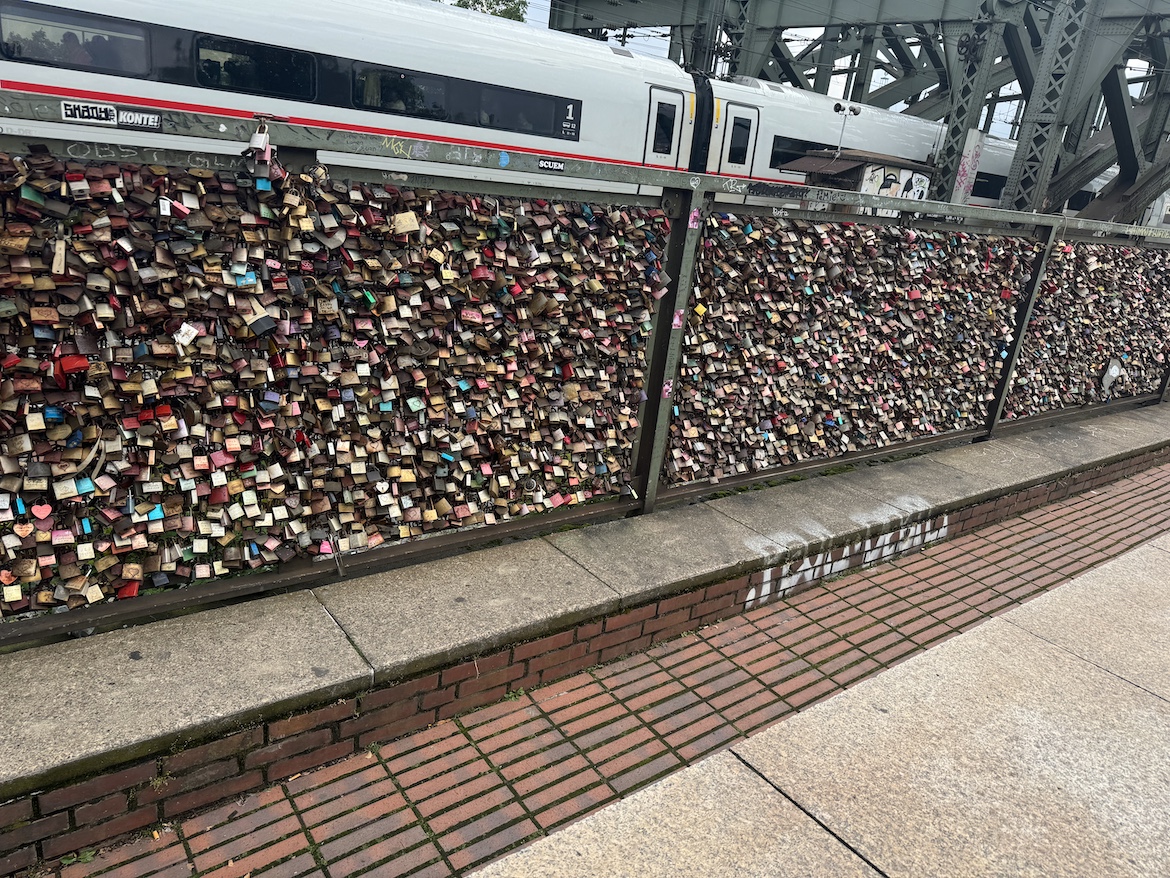
By the train station, we reached the Rhine River and the Hohenzollern Bridge.
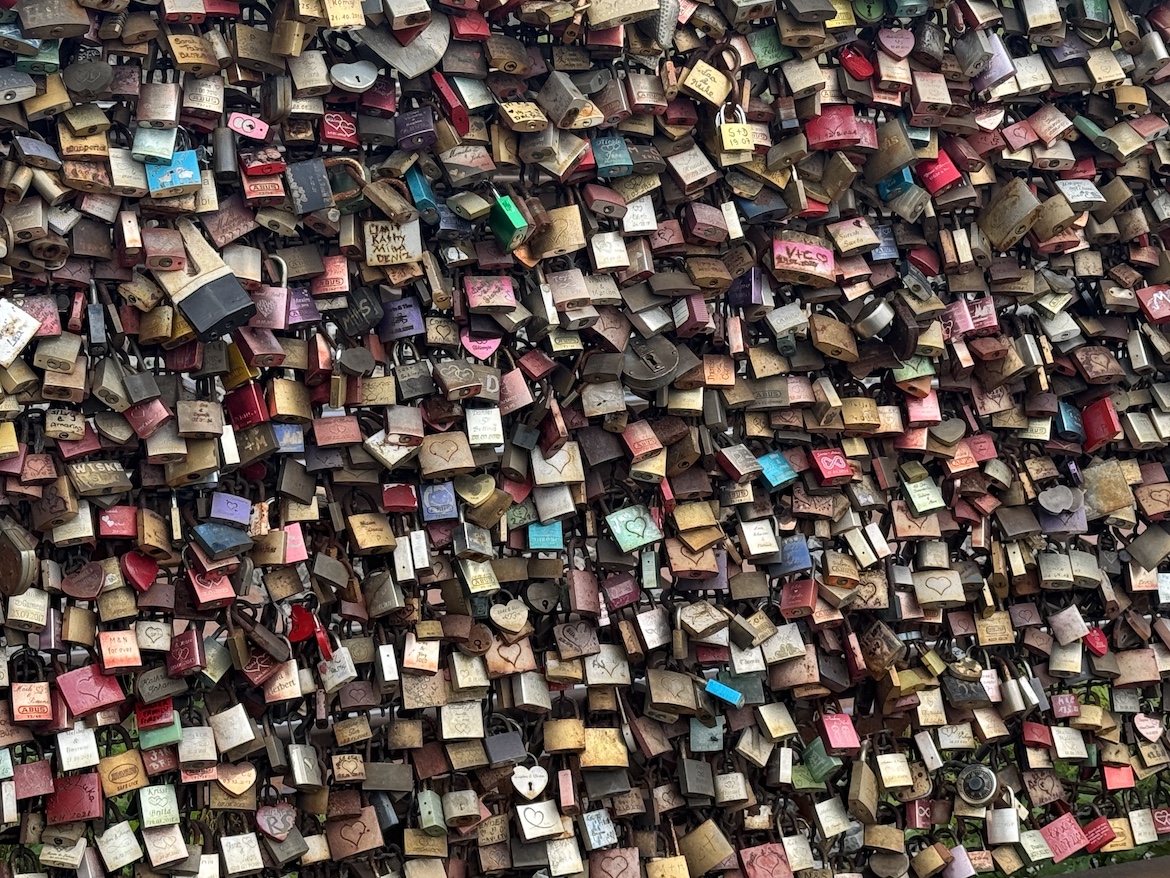
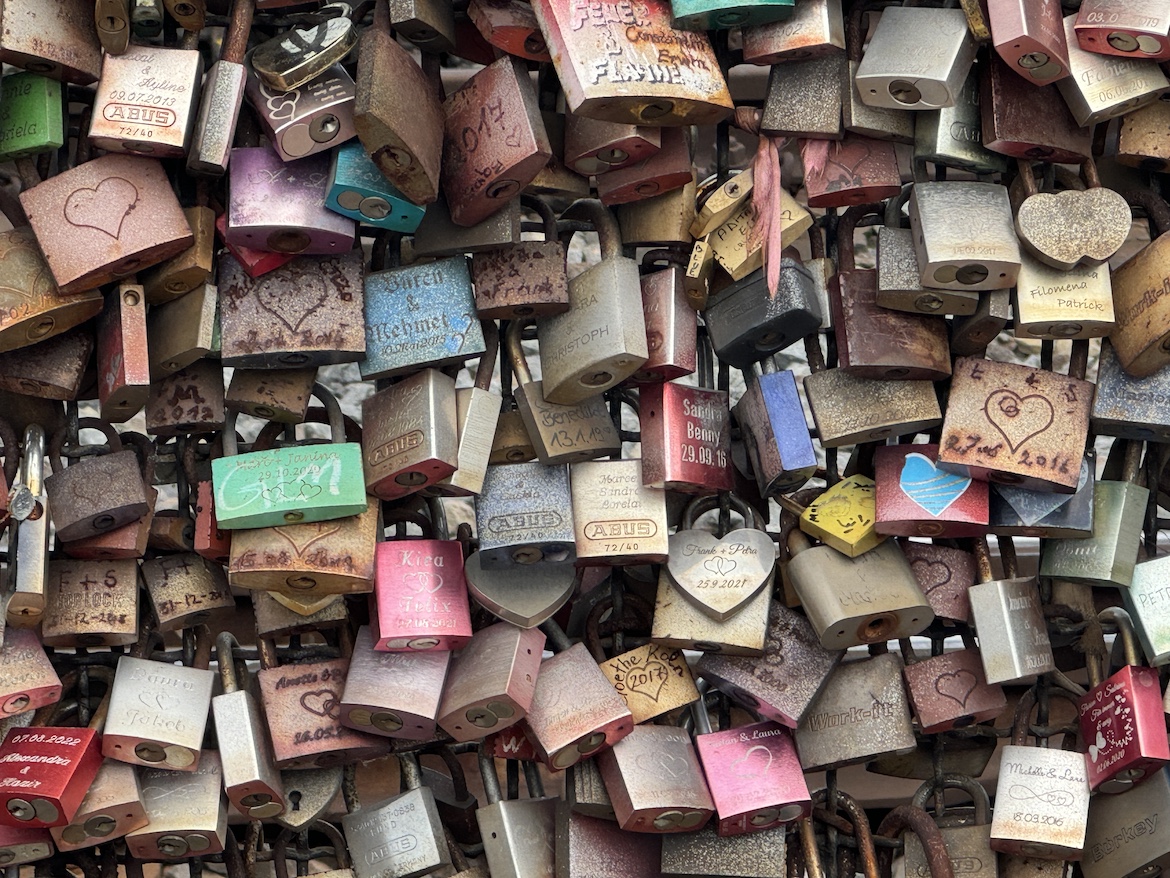
The bridge is covered in thousands upon thousands of padlocks. Couples clip them to the railing, lean over the edge, and fling the tiny key into the Rhine. If the lock can’t be opened, neither can the love. Somewhere down there are thousands of tiny promises.
The tradition began around 2008, inspired by similar lock bridges in Paris and Italy. At first, Deutsche Bahn — Germany’s national railway company, which owns the bridge — considered removing them. But the practice grew quickly and became a tourist attraction. Engineers eventually confirmed the locks posed no structural threat, and today they are tolerated.
They are not removed annually, as you might expect. Occasionally, sections are cleared for maintenance, but for the most part, the locks accumulate.
Visitors are often surprised to learn that those thousands of tiny padlocks collectively weigh several tons. Estimates range from roughly 2 tons to as much as 15 tons of metal clinging to the railings — yet the bridge remains steadfast under the burden.
Many of the locks look new because they are. People add them daily.
Some are engraved in tidy lettering. Others are scribbled in marker and sealed with hope.
Does it matter how polished it is? The promise is what counts.
Click (or tap) any photo to open the gallery, see the full image, captions, and scroll through the set.
Stolpersteine: Names in the Pavement
And then there are the Stolpersteine.
Stolpersteine translates to “stumbling stones” in English — small brass plaques embedded in the pavement marking where victims of the Nazi regime once lived.
On Day 12 of this series, I shared more about these and included video. If you haven’t seen that, please go back and watch it. I promise you’ll be moved.
Today, we paused in front of three stones for the Goldschmidt family. They fled to Holland in 1938 and were deported in 1943. They did not survive.
I can’t fathom an entire family erased like that. But we all know this happened on a scale beyond imagination — six million Jews and millions of others were systematically persecuted and killed.
The stones don’t allow you to look away. They sit at your feet, interrupting your stride.
History isn’t abstract here.
It is specific.
It has names.
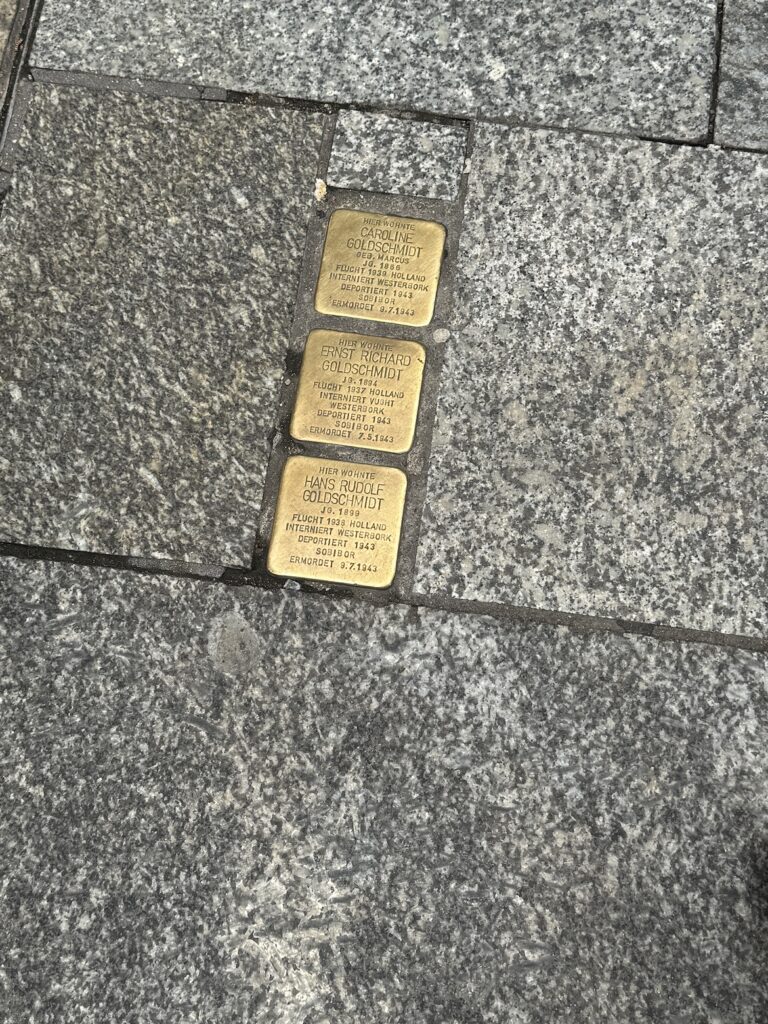
Three Stolpersteine for Caroline, Ernst Richard, and Hans Rudolf Goldschmidt. They lived here. They fled to Holland in 1938. They were deported in 1943 and did not survive. Their names remain in the pavement.
Back to the Longship
By night, we returned to the longship.
Morning brought Roman history, perfume, and a democratic martyr. Afternoon brought cathedral stonework and centuries-old restaurants. Evening ended beside a river carrying keys from thousands of locked promises.
Cologne holds all of it at once.
And that, perhaps, is what makes it unforgettable.
That’s a wrap for Day 13 of our 33 Days in Europe series.
Missed a day or just joining in? The full 33 Days in Europe series is right here.
Next Up – Day 14 of my 33 Days of Europe series
- Day 14 – Windmills & Waterways: The Netherlands in Motion
Gear I Recommend
See all my travel gear and essentials here: Things I Love & Recommend
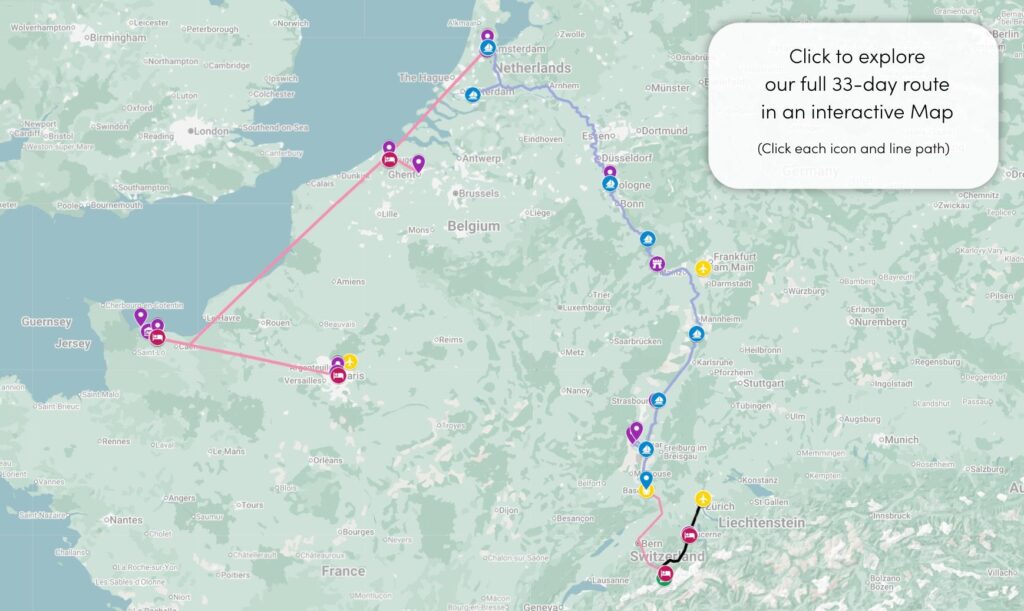
Detailed Map of the Entire Journey
Below is a visual summary of our full 33-day route—hotels, attractions, Viking cruise path and stops, as well as transit modes and paths—hiking, train, plane, gondola.
Click to explore the interactive version and wander through the journey pin by pin.