
The storied, romantic Rhine is one of the world’s most legendary rivers—a muse for artists and writers, a snaking siren to lovelorn sailors, and a coveted cruising destination.
— Quirky Cruise, Overview of the Rhine River
This post is part of my 33 Days in Europe series. Visit the hub page to follow along, see the full itinerary, and sign up for email updates.
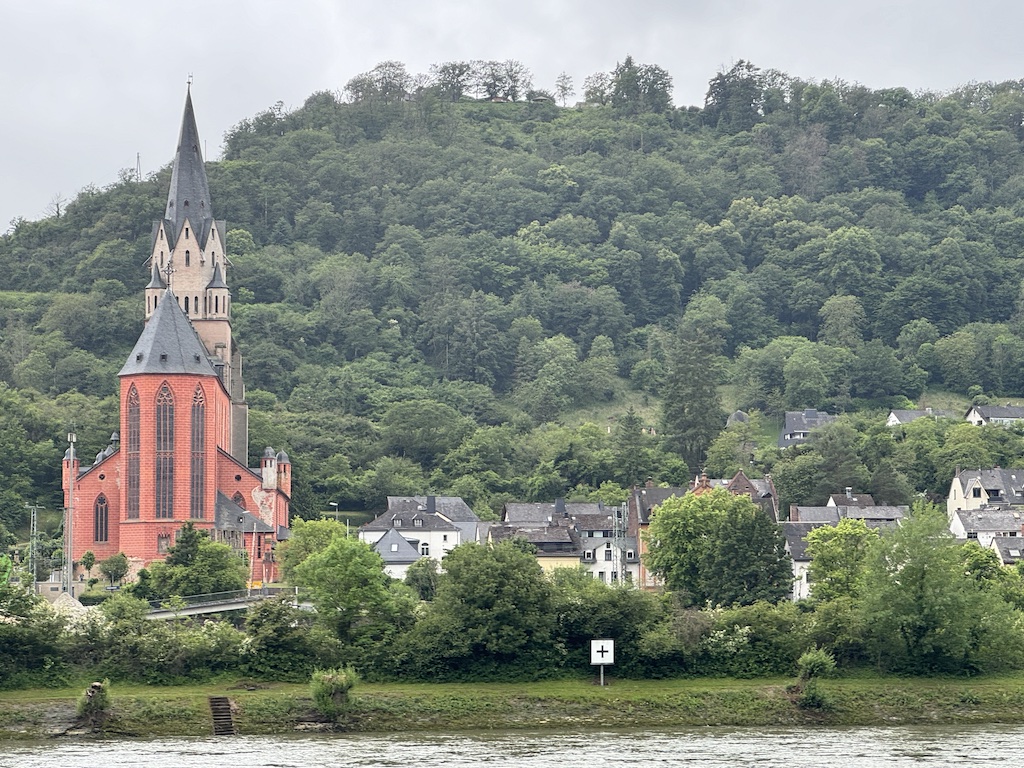
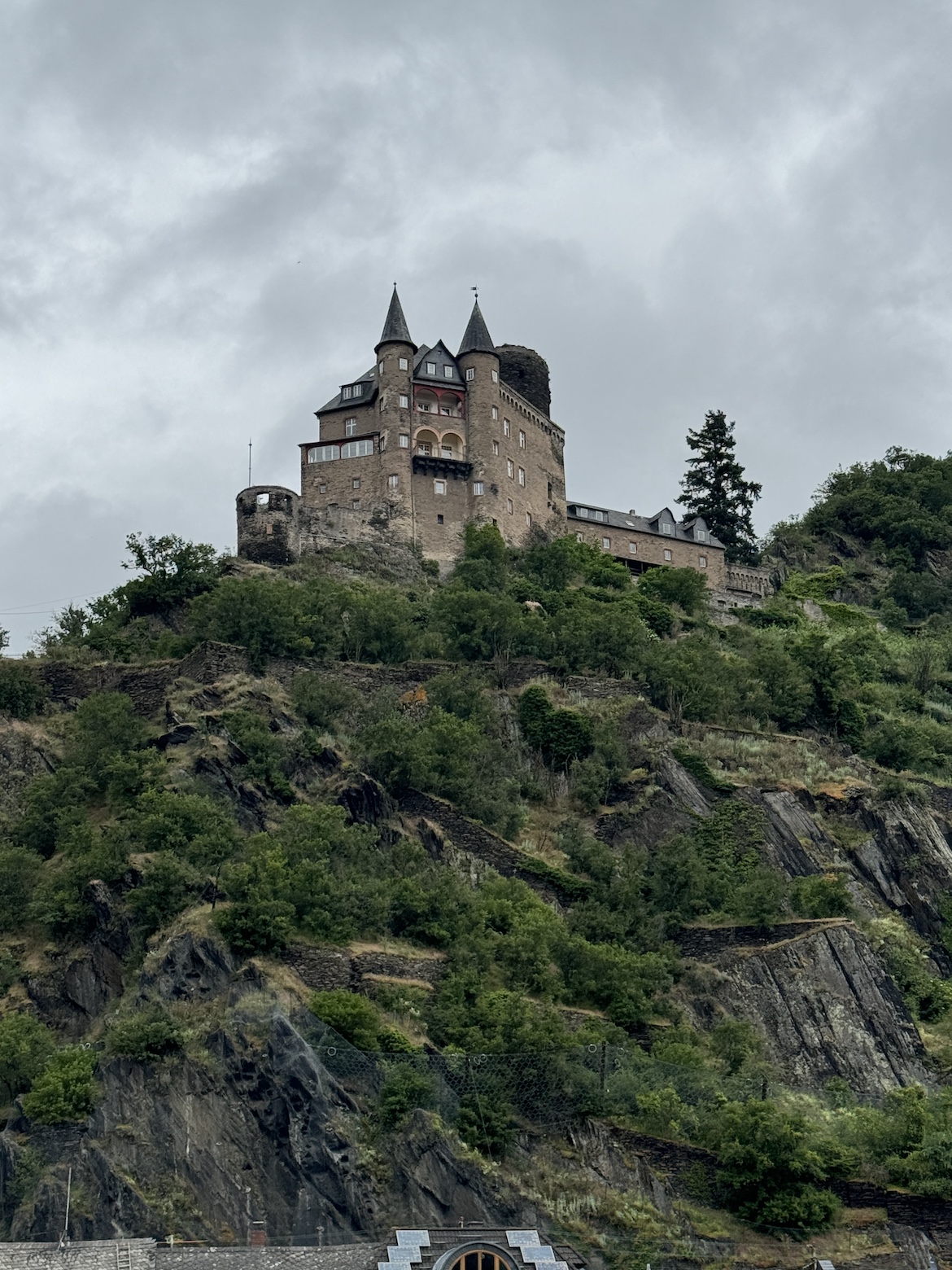
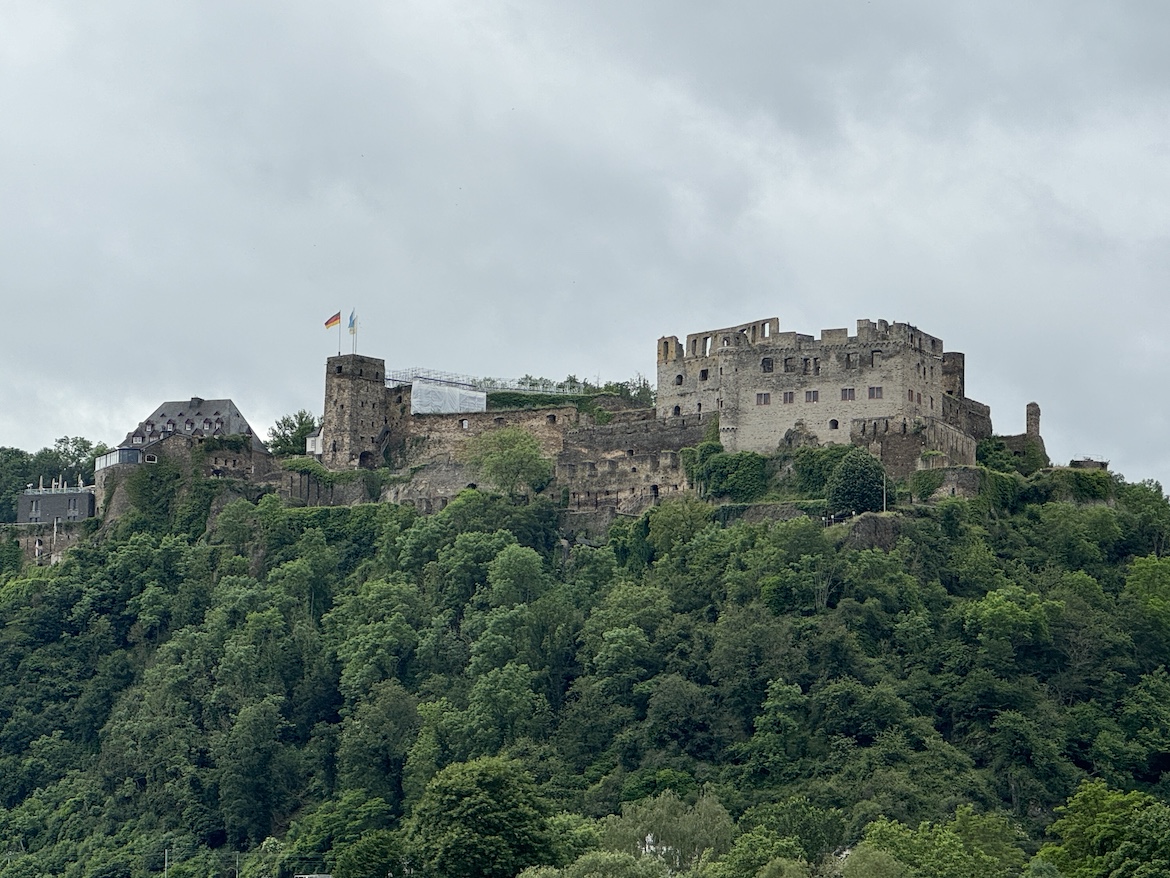
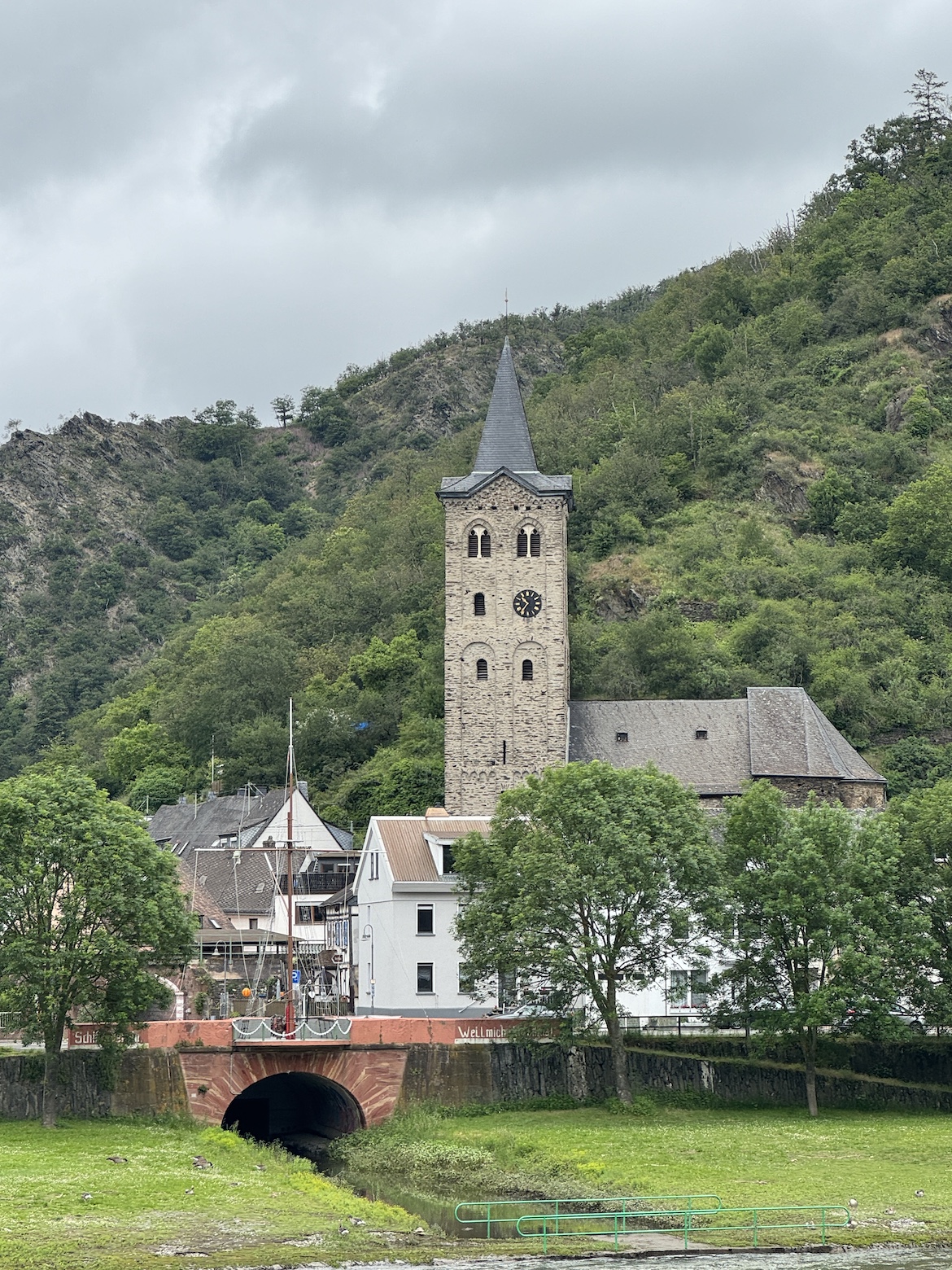
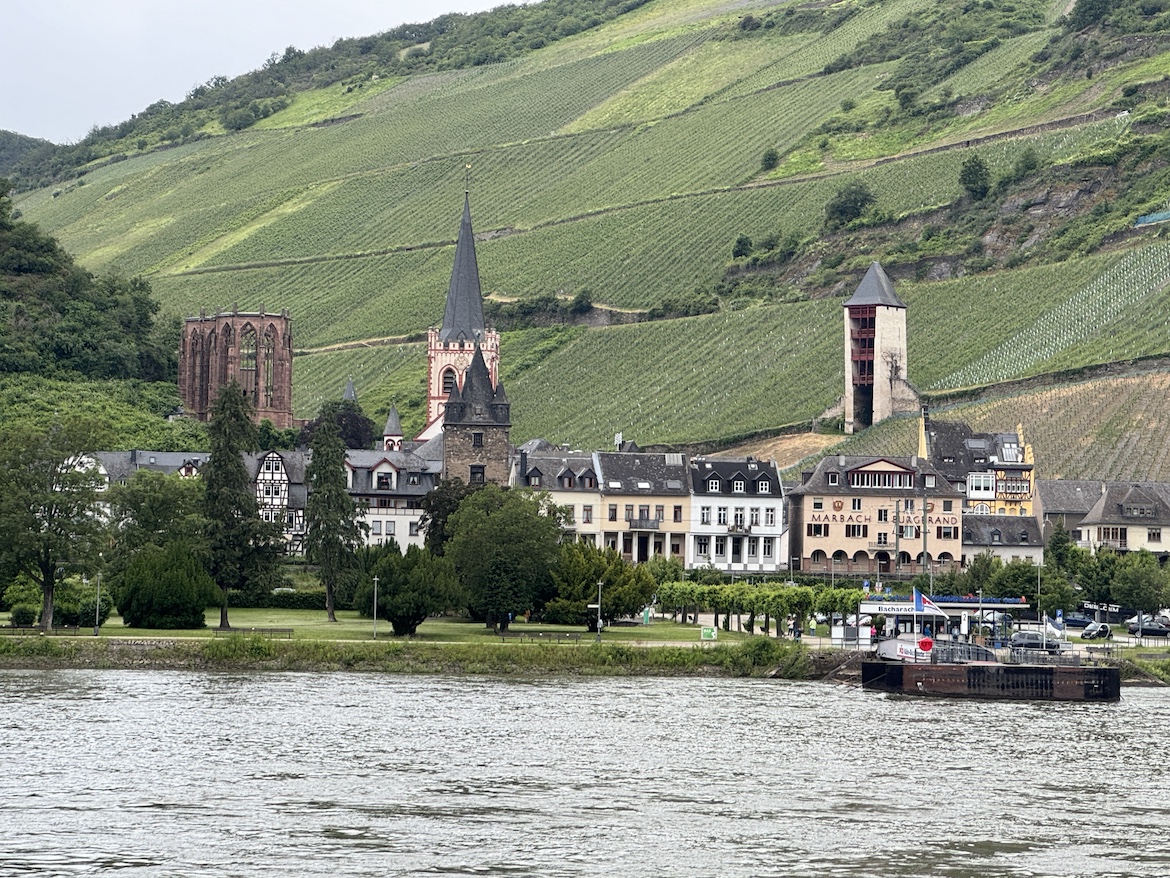
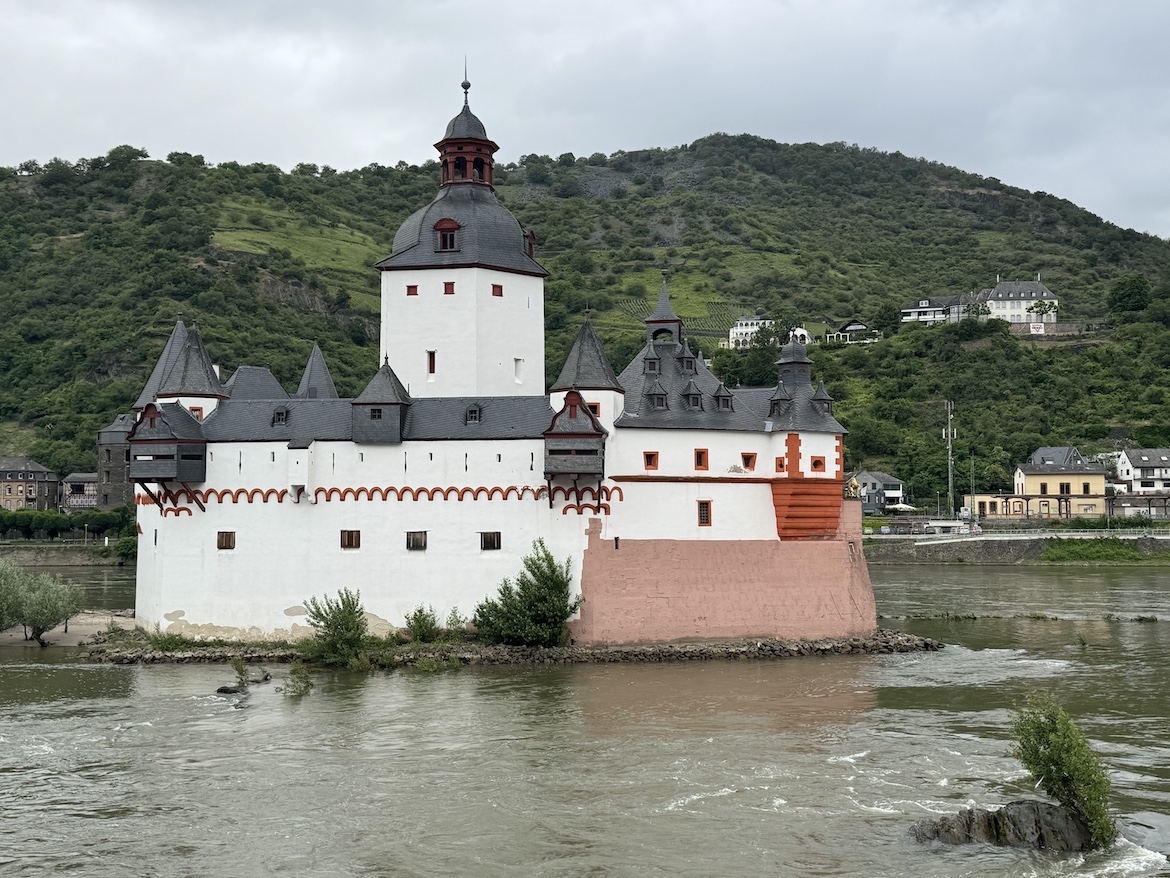
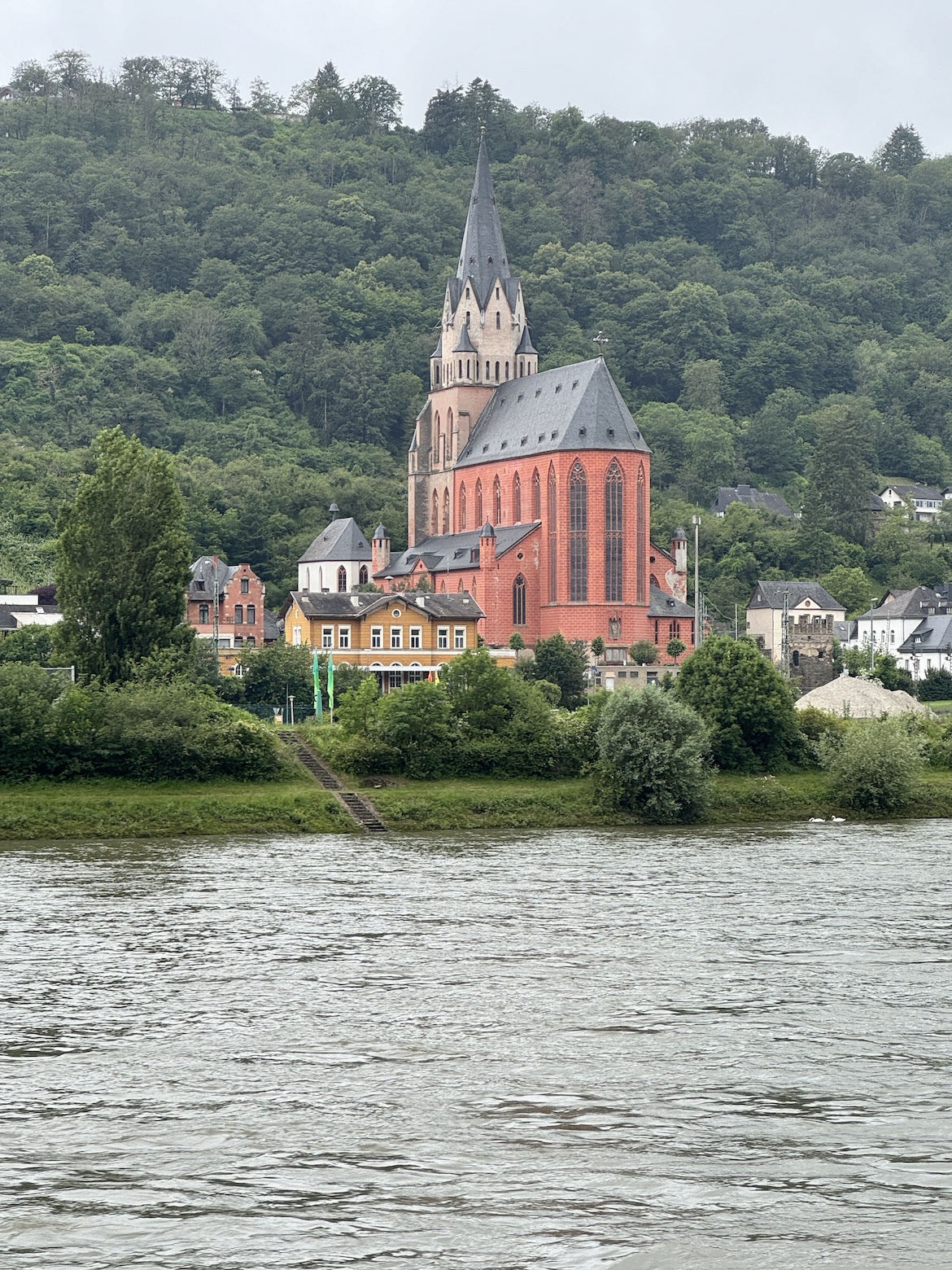
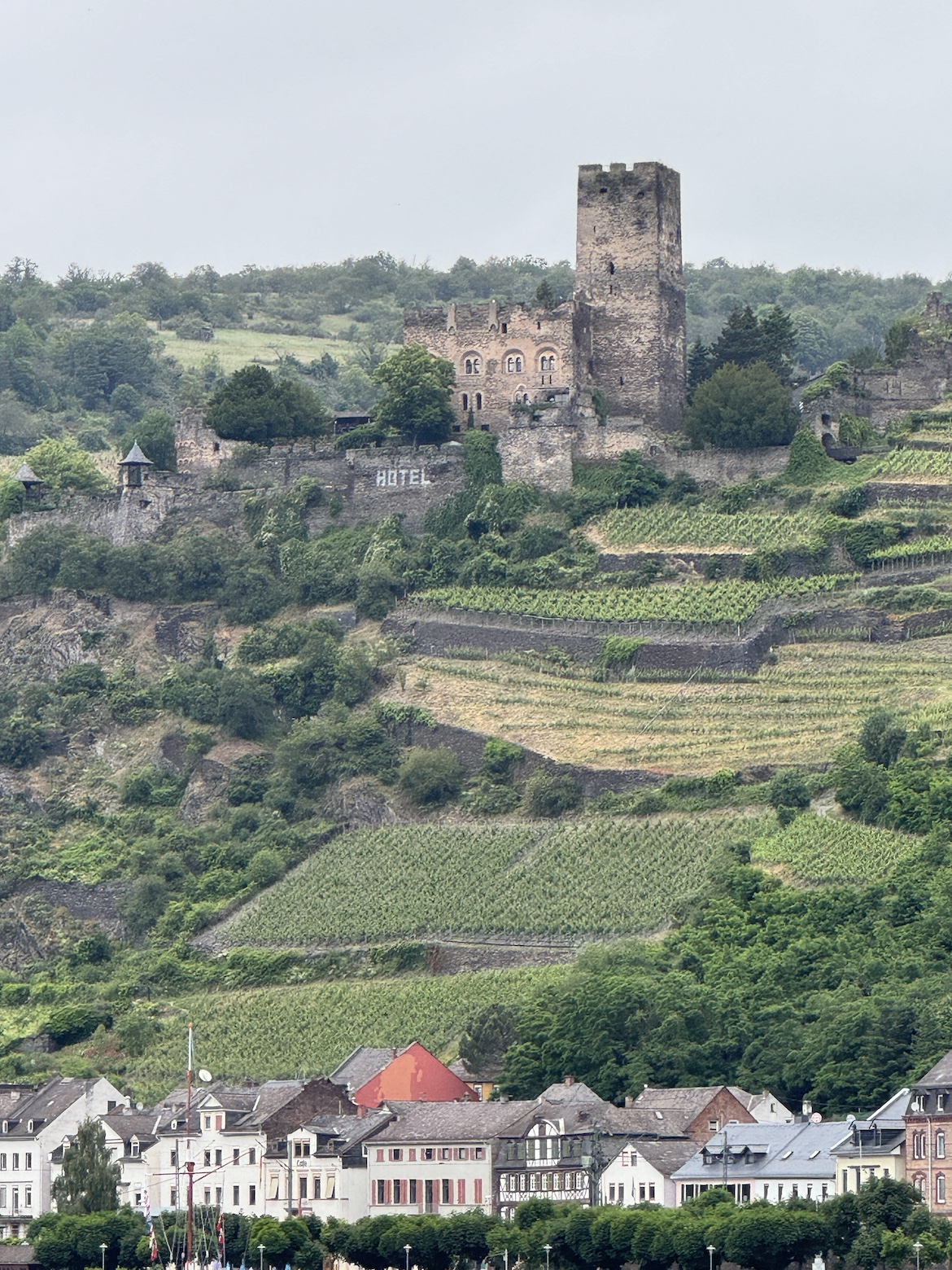
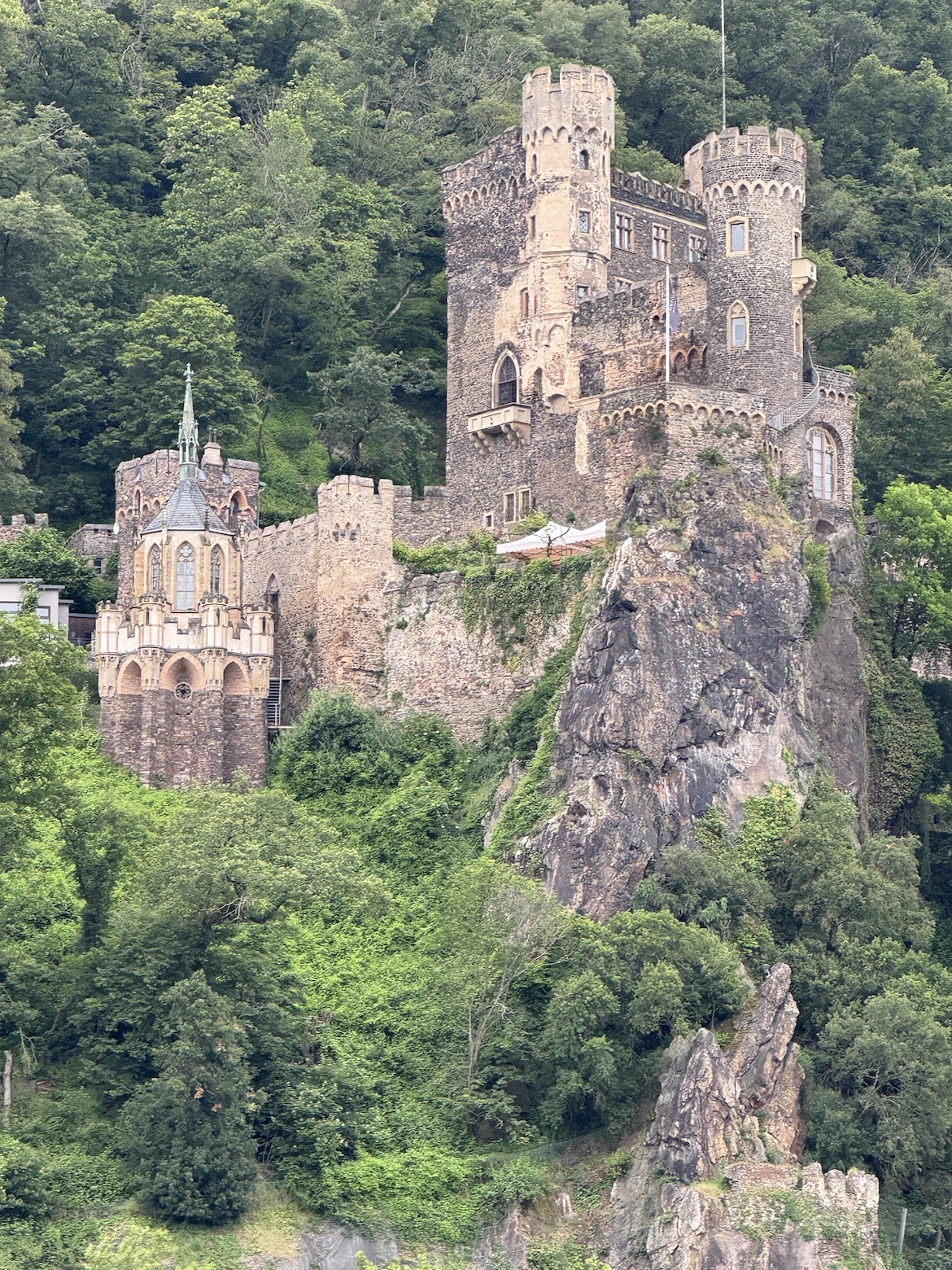
We left Rüdesheim at nine aboard our Viking River cruise and settled in for what the itinerary simply called “scenic sailing.” Four hours along the Rhine doesn’t sound like much on paper, but it turned out to be one of the most absorbing stretches of the entire trip. Scenic sailing on the Rhine River is not passive drifting. It is constant revelation. Castles appeared around nearly every bend — some perched dramatically on cliffs, others tucked lower along the banks, vineyards climbing behind them in precise green lines. These were the castles on the Rhine River I had seen in travel advertisements, now rising directly in front of us.
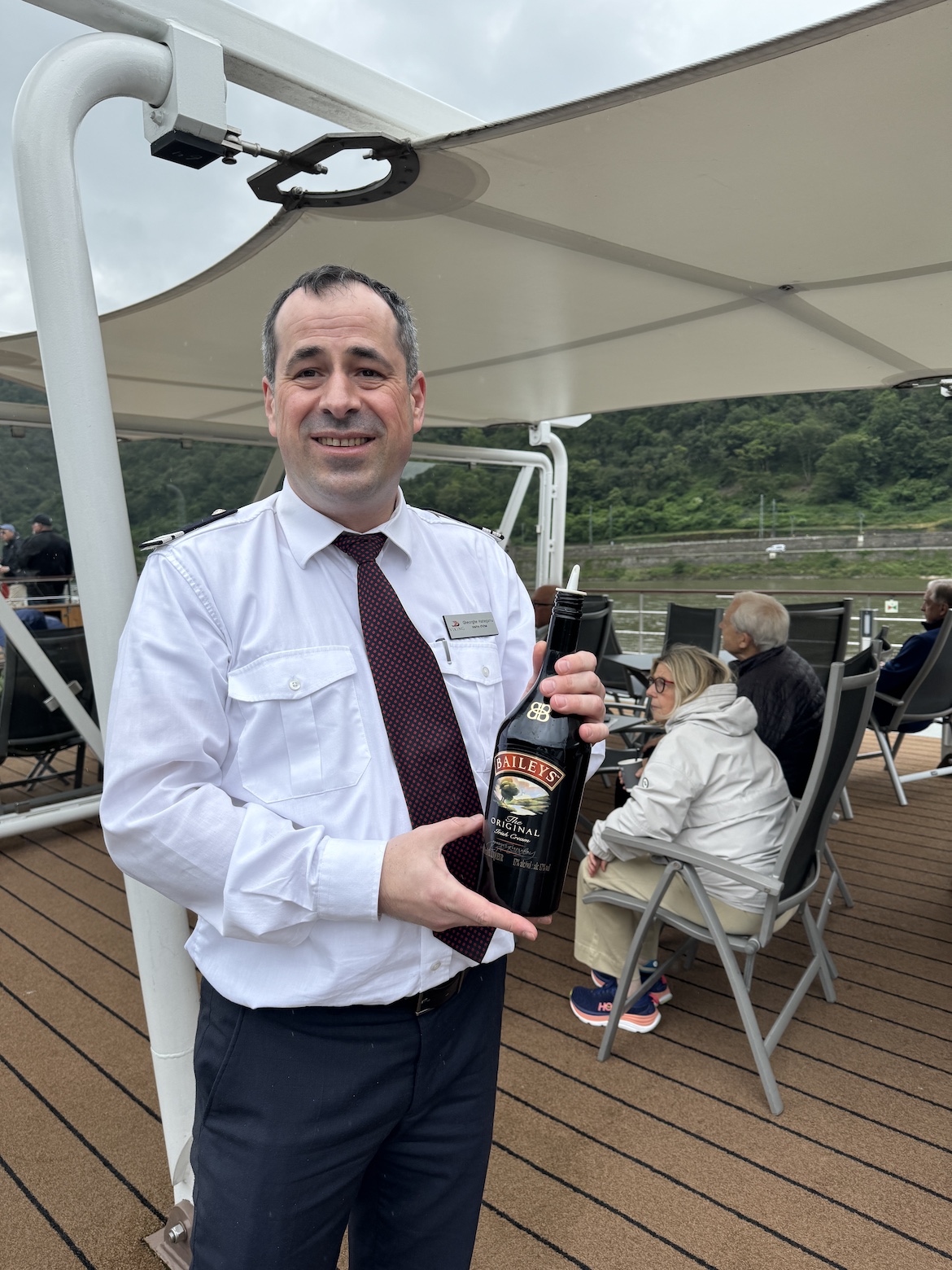
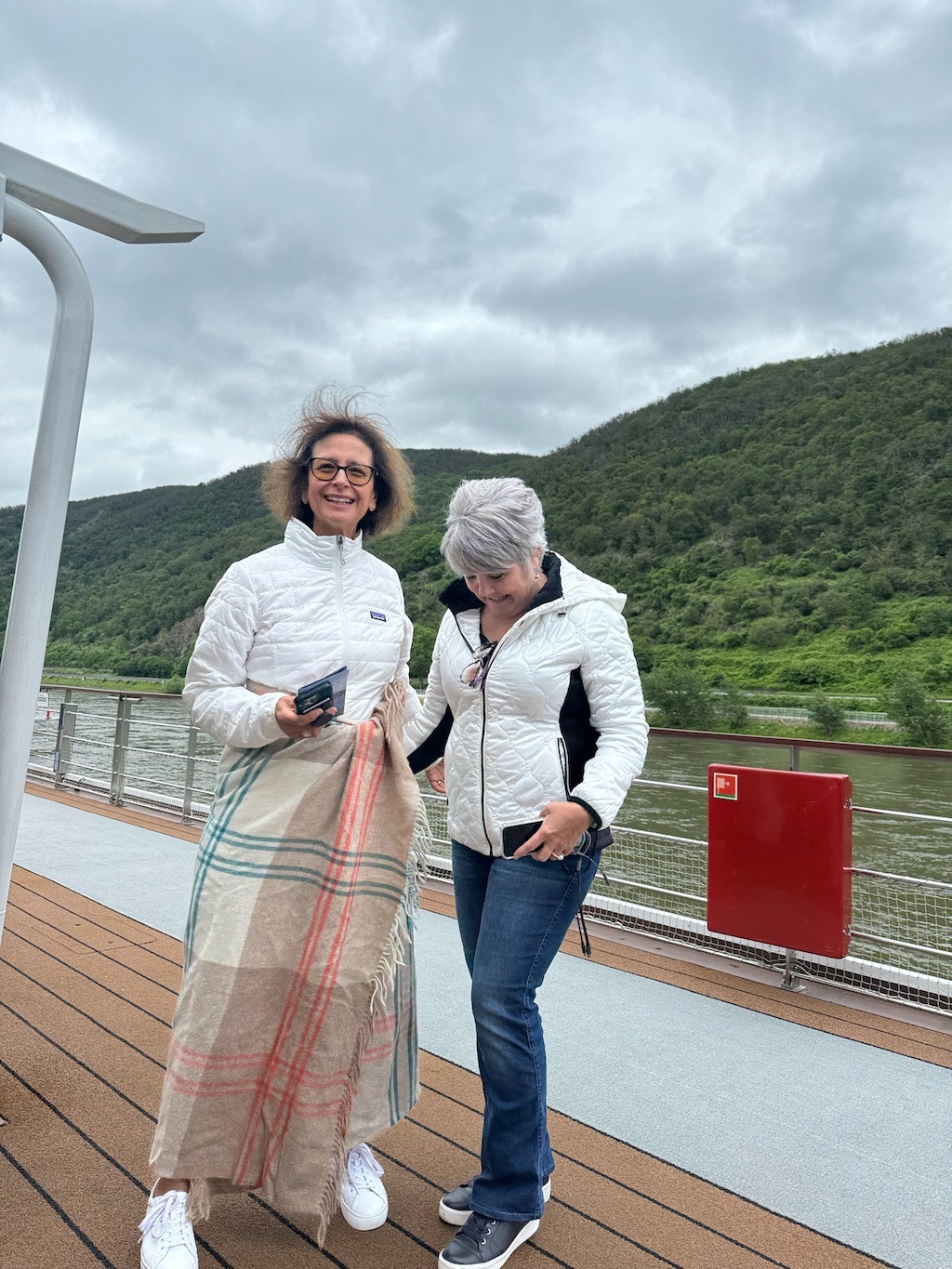
The weather helped. It was cold and damp, the sky low and gray, and instead of dulling the landscape, it deepened it. Stone darkened. The hills looked saturated. The river hummed along. We walked the decks or settled into lounge chairs with blankets at the ready. Two members of the ship’s staff emerged from below in grand fashion — one carrying hot chocolate and coffee, the other a large bottle of Baileys Irish Cream (my favorite, by the way). There was something unexpectedly elegant about sipping that while gliding past medieval fortresses.
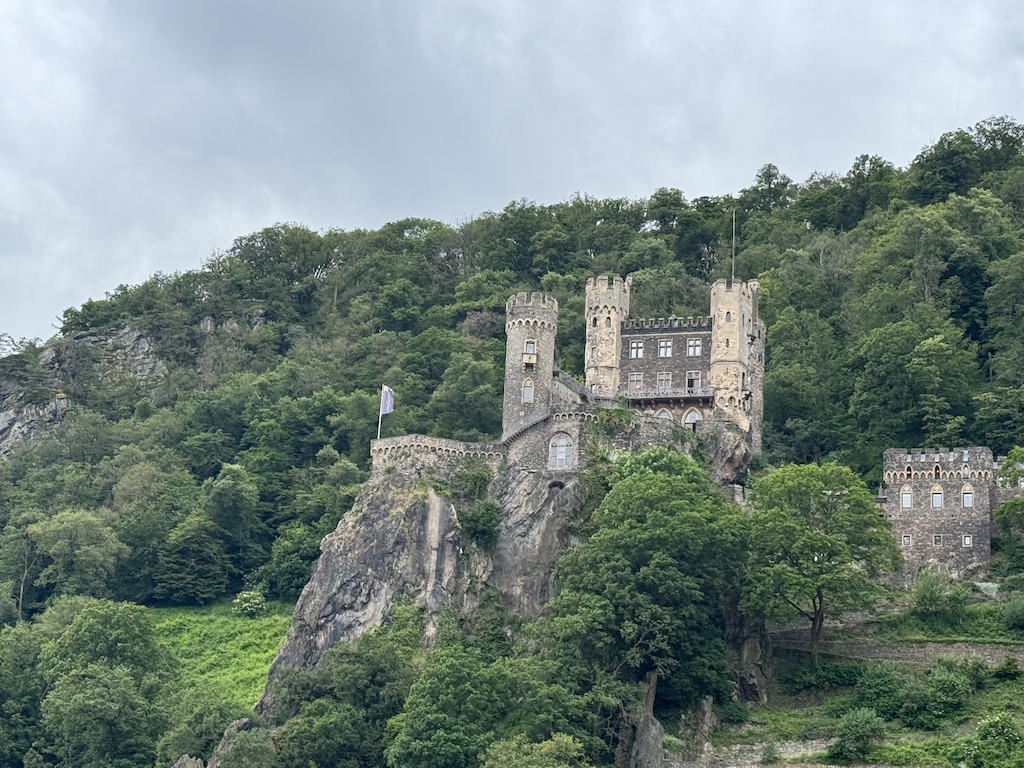
A castle clinging to the cliffs above the Rhine. Stone, sky, and centuries layered together.
Over the speaker, an announcer talked in a poetic amble about the historic castles along the Rhine River and this key area, sprinkling facts and dates back and forth like a ping-pong match.
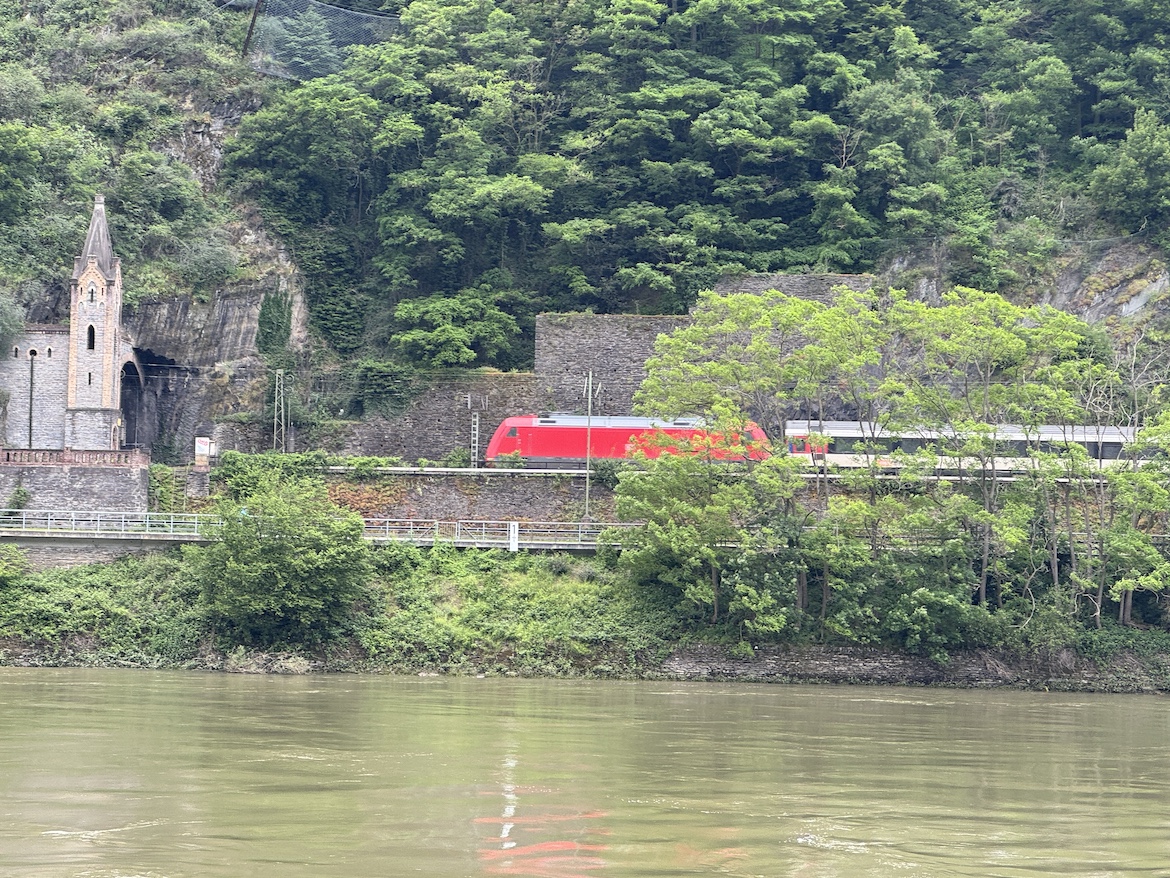
Some of the “castles” we passed were real medieval fortresses. Others were smaller, decorative facades erected in the 1800s — little stone structures that looked like they belonged on a stage. These were designed to blend industry into the romantic landscape — specifically the railway tunnels cut into the hillside behind them.
I was told a story that they were wartime decoys meant to protect rail lines — that Hitler himself had them placed in an effort to fool Allied aircraft. War or not, the Allies were instructed not to bomb historical landmarks — or perhaps that was simply their good nature — and the whole story felt incredible to witness. In any case, clearly the plan worked, because the façades still stand guard today over the railway tunnel entrances. But the storyline is still debated.
Whether folklore or fact, I loved the whole idea of it: enemies and allies trying to fool one another to gain victory. Throughout our 33-day trip to five countries, we repeatedly found ourselves standing in places marked by World War II history. The trek placed us in the very places most of us have only read about.
It was beautiful. Magical. Historical and heavy, all at once. This stretch of scenic sailing on the Rhine River was exactly what the brochures promise, except now we were inside it.
After the tour we dined at water level in the dining room, the scene still mesmerizing through the floor-to-ceiling windows — though less dramatic now. We were glad to be warm and cozy. The chit-chat with fellow cruisers, some now familiar friends, rumbled throughout the space, sprinkled with staccatos of laughter and clinking glasses. There is much to cheer about on a trip like this. In a word: delightful.
Click (or tap) any photo to open the gallery, see the full image, captions, and scroll through the set.
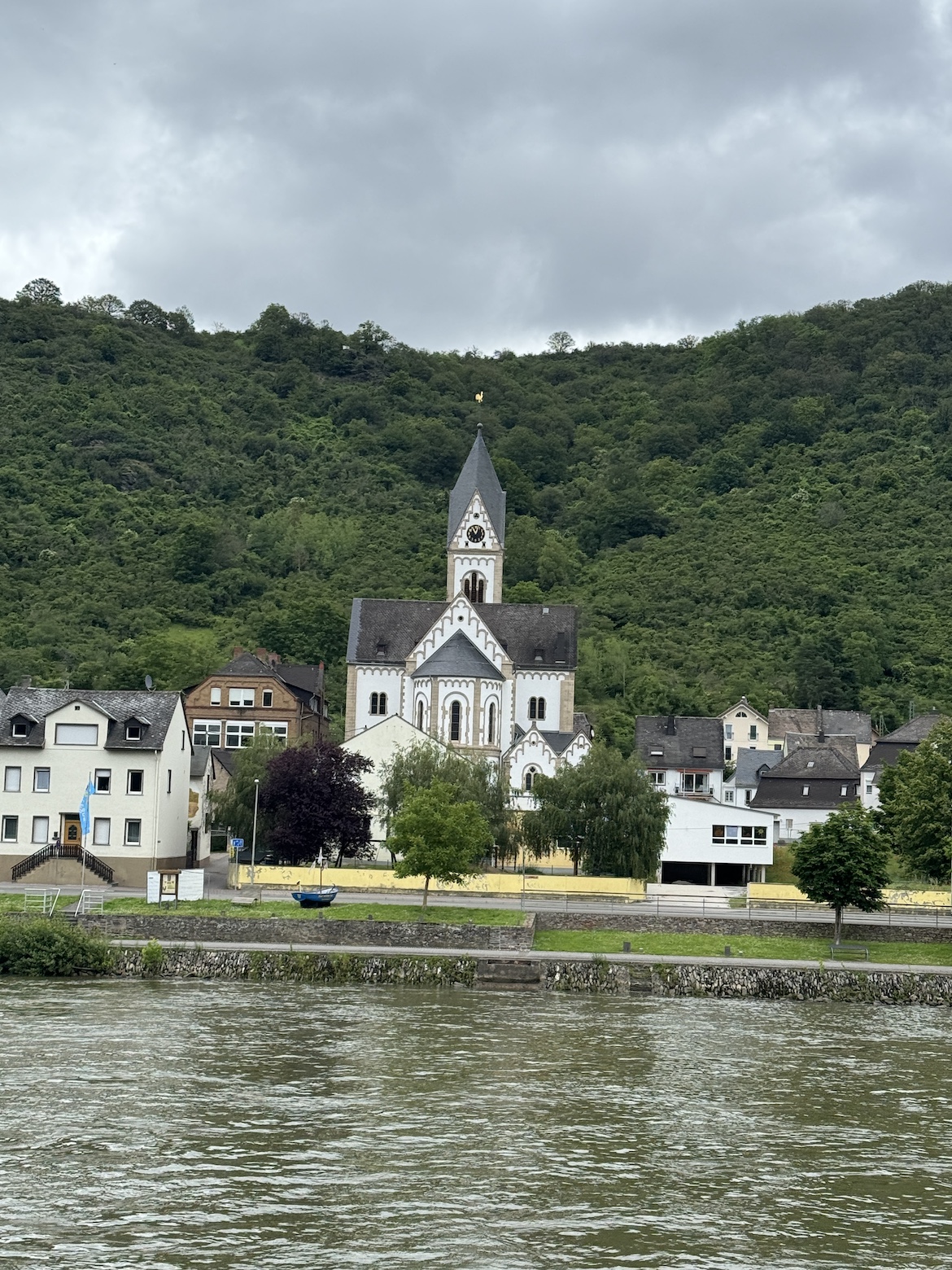
Stepping Off in Koblenz
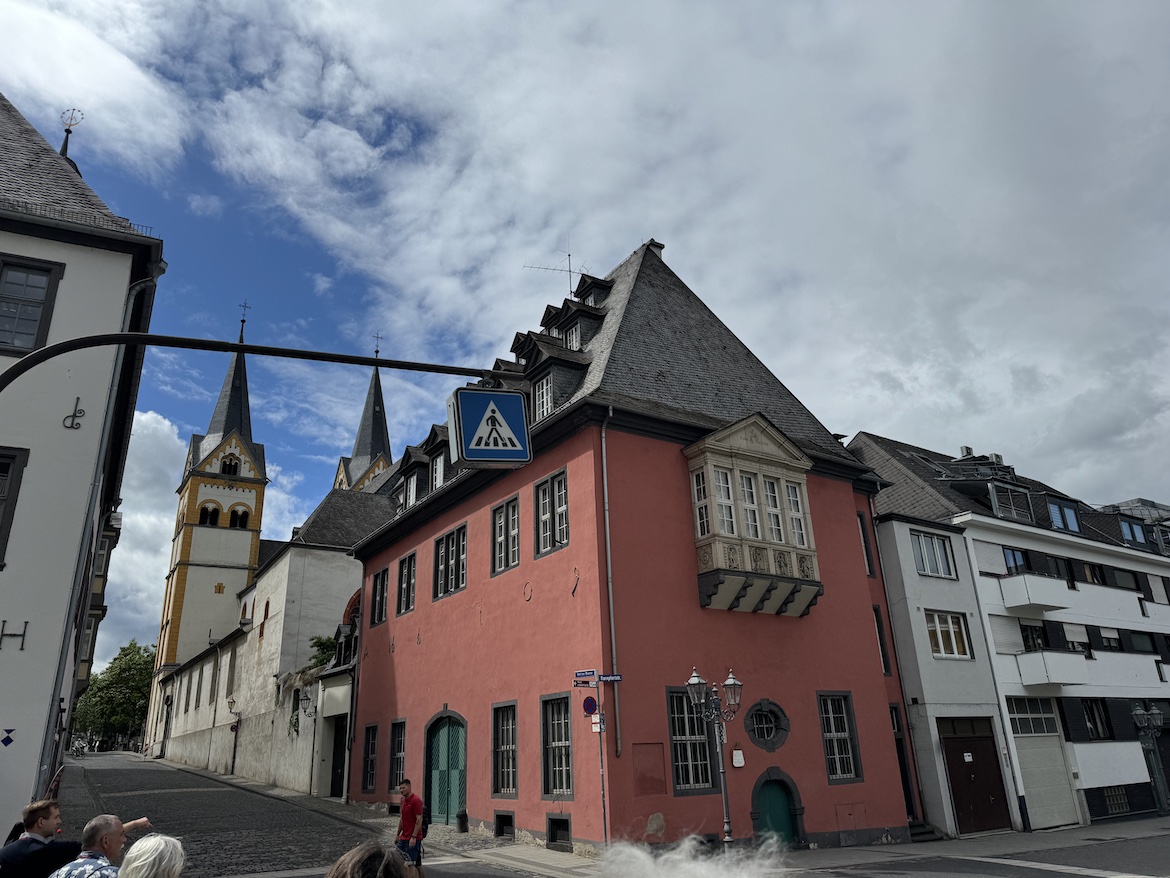
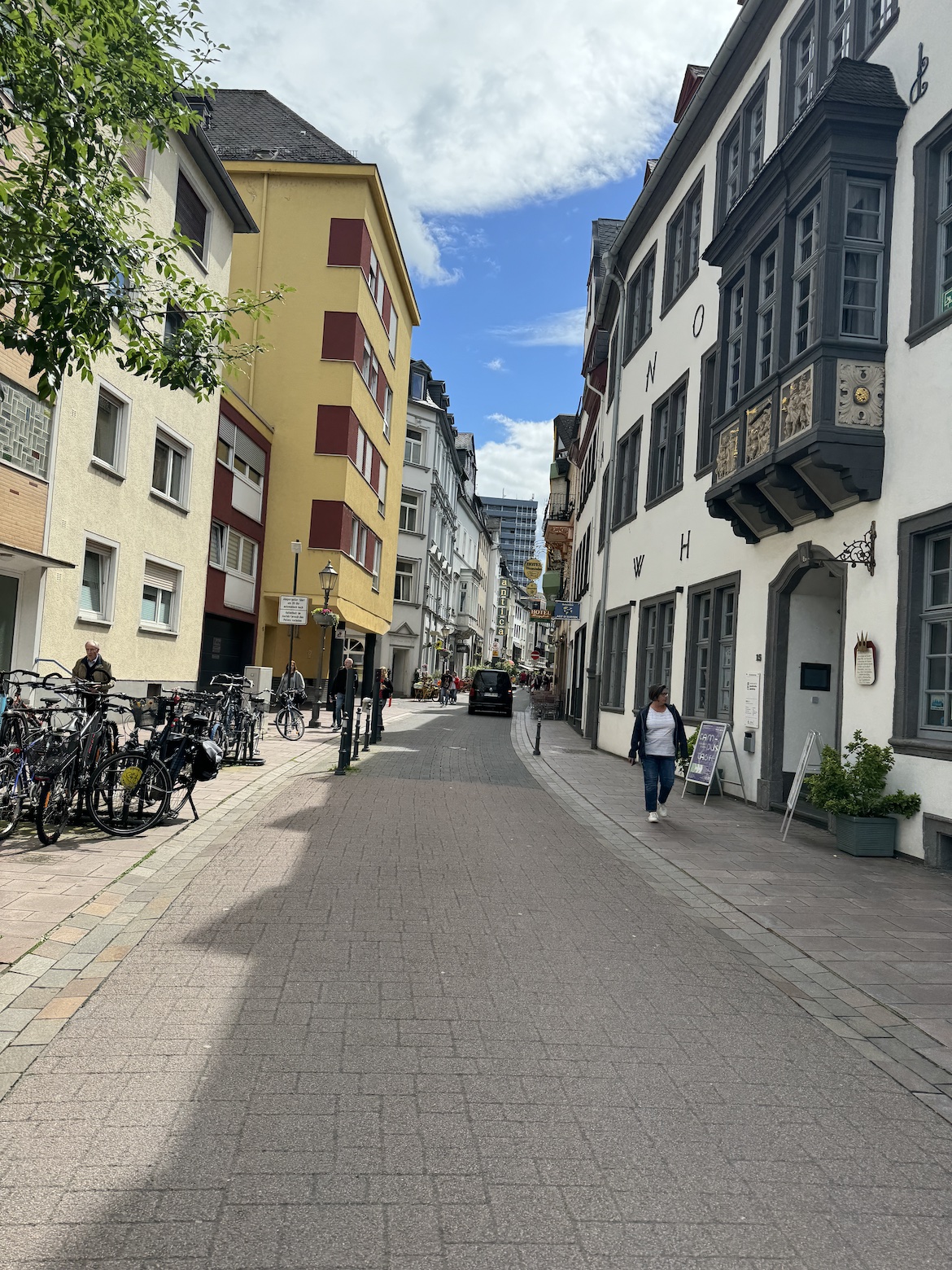
By early afternoon, we stepped off the ship in Koblenz, grateful to stretch our legs after lounging about. The town felt compact and walkable, and we didn’t need any real direction. We let ourselves drift toward whatever street looked promising and felt comfortable with the longship so near.
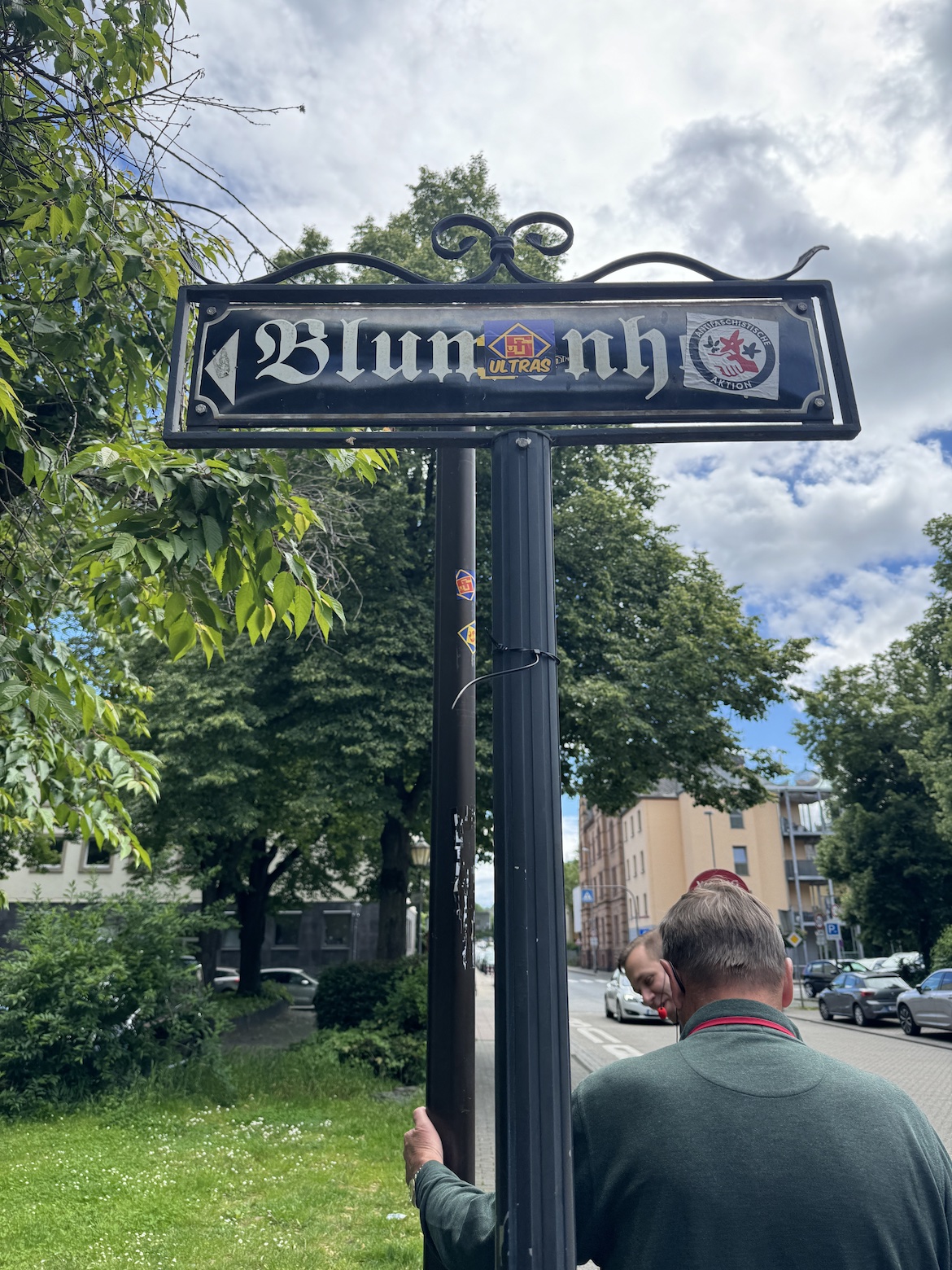
Stone buildings leaned into narrow lanes. Window boxes (oh, those window boxes!) added color to otherwise sturdy, ancient facades. Even the street signs felt like clues, arrows pointing toward places we couldn’t fully pronounce but were happy to explore anyway. Koblenz sits at the meeting of the Rhine River and the Moselle River, and you can feel that convergence in the movement of people and boats and energy.
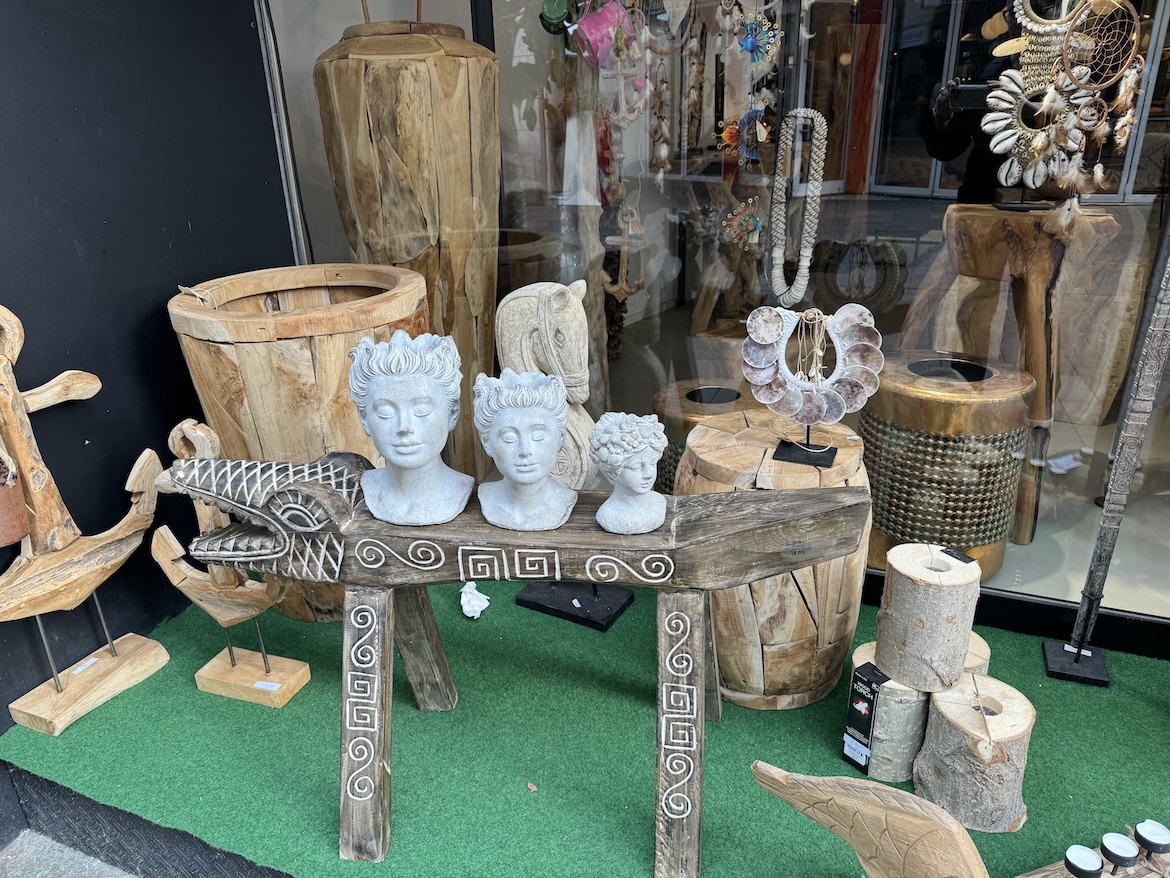
Window browsing turned into shopping and I purchased a beautiful sweater. But it was the lamp that took my breath away. She was shaped like a small girl holding an umbrella, her clothing printed with mathematical symbols, her wayward lampshade tilted as if bracing against the wind. I just loved it. And I love black and white. To me, perfection.
Alas, I couldn’t get it home — nor could I order it later. I had briefly entertained rewiring it for the U.S., but the whole thing proved impossible.
Click (or tap) any photo to open the gallery, see the full image, captions, and scroll through the set.

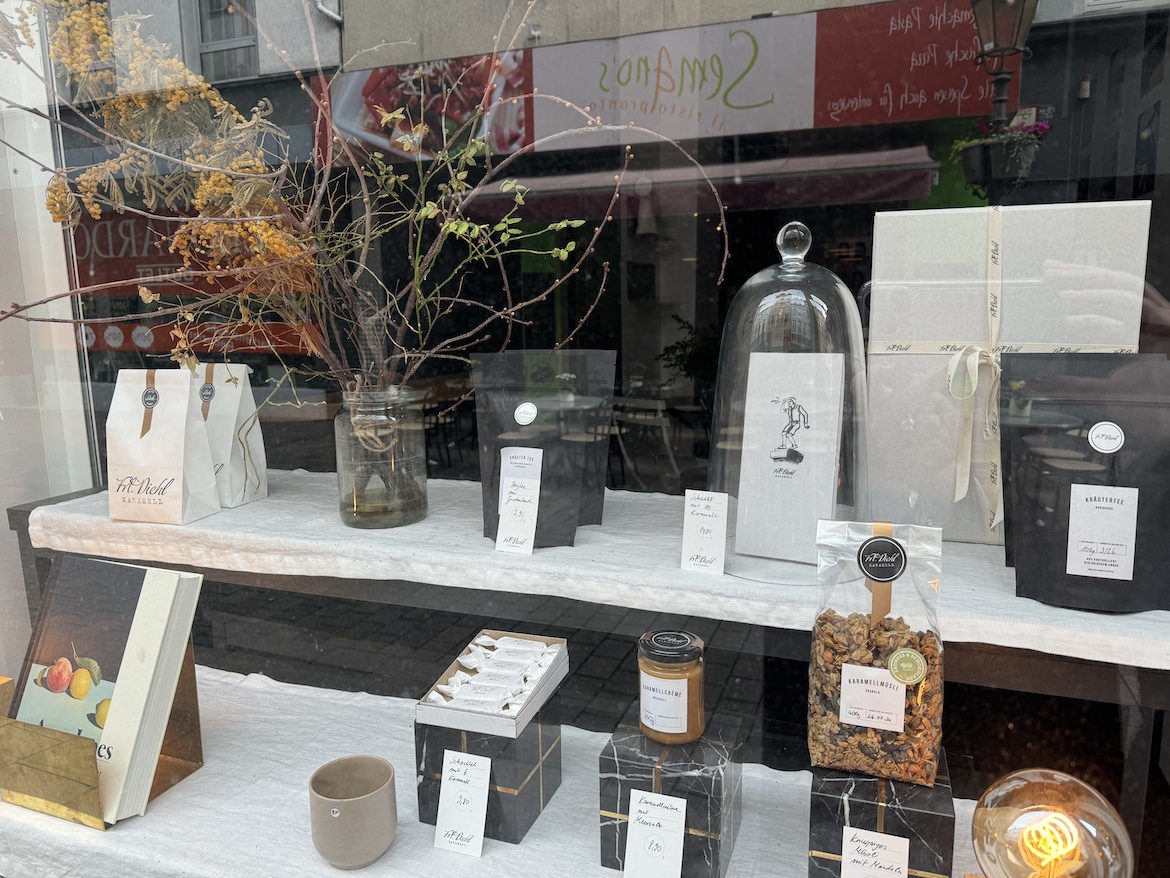
Stumbling Stones: One Life, One Stone
Often it is the smallest things that make the biggest impact — like what happened today in Koblenz.
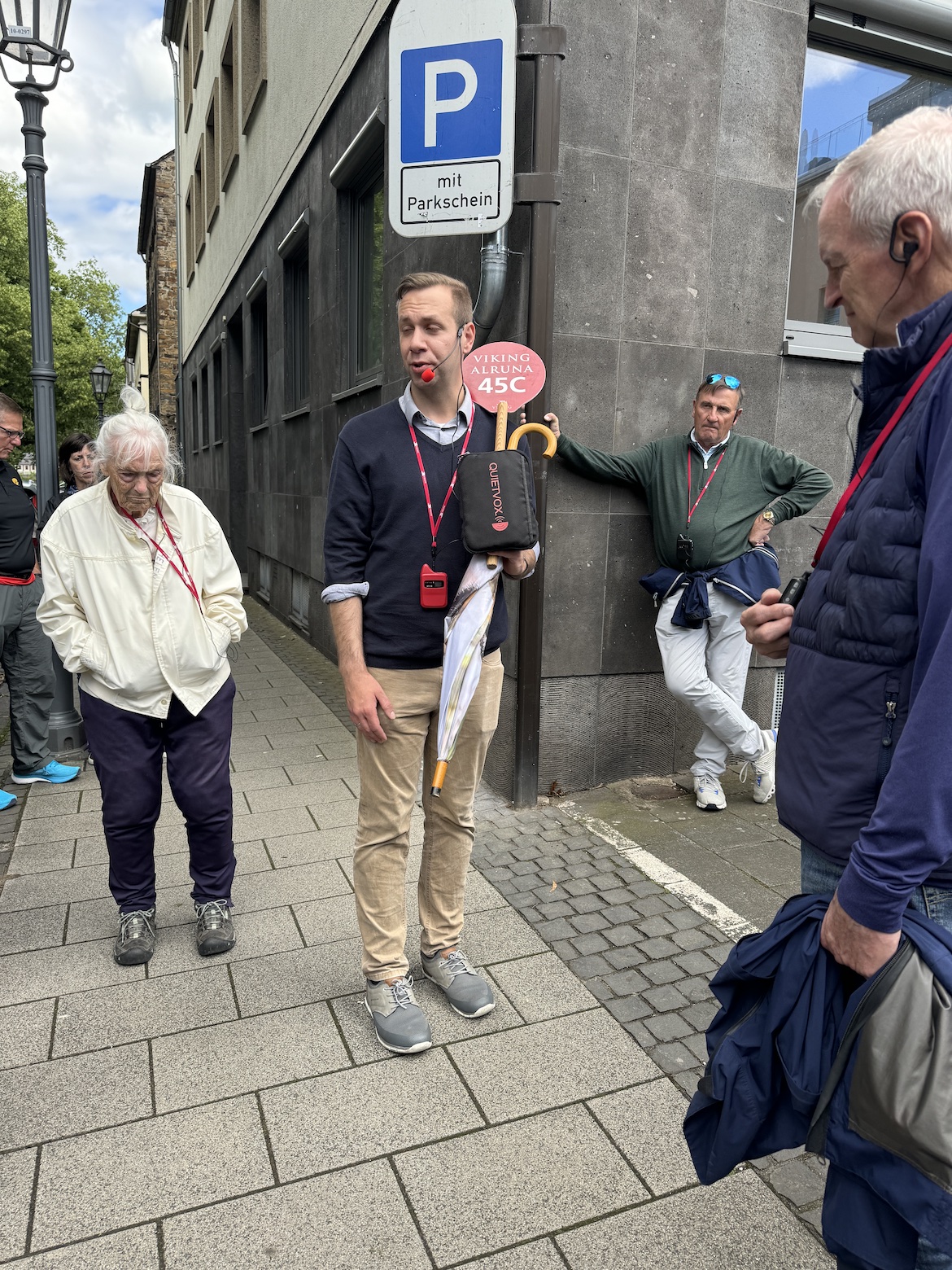
Our guide that afternoon held a PhD in history and carried it lightly. At one point, he shared something deeply personal: his grandfather had been part of Hitler’s army. More than that, he had remained loyal to Hitler’s ideology long after the war ended. The guide told us his grandfather spoke most freely about this allegiance when he drank too much. That tension — between inherited loyalty and historical truth — had followed him his entire life.
As we walked, he asked us to look down.
Set into the sidewalk was a small brass square: a Stolperstein — a “stumbling stone.” I love the name. It quite literally means to stumble. To be interrupted mid-step. To be forced to look down and notice what is beneath you.
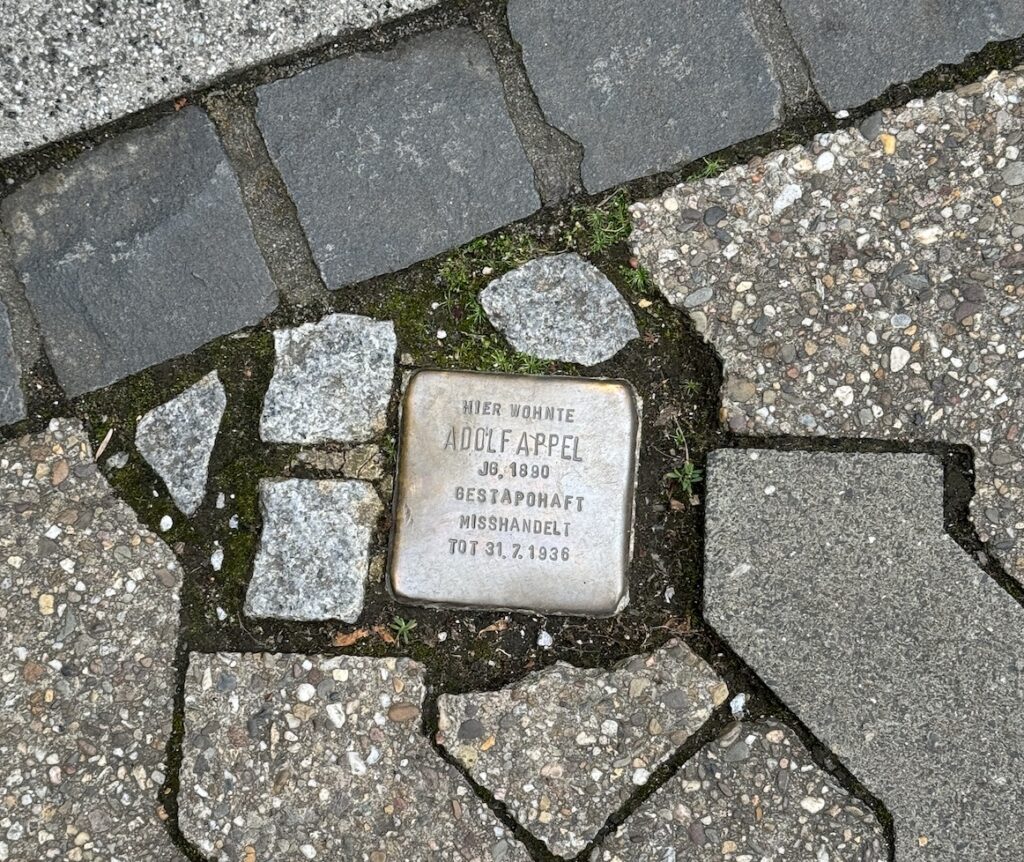
Stumbling stone for Adolf Appel. A small brass square set into the pavement to remember the person who once freely lived here — arrested by the Gestapo, “mistreated”, and dead by July 31, 1936.
The stone reads:
HIER WOHNTE
ADOLF APPEL
JG. 1880
GESTAPOHAFT
MISSHANDELT
TOT 31.7.1936
Translation:
Here lived
Adolf Appel
Born 1880
Imprisoned by the Gestapo
Mistreated
Dead July 31, 1936
The English word “mistreated” is too polite. It does not prepare you for the weight of it.
I have been cautioned not to use the word “tortured,” because that is not the official language recorded in the historical documentation. But we should not misunderstand what this word means.
Adolf Appel was arrested by the Gestapo. In their custody, he was beaten. The word on the stone — misshandelt — means physically assaulted. It means struck. It means injured by force. It means brutalized under interrogation. By 1936, the Gestapo operated outside judicial restraint. There was no legal recourse. No protection. Violence was not incidental; it was method. The abuse inflicted on him was severe enough that he did not survive it. He was 56 years old when he died.
Adolf Appel lived in that building. He walked this street. He had neighbors. And then the state ended his life.
The Stumbling Stone project began in the 1990s under the direction of artist Gunter Demnig. It faced resistance in its early years — some questioned whether placing names in the ground was appropriate or even legal.
For a deeper understanding of the Stolpersteine project, this short video explains it beautifully.

I stood there longer than I expected to.
History does not feel abstract when it rests beneath your shoes. It feels immediate. It feels local. It feels personal.
Throughout my 33 Days in Europe series, I return to this tension again and again: standing in a place healthy and alive, watching people laugh, shop, sip coffee in the sun — while knowing that in this very spot someone was taken, beaten, and killed. The birds still sing. The sky still opens wide. Life goes on, unapologetic and bright.
And yet his name remains.
There is deep meaning in Jewish tradition around remembering the names of the dead. Memory is not passive; it is an act. That is what these stones do. They insist on remembrance.
One life. One stone. One name spoken aloud.
It is not enough to undo what happened.
But it is something.
Today, more than 100,000 of these stones stretch across 26 countries in Europe, embedded in ordinary pavement and impossible to ignore once you see them. They commemorate victims of the Nazi regime — Jews, Roma and Sinti, gay men, socialists, prisoners of war, and others targeted for persecution. On this trip, I began noticing them everywhere: outside apartment buildings, along ordinary streets, in places where life carried on as usual.
One or sometimes several right below our feet.
And then Amsterdam.
Imagine my surprise when we arrived at our small hotel — once a private home — and found a stumbling stone embedded in the sidewalk right outside the very place we were staying.
The realization caught my breath.
In Jewish tradition, memory is sacred. Names matter. Artist Gunter Demnig’s brass Stolpersteine seem to understand that. Each stone returns a name to the pavement, refusing anonymity.
Click (or tap) any photo to open the gallery, see the full image, captions, and scroll through the set.
Where the Afternoon Led Us
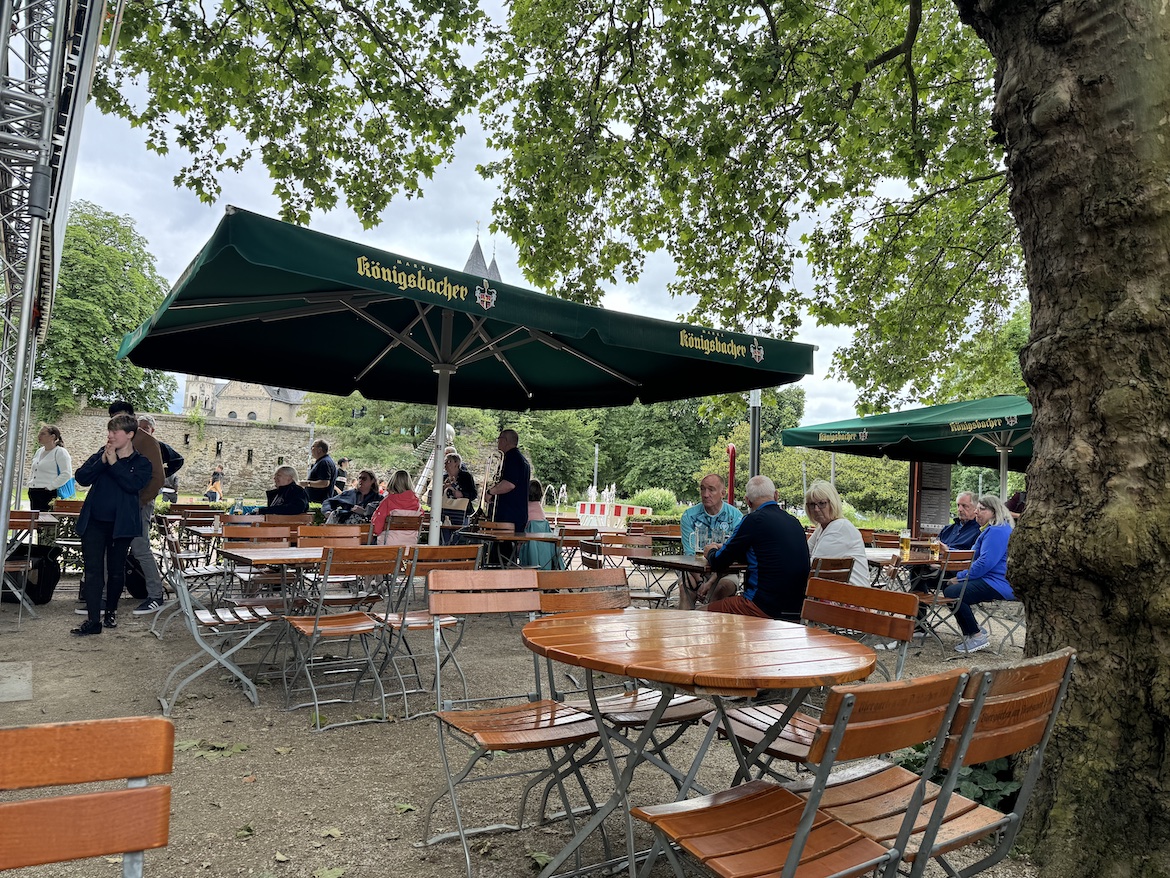
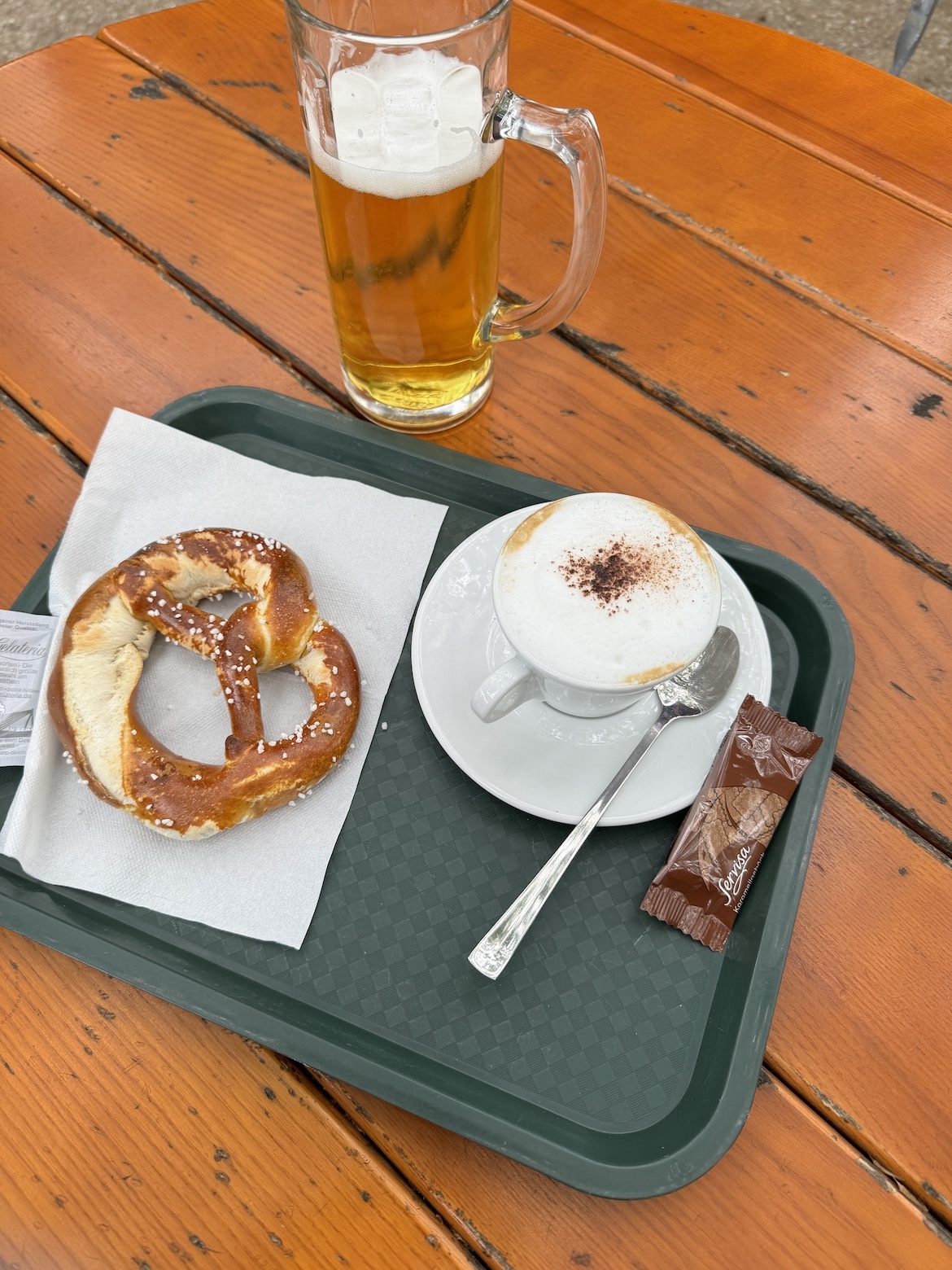
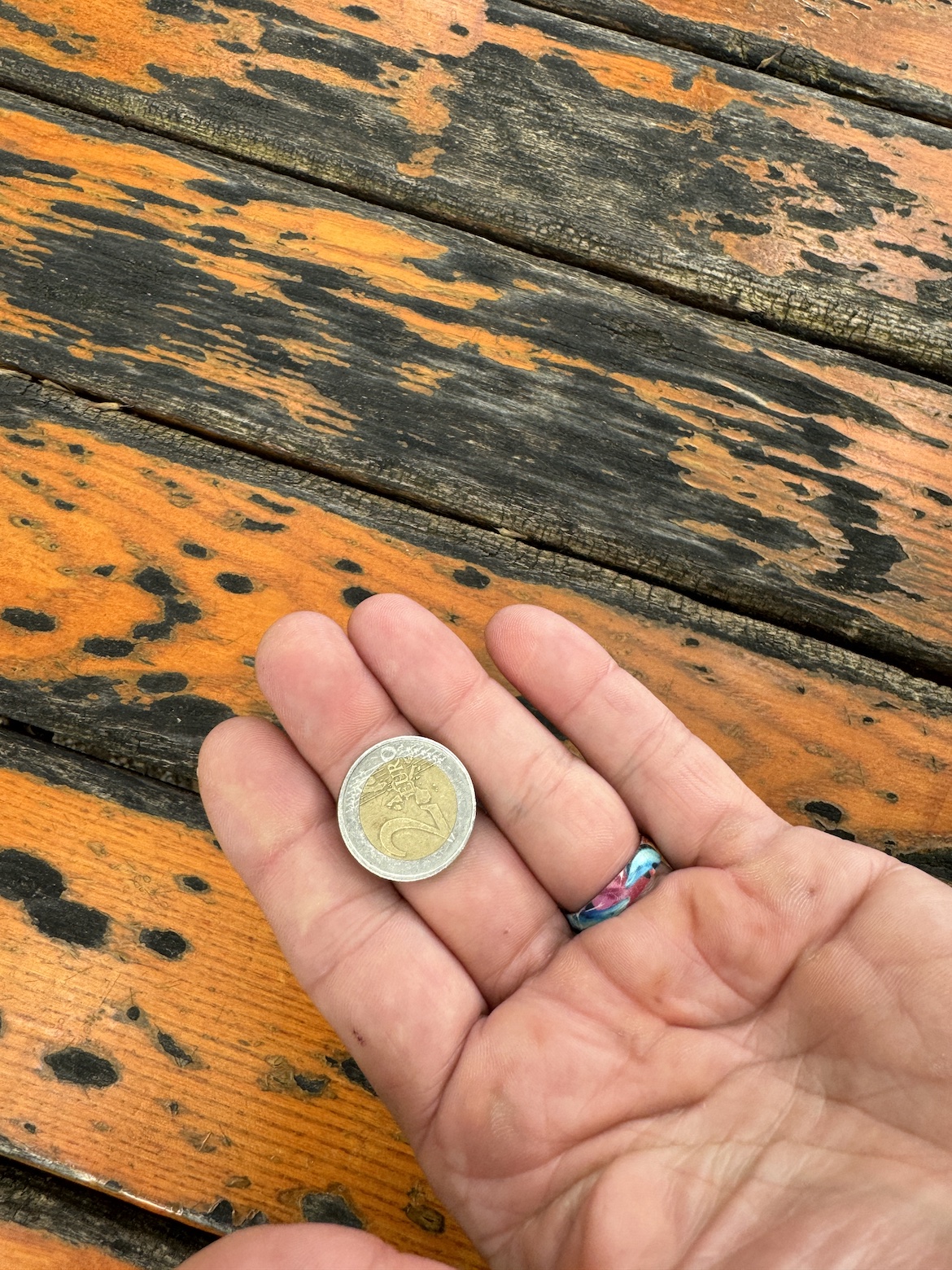
The rest of the day felt lighter. We wandered through the old streets, ducked into shops, paused for a traditional beer and a pretzel along the river. It is always the details you remember. For example, at a large beer garden, we enjoyed a beer and pretzel along the river. When Ron returned the tray he was paid $2 Euro! They pay people when they do the work of cleaning up after themselves. All he did was return the empty tray to the place we ordered the food.
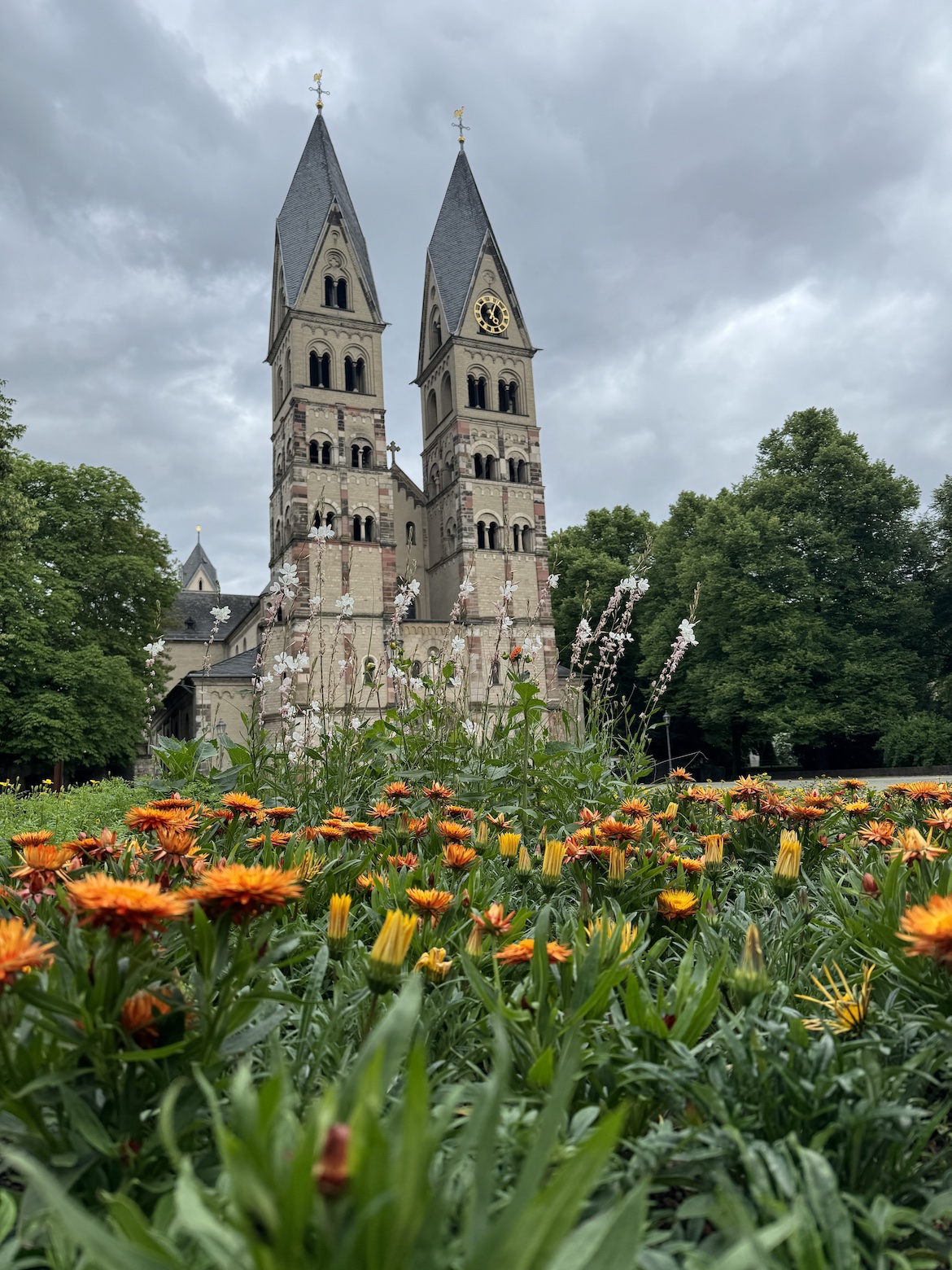
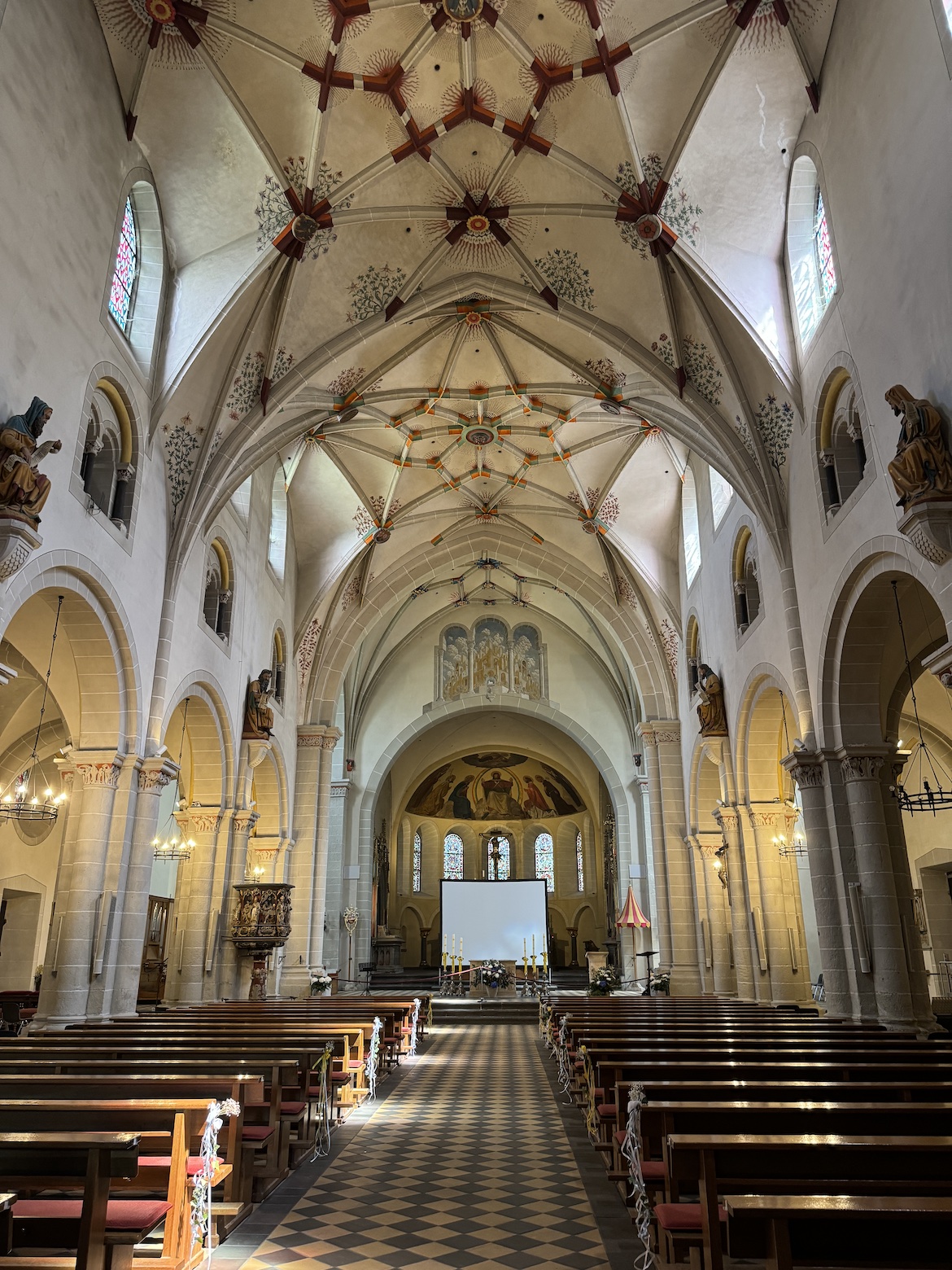
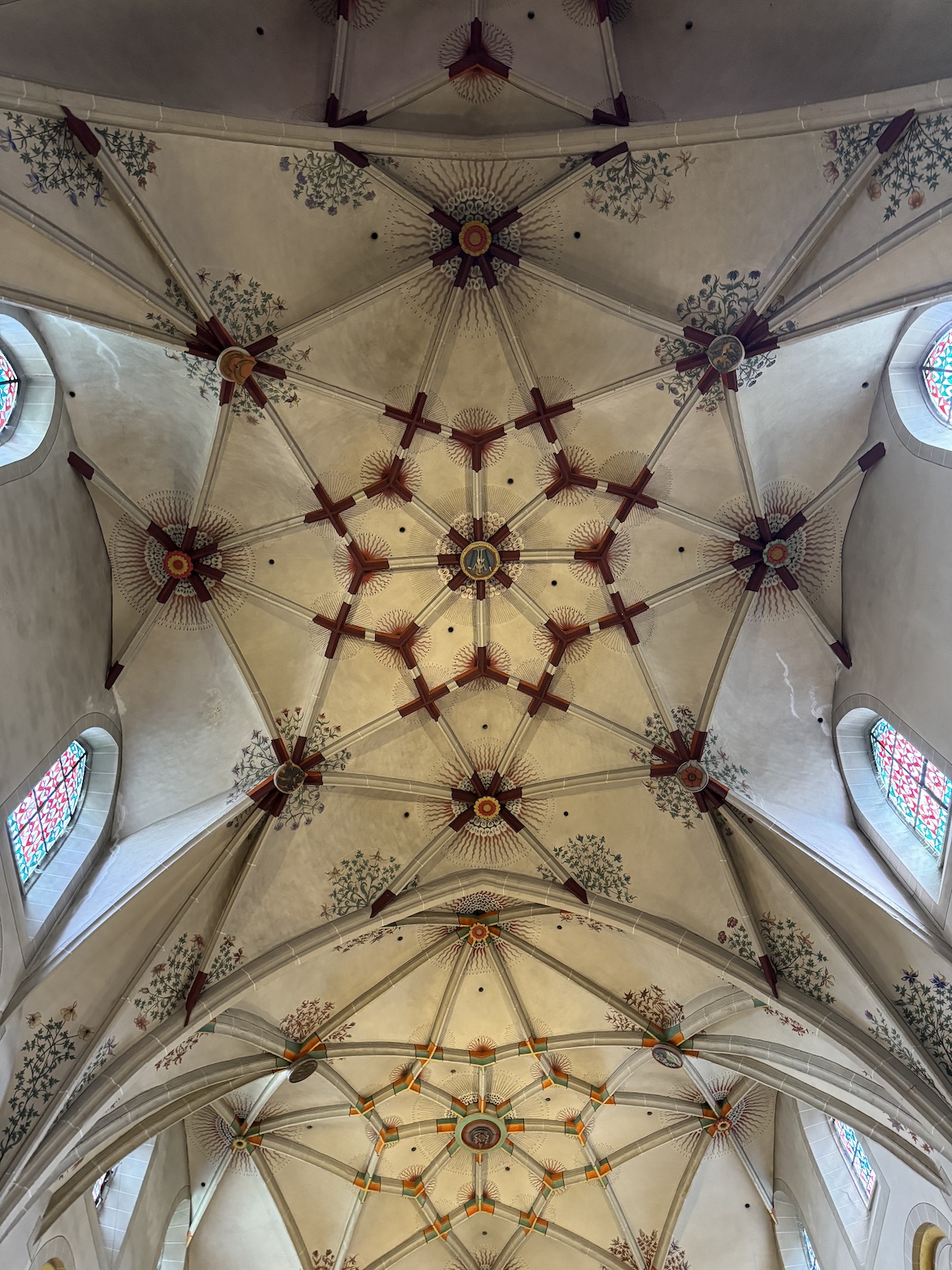
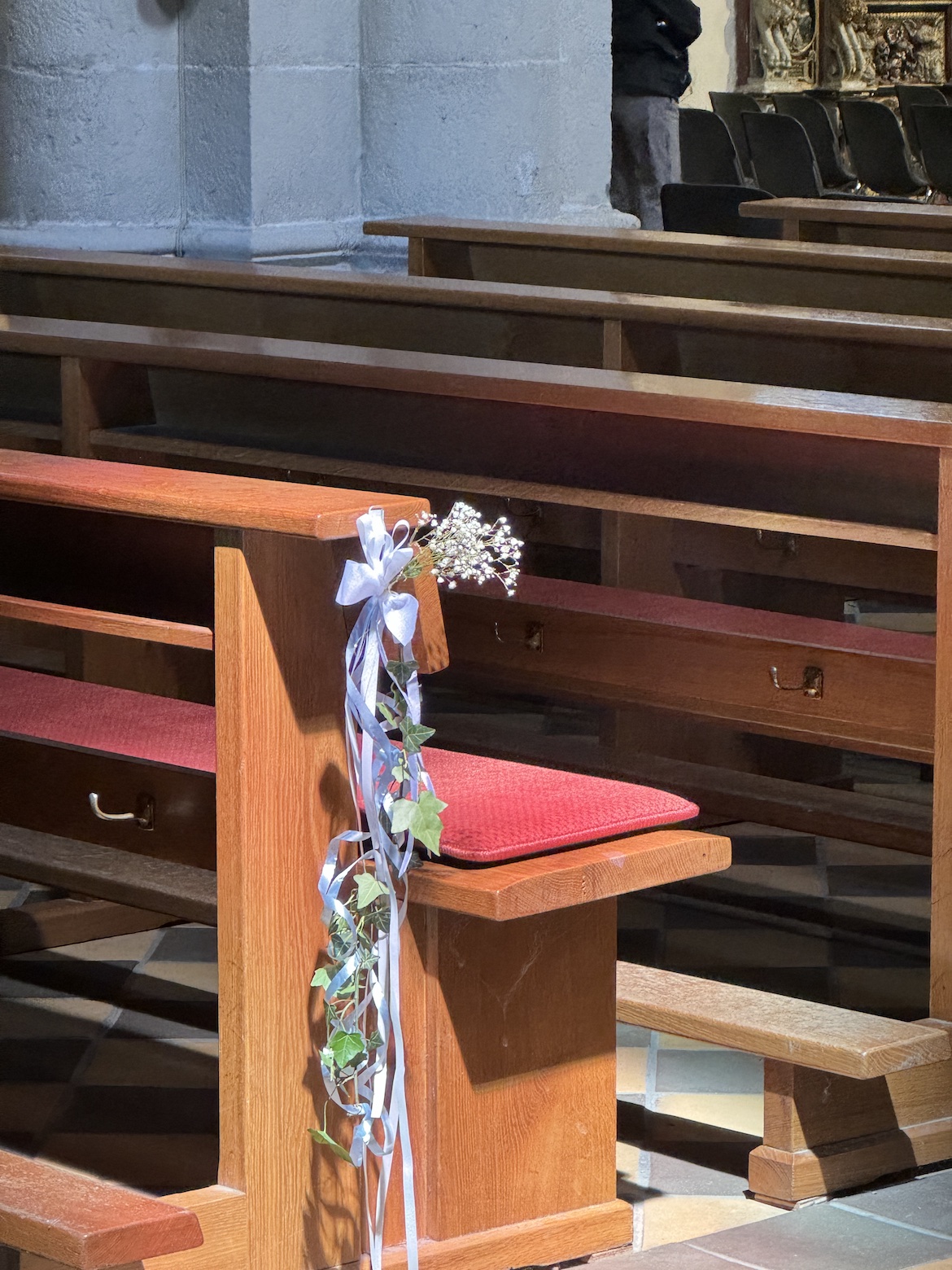
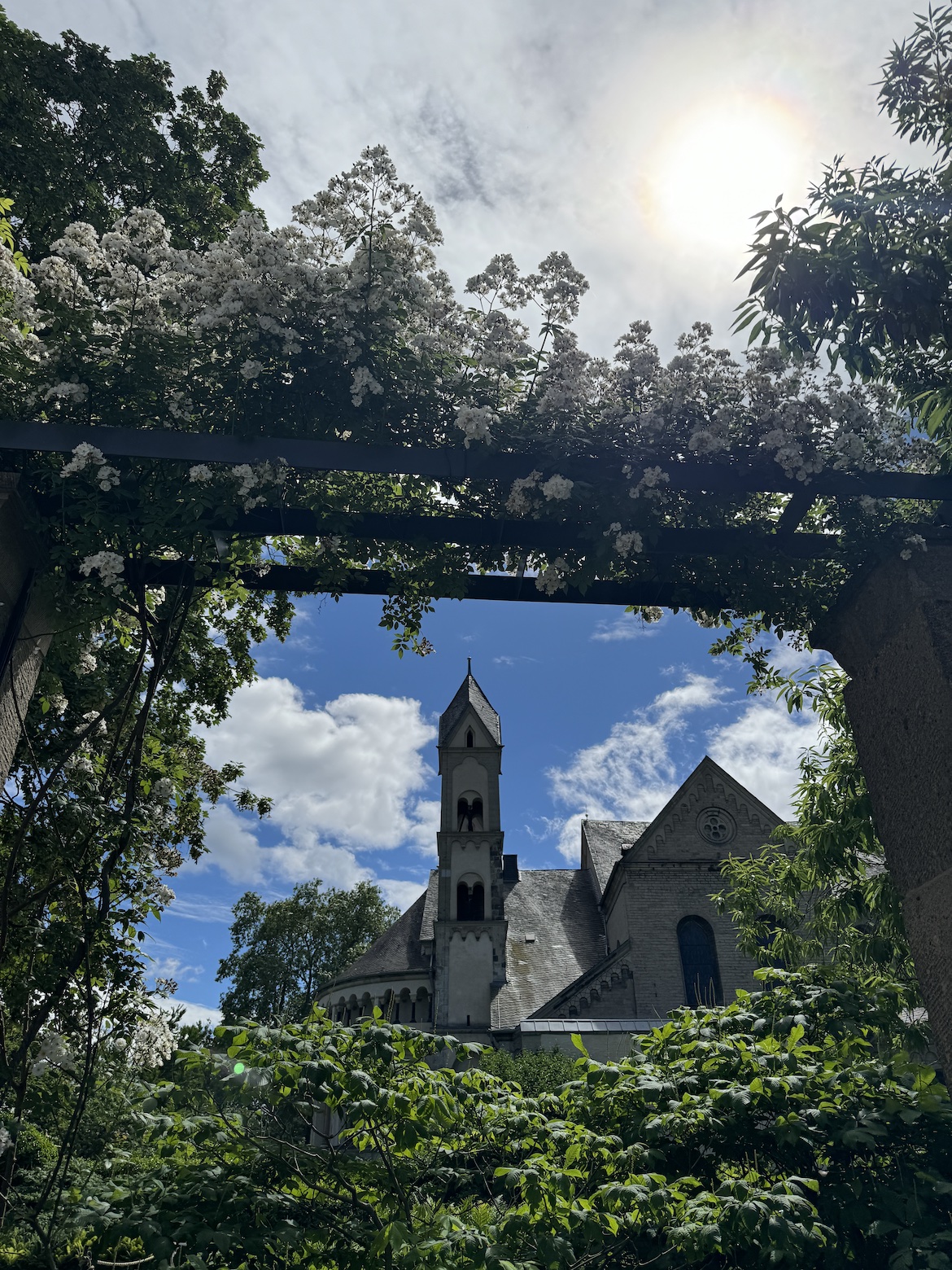
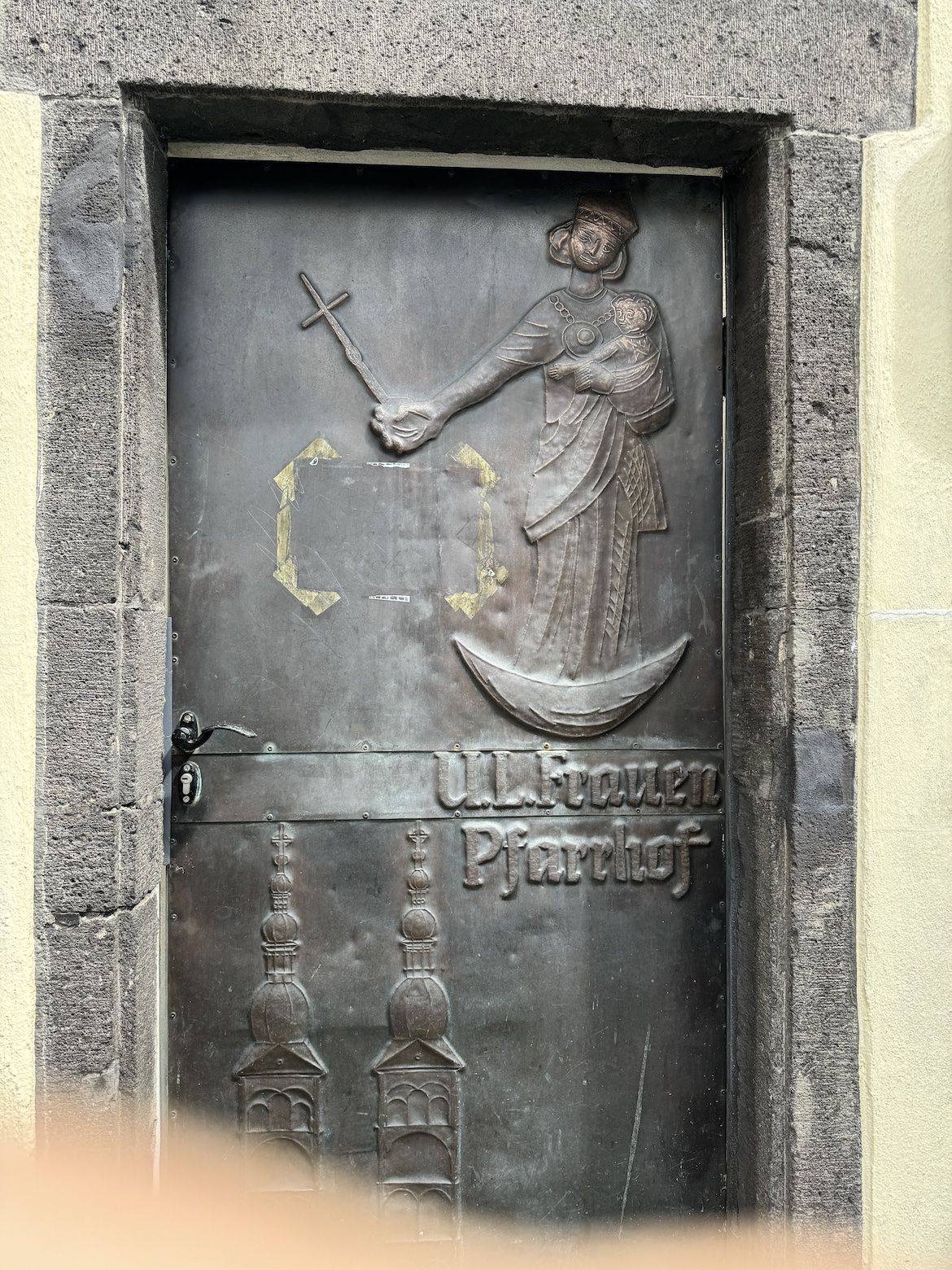
We stepped inside the Basilica of St. Castor, its twin towers anchoring the square. So beautiful. The stone interior felt grounded and steady, as if it had absorbed centuries of weather and waiting. Outside, modern art installations punctuated the old architecture — reminders that towns aren’t museums, they’re living places.
Click (or tap) any photo to open the gallery, see the full image, captions, and scroll through the set.
Back Aboard
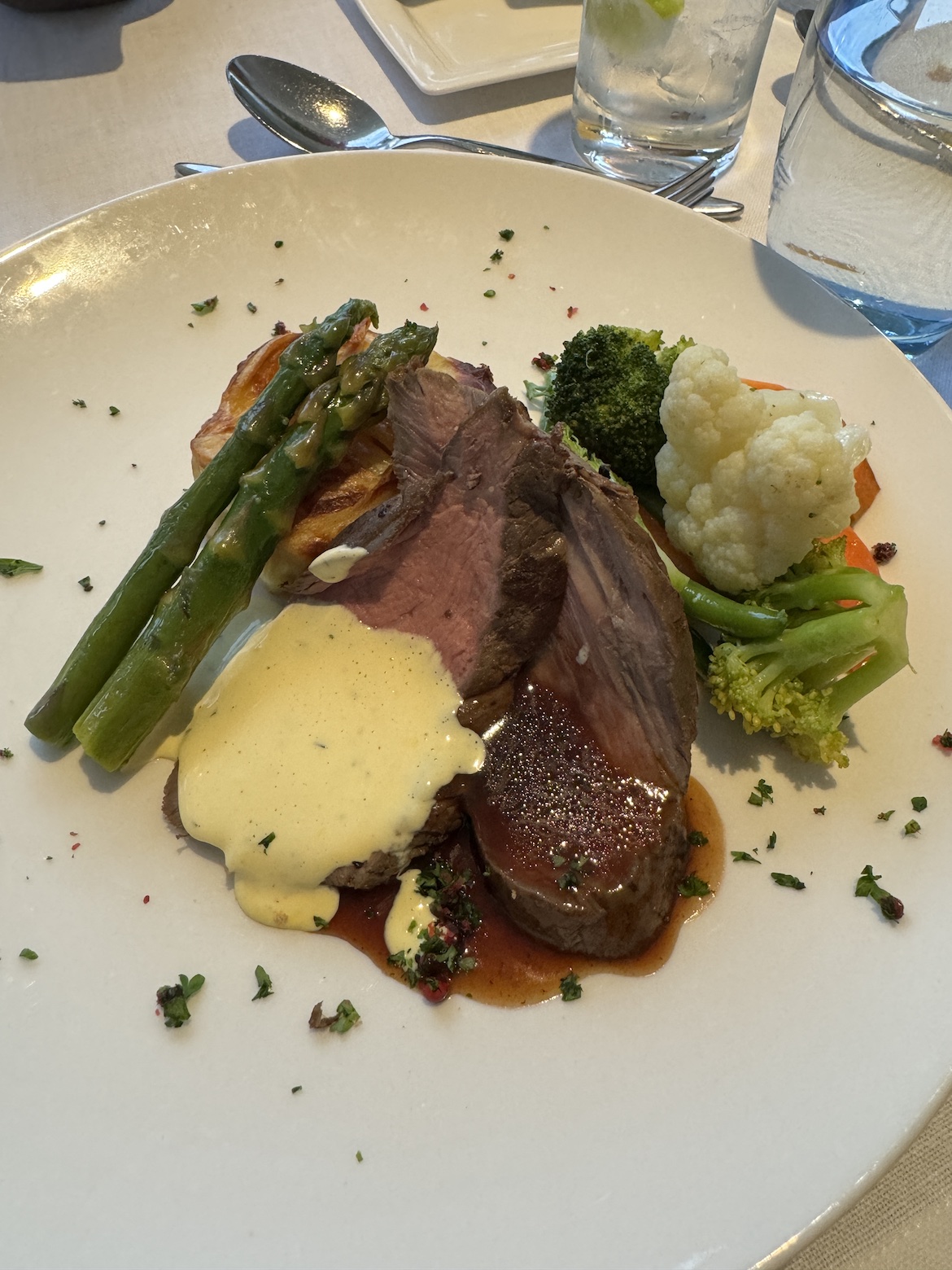
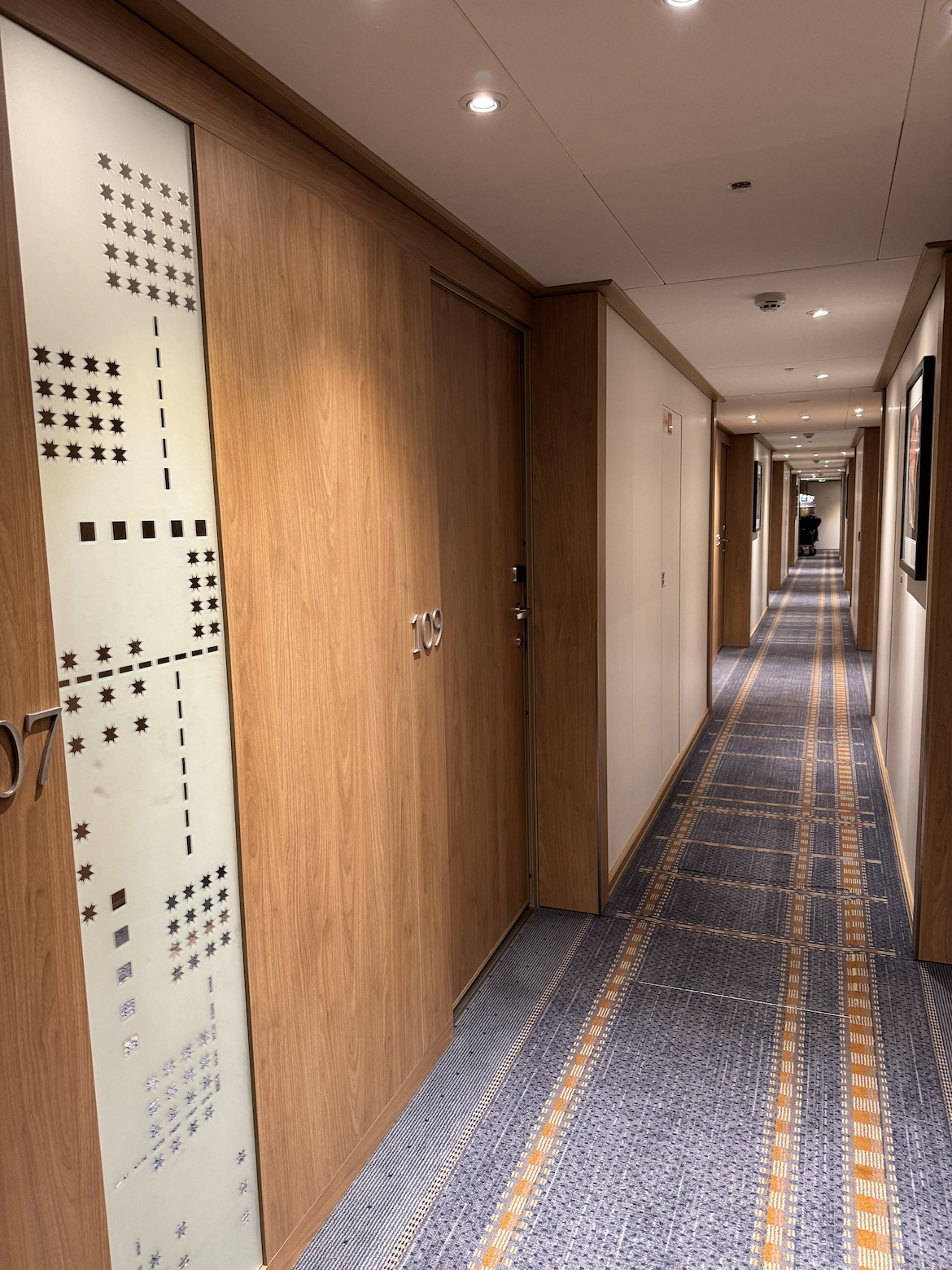
By late afternoon, we were back on the longship. Dinner felt especially welcome after the cold river air and hours on our feet. Warm light, familiar corridors, our small cabin waiting for us. Nothing dramatic — just the quiet satisfaction of a full day.
The Rhine gave us castles. Koblenz gave us context. I’m grateful for both.
Click (or tap) any photo to open the gallery, see the full image, captions, and scroll through the set.
That’s a wrap for Day 12 of my 33 Days in Europe series.
Next up — Day 13.
Missed a day or just joining in? The full 33 Days in Europe series is right here.
Subscribe to follow along with future posts and upcoming series.
Gear I Recommend
See all my travel gear and essentials here: Things I Love & Recommend
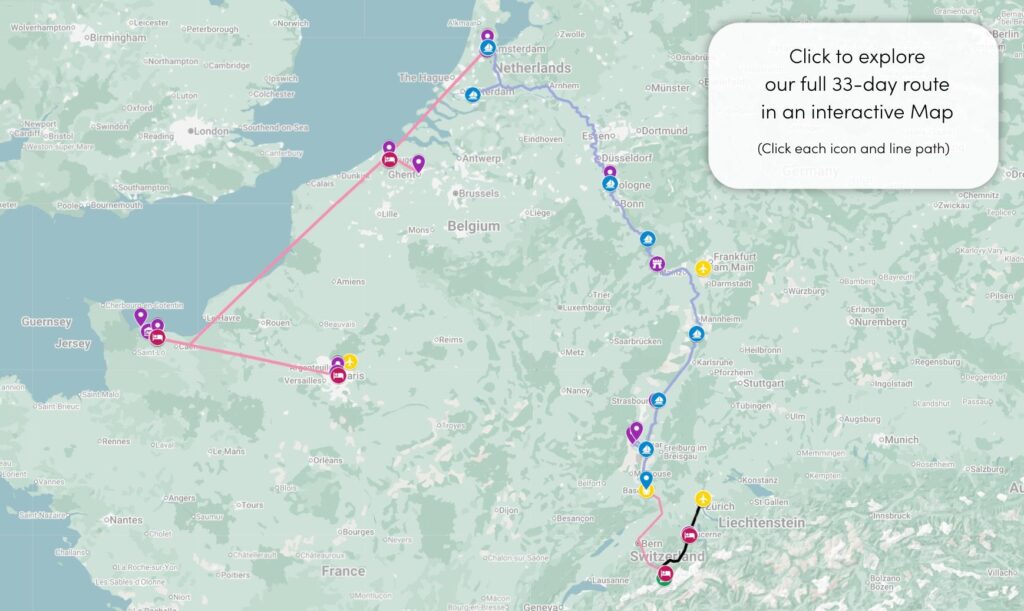
Detailed Map of the Entire Journey
Below is a visual summary of our full 33-day route—hotels, attractions, Viking cruise path and stops, as well as transit modes and paths—hiking, train, plane, gondola.
Click to explore the interactive version and wander through the journey pin by pin.